✨ Early Bird 40% off your first 3 months with code · 40% off · 3 months · EARLYBIRD
Head chef

Head chef, take control of every service and your business numbers

As a head chef, you need every service to add up. Miselup connects recipes, costs and team; Mise Pro also brings purchasing, inventory and daily P&L.

From €19/month per location No lock-in: cancel anytime Costings and margins in an afternoon

Spec sheet · dynamic

Spec Sheet: Seasonal Mushroom and Parmesan Risotto

4 servings
Food cost 28%
  • Carnaroli Rice 320 g 1,20 €
  • Vegetable Broth 1.5 L 0,75 €
  • Seasonal Mushrooms (mixed) 200 g 3,50 €
  • Onion 80 g 0,10 €
  • Garlic 10 g 0,03 €
  • Dry White Wine 100 ml 0,25 €
  • Unsalted Butter 60 g 0,60 €
  • Parmesan Reggiano (grated) 80 g 1,80 €
  • Extra Virgin Olive Oil 30 ml 0,30 €
  • Fresh Parsley 5 g 0,05 €

Cost / serving: 2,19 €

8,78 €
See it inside

The real product, not a mockup

Explore the catalog, recipe costing, HACCP controls and traceability in Miselup.

  • Your business at a glance

    A dashboard with your activity, costs and alerts in one screen.

  • Ingredient catalogue

    1,200+ ingredients with cost, units and allergens.

  • Ingredient sheet

    Price per unit, allergens, conversions and supplier.

  • Sub-recipes

    Nested sub-recipes that recost themselves when a price changes.

  • Final preparations

    Dishes, drinks, desserts or trays: everything you sell, ready to cost.

  • Food-cost to the cent

    Cost, waste and margin of the final preparation in real time.

  • Export to professional PDF

    Technical sheet and food-cost ready to print or send.

  • Techniques

    Your library of techniques, with photos and steps.

  • Equipment & tableware

    Your production space's tools and equipment inventory.

  • Controls in the portal

    Configured controls, reading status and access to the form. Documentary records needing attachments are entered in management.

  • Measurement and corrective action

    Product core-temperature recording and corrective action for deviations; this recording type is available in Mise Pro HACCP.
The why

Recipe costing in head chef

For a head chef in 2026, recipe costing is far more than a simple list of ingredients; it's the backbone of profitability and efficiency in the kitchen. Without rigorous cost control, an average restaurant in Spain can lose between 5% and 10% of its annual gross profit margin, translating into tens of thousands of euros vanishing due to poor management of raw materials and processes.

Implementing digital, real-time recipe costing radically transforms operations. It lets you instantly know the exact margin of each final preparation, making it easier to take strategic decisions on your menu, selling price settings, and purchase optimization. You'll stop working blind, knowing exactly which final preparations are truly profitable and which need adjustments to maximize your establishment's profits.

Why Miselup

Miselup, built for head chef

Miselup for head chefs: link spec sheets and costings to purchasing, stock and profitability, depending on your plan, so every service adds up.

Precision Recipe Costing

Control the food cost of every final preparation with precision. Optimize margins, reduce waste, and ensure the profitability of your station or business.

Flawless Spec Sheets

Create detailed, standardized spec sheets that guarantee quality, consistency, and team training, no matter who is cooking.

Your kitchen know-how, your legacy

Organize all your recipes, techniques, and processes in one digital hub. An asset that belongs to you and goes with you, even if you change venues.

Digitize Your Notebooks in One Afternoon

Use our AI to transform your handwritten notes and recipes into organized, ready-to-use digital spec sheets.

Step by step

How to cost out your signature items step by step

1

Define the spec sheet for the final preparation

Detail every ingredient, its exact quantity in grams or milliliters, and the preparation process. Be meticulous; every gram counts toward the final cost and quality standardization.

2

Calculate the unit cost of each ingredient

Get the purchase price per unit of measure (kg, liter) and divide it by the amount used in the final preparation. Consider offers and prices from your regular suppliers.

3

Apply waste and yield loss

Estimate the loss percentage for each ingredient during preparation (peeling, trimming, cooking). This factor is crucial for a real cost and to avoid unpleasant surprises.

4

Add indirect costs and labor

Although recipe costing focuses on direct cost, consider energy consumption, cooking time, and staff involved. This will give you a more complete view of the total production cost.

5

Review and update regularly

Ingredient prices fluctuate. Review your recipe costing at least quarterly or whenever there are significant changes in your suppliers' costs to always keep them up to date.

A whole salmon reaches the pass as six different plates. See how to split a breakdown cost across cuts of very different value.

Free calculator

Calculate the food cost of any item

Enter the ingredient cost and the menu price: you'll see your food cost, the margin and whether you're in the target range (25-35%).

Food cost

—

Price before VAT

—

Gross margin per unit sold

—

Typical target range: 25-35% depending on the business.

Want the full version? Open the calculator

Worked example

Real-world example: recipe costing for 'Salt-Baked Sea Bass with Roasted Vegetables'

A classic dish that requires precision to optimize its profitability without sacrificing quality. Costs are adjusted to 2026 market prices.

Ingredient Quantity Waste Cost
Whole sea bass (per serving) 250 g 30 % 3.50 €
Coarse salt 500 g 0 % 0.15 €
Russet potato 150 g 10 % 0.25 €
Cherry tomato 50 g 5 % 0.30 €
Green asparagus 40 g 15 % 0.45 €
Extra virgin olive oil 30 ml 0 % 0.60 €
Garlic 5 g 10 % 0.05 €
Lemon 20 g 20 % 0.10 €

Total cost

5.40 €

Food cost

27 %

Suggested price

19.95 € (VAT incl.)

Margin

14.55 € per unit

If you modify the quantity of an ingredient, the system will automatically recalculate the total cost of the dish and, with it, the food cost and margin.

25-30 %

Target Food Cost for fine dining restaurants

industry reports

15 %

Average reduction in food waste with recipe costing management

Spain market data

10 %

Potential increase in profit margin with cost control

hospitality profitability studies

40 %

Dishes with outdated food cost on menus not periodically updated

gastronomic consultancy analysis

In pictures

The craft, up close

Head chef

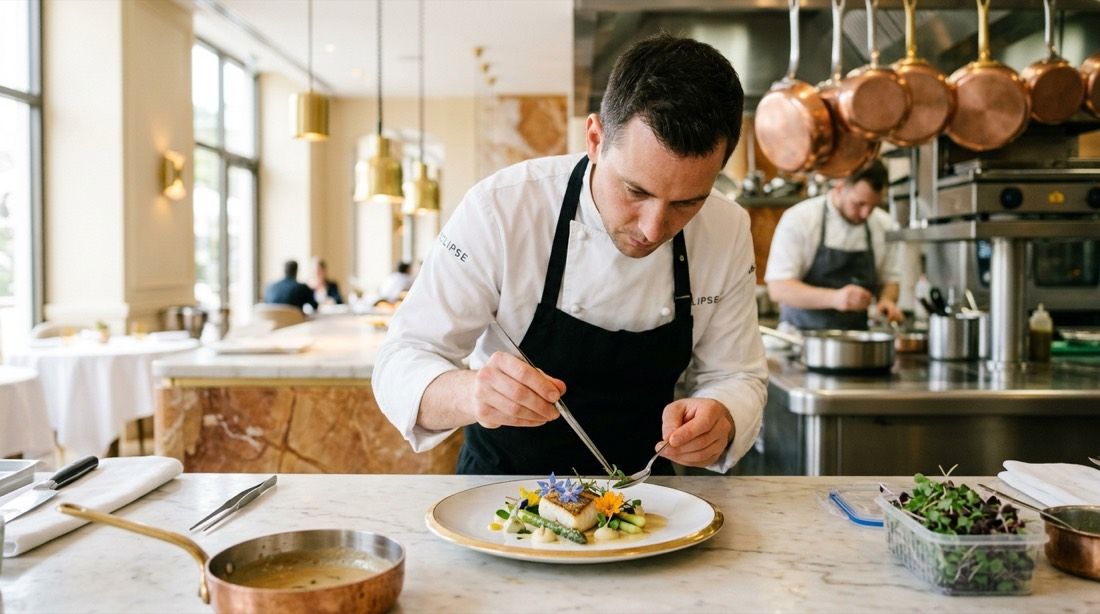
The pass, where costing becomes a dish
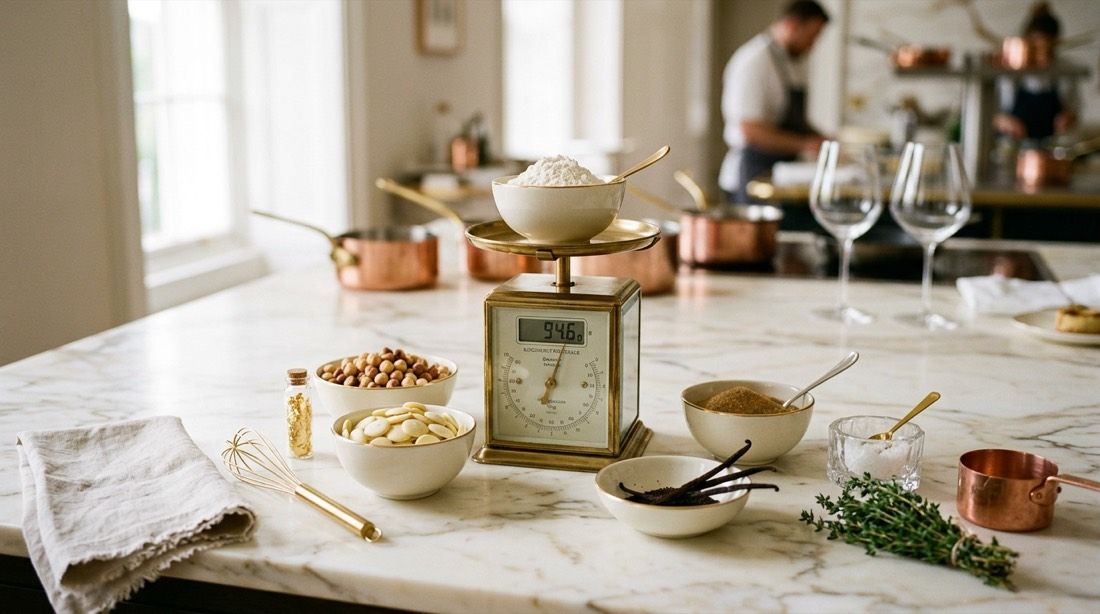
Mise en place weighed to the gram
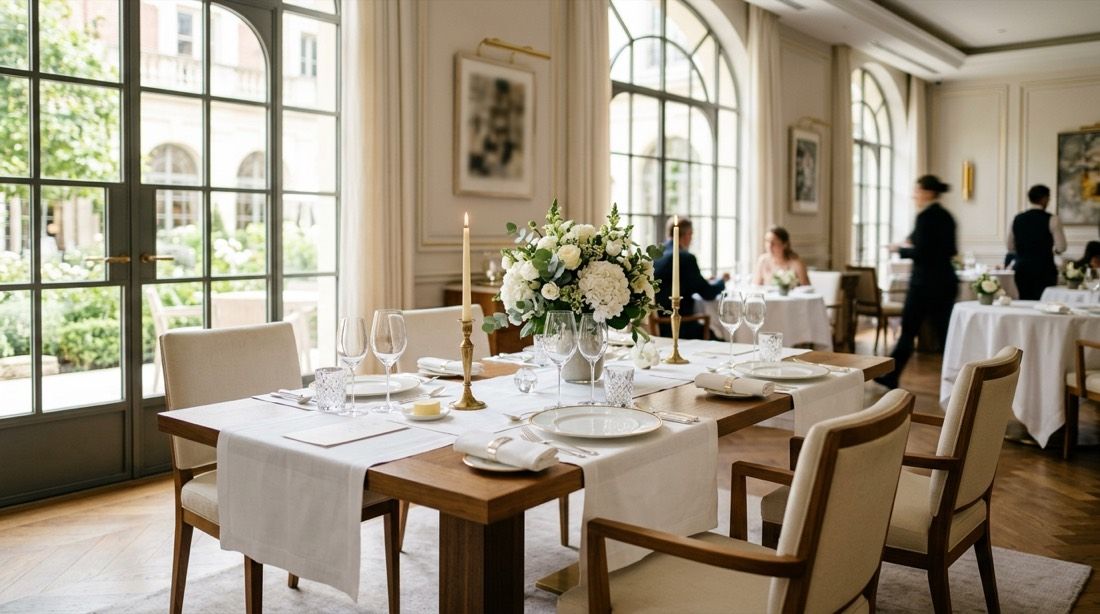
A dining room set for a profitable service
Avoid these

Common recipe costing mistakes as a head chef

Ignoring real yield loss

Not considering the net weight after cleaning or cooking distorts the real final preparation cost and reduces your margin without you knowing it.

Failing to update purchase prices

Supplier prices fluctuate constantly. Working with old prices leads to an unrealistic food cost and wrong pricing decisions.

Not standardizing recipes

Every cook makes the dish their own way, varying quantities. Without a precise spec sheet, recipe costing loses its value and quality becomes inconsistent.

Not considering preparation costs

Although not direct ingredient costs, the time and resources spent on mise en place or long cook times impact overall efficiency and profitability.

The niche in depth

Essential recipe costing types for your kitchen

Tailored to every operational and strategic need

Final preparation recipe costing · soon

The most common, it calculates the cost of a single serving to the customer, including all ingredients and yield losses.

Semi-finished product recipe costing · soon

Fundamental for base preparations like stocks, sauces, or doughs. It allows you to know the cost of these components before integrating them into final preparations.

Beverage recipe costing · soon

For cocktails, wines by the glass, or mixed drinks. It includes the cost of liquors, mixers, garnishes, and often-forgotten ice.

Tasting menu recipe costing · soon

Groups the cost of each course in a tasting menu to calculate the total food cost of the whole experience.

Event/banquet recipe costing · soon

Allows for precise budgeting of large production volumes, adjusting per-guest costs and optimizing purchases.

Professionals

What the pros who run on numbers say

Chefs, pastry chefs, bartenders, baristas and chocolatiers who swapped spreadsheets and notebooks for Miselup.

Carlos Mendoza

Carlos Mendoza

Owner · La Mesa Restaurant

“Every recipe change used to be a mess. With Miselup, if I bump the sirloin by 20 g, I see the real cost instantly. It's amazing—I no longer lose margin without noticing. Now costing is quick and safe, no calculator needed.”

Diego Valdés

Diego Valdés

Head Bartender · Nébula Bar

“My team sees the production sheet without any cost breakdown. That way they measure every cocktail precisely—no more over- or under-pouring. The recipe stays clear, and the numbers stay for my eyes only.”

Isabel Vega

Isabel Vega

Artisan Chocolatier · Bombones Amargo

“For a big order of 300 boxes, I enter the base recipe for 10 chocolates and Miselup scales everything: grams, time, cost. No neurotic math. From small workshop to large order, the scaling is spot on and I don't waste a single gram of cocoa.”

Carlos Mendoza

Carlos Mendoza

Owner · La Mesa Restaurant

“Every recipe change used to be a mess. With Miselup, if I bump the sirloin by 20 g, I see the real cost instantly. It's amazing—I no longer lose margin without noticing. Now costing is quick and safe, no calculator needed.”

Diego Valdés

Diego Valdés

Head Bartender · Nébula Bar

“My team sees the production sheet without any cost breakdown. That way they measure every cocktail precisely—no more over- or under-pouring. The recipe stays clear, and the numbers stay for my eyes only.”

Isabel Vega

Isabel Vega

Artisan Chocolatier · Bombones Amargo

“For a big order of 300 boxes, I enter the base recipe for 10 chocolates and Miselup scales everything: grams, time, cost. No neurotic math. From small workshop to large order, the scaling is spot on and I don't waste a single gram of cocoa.”

Lucía Ramírez

Lucía Ramírez

Pastry Chef · Dulce Masa Bakery

“I always jot down recipes in my test notebook. I snap a photo with Miselup, and the AI turns that page into a technical sheet with exact ingredients and weights. It's magic—saves me hours of copying data and eliminates errors completely.”

Ana Solís

Ana Solís

Catering Director · Sol y Sombra Events

“For each wedding menu, I instantly see if the proposal is green or red. The margin traffic light tells me if I'm over cost before sending the quote. I negotiate with data, not blind. And I sleep easy once every event is locked in.”

Lucía Ramírez

Lucía Ramírez

Pastry Chef · Dulce Masa Bakery

“I always jot down recipes in my test notebook. I snap a photo with Miselup, and the AI turns that page into a technical sheet with exact ingredients and weights. It's magic—saves me hours of copying data and eliminates errors completely.”

Ana Solís

Ana Solís

Catering Director · Sol y Sombra Events

“For each wedding menu, I instantly see if the proposal is green or red. The margin traffic light tells me if I'm over cost before sending the quote. I negotiate with data, not blind. And I sleep easy once every event is locked in.”

FAQ

Frequently asked questions

Head chef

What is the target food cost for my fine dining restaurant?
An optimal food cost in fine dining usually ranges around 25-30%. However, it can vary depending on the type of product, the exclusivity of ingredients, and your establishment's pricing strategy.
How can I calculate the selling price of a final preparation from its recipe cost?
To calculate the selling price, divide the total final preparation cost by the target food cost percentage (e.g., Cost / 0.27). Then, add the applicable VAT. This gives you a profitable base price.
How often should I update my menu's recipe costing?
Ideally, you should review them quarterly and whenever there are significant changes in supplier prices or recipes. Recipe costing software will alert you to these variations.
What's the difference between food cost and profit margin?
Food cost is the percentage of the selling price that ingredients represent. Profit margin is the difference between the selling price and all costs (ingredients, staff, rent, etc.), expressed in absolute value or percentage.
How does yield loss affect the real cost of a final preparation?
Yield loss increases the real cost of an ingredient. If you buy 1 kg of something for €10 and only use 800g due to waste, the real cost per usable kg is €12.50, not €10.
Can I use my recipe costing to negotiate with suppliers?
Yes, by having precise control of your consumption and costs per ingredient, you can negotiate better prices with your suppliers, demonstrating volumes and seeking to optimize your supply chain.
John Guerrero
About the author

John Guerrero

Gastronomy consultant · Founder of ChefBusiness and Miselup

15+ years advising restaurants, bakeries and hospitality businesses across Spain and Latam. Creator of ChefBusiness, AI Chef Pro and Miselup: the digital mise en place his clients use to control food cost to the cent.

Ready to sell with clear margins?

Get costs and margins under control from day one and run your business on real numbers. From €19 a month; Mise Pro adds purchasing, inventory and daily P&L.