✨ Early Bird 40% off your first 3 months with code · 40% off · 3 months · EARLYBIRD
Selling price & margins

How to Calculate the Selling Price of a Dish and Set Profit Margins

Discover the methodology for setting selling prices (PVP) that ensure your business's profitability. Miselup simplifies this process, allowing you to optimize your margins with precision.

Free forever No credit card Your recipe book in an afternoon

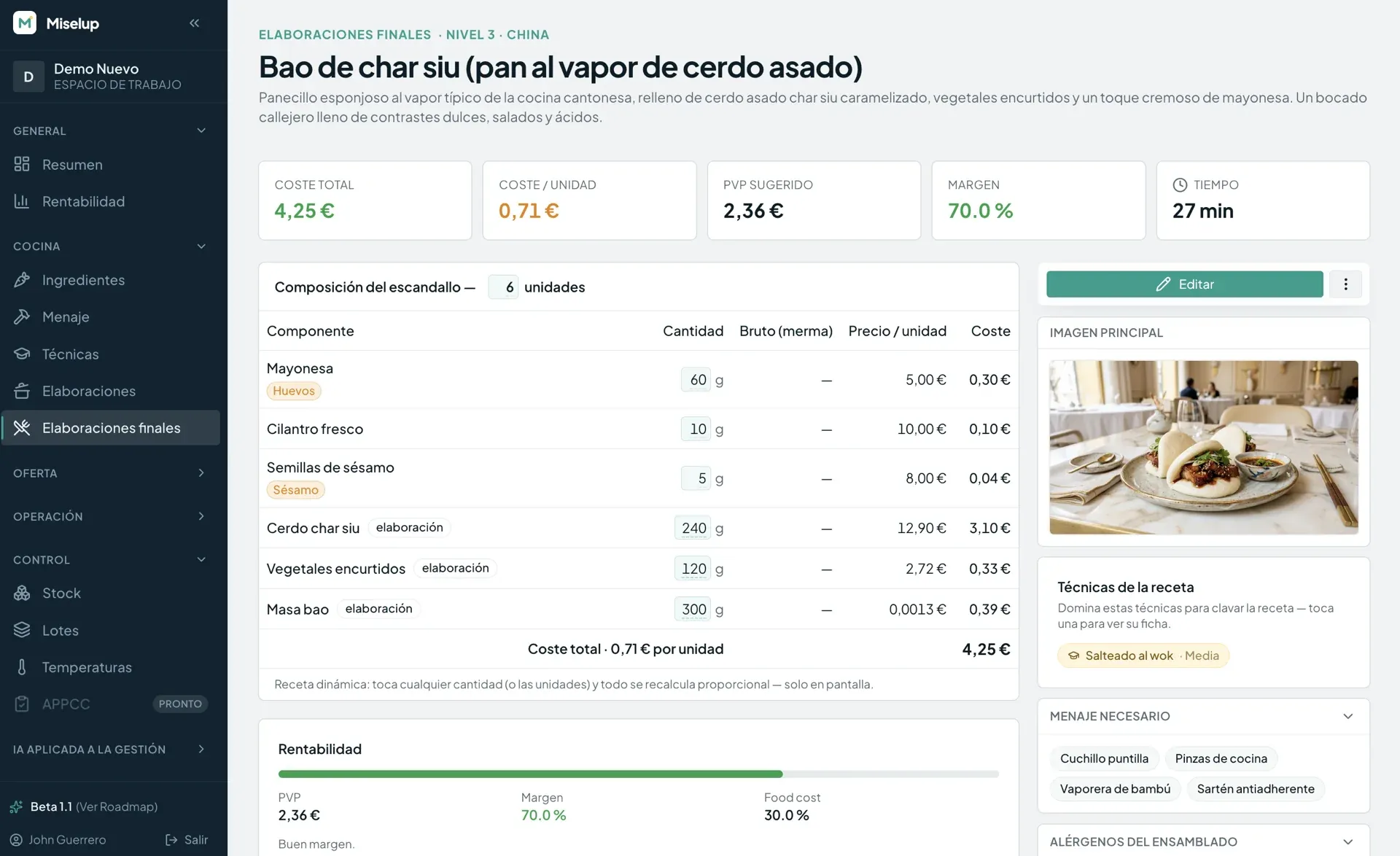
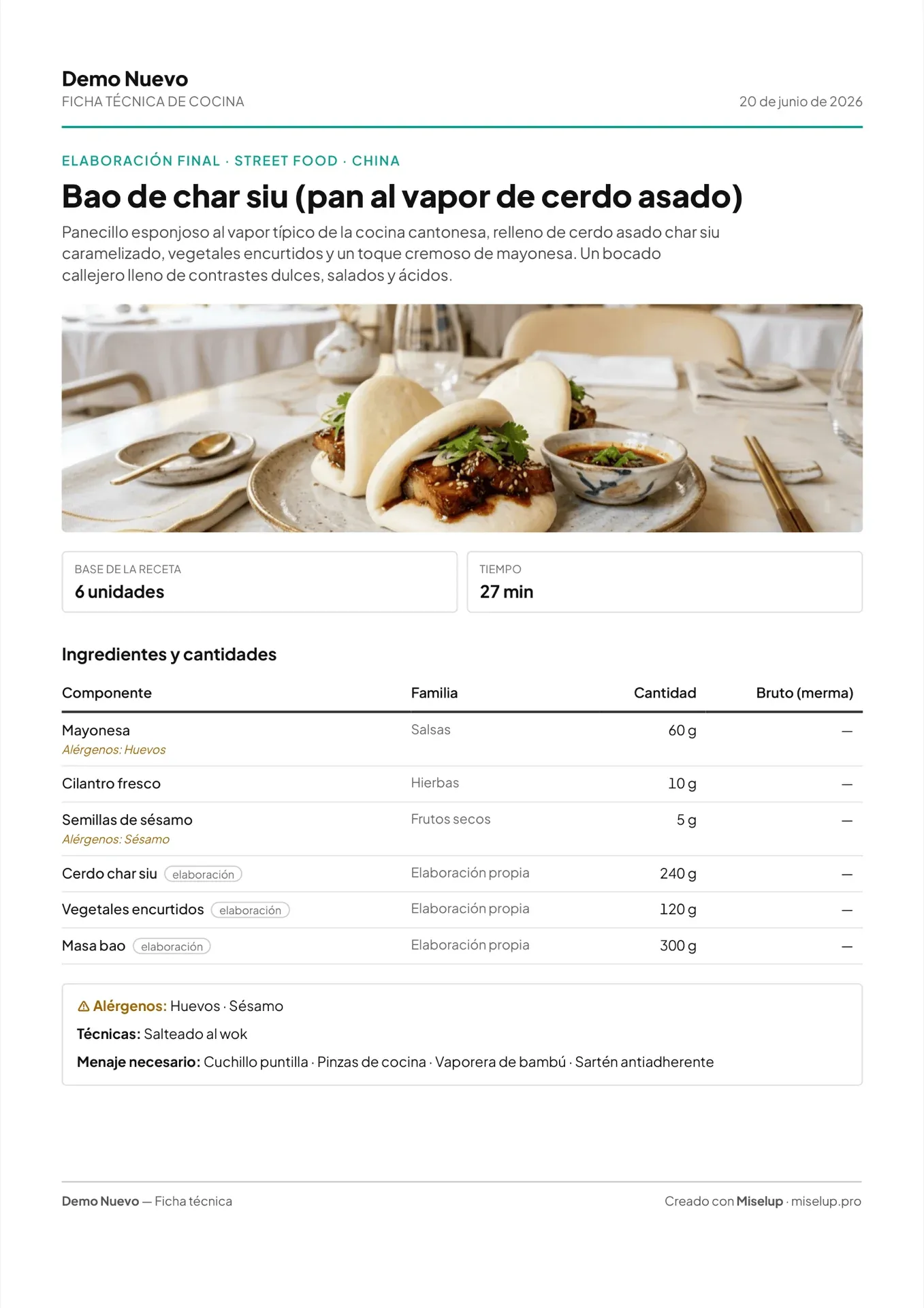
Spec sheet · dynamic

Seafood Paella (10 servings)

10 servings
Food cost 35%
  • Bomba rice 1000 g €2.50
  • Fish stock 3000 ml €6.00
  • Fresh shrimp 500 g €12.50
  • Mussels 1000 g €4.00
  • Squid 300 g €3.60
  • Sofrito vegetables 500 g €1.80
  • Saffron and spices 5 g €3.00
  • Olive oil 100 ml €0.80

Cost / serving: €3.42

€34.20
The why

Selling price & margins

In the Spanish hospitality industry, accurate calculation of the Selling Price (PVP) and margin management are the cornerstone of survival and success. It’s estimated that without a well-defined pricing strategy, businesses can lose up to 20% of their annual profit potential, diluted in hidden costs, uncontrolled waste, and a mistaken perception of each dish’s real profitability. This lack of rigor directly impacts liquidity and long-term viability.

Implementing a robust system to calculate PVP and margins transforms financial management, enabling precise control of food cost and each item’s contribution to the bottom line. This not only optimizes per-dish profitability but also facilitates strategic decisions about the menu, promotional offers, and supplier negotiations, ensuring that every sale positively contributes to the business’s financial goals.

Why Miselup

Miselup, built for selling price & margins

Learn how to calculate the selling price of your dishes and set profitable margins for your hospitality business. Miselup helps you optimize your pricing.

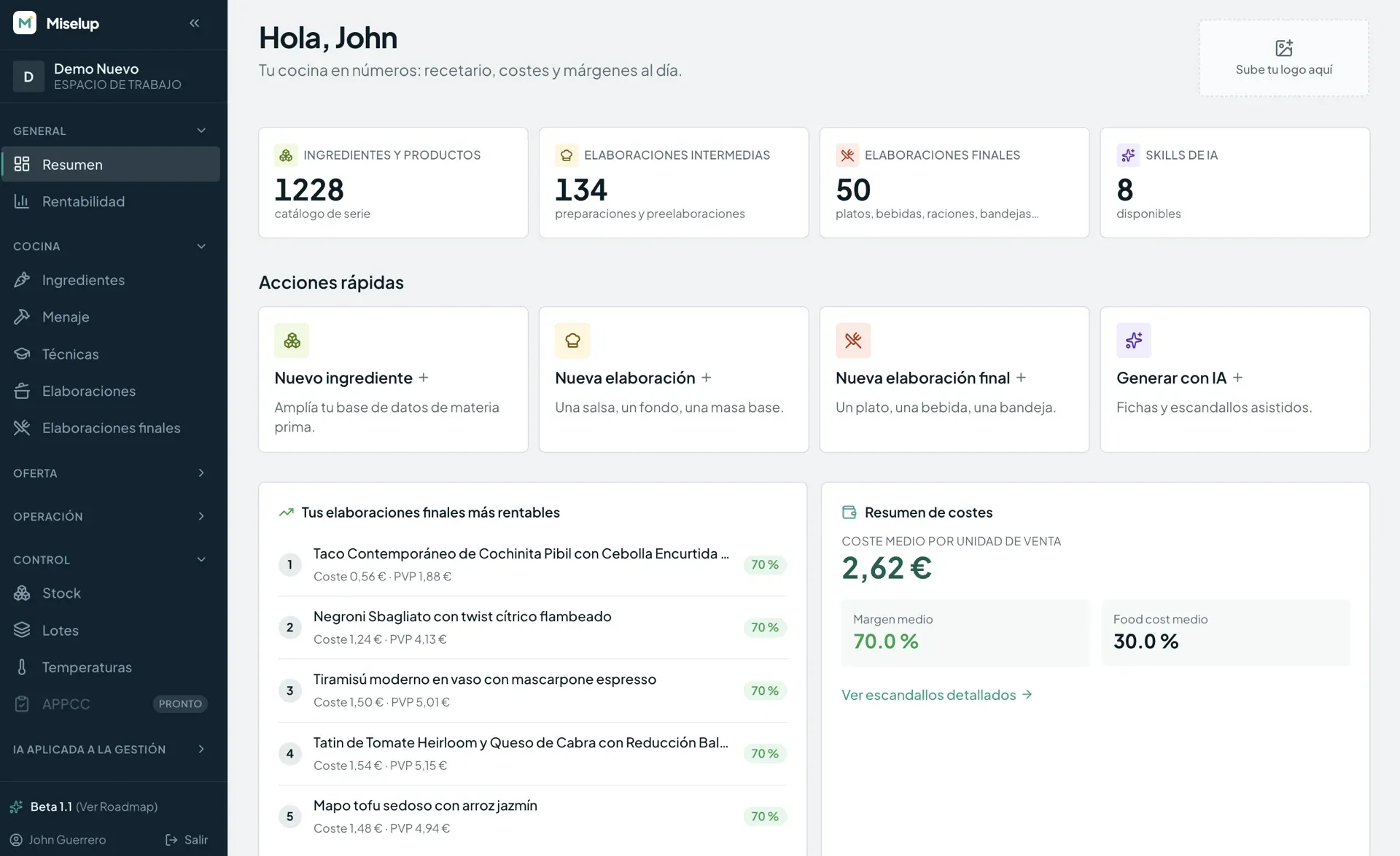
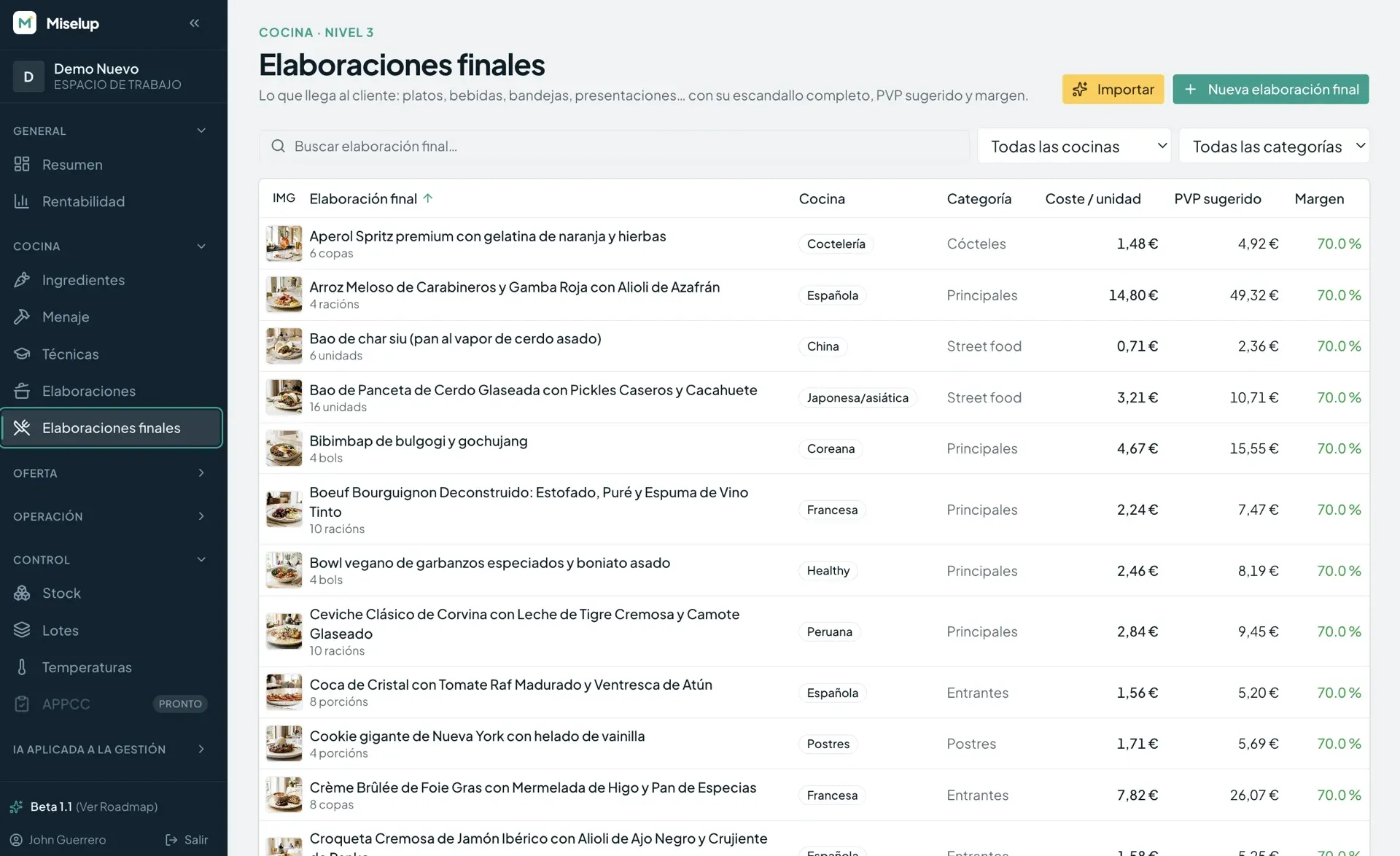
Automatic selling price calculation

Miselup calculates the suggested selling price based on your costs and desired margin, eliminating manual errors and saving time.

Real-time profitability analysis

Instantly visualize the impact of every price or ingredient change on your margins, making strategic decision-making easier.

Margin optimization

Define different margin policies for various product categories, ensuring the overall profitability of your menu.

Step by step

How to calculate a dish’s PVP and set margins in hospitality step by step

1

Calculate the real cost of raw materials (food cost in €)

Determine the exact cost of all ingredients used in one serving of the dish, including waste and pre-preparations. This is your unit food cost.

2

Define your target food cost percentage

Set what percentage of the PVP you want the raw material cost to represent. This percentage varies depending on the type of business (e.g., 25–35% for restaurants).

3

Calculate the PVP excluding VAT

Divide the unit food cost (€) by your target food cost percentage (e.g., 0.30 for 30%). The result is the dish’s PVP before tax.

4

Apply the corresponding VAT

Add the Value Added Tax (VAT) to the PVP excluding VAT. In Spain, for hospitality, it is usually 10%. This is the final PVP the customer will see on the menu.

5

Calculate the profit margin

Subtract the total dish cost (food cost + other direct costs if you consider them) from the final PVP. This is the gross profit per unit sold, key to profitability.

Worked example

Real example: PVP and margin calculation for 'Tuna Tataki with Wakame'

A practical case to understand how costs are broken down and the optimal selling price is reached.

Ingredient Quantity Waste Cost
Tuna loin 150 g 10 % 4,50 €
Wakame seaweed 30 g 0 % 0,80 €
Soy sauce 20 ml 0 % 0,15 €
Sesame seeds 5 g 0 % 0,10 €
Sesame oil 5 ml 0 % 0,20 €
Fresh ginger 10 g 5 % 0,08 €
Lime 1/4 each 0 % 0,12 €
Maldon salt 2 g 0 % 0,05 €

Total cost

6,00 €

Food cost

25 %

Suggested price

26,40 € (VAT incl.)

Margin

20,40 € per unit

If an ingredient’s cost increases, the system automatically recalculates the food cost and suggests a PVP adjustment to maintain the desired margin.

28 %

Average food cost in Spanish restaurants

hospitality sector reports 2026

10 %

VAT rate applicable in hospitality (Spain)

Spanish Tax Agency 2026

15 %

Increase in profitability with price management

gastronomic consulting studies

35 %

Target gross margin for main dishes

Spain market data

In pictures

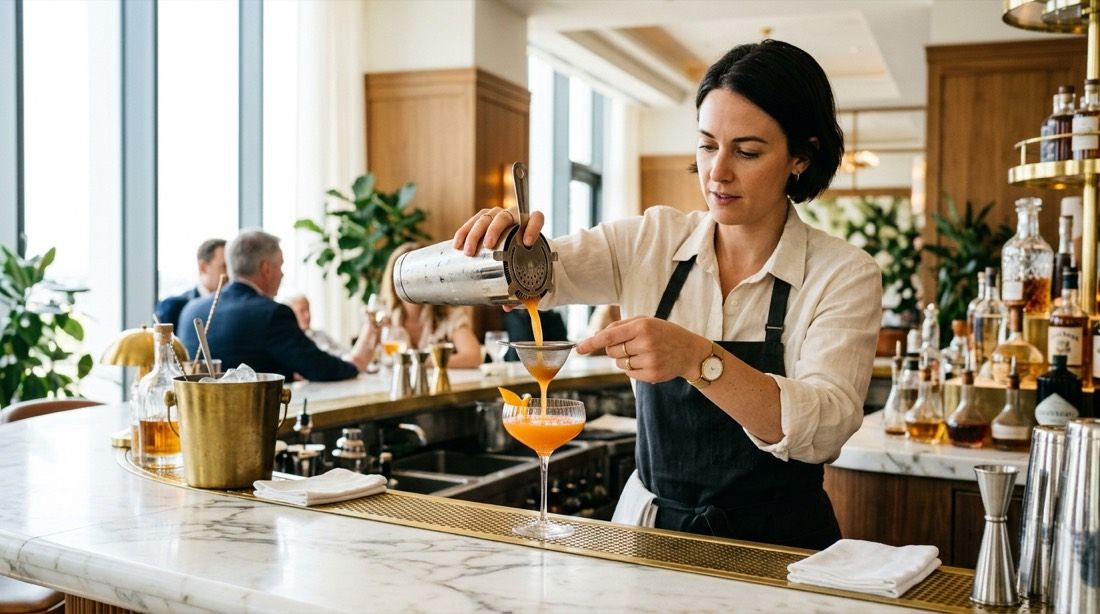
The craft, up close

Selling price & margins

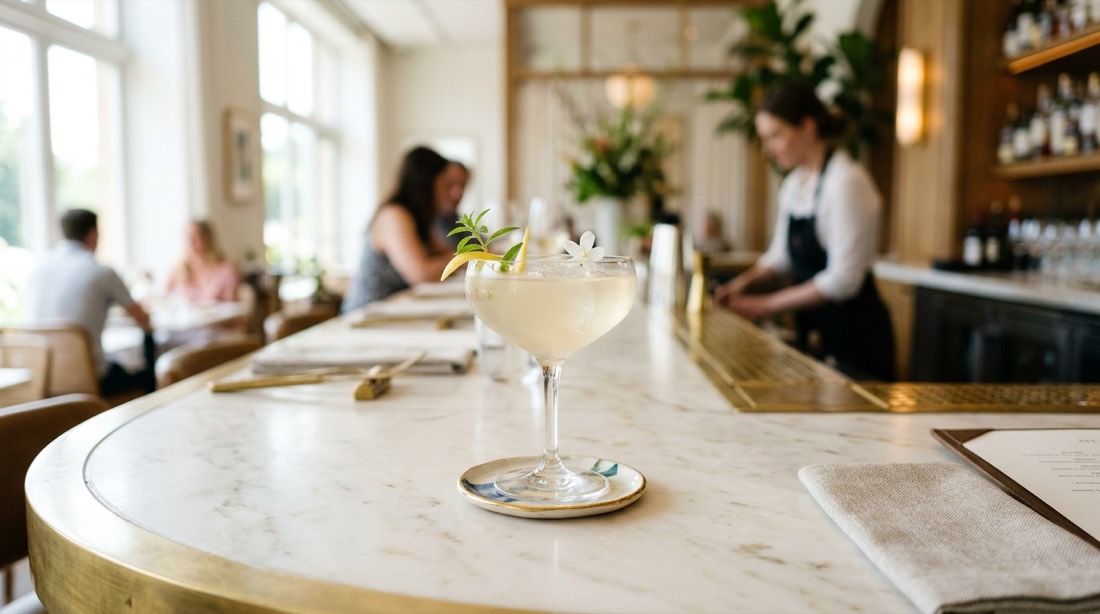
Every glass with its costing
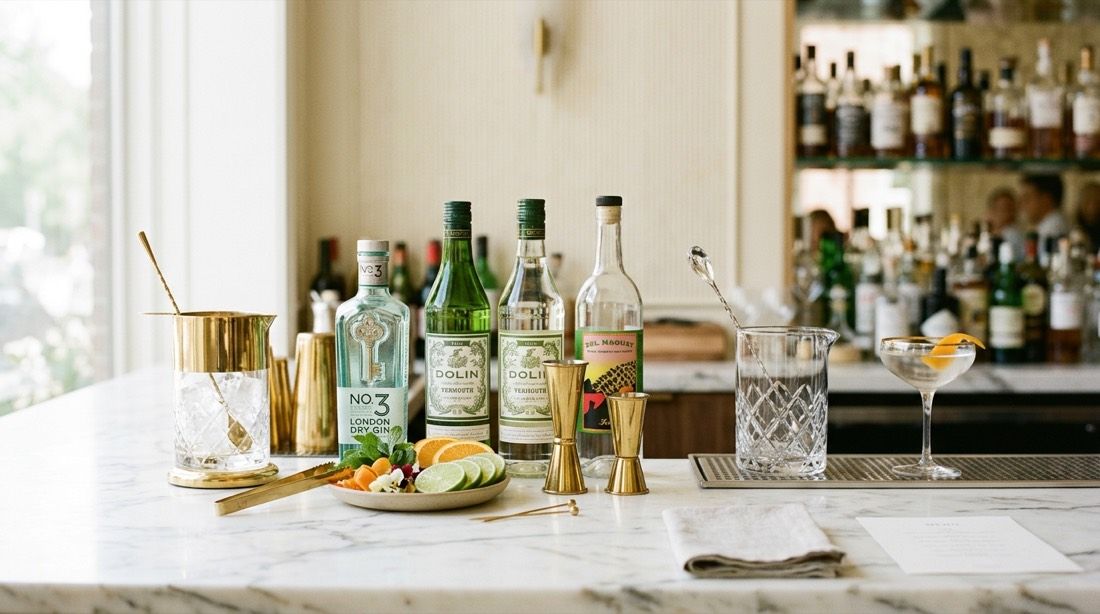
The bar's mise en place
Price per glass, clear margin
Avoid these

Common mistakes when calculating PVP and margins in hospitality

Ignoring indirect costs

Focusing only on food cost is a mistake. Labor, rent, energy, etc., must be covered by the gross margin generated, even if they are not included directly in the unit recipe costing.

Pricing based on competitors

Basing PVP solely on what competitors charge without knowing your own costs and margin structure can lead to ruin. Your profitability is unique.

Ignoring price elasticity

Raising prices without analyzing how it will affect demand can reduce sales volume. Finding a balance between margin and volume is crucial.

Not updating costs regularly

Supplier prices change. If you don’t update your recipe costings, your calculated margins will be wrong and you’ll be losing money without knowing it.

The niche in depth

Pricing strategies in hospitality

Methods to determine the optimal PVP for your dishes and drinks.

Cost-plus pricing · soon

The total cost of the dish is calculated and a desired fixed margin is added. It’s the most basic and direct method.

Value-based pricing · soon

Sets the price based on the value perceived by the customer, not solely on cost. Common in fine dining or unique experiences.

Competitive pricing · soon

Adjusts prices based on what direct competitors charge. Requires good market knowledge.

Psychological pricing · soon

Strategies like prices ending in .99 or .95 to appear more affordable, or round prices for premium products.

Dynamic pricing · soon

Real-time price adjustment based on demand, time of day, or availability. More complex but optimizes revenue in certain contexts.

Professionals

What the pros who cook with numbers say

Chefs, pastry chefs, bartenders, baristas and chocolatiers who swapped spreadsheets and notebooks for Miselup.

Carlos Mendoza

Carlos Mendoza

Owner · La Mesa Restaurant

“Every recipe change used to be a mess. With Miselup, if I bump the sirloin by 20 g, I see the real cost instantly. It's amazing—I no longer lose margin without noticing. Now costing is quick and safe, no calculator needed.”

Diego Valdés

Diego Valdés

Head Bartender · Nébula Bar

“My team sees the production sheet without any cost breakdown. That way they measure every cocktail precisely—no more over- or under-pouring. The recipe stays clear, and the numbers stay for my eyes only.”

Mateo Herrera

Mateo Herrera

Owner · Café Origen

“Swap whole milk for oat milk and Miselup updates allergens on the menu automatically. Every new season with sandwiches and pastries used to be a nightmare. Now my digital menu is always up to date and my celiac customers are grateful.”

Carlos Mendoza

Carlos Mendoza

Owner · La Mesa Restaurant

“Every recipe change used to be a mess. With Miselup, if I bump the sirloin by 20 g, I see the real cost instantly. It's amazing—I no longer lose margin without noticing. Now costing is quick and safe, no calculator needed.”

Diego Valdés

Diego Valdés

Head Bartender · Nébula Bar

“My team sees the production sheet without any cost breakdown. That way they measure every cocktail precisely—no more over- or under-pouring. The recipe stays clear, and the numbers stay for my eyes only.”

Mateo Herrera

Mateo Herrera

Owner · Café Origen

“Swap whole milk for oat milk and Miselup updates allergens on the menu automatically. Every new season with sandwiches and pastries used to be a nightmare. Now my digital menu is always up to date and my celiac customers are grateful.”

Carlos Mendoza

Carlos Mendoza

Owner · La Mesa Restaurant

“Every recipe change used to be a mess. With Miselup, if I bump the sirloin by 20 g, I see the real cost instantly. It's amazing—I no longer lose margin without noticing. Now costing is quick and safe, no calculator needed.”

Diego Valdés

Diego Valdés

Head Bartender · Nébula Bar

“My team sees the production sheet without any cost breakdown. That way they measure every cocktail precisely—no more over- or under-pouring. The recipe stays clear, and the numbers stay for my eyes only.”

Mateo Herrera

Mateo Herrera

Owner · Café Origen

“Swap whole milk for oat milk and Miselup updates allergens on the menu automatically. Every new season with sandwiches and pastries used to be a nightmare. Now my digital menu is always up to date and my celiac customers are grateful.”

Lucía Ramírez

Lucía Ramírez

Pastry Chef · Dulce Masa Bakery

“I always jot down recipes in my test notebook. I snap a photo with Miselup, and the AI turns that page into a technical sheet with exact ingredients and weights. It's magic—saves me hours of copying data and eliminates errors completely.”

Ana Solís

Ana Solís

Catering Director · Sol y Sombra Events

“For each wedding menu, I instantly see if the proposal is green or red. The margin traffic light tells me if I'm over cost before sending the quote. I negotiate with data, not blind. And I sleep easy once every event is locked in.”

Isabel Vega

Isabel Vega

Artisan Chocolatier · Bombones Amargo

“For a big order of 300 boxes, I enter the base recipe for 10 chocolates and Miselup scales everything: grams, time, cost. No neurotic math. From small workshop to large order, the scaling is spot on and I don't waste a single gram of cocoa.”

Lucía Ramírez

Lucía Ramírez

Pastry Chef · Dulce Masa Bakery

“I always jot down recipes in my test notebook. I snap a photo with Miselup, and the AI turns that page into a technical sheet with exact ingredients and weights. It's magic—saves me hours of copying data and eliminates errors completely.”

Ana Solís

Ana Solís

Catering Director · Sol y Sombra Events

“For each wedding menu, I instantly see if the proposal is green or red. The margin traffic light tells me if I'm over cost before sending the quote. I negotiate with data, not blind. And I sleep easy once every event is locked in.”

Isabel Vega

Isabel Vega

Artisan Chocolatier · Bombones Amargo

“For a big order of 300 boxes, I enter the base recipe for 10 chocolates and Miselup scales everything: grams, time, cost. No neurotic math. From small workshop to large order, the scaling is spot on and I don't waste a single gram of cocoa.”

Lucía Ramírez

Lucía Ramírez

Pastry Chef · Dulce Masa Bakery

“I always jot down recipes in my test notebook. I snap a photo with Miselup, and the AI turns that page into a technical sheet with exact ingredients and weights. It's magic—saves me hours of copying data and eliminates errors completely.”

Ana Solís

Ana Solís

Catering Director · Sol y Sombra Events

“For each wedding menu, I instantly see if the proposal is green or red. The margin traffic light tells me if I'm over cost before sending the quote. I negotiate with data, not blind. And I sleep easy once every event is locked in.”

Isabel Vega

Isabel Vega

Artisan Chocolatier · Bombones Amargo

“For a big order of 300 boxes, I enter the base recipe for 10 chocolates and Miselup scales everything: grams, time, cost. No neurotic math. From small workshop to large order, the scaling is spot on and I don't waste a single gram of cocoa.”

FAQ

Frequently asked questions

Selling price & margins

What is a good target food cost for my restaurant?
A good target food cost usually falls between 25% and 35%, depending on the type of cuisine, ingredient quality, and restaurant positioning. For fine dining, it may be lower; for fast food, slightly higher.
How does VAT affect the PVP calculation?
VAT (10% in Spain for hospitality) is added to the PVP excluding VAT. Including it is crucial to get the final price the customer will pay and to ensure your actual margin is not affected by this tax.
What is a dish’s contribution margin?
The contribution margin is the difference between the PVP and the variable cost of the dish (mainly the food cost). It indicates how much each sale contributes to covering the business’s fixed costs and generating profit.
Should I have the same margin on all my dishes?
Not necessarily. It’s advisable to have a varied margin strategy. Some dishes may have a lower margin to attract customers (loss leaders), while others, with higher margins, compensate and maximize overall profitability.
How can I raise prices without losing customers?
Communicate added value, enhance the experience, introduce new dishes with adjusted prices, or make small, gradual increases. Analyze each dish’s price elasticity before raising prices sharply.
Which software helps me calculate PVP and margins efficiently?
Cost management software like Miselup automates the calculation of recipe costings, food cost, PVP, and margins in real time, facilitating decision-making and optimizing your business’s profitability.
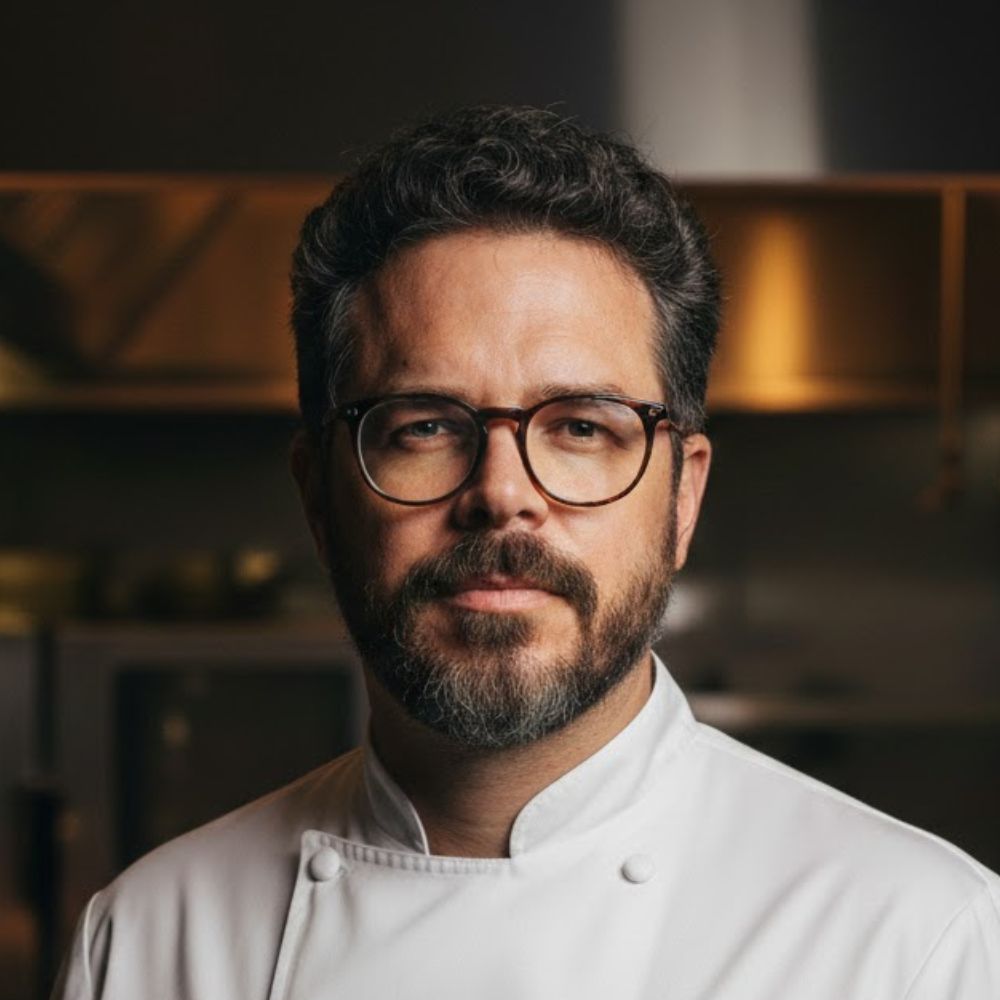
John Guerrero
About the author

John Guerrero

Gastronomy consultant · Founder of ChefBusiness and Miselup

15+ years advising restaurants, bakeries and hospitality businesses across Spain and Latam. Creator of ChefBusiness, AI Chef Pro and Miselup: the digital mise en place his clients use to control food cost to the cent.

Ready to stop losing money on every plate?

Set up your recipe book in an afternoon and try Free forever. No credit card, no commitment.