✨ Early Bird 40% off your first 3 months with code · 40% off · 3 months · EARLYBIRD
Bakeries

Recipe Costing for Bakeries: Calculate Your Dough Costs

Control the real cost of every loaf, croissant, or bun. From ingredients to baking, master the profitability of your bakery workshop.

Free forever No credit card Your recipe book in an afternoon

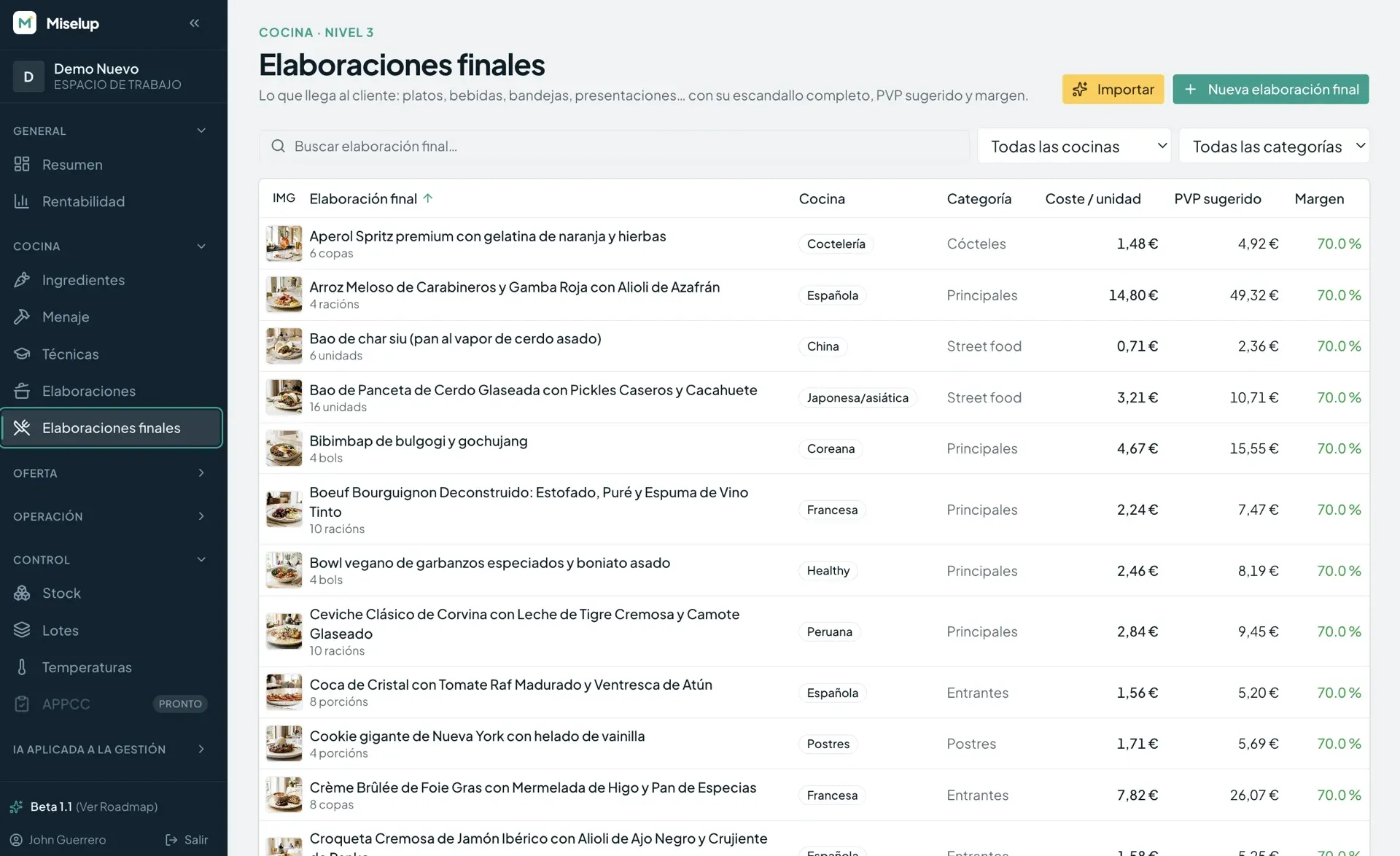
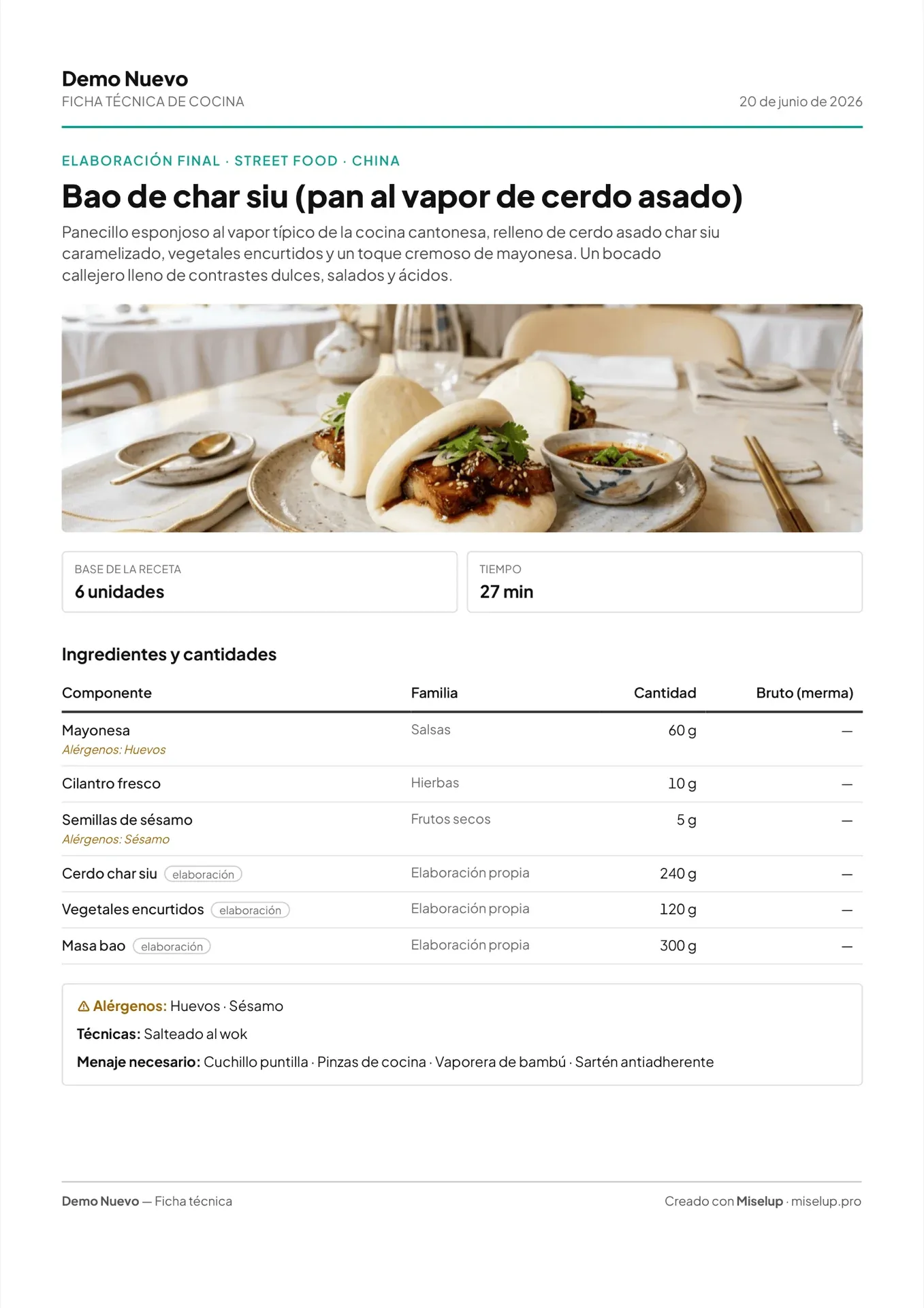
Spec sheet · dynamic

84% Butterfat Croissant

12 units
Food cost 32 %
  • Strong bread flour 500 g 0,65 €
  • Dry butter 84% fat 275 g 2,75 €
  • Fresh whole milk 150 ml 0,15 €
  • White sugar 50 g 0,08 €
  • Fresh baker's yeast 20 g 0,30 €
  • Fine salt 10 g 0,02 €
  • Fresh eggs (for egg wash) 1 unidad 0,25 €

Cost / unit: 0,35 €

4,20 €
The why

Recipe costing in bakeries

Recipe costing in a bakery is the precise calculation of the cost of each product (from a baguette to a pain au chocolat). Without it, an average bakery workshop loses sight of up to 15% of its margin: according to industry reports, 68% of bakeries don't cost all their SKUs, which translates into over €4,000 in annual profitability leakage for every percentage point of uncontrolled food cost.

By having a live, digital recipe cost, each SKU shows its real margin and allows you to make agile decisions: adjust the price of a baguette when flour prices rise, discontinue a product that doesn't reach a 25% food cost, or launch a new sourdough bread with the confidence that the selling price covers the cost and delivers the expected profit.

Why Miselup

Miselup, built for bakeries

Recipe costing software for bakeries. Calculate the real cost of doughs, breads, and pastries. Control your food cost, allergens, and production scaling with AI.

Costing for sourdough starters and preferments

Create spec sheets for your sourdough starter, poolish, or biga as composite ingredients. Miselup calculates their cost and integrates it into the final costing of the piece.

Yield loss & yield control

Record yield loss from baking or cooling of each batch. The software adjusts the final cost to reflect your product's actual yield.

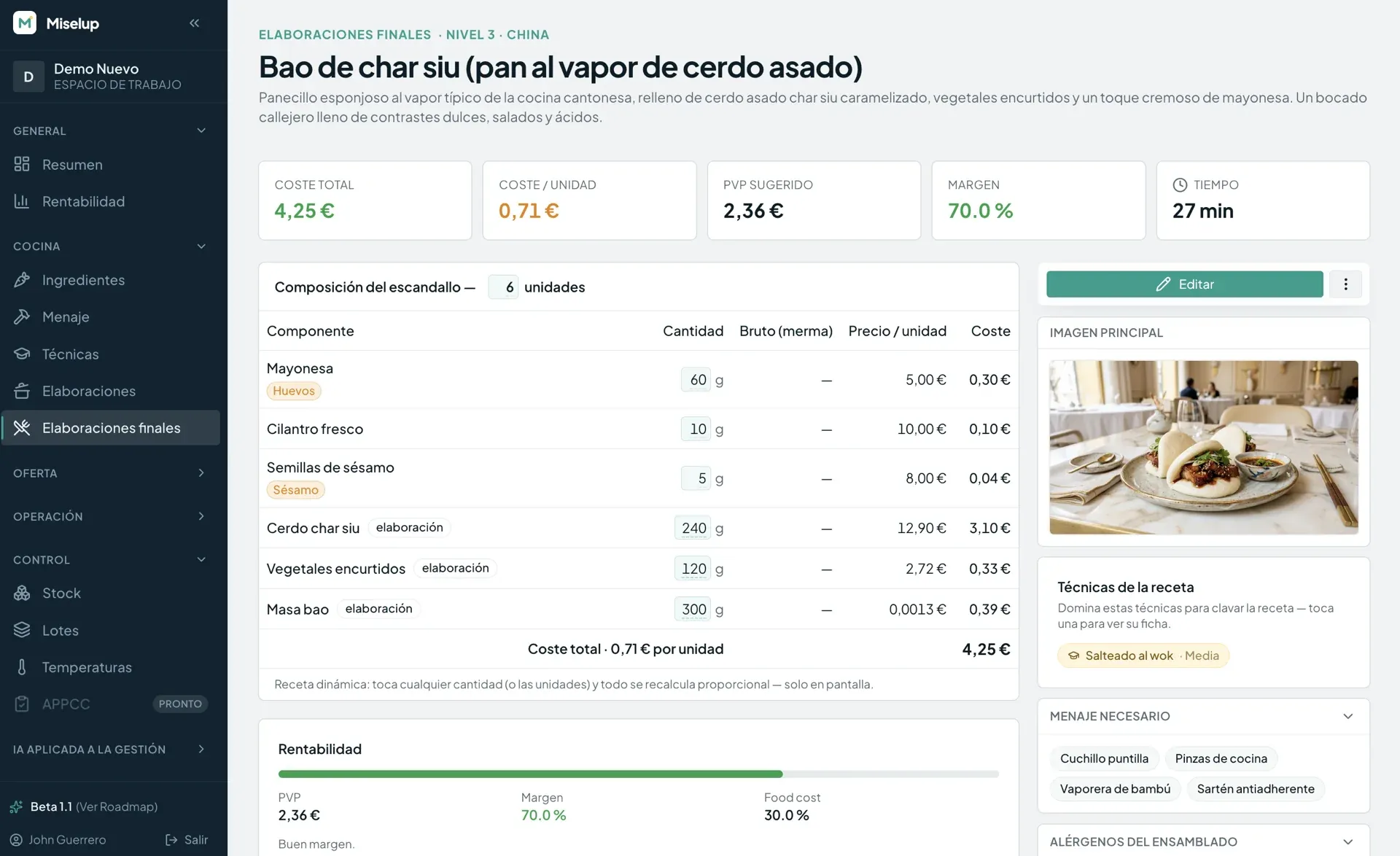
Instantly scalable recipes

A large catering order? Scale your recipe from 20 to 200 croissants with one click and get the exact shopping list.

Step by step

How to cost bakery doughs step by step

1

1. List all ingredients with precision

Note down every raw material with its purchase format (kg, liters, units) and the actual price from the latest invoice. Include even the salt, yeast, and water if it has a filtration cost.

2

2. Assign the real yield loss for each ingredient

Flour can have a 1% waste due to dust, and sourdough starter a 3% loss from sticking to the container. Dry goods (salt, sugar) usually have 0%, but fruits or nuts do lose weight when cleaned.

3

3. Calculate the total dough cost

Multiply the quantity used by the unit price (including waste) and add up all the ingredients. Then divide by the number of pieces yielded from that dough to get the cost per unit.

4

4. Incorporate proportional indirect costs

Add a percentage for oven energy, direct labor, and utensil amortization. A good rule of thumb is to add 8-12% on top of the raw material cost.

5

5. Set the selling price with the target food cost

Define the food cost percentage you want for that product family (e.g., 28% for basic bread). Divide the total cost per unit by that percentage and add the corresponding VAT (4% for basic bread, 10% for viennoiserie).

Worked example

Real-world example: costing a traditional baguette

250g baguette of common bread, with sourdough starter and long fermentation.

Ingredient Quantity Waste Cost
Bread flour 500 g 0 % €0.25
Water 300 ml 0 % €0.00
Fresh yeast 10 g 0 % €0.05
Fine salt 10 g 0 % €0.01
Active sourdough starter 100 g 0 % €0.10
Bread improver (optional) 5 g 0 % €0.03
Olive oil for kneading 5 ml 0 % €0.02
Dusting flour 10 g 100 % €0.01

Total cost

€0.41

Food cost

25 %

Suggested price

€1.68 (VAT incl.)

Margin

€1.22 per unit

By adjusting the flour quantity, the software instantly recalculates the cost, selling price, and margin while maintaining the 25% target food cost.

68 %

of bakeries don't cost all their SKUs

industry reports

32 %

average food cost in artisan bakeries

Spain market data

€0.15

loss per poorly costed baguette

profitability studies

45 %

of bakery workshops don't know the real margin per product

baker surveys

In pictures

The craft, up close

Bakeries

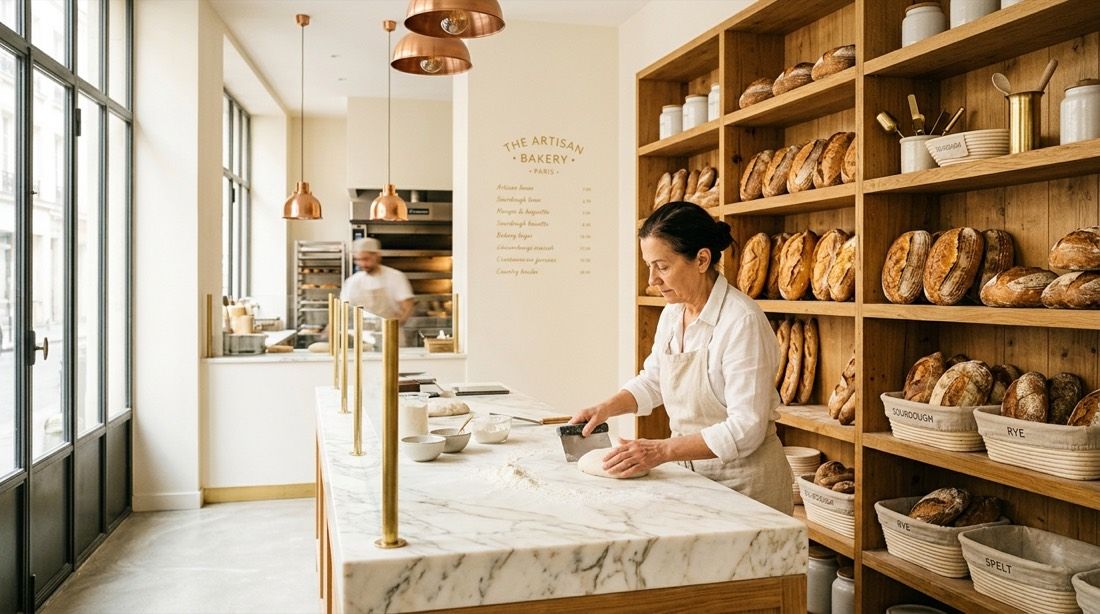
The bakehouse at first light
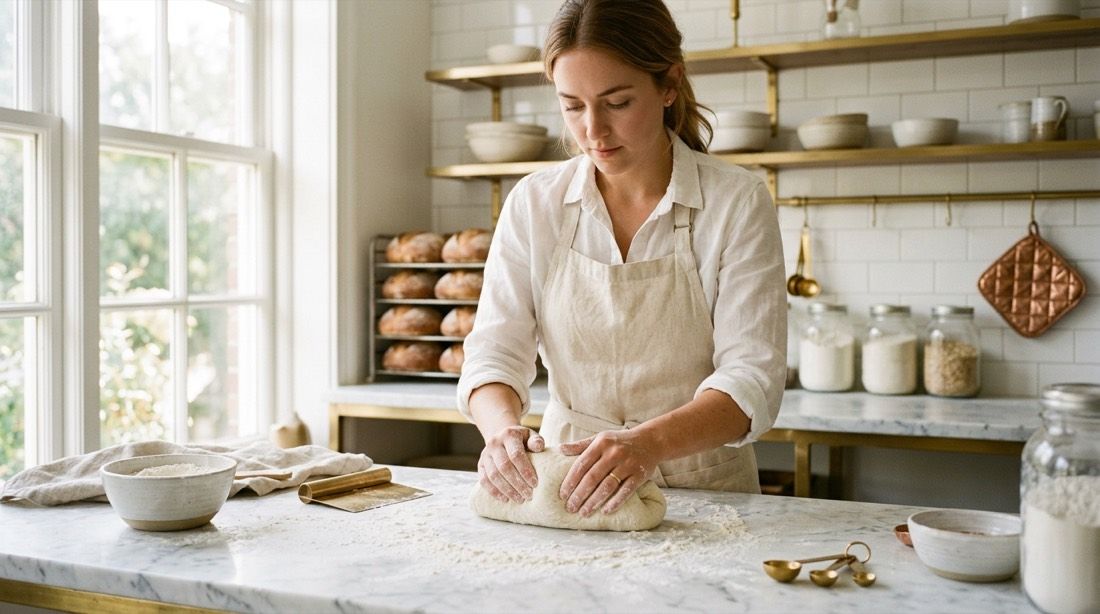
Every dough with its exact cost
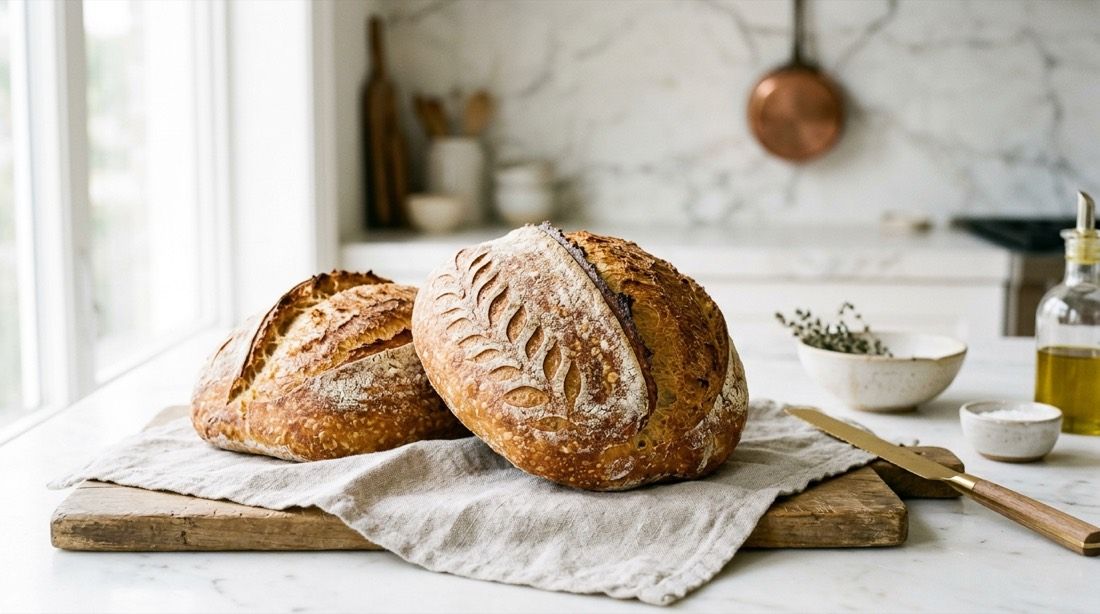
Loaves with controlled margin
Avoid these

Common costing mistakes in bakeries

Not including baking loss

A baguette loses between 10% and 15% of its weight during baking. If this isn't factored in, the cost per unit sold is unrealistic and the margin is inflated.

Forgetting indirect costs

Oven electricity, mixer water, or parchment paper all add up. A professional recipe costing prorates these so each piece absorbs its share.

Using outdated purchase prices

Flour prices fluctuate every quarter. Costing with prices from six months ago distorts the food cost and can lead to selling below the minimum margin.

Not differentiating between sourdough starters and preferments

A natural sourdough starter has a daily maintenance cost (flour, water, time). If treated as a free ingredient, the real cost of the bread is underestimated.

The niche in depth

Types of recipe costing in bakeries

Each product family requires a different approach to calculate its profitability.

Basic bread (baguettes, boules) · soon

Costing per piece from a base dough. The target food cost is usually 25-28%.

Sandwich loaves and specialty breads · soon

Includes ingredients like butter, milk, or seeds. The cost is higher and the food cost can reach 35%.

Laminated viennoiserie · soon

Croissants, pains au chocolat... Here, the butter and lamination increase the raw material cost, and the costing must reflect the yield per tray.

Sourdoughs and long-fermentation breads · soon

The maintenance cost of the culture and the longer production time must be allocated to avoid giving away margin.

Gluten-free and alternative products · soon

Expensive flours (rice, almond) and separate processes require a specific costing to avoid losing money in this range.

Professionals

What the pros who cook with numbers say

Chefs, pastry chefs, bartenders, baristas and chocolatiers who swapped spreadsheets and notebooks for Miselup.

Carlos Mendoza

Carlos Mendoza

Owner · La Mesa Restaurant

“Every recipe change used to be a mess. With Miselup, if I bump the sirloin by 20 g, I see the real cost instantly. It's amazing—I no longer lose margin without noticing. Now costing is quick and safe, no calculator needed.”

Diego Valdés

Diego Valdés

Head Bartender · Nébula Bar

“My team sees the production sheet without any cost breakdown. That way they measure every cocktail precisely—no more over- or under-pouring. The recipe stays clear, and the numbers stay for my eyes only.”

Mateo Herrera

Mateo Herrera

Owner · Café Origen

“Swap whole milk for oat milk and Miselup updates allergens on the menu automatically. Every new season with sandwiches and pastries used to be a nightmare. Now my digital menu is always up to date and my celiac customers are grateful.”

Carlos Mendoza

Carlos Mendoza

Owner · La Mesa Restaurant

“Every recipe change used to be a mess. With Miselup, if I bump the sirloin by 20 g, I see the real cost instantly. It's amazing—I no longer lose margin without noticing. Now costing is quick and safe, no calculator needed.”

Diego Valdés

Diego Valdés

Head Bartender · Nébula Bar

“My team sees the production sheet without any cost breakdown. That way they measure every cocktail precisely—no more over- or under-pouring. The recipe stays clear, and the numbers stay for my eyes only.”

Mateo Herrera

Mateo Herrera

Owner · Café Origen

“Swap whole milk for oat milk and Miselup updates allergens on the menu automatically. Every new season with sandwiches and pastries used to be a nightmare. Now my digital menu is always up to date and my celiac customers are grateful.”

Carlos Mendoza

Carlos Mendoza

Owner · La Mesa Restaurant

“Every recipe change used to be a mess. With Miselup, if I bump the sirloin by 20 g, I see the real cost instantly. It's amazing—I no longer lose margin without noticing. Now costing is quick and safe, no calculator needed.”

Diego Valdés

Diego Valdés

Head Bartender · Nébula Bar

“My team sees the production sheet without any cost breakdown. That way they measure every cocktail precisely—no more over- or under-pouring. The recipe stays clear, and the numbers stay for my eyes only.”

Mateo Herrera

Mateo Herrera

Owner · Café Origen

“Swap whole milk for oat milk and Miselup updates allergens on the menu automatically. Every new season with sandwiches and pastries used to be a nightmare. Now my digital menu is always up to date and my celiac customers are grateful.”

Lucía Ramírez

Lucía Ramírez

Pastry Chef · Dulce Masa Bakery

“I always jot down recipes in my test notebook. I snap a photo with Miselup, and the AI turns that page into a technical sheet with exact ingredients and weights. It's magic—saves me hours of copying data and eliminates errors completely.”

Ana Solís

Ana Solís

Catering Director · Sol y Sombra Events

“For each wedding menu, I instantly see if the proposal is green or red. The margin traffic light tells me if I'm over cost before sending the quote. I negotiate with data, not blind. And I sleep easy once every event is locked in.”

Isabel Vega

Isabel Vega

Artisan Chocolatier · Bombones Amargo

“For a big order of 300 boxes, I enter the base recipe for 10 chocolates and Miselup scales everything: grams, time, cost. No neurotic math. From small workshop to large order, the scaling is spot on and I don't waste a single gram of cocoa.”

Lucía Ramírez

Lucía Ramírez

Pastry Chef · Dulce Masa Bakery

“I always jot down recipes in my test notebook. I snap a photo with Miselup, and the AI turns that page into a technical sheet with exact ingredients and weights. It's magic—saves me hours of copying data and eliminates errors completely.”

Ana Solís

Ana Solís

Catering Director · Sol y Sombra Events

“For each wedding menu, I instantly see if the proposal is green or red. The margin traffic light tells me if I'm over cost before sending the quote. I negotiate with data, not blind. And I sleep easy once every event is locked in.”

Isabel Vega

Isabel Vega

Artisan Chocolatier · Bombones Amargo

“For a big order of 300 boxes, I enter the base recipe for 10 chocolates and Miselup scales everything: grams, time, cost. No neurotic math. From small workshop to large order, the scaling is spot on and I don't waste a single gram of cocoa.”

Lucía Ramírez

Lucía Ramírez

Pastry Chef · Dulce Masa Bakery

“I always jot down recipes in my test notebook. I snap a photo with Miselup, and the AI turns that page into a technical sheet with exact ingredients and weights. It's magic—saves me hours of copying data and eliminates errors completely.”

Ana Solís

Ana Solís

Catering Director · Sol y Sombra Events

“For each wedding menu, I instantly see if the proposal is green or red. The margin traffic light tells me if I'm over cost before sending the quote. I negotiate with data, not blind. And I sleep easy once every event is locked in.”

Isabel Vega

Isabel Vega

Artisan Chocolatier · Bombones Amargo

“For a big order of 300 boxes, I enter the base recipe for 10 chocolates and Miselup scales everything: grams, time, cost. No neurotic math. From small workshop to large order, the scaling is spot on and I don't waste a single gram of cocoa.”

FAQ

Frequently asked questions

Bakeries

What is the ideal food cost for a bakery?
It depends on the product type: for basic bread, 25-28% is recommended, while for viennoiserie and specialty breads, it can range between 30% and 35% due to the higher cost of raw materials. The key is to set a target per family and review it monthly.
How do you calculate the selling price of a baguette?
Divide the total cost of the baguette (ingredients + indirect costs) by the target food cost in decimal form (e.g., 0.28). Add the corresponding VAT to the result (4% for basic bread). If the cost is €0.41 and you want a 25% food cost, the selling price before VAT is €1.64, and with VAT it's €1.71.
What yield loss is applied to flour in a bakery?
Flour has a minimal loss, typically 1% due to dust lost during kneading and dusting. In professional costing, this percentage is considered to avoid underestimating actual consumption.
Is it necessary to cost sourdough starters?
Yes, because maintaining a sourdough starter consumes flour and water daily. If its cost isn't calculated and allocated to the breads that use it, you're giving away part of your margin.
How often should recipe costing be updated in a bakery?
At a minimum, every time the price of a main ingredient changes (flour, butter) or when introducing a new recipe. With digital software, the update is immediate when you modify the cost of the raw material.
Is it worth using costing software in a small bakery?
Yes, because it prevents manual calculation errors and allows you to see the margin of each SKU instantly. It also makes it easy to adjust prices when flour goes up without having to redo all the math by hand.
John Guerrero
About the author

John Guerrero

Gastronomy consultant · Founder of ChefBusiness and Miselup

15+ years advising restaurants, bakeries and hospitality businesses across Spain and Latam. Creator of ChefBusiness, AI Chef Pro and Miselup: the digital mise en place his clients use to control food cost to the cent.

Ready to stop losing money on every plate?

Set up your recipe book in an afternoon and try Free forever. No credit card, no commitment.