✨ Early Bird 40% off your first 3 months with code · 40% off · 3 months · EARLYBIRD
Restaurants & fine dining

Recipe Costing for Restaurants: Master Your Food Cost

Control the real cost of every fine dining dish with dynamic spec sheets. Adjust weights and prices instantly to maximize profitability.

Free forever No credit card Your recipe book in an afternoon

Spec sheet · dynamic

Red Tuna Tataki with Sesame Emulsion

4 servings
Food cost 28 %
  • Red tuna loin (sashimi grade) 600 g 18,50 €
  • Black and white sesame seeds 80 g 1,20 €
  • Low-sodium soy sauce 50 ml 0,45 €
  • Extra virgin sesame oil 30 ml 0,60 €
  • Fresh ginger 20 g 0,30 €
  • Fresh chives 15 g 0,25 €

Cost / unit: 5,33 €

21,30 €
The why

Recipe costing in restaurants & fine dining

In a restaurant, recipe costing is the detailed calculation of each dish's cost based on its ingredients, waste, and yields. Without it, a fine dining establishment can lose between 8% and 15% of its annual revenue through invisible leaks, according to Spanish hospitality management data: from poorly adjusted portions to suppliers raising prices without the chef catching it in time.

When your recipe costing is kept alive and digital, every item on the menu shows its real-time margin instantly. You can decide if a starter with a 42% food cost still deserves a spot on the menu, tweak gram weights before printing the new menu, or simulate the impact of a 5% increase in fish cost without touching a calculator.

Why Miselup

Miselup, built for restaurants & fine dining

Recipe costing software for restaurants. Calculate real food cost per dish, automatic allergens, and AI-powered spec sheets. Try Miselup.

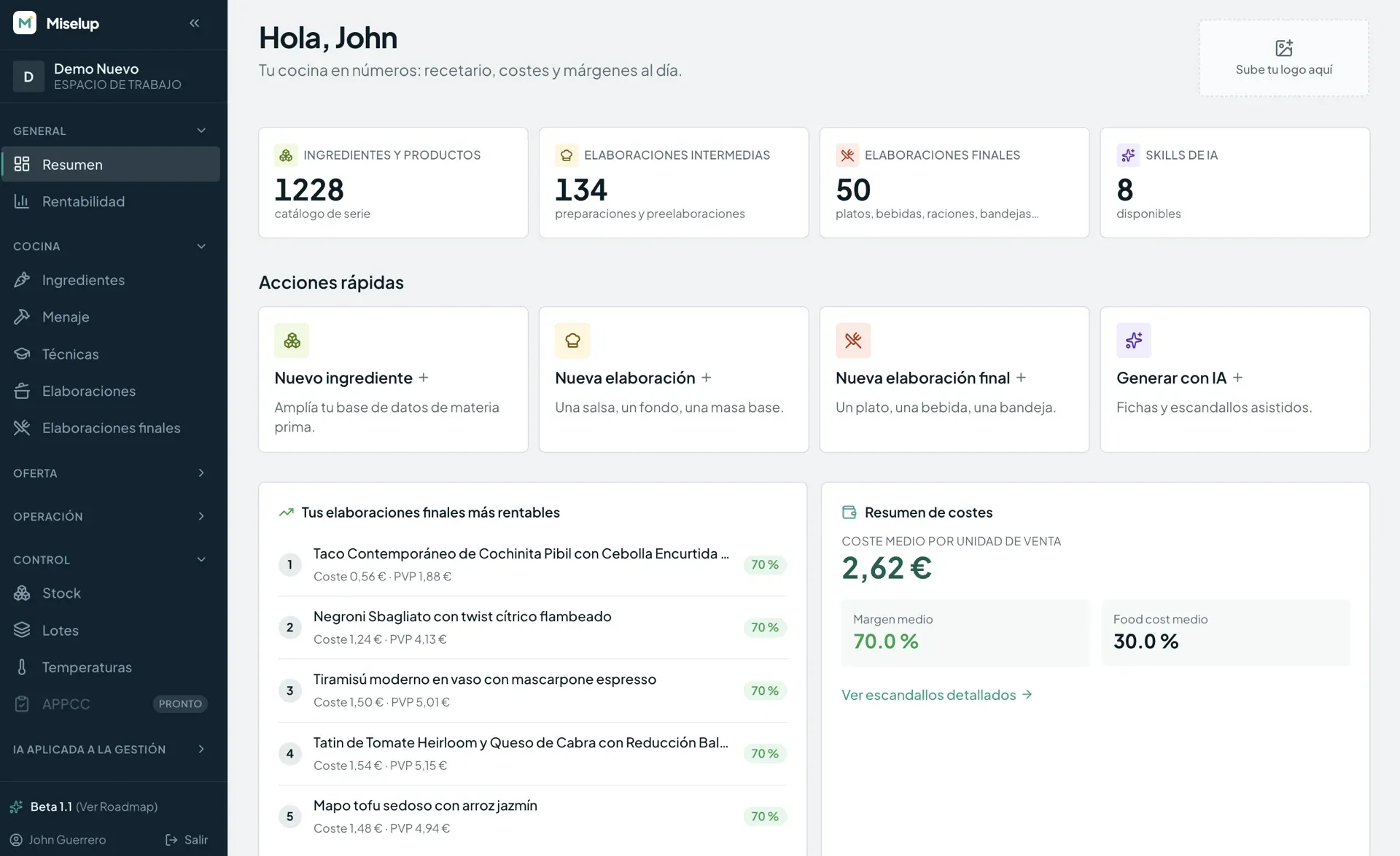
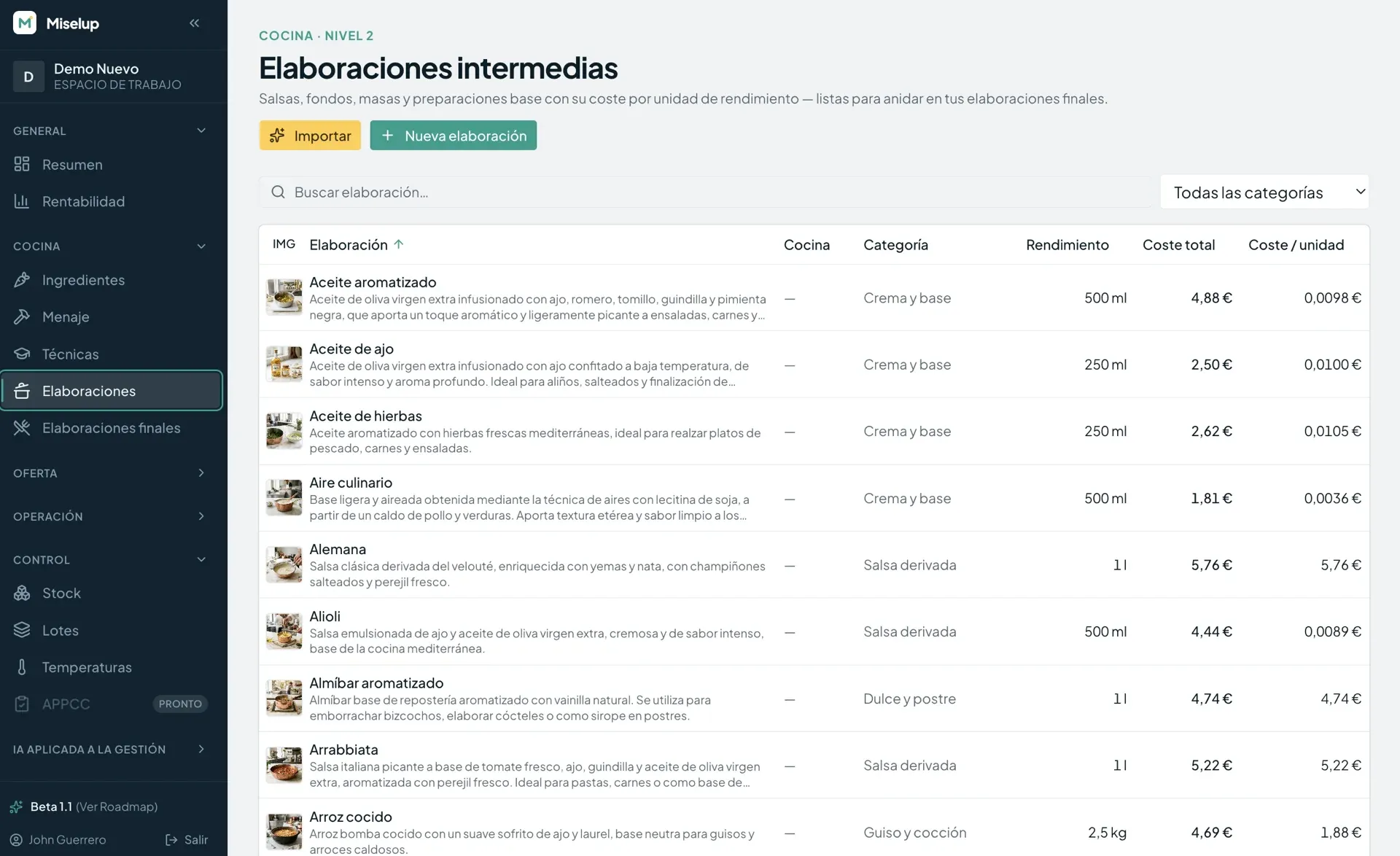
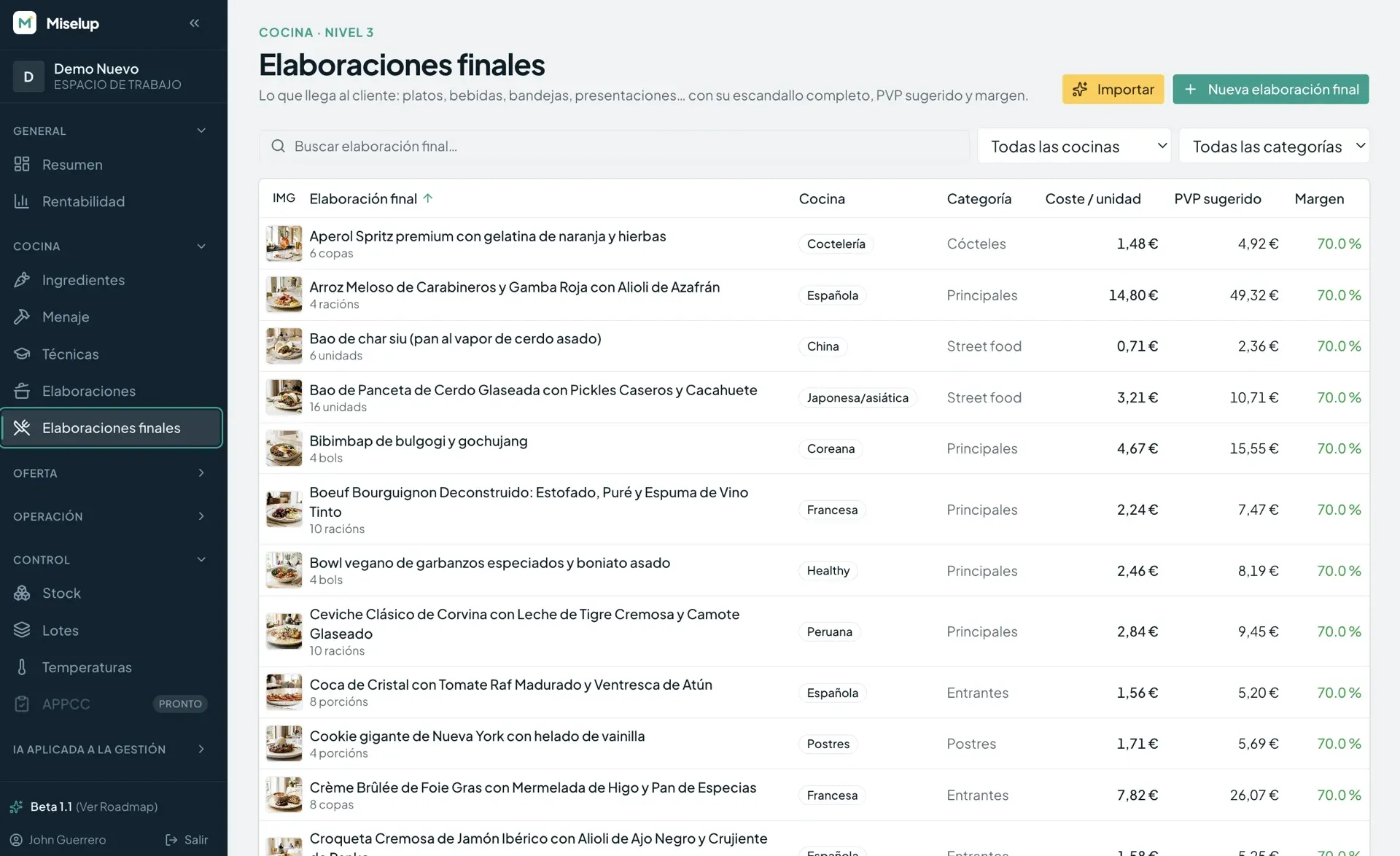
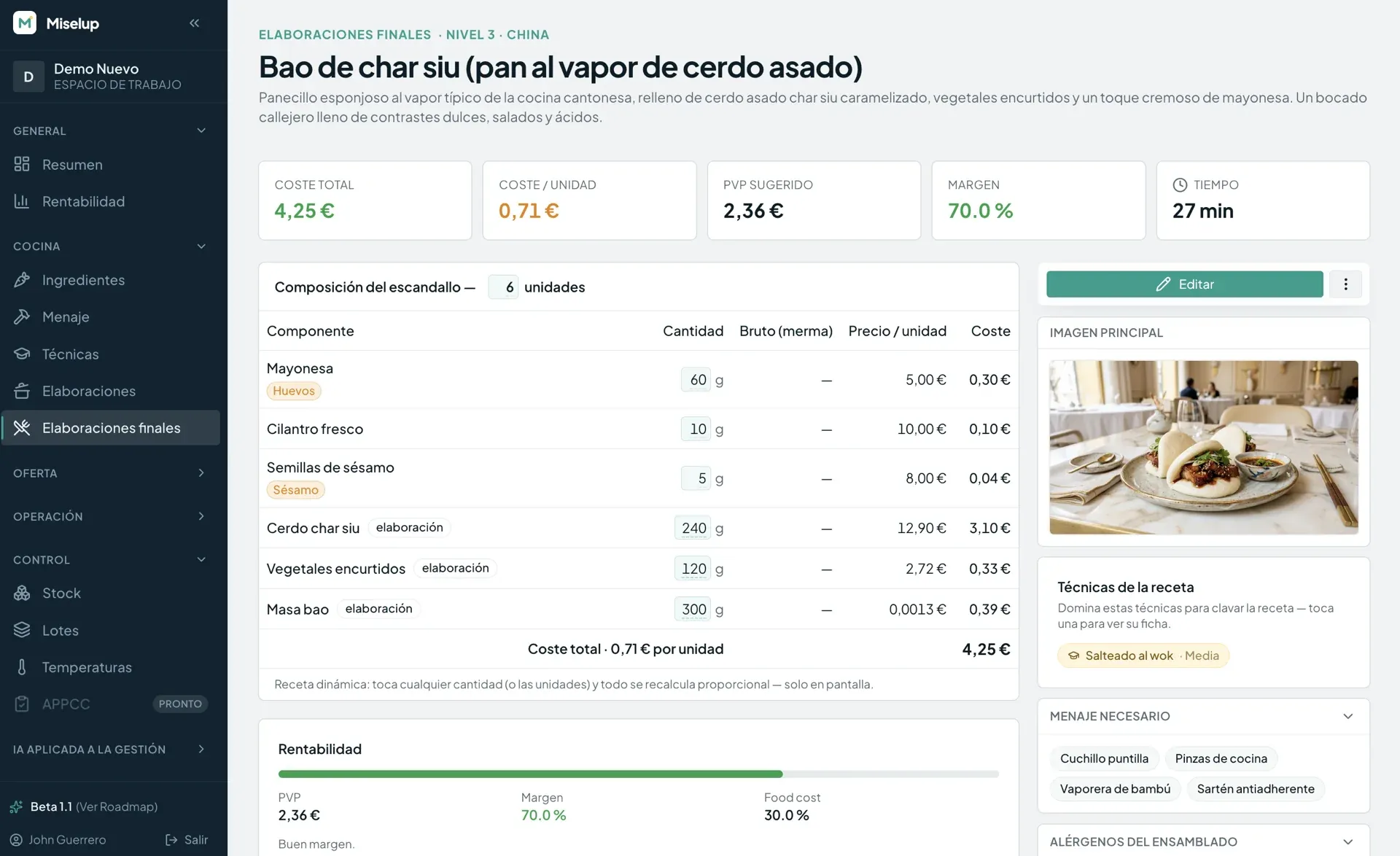
100% Dynamic Recipe Costing

Modify an ingredient quantity and instantly recalculate the cost, selling price, and margin of the entire dish.

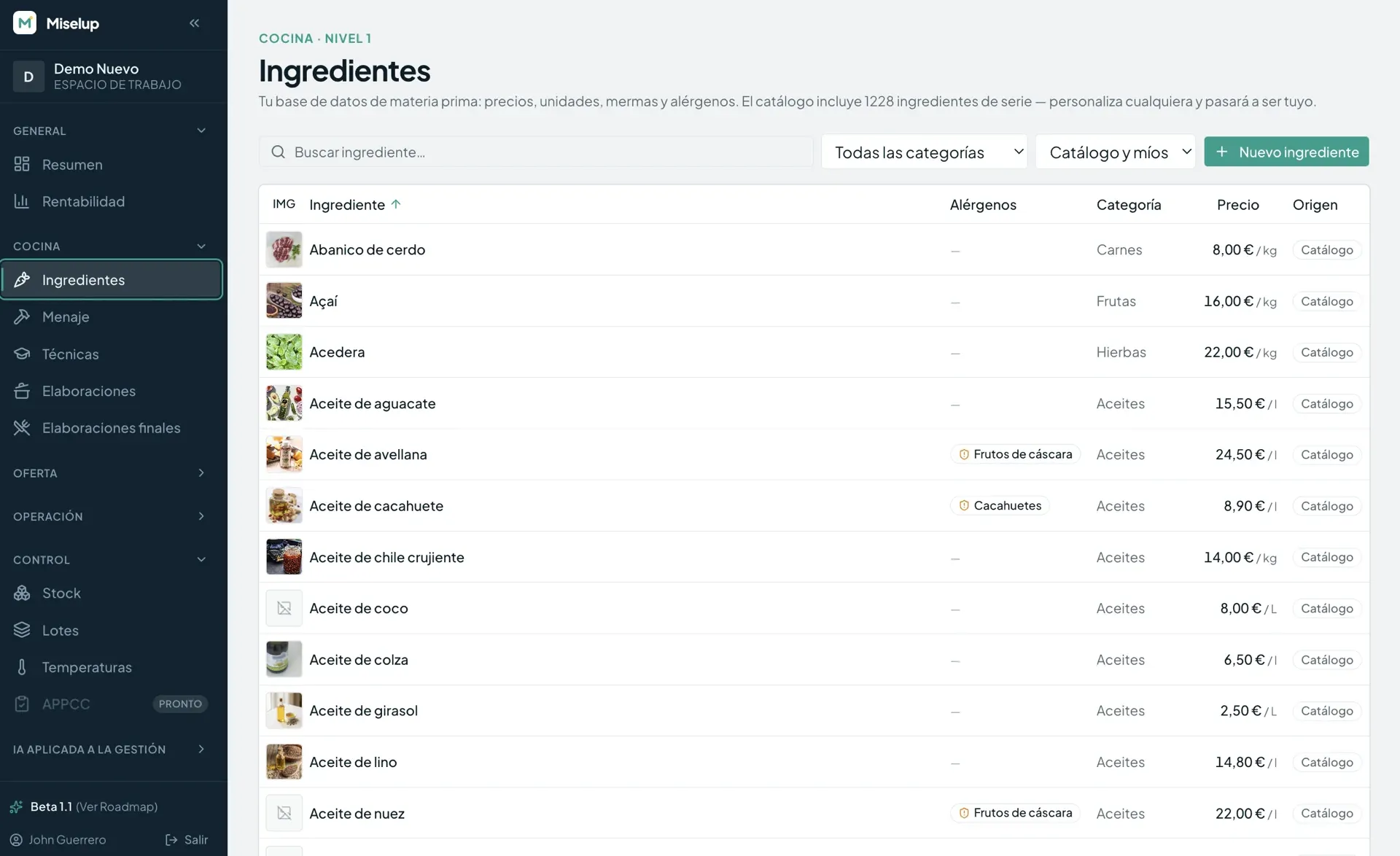
AI-Powered Import

Scan receipts, photos, or PDFs from your suppliers and the AI creates the spec sheet with all ingredients and their costs.

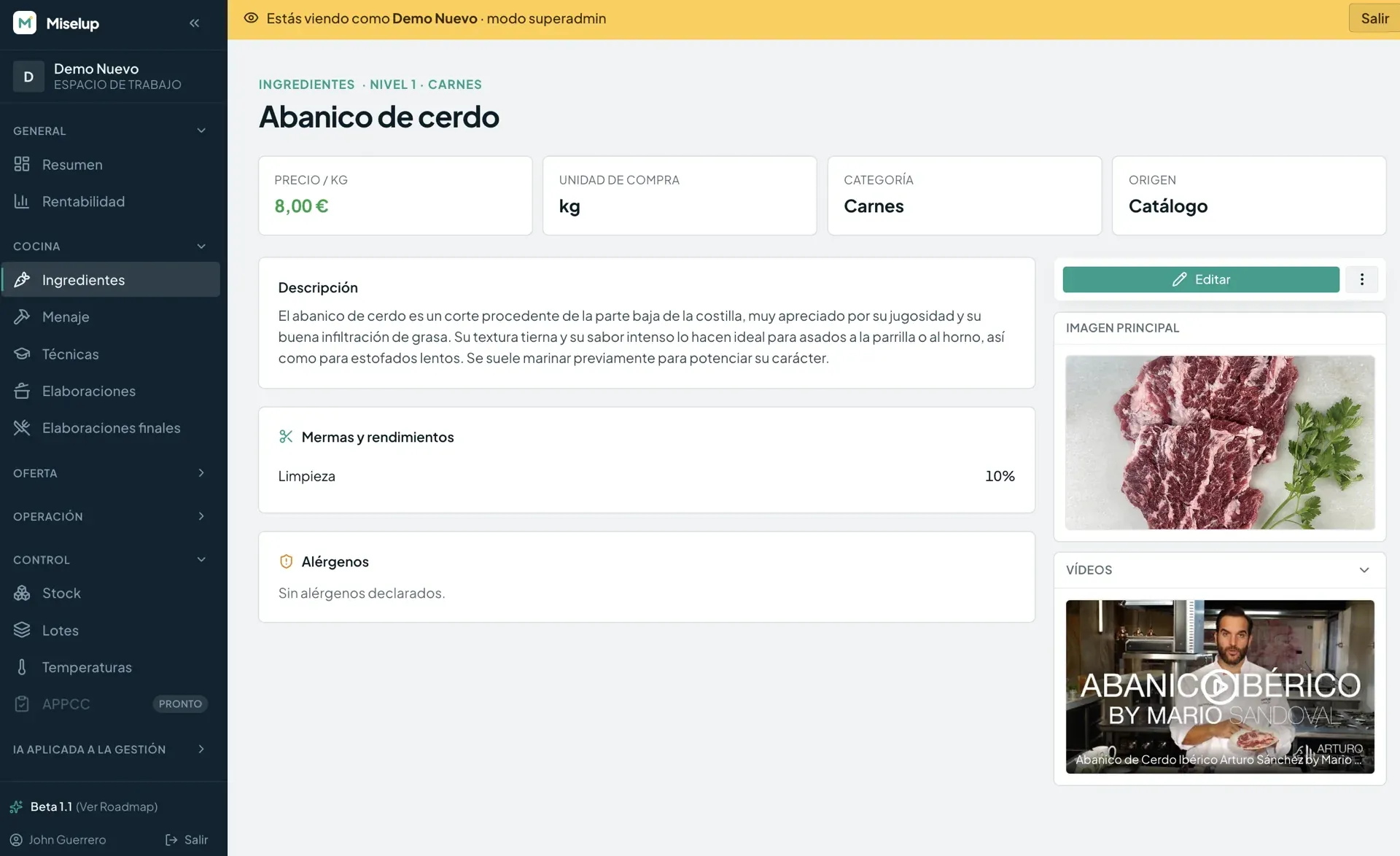
Allergen Management & Scaling

Automatically declares allergens and scales production from one serving to 50 or 100 covers without errors.

Step by step

How to cost a fine dining dish step by step

1

Break down the recipe into ingredients and purchase units

List each ingredient with its purchase format (kg, piece, L), the actual price from the latest invoice, and the net quantity you use in the recipe, already peeled or cleaned. Don't use estimates: weigh and record.

2

Apply the actual yield loss for each ingredient

Weigh the waste after cleaning, deboning, or reducing. If a 200 g hake loin loses 30 g between skin and bones, the yield loss is 15%. That waste translates into a higher cost per net gram than the raw purchase price.

3

Calculate the cost per ingredient and add it up

Multiply the net quantity used by the net unit cost (after yield loss). Add all costs to get the total base recipe cost. Include low-cost ingredients like salt or oil if used in measurable quantities.

4

Add indirect costs and the kitchen waste factor

Incorporate a percentage for seasonings, film wrap, paper, and small losses during plating (0.5-1.5% of total cost). In fine dining, the daily cost of garnishes and mother sauces can also be prorated.

5

Determine the selling price with the target food cost and VAT

Divide the total cost by the target food cost (e.g., 28%) to get the pre-tax selling price. Multiply by 1.10 to add the 10% VAT and round to a psychological price point. Verify that the gross margin covers overhead costs.

Worked example

Real example: costing a beef tenderloin steak tartare with cured egg yolk

Calculation for a 180 g tartare serving, with toast points and micro green salad garnish.

Ingredient Quantity Waste Cost
Beef tenderloin (cleaned) 150 g 10 % 2.85 €
Cured egg yolk (1 unit) 1 unit 5 % 0.35 €
Capers in brine 10 g 0 % 0.08 €
Sweet and sour pickle 15 g 0 % 0.06 €
Dijon mustard 5 g 0 % 0.04 €
Extra virgin olive oil 10 ml 0 % 0.12 €
Crystal bread for toast points 40 g 5 % 0.18 €
Micro greens and dressing 25 g 2 % 0.22 €

Total cost

3.90 €

Food cost

28 %

Suggested price

15.30 € (VAT incl.)

Margin

10.01 € per unit

If you adjust the tenderloin amount to 130 g, the cost drops to 3.42 € and the food cost to 24.6%, allowing for a more competitive selling price of 13.50 €.

28 %

Recommended average food cost in fine dining

industry reports

62 %

Average gross margin per dish in gastronomic restaurants

Spanish market data

14 %

Annual margin loss from not updating recipe costs quarterly

hospitality management studies

3.2

Times a menu is reviewed per year in restaurants using digital recipe costing

executive chef surveys

In pictures

The craft, up close

Restaurants & fine dining

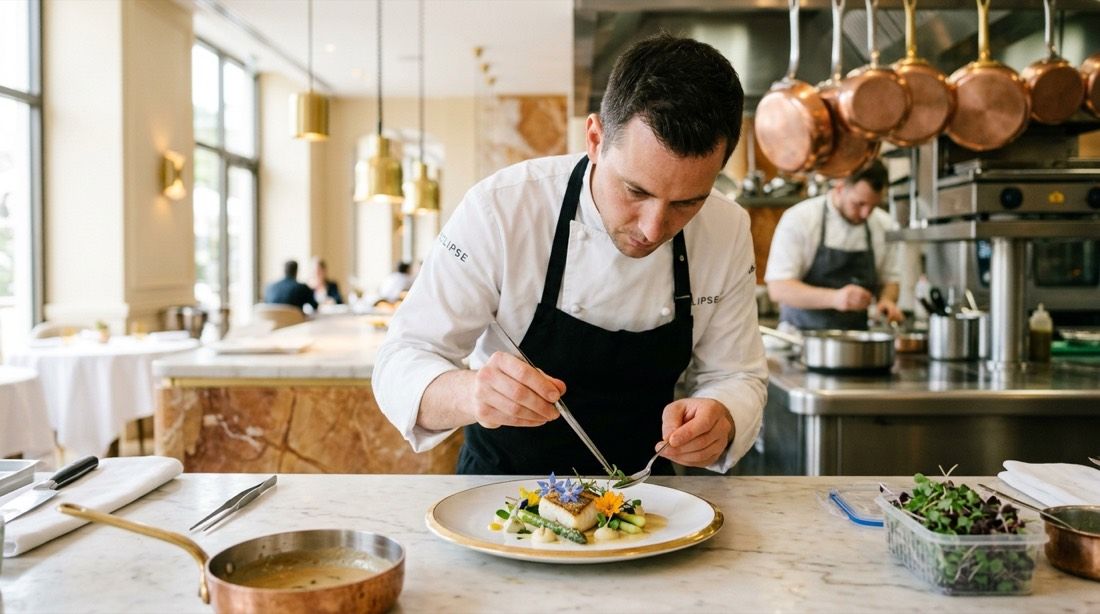
The pass, where costing becomes a dish
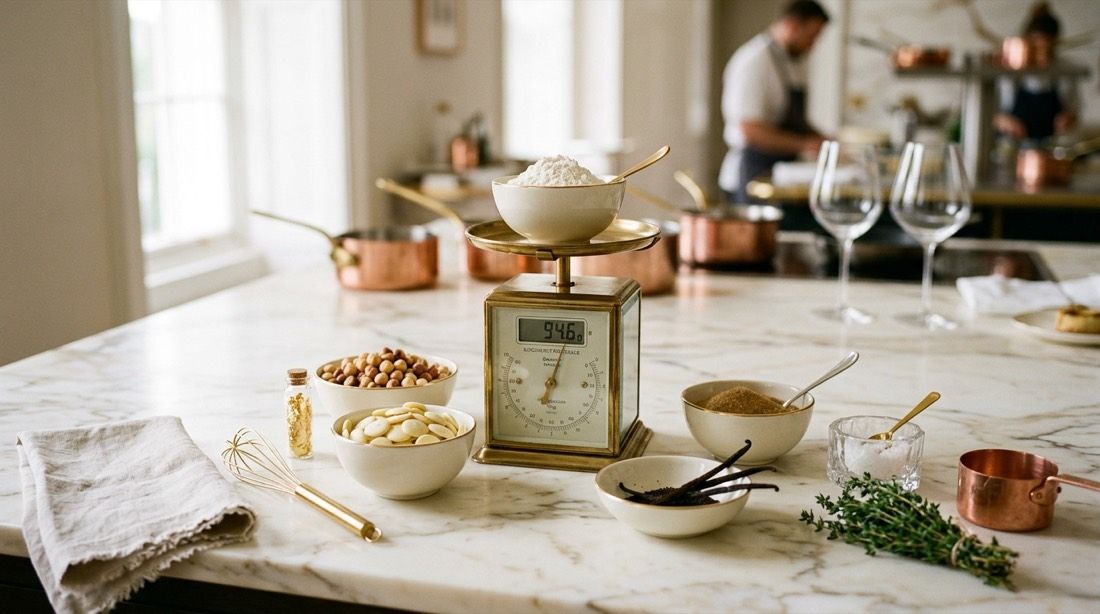
Mise en place weighed to the gram
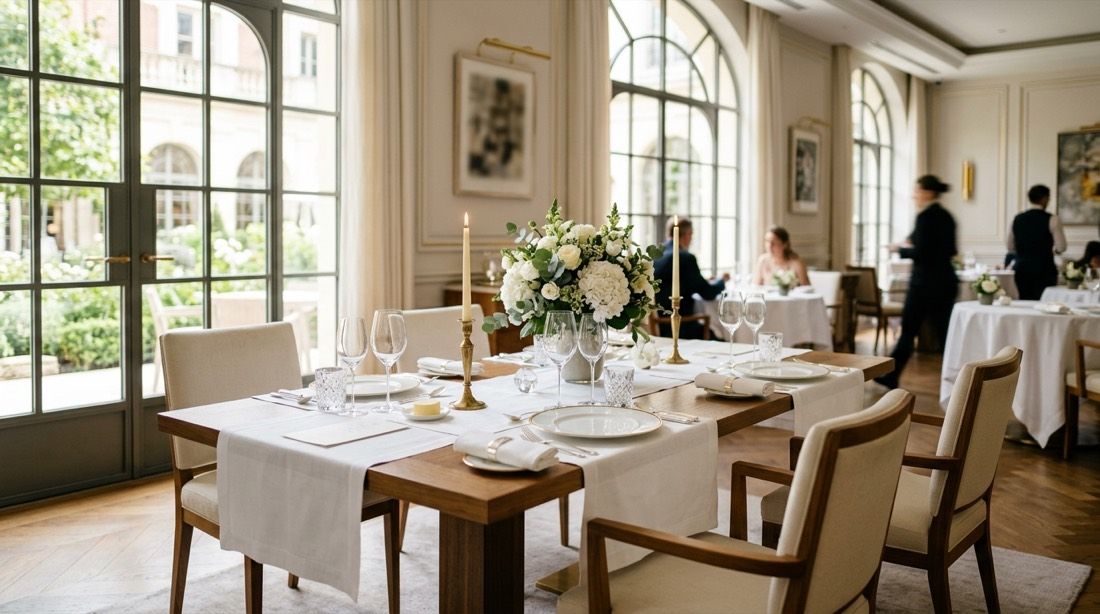
A dining room set for a profitable service
Avoid these

Common mistakes when costing in restaurants

Confusing purchase price with net cost

Forgetting yield loss when cleaning fish, meat, or vegetables inflates fictional margins. A turbot at 12 €/kg can actually cost 18 €/kg net after removing head, skin, and bones.

Not including garnishes and sauces in the recipe cost

A meat stock or a reduced sauce can account for up to 8% of the total dish cost. If not prorated, the actual food cost of the main component skyrockets without the chef noticing.

Keeping the same recipe cost the entire season

The price of sea bream at Christmas or artichokes in winter varies by more than 30%. Using a fixed annual cost distorts profitability and forces you to raise prices at the wrong time.

Setting selling price based only on intuition or by copying competitors

Without a target food cost per dish (e.g., 25-30%), you end up with menu stars that lose money and cheap dishes that don't compensate. Recipe costing gives you the price floor before you decide the ceiling based on perceived value.

The niche in depth

Types of menu costing in restaurants

Each service format demands a different cost approach:

Per-dish recipe costing · soon

The classic method: costs out each individual preparation to set the menu selling price. Ideal for fine dining with highly technical recipes.

Tasting menu costing · soon

Calculates the total cost of an 8-12 course tasting menu, including amuse-bouches and petit fours, to ensure an overall food cost of 28-32%.

Event and banquet costing · soon

Based on cost per cover, with standardized servings and a 5% safety margin to avoid stock shortages.

Cocktail and beverage costing · soon

Similar to food costing but measures milliliters, ice, and garnishes. A 7-ingredient cocktail can hit an 18-22% food cost.

Wine list costing · soon

Applies a markup factor to the bottle cost (2.5 to 3.5 times) to cover service, glassware, and corkage-related yield loss.

Professionals

What the pros who cook with numbers say

Chefs, pastry chefs, bartenders, baristas and chocolatiers who swapped spreadsheets and notebooks for Miselup.

Carlos Mendoza

Carlos Mendoza

Owner · La Mesa Restaurant

“Every recipe change used to be a mess. With Miselup, if I bump the sirloin by 20 g, I see the real cost instantly. It's amazing—I no longer lose margin without noticing. Now costing is quick and safe, no calculator needed.”

Diego Valdés

Diego Valdés

Head Bartender · Nébula Bar

“My team sees the production sheet without any cost breakdown. That way they measure every cocktail precisely—no more over- or under-pouring. The recipe stays clear, and the numbers stay for my eyes only.”

Mateo Herrera

Mateo Herrera

Owner · Café Origen

“Swap whole milk for oat milk and Miselup updates allergens on the menu automatically. Every new season with sandwiches and pastries used to be a nightmare. Now my digital menu is always up to date and my celiac customers are grateful.”

Carlos Mendoza

Carlos Mendoza

Owner · La Mesa Restaurant

“Every recipe change used to be a mess. With Miselup, if I bump the sirloin by 20 g, I see the real cost instantly. It's amazing—I no longer lose margin without noticing. Now costing is quick and safe, no calculator needed.”

Diego Valdés

Diego Valdés

Head Bartender · Nébula Bar

“My team sees the production sheet without any cost breakdown. That way they measure every cocktail precisely—no more over- or under-pouring. The recipe stays clear, and the numbers stay for my eyes only.”

Mateo Herrera

Mateo Herrera

Owner · Café Origen

“Swap whole milk for oat milk and Miselup updates allergens on the menu automatically. Every new season with sandwiches and pastries used to be a nightmare. Now my digital menu is always up to date and my celiac customers are grateful.”

Carlos Mendoza

Carlos Mendoza

Owner · La Mesa Restaurant

“Every recipe change used to be a mess. With Miselup, if I bump the sirloin by 20 g, I see the real cost instantly. It's amazing—I no longer lose margin without noticing. Now costing is quick and safe, no calculator needed.”

Diego Valdés

Diego Valdés

Head Bartender · Nébula Bar

“My team sees the production sheet without any cost breakdown. That way they measure every cocktail precisely—no more over- or under-pouring. The recipe stays clear, and the numbers stay for my eyes only.”

Mateo Herrera

Mateo Herrera

Owner · Café Origen

“Swap whole milk for oat milk and Miselup updates allergens on the menu automatically. Every new season with sandwiches and pastries used to be a nightmare. Now my digital menu is always up to date and my celiac customers are grateful.”

Lucía Ramírez

Lucía Ramírez

Pastry Chef · Dulce Masa Bakery

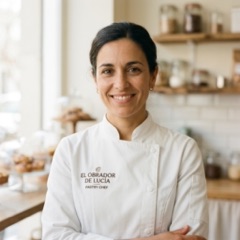
“I always jot down recipes in my test notebook. I snap a photo with Miselup, and the AI turns that page into a technical sheet with exact ingredients and weights. It's magic—saves me hours of copying data and eliminates errors completely.”

Ana Solís

Ana Solís

Catering Director · Sol y Sombra Events

“For each wedding menu, I instantly see if the proposal is green or red. The margin traffic light tells me if I'm over cost before sending the quote. I negotiate with data, not blind. And I sleep easy once every event is locked in.”

Isabel Vega

Isabel Vega

Artisan Chocolatier · Bombones Amargo

“For a big order of 300 boxes, I enter the base recipe for 10 chocolates and Miselup scales everything: grams, time, cost. No neurotic math. From small workshop to large order, the scaling is spot on and I don't waste a single gram of cocoa.”

Lucía Ramírez

Lucía Ramírez

Pastry Chef · Dulce Masa Bakery

“I always jot down recipes in my test notebook. I snap a photo with Miselup, and the AI turns that page into a technical sheet with exact ingredients and weights. It's magic—saves me hours of copying data and eliminates errors completely.”

Ana Solís

Ana Solís

Catering Director · Sol y Sombra Events

“For each wedding menu, I instantly see if the proposal is green or red. The margin traffic light tells me if I'm over cost before sending the quote. I negotiate with data, not blind. And I sleep easy once every event is locked in.”

Isabel Vega

Isabel Vega

Artisan Chocolatier · Bombones Amargo

“For a big order of 300 boxes, I enter the base recipe for 10 chocolates and Miselup scales everything: grams, time, cost. No neurotic math. From small workshop to large order, the scaling is spot on and I don't waste a single gram of cocoa.”

Lucía Ramírez

Lucía Ramírez

Pastry Chef · Dulce Masa Bakery

“I always jot down recipes in my test notebook. I snap a photo with Miselup, and the AI turns that page into a technical sheet with exact ingredients and weights. It's magic—saves me hours of copying data and eliminates errors completely.”

Ana Solís

Ana Solís

Catering Director · Sol y Sombra Events

“For each wedding menu, I instantly see if the proposal is green or red. The margin traffic light tells me if I'm over cost before sending the quote. I negotiate with data, not blind. And I sleep easy once every event is locked in.”

Isabel Vega

Isabel Vega

Artisan Chocolatier · Bombones Amargo

“For a big order of 300 boxes, I enter the base recipe for 10 chocolates and Miselup scales everything: grams, time, cost. No neurotic math. From small workshop to large order, the scaling is spot on and I don't waste a single gram of cocoa.”

FAQ

Frequently asked questions

Restaurants & fine dining

What is the ideal food cost for a fine dining restaurant?
In Spain, the target food cost for fine dining sits between 25% and 30%. Below 25% can undermine perceived quality; above 32%, the gross margin becomes dangerously tight to cover labor and rent.
How do you calculate a dish's selling price from the recipe cost?
Divide the total dish cost by the target food cost (e.g., 0.28) to get the pre-VAT price. Then add the 10% VAT and round. If the cost is 4.50 € and you're aiming for 28%, the selling price without VAT is 16.07 €, and with VAT 17.68 €, which you can adjust to 17.90 €.
How often should recipe costs be updated in a restaurant?
Ideally, review them every time a supplier or a relevant price changes, and at least once a month. With recipe costing software, the update is immediate when an invoice is uploaded, preventing gaps that eat into your margin.
What is the difference between a recipe cost sheet and a kitchen spec sheet?
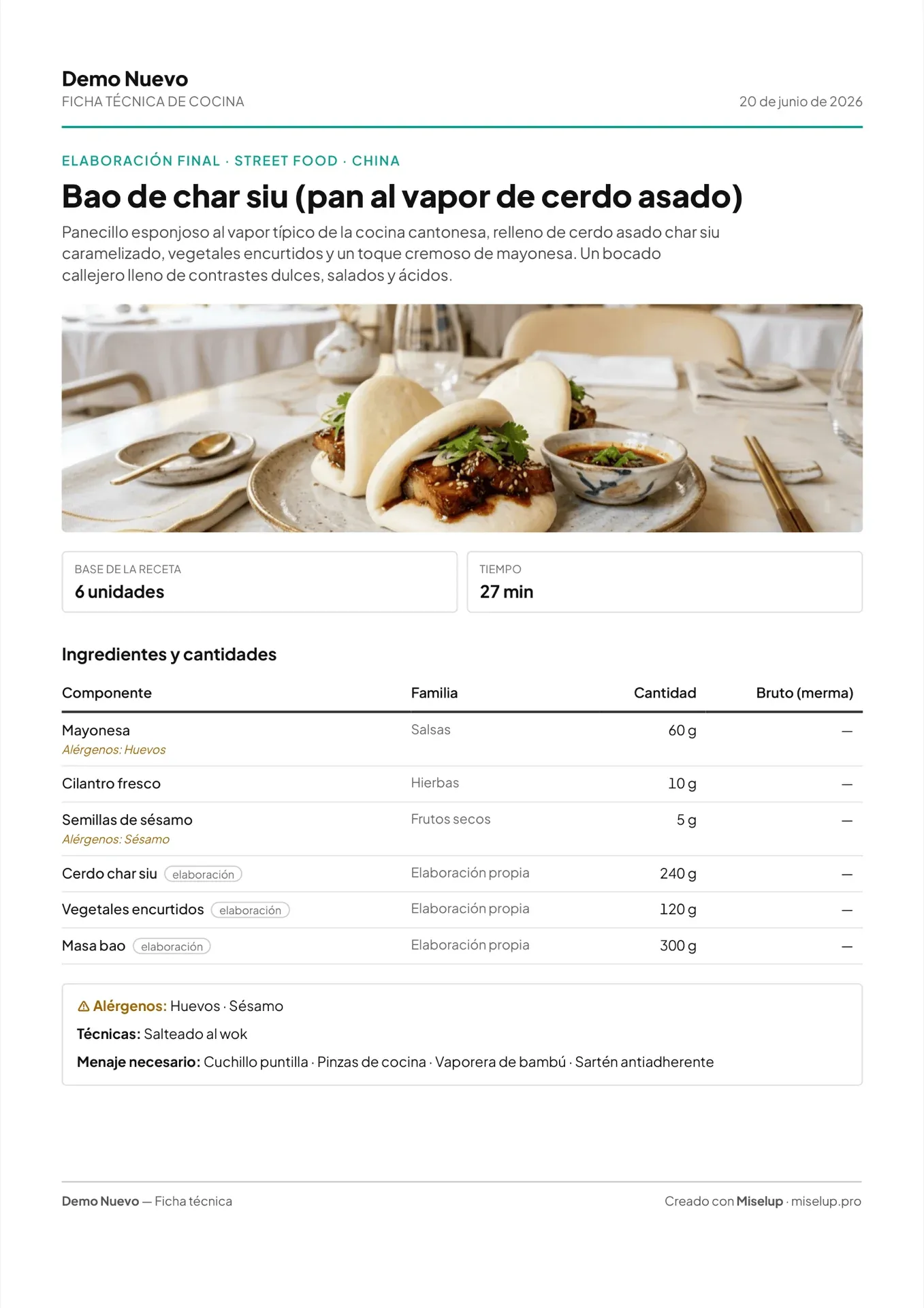
The spec sheet includes the recipe cost plus the dish description, preparation method, plating instructions, and sometimes a photo. The cost breakdown is the financial part; the spec sheet is the complete production document.
Is it mandatory to have recipe cost sheets in hospitality?
There is no law that explicitly requires it, but keeping accounting records that reflect real costs is mandatory. Tax authorities can request margin traceability, and an updated recipe cost sheet is the best defense during an inspection.
How does yield loss affect the food cost of a meat dish?
A 15% yield loss on a tenderloin at 10 €/kg raises the net cost to 11.76 €/kg. If unaccounted for, the dish's real food cost will be 1.5 points higher than calculated, which over 200 services can mean more than 300 € in monthly loss.
John Guerrero
About the author

John Guerrero

Gastronomy consultant · Founder of ChefBusiness and Miselup

15+ years advising restaurants, bakeries and hospitality businesses across Spain and Latam. Creator of ChefBusiness, AI Chef Pro and Miselup: the digital mise en place his clients use to control food cost to the cent.

Ready to stop losing money on every plate?

Set up your recipe book in an afternoon and try Free forever. No credit card, no commitment.