✨ Early Bird 40% off your first 3 months with code · 40% off · 3 months · EARLYBIRD
Chocolateries

Artisan chocolate & bonbon recipe costing that updates margins instantly

From cocoa bean to filled bonbon: master the cost traceability of your chocolate workshop. Fine-tune couvertures, fruit purées and decorations knowing exactly how much each piece and each bar costs you.

Free forever No credit card Your recipe book in an afternoon

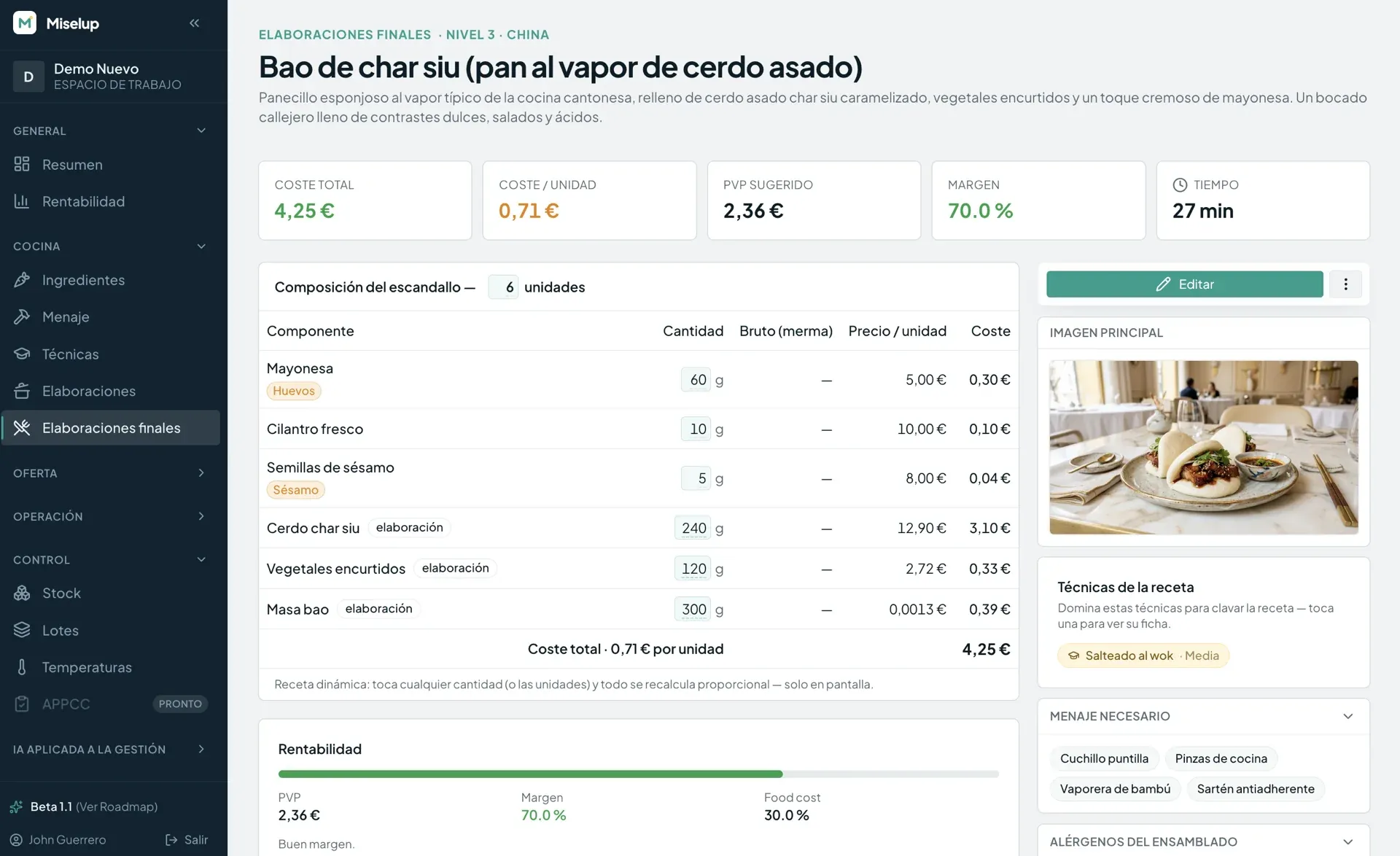
Spec sheet · dynamic

70% dark chocolate bonbon filled with whipped mango & passion fruit ganache

40 units
Food cost 24 %
  • 70% dark couverture São Tomé 400 g €6.20
  • Cocoa butter (for tempering) 25 g €0.43
  • Whipping cream 38% butterfat 200 g €1.10
  • Concentrated mango purée 80 g €0.96
  • Concentrated passion fruit purée 40 g €0.68
  • Fresh unsalted butter 30 g €0.38
  • Orange blossom honey 15 g €0.22
  • Bitter cocoa powder (for dusting) as needed €0.10

Cost / unit: €0.25

€10.07
The why

Recipe costing in chocolateries

Recipe costing in an artisan chocolate shop is the precise calculation of every raw material that goes into a bonbon, a bar, or a chocolate figure. Without it, the workshop loses between 8% and 15% of its annual revenue through uncontrolled waste, unbalanced recipes, and intuition-based pricing. Every gram of cocoa, cocoa butter, or praline that isn't weighed and logged is money slipping away in an industry where top-quality raw materials can exceed €25/kg.

A digital, living recipe costing tool transforms business profitability. It lets you set the selling price (PVP) with a target food cost of 22–28%, adjust the menu based on each item's actual margin, and decide with data whether a champagne truffle is more profitable than a passion fruit bonbon. In 2026, with cocoa prices soaring, anyone not costing every batch is giving their work away.

Why Miselup

Miselup, built for chocolateries

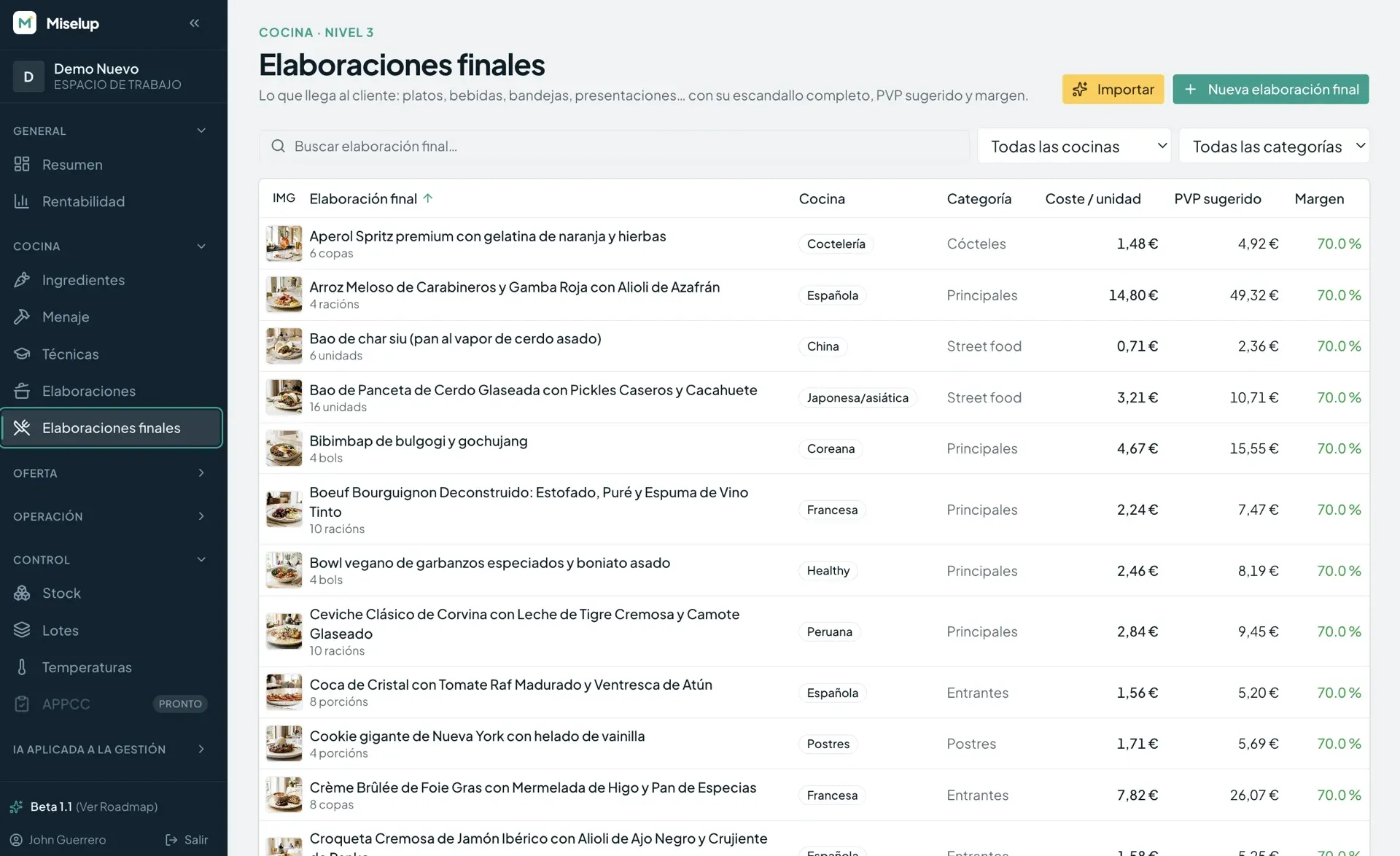
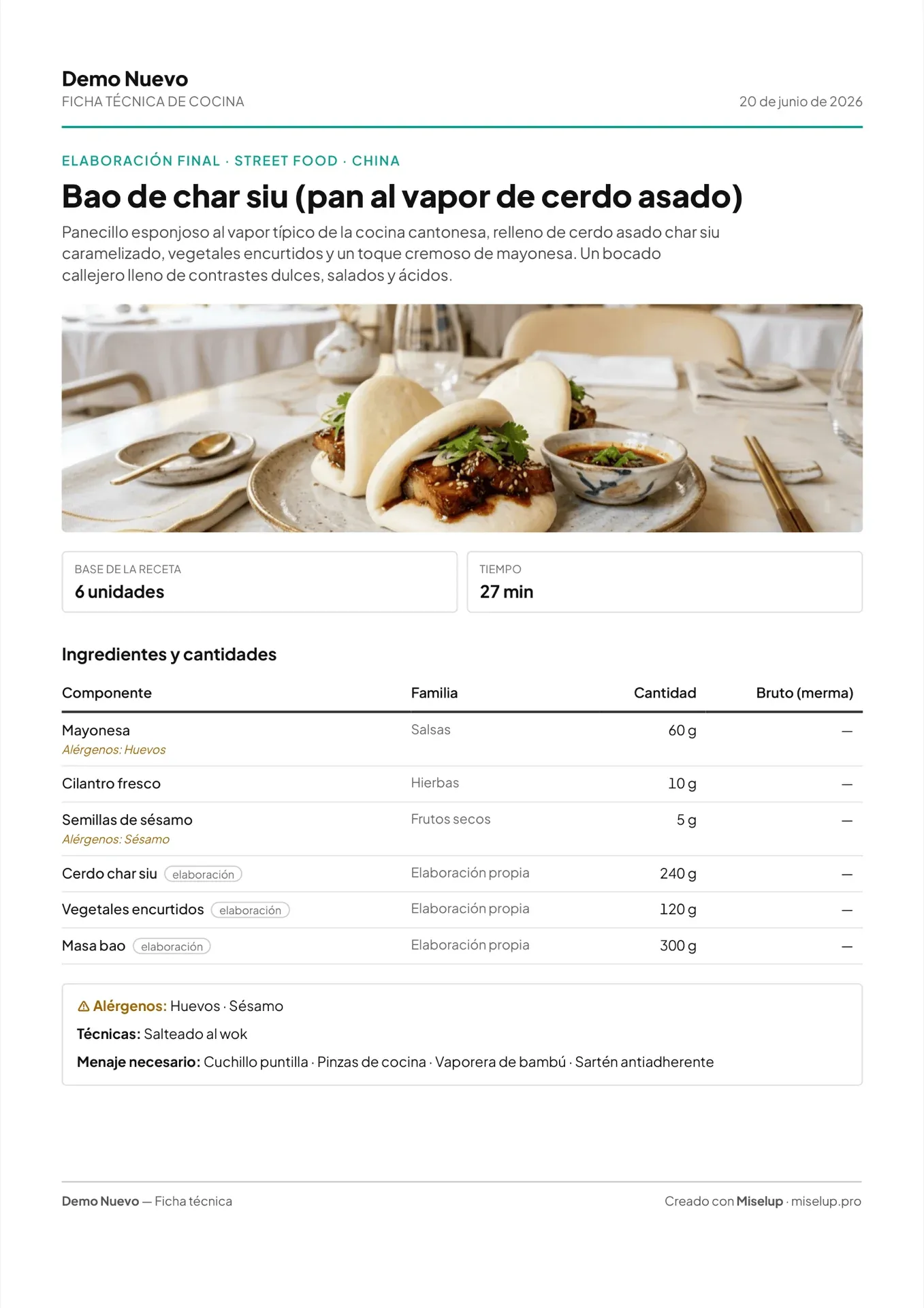
Control the real cost of each bonbon and bean-to-bar chocolate tablet. Software with dynamic recipe costing, shareable spec sheets and AI-powered recipe import for chocolatiers.

Master the cost of your origin couverture

Update the price of your Dominican Republic or Peru couverture and watch the recipe costing of all your recipes adjust automatically. Control cocoa price swings without your margin melting away.

Sub-recipes for single-serving fillings and ganaches

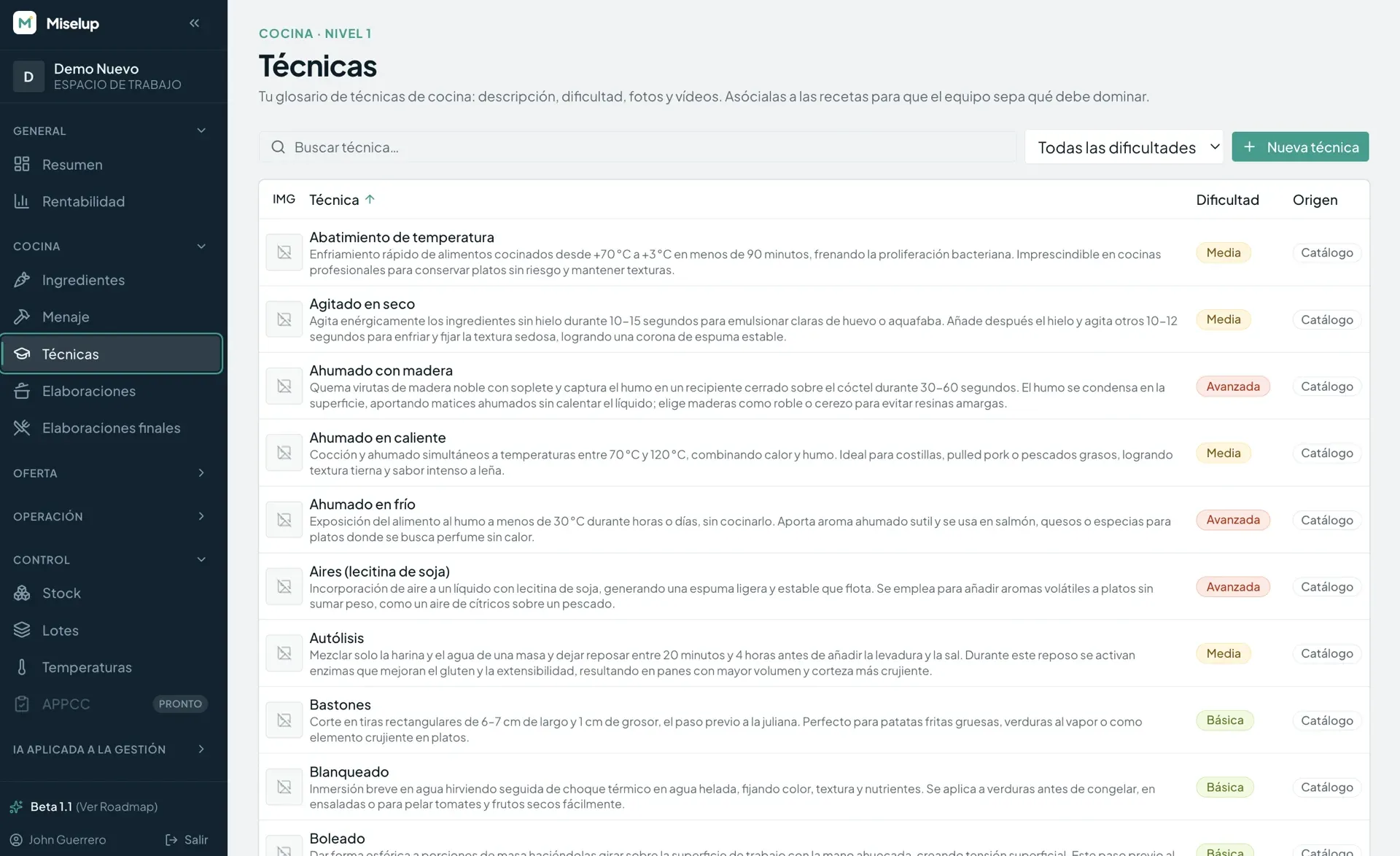
Create an independent spec sheet for your passion fruit ganache or hazelnut praliné. Assign it to each bonbon and get the exact cost per bite, like a master chocolatier who wastes not a gram of richness.

Import your recipe notebooks with a photo

Snap a picture of your handwritten recipe with chocolatier percentages, a course PDF or a supplier Excel. Miselup’s AI importer creates the spec sheet automatically, with allergens and calculated costs.

Step by step

How to cost artisan bonbons and chocolate step by step

1

Build the spec sheet for the production

Start from the standardized recipe with all ingredients in grams for a specific production run, e.g., 100 hazelnut praline bonbons. Include every component: coating, filling, decoration, and the capsule material if it's a molded bonbon.

2

Calculate the net cost per gram of each ingredient

Divide the kilo purchase price (tax and shipping included) by 1000. For a 70% dark chocolate coating at €18.50/kg, the cost is €0.0185/g. Apply this uniform method so you can compare recipe costs across different productions.

3

Apply the actual waste percentage to each process

Weigh what goes in and what comes out at each stage: tempering (2–3% waste from residue), molding (1–2% trimmings), and filling. For a molded bonbon, total waste usually ranges between 3% and 6%. Record your workshop's real loss figures; don't rely on generic standards.

4

Add the cost of auxiliary materials and presentation

Include the unit cost of the paper capsule (€0.02–0.05), the seal, the individual box, or the display. A loose bonbon does not have the same presentation cost as one in a 12-piece gift box with ribbon and card.

5

Calculate the total cost per unit and set the selling price according to your target food cost

Divide the recipe's total cost by the number of units produced. If a bonbon costs €0.42 and your target food cost is 25%, the minimum selling price excluding VAT is €1.68. Add 10% VAT to get the final consumer price: €1.85.

Worked example

Real-world example: costing a dark chocolate and hazelnut praline bonbon

Costing for a production of 100 molded 12 g bonbons with 70% cocoa coating and artisan praline filling. Raw material prices updated to June 2026 for the Spanish Horeca channel.

Ingredient Quantity Waste Cost
70% dark chocolate coating 800 g 4% €14.80
Toasted hazelnuts for praline 300 g 2% €5.10
Powdered sugar for praline 200 g 0% €0.60
Cocoa butter for molds 50 g 3% €1.25
Paper capsules (100 pcs.) 100 pcs. 0% €2.80
12-piece gift box (8.33 boxes) 8.33 pcs. 0% €6.66
Gold seal (100 pcs.) 100 pcs. 0% €1.50
Direct labor (30 min) 0.5 h 0% €7.50

Total cost

€40.21

Food cost

24.8%

Suggested price

€1.95 (VAT incl.)

Margin

€1.37 per unit

If you reduce the coating waste to 3% by improving your tempering technique, the unit cost drops to €0.39 and the margin rises to €1.40 per bonbon, which means an extra €3 for every 12-piece box.

22-28%

Recommended target food cost for mid-to-high-end artisan chocolate shops

industry reports

3-6%

Average total waste in molded bonbon production (tempering, molding, trimmings)

Spanish market data

€18-25/kg

Price range for single-origin dark chocolate coatings for professional workshops

Horeca distributor rates 2026

15%

Average increase in cocoa origin prices over the last year

industry reports

In pictures

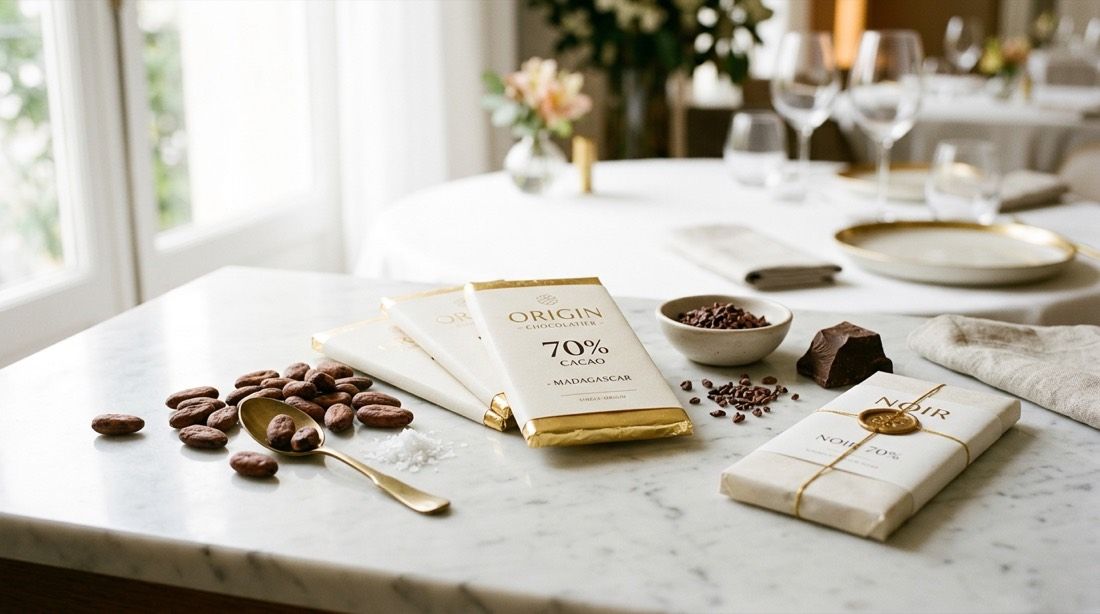
The craft, up close

Chocolateries

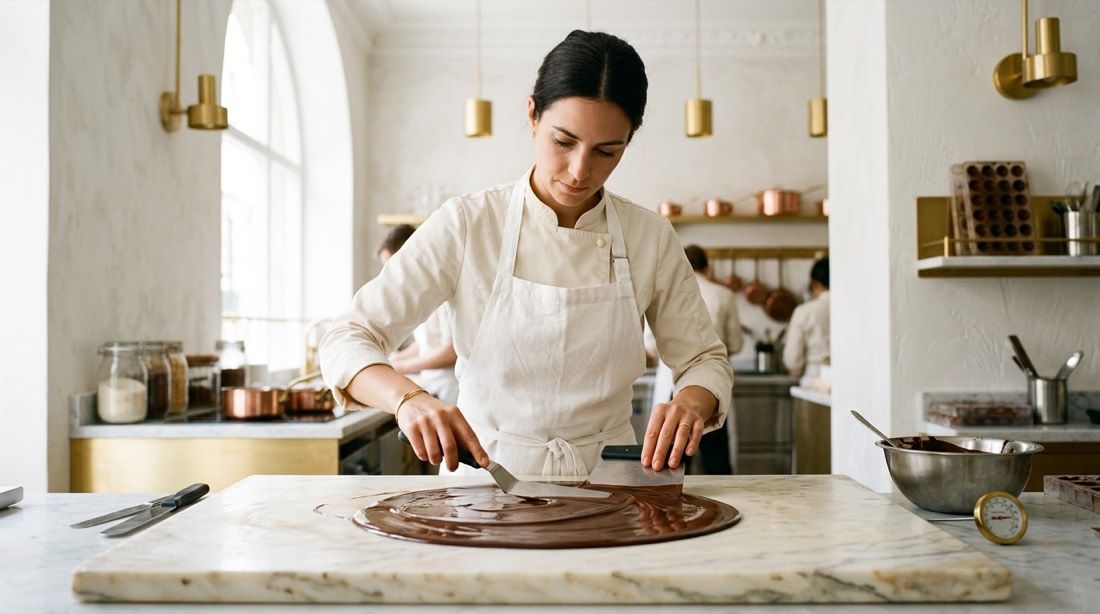
Perfect tempering has an exact cost
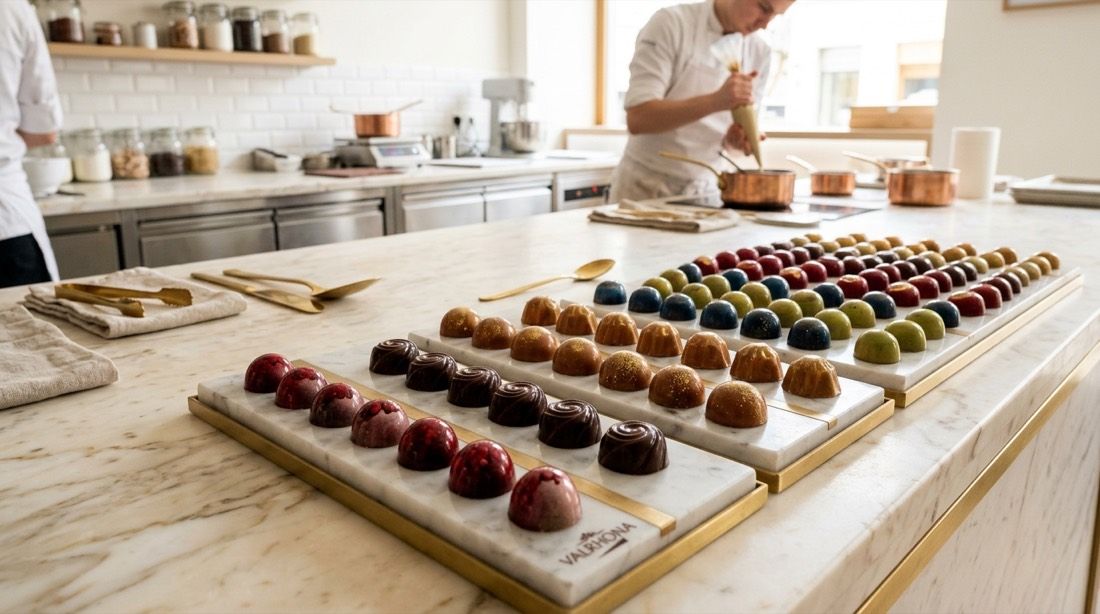
Bonbons to the cent, box by box
From bean to margin
From bean to margin
Avoid these

Common costing mistakes in artisan chocolate shops

Not weighing actual waste from each batch

Using a flat 5% waste figure distorts your costs. On a very humid day the coating thickens and waste from sticking can jump to 8%. If you don't log it, you're absorbing a cost that isn't real and your margin quietly melts away.

Forgetting the cost of presentation and packaging

A 12-piece bonbon box can carry €1.20 in packaging alone. If you don't include that in your costing, you're giving away the wrapping. This cost can represent up to 10% of the final selling price in gift formats.

Not updating the costing with each supplier or cocoa batch change

Cocoa prices fluctuate monthly. A bonbon costed in January with coating at €16/kg can have a real cost 15% higher in June if the supplier has raised prices. Your costing must be a living tool, not a static document.

Mistaking the whole recipe cost for the cost per sold unit

If you produce 100 bonbons but only sell 85 because the rest break or become samples, the cost of the 15 unsold ones must be absorbed by the 85 sold. Not accounting for commercial waste is a mistake that sinks the workshop's real profitability.

The niche in depth

Types of costings every artisan chocolate shop needs

Each product family has a different cost structure. These are the essential costings to keep your workshop profitable:

Molded bonbon costing · soon

The most complex because it sums up coating, filling, decoration, and capsule. Waste in molding and tempering is critical.

Chocolate bar costing · soon

Here the net weight and cocoa percentage drive the cost. Packaging (box, aluminum foil) carries a higher relative weight than with a loose bonbon.

Chocolate figure costing · soon

Skilled labor can account for up to 40% of the total cost. You must cost by the chocolatier's work hour, not just per gram of chocolate.

Assortment or tasting box costing · soon

This is the weighted sum of the individual costings of each reference in the box, plus the cost of the common packaging and assembly.

Hot chocolate and cocoa drink costing · soon

Includes the raw material cost per cup, but also milk, sugar, topping, and the percentage of waste from evaporation and residue in the chocolate machine.

Professionals

What the pros who cook with numbers say

Chefs, pastry chefs, bartenders, baristas and chocolatiers who swapped spreadsheets and notebooks for Miselup.

Carlos Mendoza

Carlos Mendoza

Owner · La Mesa Restaurant

“Every recipe change used to be a mess. With Miselup, if I bump the sirloin by 20 g, I see the real cost instantly. It's amazing—I no longer lose margin without noticing. Now costing is quick and safe, no calculator needed.”

Diego Valdés

Diego Valdés

Head Bartender · Nébula Bar

“My team sees the production sheet without any cost breakdown. That way they measure every cocktail precisely—no more over- or under-pouring. The recipe stays clear, and the numbers stay for my eyes only.”

Mateo Herrera

Mateo Herrera

Owner · Café Origen

“Swap whole milk for oat milk and Miselup updates allergens on the menu automatically. Every new season with sandwiches and pastries used to be a nightmare. Now my digital menu is always up to date and my celiac customers are grateful.”

Carlos Mendoza

Carlos Mendoza

Owner · La Mesa Restaurant

“Every recipe change used to be a mess. With Miselup, if I bump the sirloin by 20 g, I see the real cost instantly. It's amazing—I no longer lose margin without noticing. Now costing is quick and safe, no calculator needed.”

Diego Valdés

Diego Valdés

Head Bartender · Nébula Bar

“My team sees the production sheet without any cost breakdown. That way they measure every cocktail precisely—no more over- or under-pouring. The recipe stays clear, and the numbers stay for my eyes only.”

Mateo Herrera

Mateo Herrera

Owner · Café Origen

“Swap whole milk for oat milk and Miselup updates allergens on the menu automatically. Every new season with sandwiches and pastries used to be a nightmare. Now my digital menu is always up to date and my celiac customers are grateful.”

Carlos Mendoza

Carlos Mendoza

Owner · La Mesa Restaurant

“Every recipe change used to be a mess. With Miselup, if I bump the sirloin by 20 g, I see the real cost instantly. It's amazing—I no longer lose margin without noticing. Now costing is quick and safe, no calculator needed.”

Diego Valdés

Diego Valdés

Head Bartender · Nébula Bar

“My team sees the production sheet without any cost breakdown. That way they measure every cocktail precisely—no more over- or under-pouring. The recipe stays clear, and the numbers stay for my eyes only.”

Mateo Herrera

Mateo Herrera

Owner · Café Origen

“Swap whole milk for oat milk and Miselup updates allergens on the menu automatically. Every new season with sandwiches and pastries used to be a nightmare. Now my digital menu is always up to date and my celiac customers are grateful.”

Lucía Ramírez

Lucía Ramírez

Pastry Chef · Dulce Masa Bakery

“I always jot down recipes in my test notebook. I snap a photo with Miselup, and the AI turns that page into a technical sheet with exact ingredients and weights. It's magic—saves me hours of copying data and eliminates errors completely.”

Ana Solís

Ana Solís

Catering Director · Sol y Sombra Events

“For each wedding menu, I instantly see if the proposal is green or red. The margin traffic light tells me if I'm over cost before sending the quote. I negotiate with data, not blind. And I sleep easy once every event is locked in.”

Isabel Vega

Isabel Vega

Artisan Chocolatier · Bombones Amargo

“For a big order of 300 boxes, I enter the base recipe for 10 chocolates and Miselup scales everything: grams, time, cost. No neurotic math. From small workshop to large order, the scaling is spot on and I don't waste a single gram of cocoa.”

Lucía Ramírez

Lucía Ramírez

Pastry Chef · Dulce Masa Bakery

“I always jot down recipes in my test notebook. I snap a photo with Miselup, and the AI turns that page into a technical sheet with exact ingredients and weights. It's magic—saves me hours of copying data and eliminates errors completely.”

Ana Solís

Ana Solís

Catering Director · Sol y Sombra Events

“For each wedding menu, I instantly see if the proposal is green or red. The margin traffic light tells me if I'm over cost before sending the quote. I negotiate with data, not blind. And I sleep easy once every event is locked in.”

Isabel Vega

Isabel Vega

Artisan Chocolatier · Bombones Amargo

“For a big order of 300 boxes, I enter the base recipe for 10 chocolates and Miselup scales everything: grams, time, cost. No neurotic math. From small workshop to large order, the scaling is spot on and I don't waste a single gram of cocoa.”

Lucía Ramírez

Lucía Ramírez

Pastry Chef · Dulce Masa Bakery

“I always jot down recipes in my test notebook. I snap a photo with Miselup, and the AI turns that page into a technical sheet with exact ingredients and weights. It's magic—saves me hours of copying data and eliminates errors completely.”

Ana Solís

Ana Solís

Catering Director · Sol y Sombra Events

“For each wedding menu, I instantly see if the proposal is green or red. The margin traffic light tells me if I'm over cost before sending the quote. I negotiate with data, not blind. And I sleep easy once every event is locked in.”

Isabel Vega

Isabel Vega

Artisan Chocolatier · Bombones Amargo

“For a big order of 300 boxes, I enter the base recipe for 10 chocolates and Miselup scales everything: grams, time, cost. No neurotic math. From small workshop to large order, the scaling is spot on and I don't waste a single gram of cocoa.”

FAQ

Frequently asked questions

Chocolateries

What is the ideal food cost for an artisan bonbon shop in Spain?
The target food cost for a mid-to-high-end chocolate shop sits between 22% and 28%. Below 22% may signal that your raw material quality is too low for the price you charge; above 28% means your gross margin is too tight to cover skilled labor and the workshop's fixed costs.
How do I calculate the selling price of an artisan bonbon box from the costing?
Sum the total cost of all the bonbons in the box, add the specific packaging (box, ribbon, bag), and divide by your target food cost. For example, if the total cost of 12 bonbons and their box is €5.04 and you aim for a 25% food cost, the selling price excluding VAT is €20.16. Adding 10% VAT gives a final price of €22.18.
What waste percentage is normal for chocolate coating during tempering?
In a professional workshop using seed tempering machines, waste from residue and trimmings is usually between 2% and 4%. If you temper by hand on a marble slab, waste can rise to 5–6%. Anything above that points to a technique issue or poor recouping of scraps.
How often should I update my bonbon costing?
At a minimum, review the costing every time you change cocoa batches or nut suppliers. In practice, with today's cocoa price volatility, a monthly review of core ingredients and a full quarterly update of your entire recipe book is recommended.
Does the type of chocolate (origin, cocoa percentage) affect the costing?
Absolutely. A 70% Peruvian origin dark chocolate coating can cost €22/kg, while a standard coating with the same percentage may be around €14/kg. The costing lets you decide whether you can pass the single-origin premium on to the selling price without losing customers, or whether you should reserve it for a specific gourmet line with a tighter food cost.
How does labor affect an artisan bonbon costing?
Direct labor is charged as a cost per produced unit. If a chocolatier takes 30 minutes to make 100 bonbons and their hourly cost is €15, you must add €0.075 per bonbon. For chocolate figures or bonbons with intricate decoration, labor can be the highest cost in the spec, even above raw materials.
John Guerrero
About the author

John Guerrero

Gastronomy consultant · Founder of ChefBusiness and Miselup

15+ years advising restaurants, bakeries and hospitality businesses across Spain and Latam. Creator of ChefBusiness, AI Chef Pro and Miselup: the digital mise en place his clients use to control food cost to the cent.

Ready to stop losing money on every plate?

Set up your recipe book in an afternoon and try Free forever. No credit card, no commitment.