✨ Early Bird 40% off your first 3 months with code · 40% off · 3 months · EARLYBIRD
Pizzerias

Pizza food cost: calculate the cost and margin of each pizza

To calculate pizza food cost, add the ingredient costs for the dough, sauce, cheese and toppings, including yield loss. Divide the batch cost by the pizzas produced, then compare the cost per pizza with its selling price. Miselup updates recipe costs when ingredient prices change.

From €19/month per location No lock-in: cancel anytime Costings and margins in an afternoon

Spec sheet · dynamic

Pizza Margherita D.O.P. with Buffalo Mozzarella

8 units
Food cost 22 %
  • 00 strong flour 1000 g 1,20 €
  • Water 600 ml 0,00 €
  • Fine sea salt 30 g 0,05 €
  • Fresh yeast 5 g 0,15 €
  • Peeled San Marzano tomatoes 800 g 3,50 €
  • D.O.P. buffalo mozzarella 600 g 9,80 €
  • Fresh basil 20 g 0,40 €
  • Extra virgin olive oil 50 ml 0,60 €

Cost / unit: 1,96 €

15,70 €
See it inside

The real product, not a mockup

Explore the catalog, recipe costing, HACCP controls and traceability in Miselup.

  • Your business at a glance

    A dashboard with your activity, costs and alerts in one screen.

  • Ingredient catalogue

    1,200+ ingredients with cost, units and allergens.

  • Ingredient sheet

    Price per unit, allergens, conversions and supplier.

  • Sub-recipes

    Nested sub-recipes that recost themselves when a price changes.

  • Final preparations

    Dishes, drinks, desserts or trays: everything you sell, ready to cost.

  • Food-cost to the cent

    Cost, waste and margin of the final preparation in real time.

  • Export to professional PDF

    Technical sheet and food-cost ready to print or send.

  • Techniques

    Your library of techniques, with photos and steps.

  • Equipment & tableware

    Your production space's tools and equipment inventory.

  • Controls in the portal

    Configured controls, reading status and access to the form. Documentary records needing attachments are entered in management.

  • Measurement and corrective action

    Product core-temperature recording and corrective action for deviations; this recording type is available in Mise Pro HACCP.
The why

Recipe costing in pizzerias

In a pizzeria, recipe costing breaks down the real cost of each pizza, from the flour to the oven oil, including mozzarella and tomato yield losses. Without this control, an average shop can be giving away between 1.20 € and 2.50 € per pizza served, which by month's end adds up to over 1,500 € in evaporated margin from the star product alone.

By digitizing your pizza costing, you instantly see the food cost per item and can decide if a four-cheese pizza with PDO ingredients holds up at a 12 € price or needs a gram-weight adjustment. You can also simulate the impact of switching mozzarella suppliers or launching a gourmet pizza with burrata, without risking your bottom line.

Why Miselup

Miselup, built for pizzerias

Calculate pizza food cost from dough, sauce, cheese and toppings. Include waste, compare cost per pizza with menu price and track margins with Miselup.

Instant food cost calculation

Adjust mozzarella or pepperoni weights and instantly see how it affects the total cost and the pizza's margin.

Shareable spec sheets

Share production spec sheets with your kitchen team without revealing costs. Everyone will know the exact quantities to maintain consistency.

Error-free production scaling

Go from producing 10 pizzas to 150 for an event. The system recalculates all ingredient quantities automatically.

Step by step

How to cost a pizza step by step

1

Calculate the cost of the base dough per ball

Weigh all ingredients in your dough recipe (flour, water, yeast, salt, oil) for one batch, calculate the total cost, and divide by the number of balls you get. Include a 2% yield loss for residue in the mixer and during resting.

2

Cost out the topping ingredient by ingredient

For each pizza, record the exact amount of tomato, cheese, and toppings you use after draining or dehydrating. Fresh mozzarella can lose up to 15% of its weight in liquid; always use the net drained weight.

3

Add service and baking costs

Include a fixed cost per pizza for tray oil, semolina for stretching, paper, or the takeaway box (0.08-0.15 €). If using a wood-fired oven, prorate the cost of firewood among the pizzas you bake daily.

4

Apply your pizzeria's target food cost

The average food cost for artisan pizzerias ranges between 20% and 26%. Divide the total pizza cost by 0.22 (for 22%) and you'll get the pre-tax selling price. Adjust based on the specialty's perceived value.

5

Review the recipe cost with every supplier or recipe change

A 0.50 € increase per kilo of mozzarella can spike your Margherita's food cost by 3 points. Update the recipe cost each time you receive an invoice to avoid selling below your minimum margin.

Dough, sauce, cheese, toppings: the real cost of a pizza adds up fast. Read the full breakdown by the slice.

Free calculator

Calculate the food cost of any item

Enter the ingredient cost and the menu price: you'll see your food cost, the margin and whether you're in the target range (25-35%).

Food cost

—

Price before VAT

—

Gross margin per unit sold

—

Typical target range: 25-35% depending on the business.

Want the full version? Open the calculator

Worked example

Real example: costing a Margherita pizza with buffalo mozzarella

33 cm pizza, 260 g dough ball, baked in a wood-fired oven.

Ingredient Quantity Waste Cost
High-strength 00 flour 180 g 0 % 0.14 €
Water 110 ml 0 % 0.00 €
Sea salt 5 g 0 % 0.01 €
Fresh yeast 1 g 0 % 0.01 €
Crushed San Marzano tomatoes 100 g 5 % 0.22 €
Buffalo mozzarella PDO 120 g 15 % 0.95 €
Fresh basil 5 leaves 10 % 0.05 €
Extra virgin olive oil (baking & finishing) 8 ml 0 % 0.06 €

Total cost

1.44 €

Food cost

22 %

Suggested price

7.20 € (VAT incl.)

Margin

5.10 € per unit

If you reduce the mozzarella to 100 g, the cost drops to 1.28 € and the food cost to 19.5%, but it may affect customer perception of quality.

22 %

Average food cost in Spanish artisan pizzerias

industry reports

1.44 €

Average cost of a Margherita pizza in a quality pizzeria

Spanish market data

18 %

Increase in buffalo mozzarella cost over the last 2 years

Italian distributor statistics

3.5

Ideal flour stock rotation (weeks) to avoid waste

pizzeria management manuals

In pictures

The craft, up close

Pizzerias

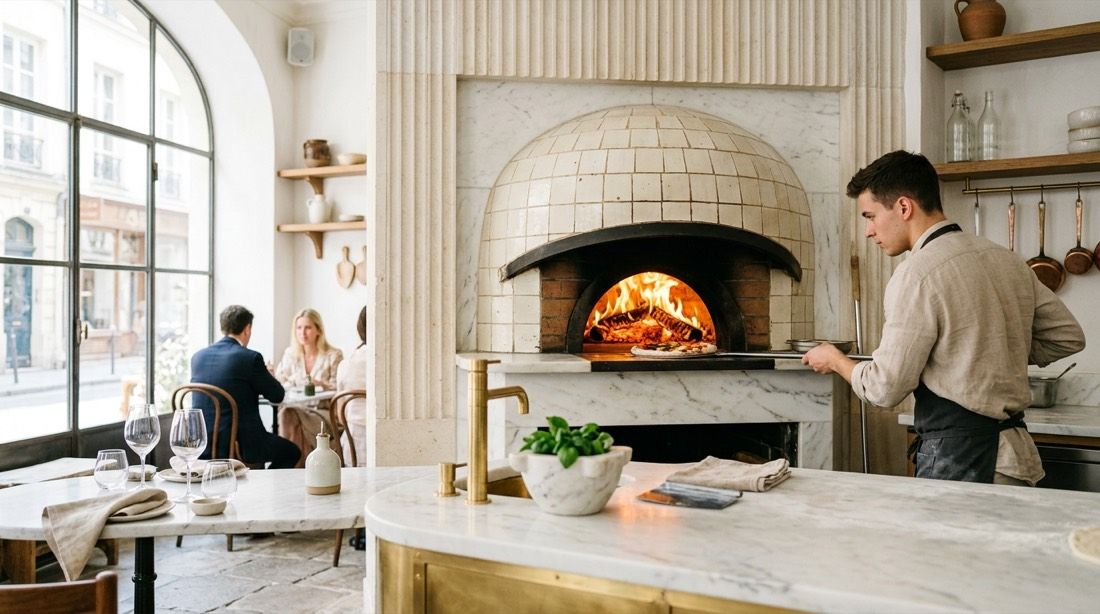
The oven, heart of the pizzeria
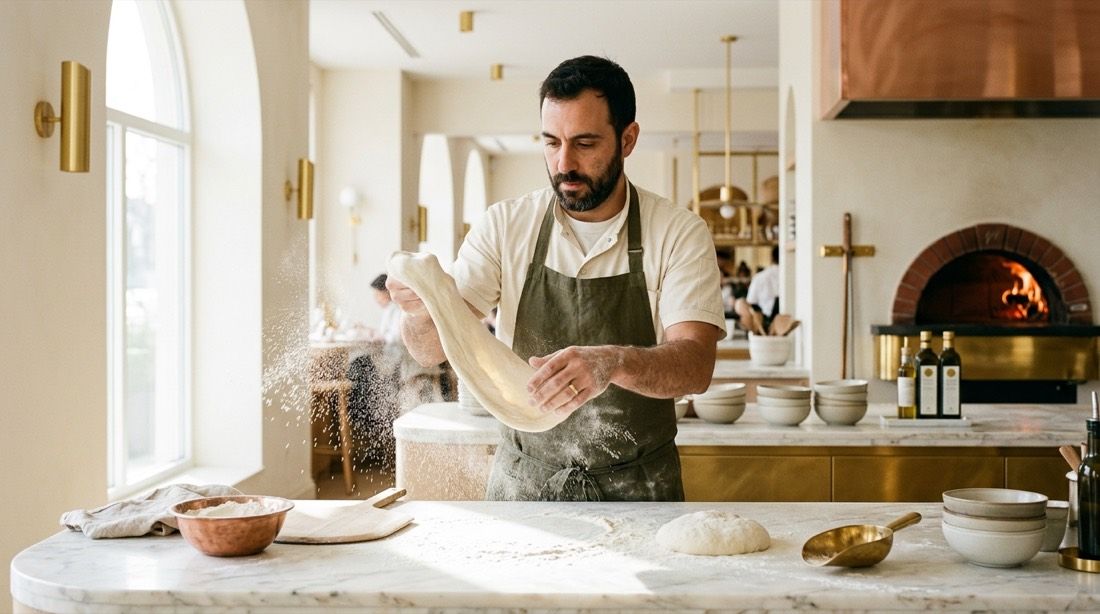
Dough: cost starts here
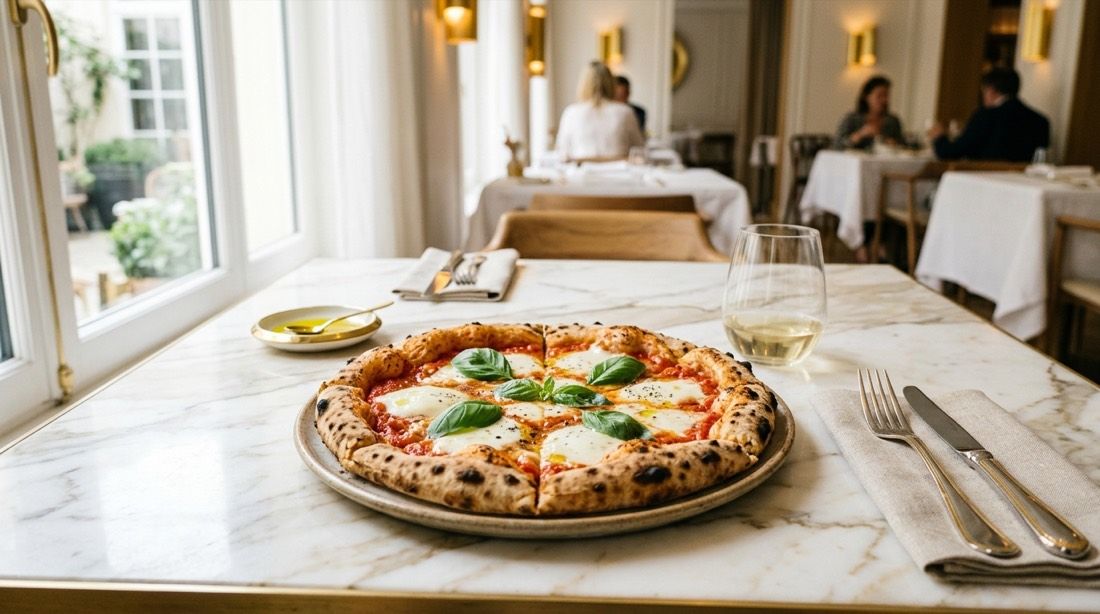
The margherita, costed to the cent
Avoid these

Common mistakes when costing in pizzerias

Not weighing the mozzarella after draining it

Fresh mozzarella releases up to 15% whey. If you calculate cost using the in-bag weight, you're inflating yield and losing 0.15 € per pizza, which over 500 pizzas a week is 75 €.

Forgetting dough and baking costs

Many only cost the topping, but the dough accounts for between 12% and 18% of the total cost. Additionally, firewood or oven gas adds between 0.05 and 0.10 € per pizza, cutting into margin if not allocated.

Using the same target food cost for all pizzas

A black truffle pizza might have a 35% food cost if sold at 18 €, while the Margherita sits at 22%. The goal should be gross margin in euros, not a fixed percentage, so premium pizzas offset the basic ones.

Not updating costs when the supplier changes package size

If mozzarella balls go from 125 g to 100 g and you don't adjust the recipe, the real cost goes up because you need more units. Always check the net weight of ingredients when receiving a new batch.

The niche in depth

Types of costing in pizzerias

Each pizza style requires a calculation adapted to its ingredients and format:

Classic round pizza costing · soon

The most common: thin or medium crust, standard toppings. Calculated per unit; the foundation for the main menu.

Gourmet or signature pizza costing · soon

Includes high-cost ingredients like burrata, Iberian ham, or truffle. Usually runs a higher food cost (25-30%) but yields a higher margin in euros.

Calzone and stuffed pizza costing · soon

Using double dough and a longer bake time, the dough cost rises by 60%, and the filling must be precisely weighed to prevent leaks.

Focaccia and pizza al taglio costing · soon

Calculated per tray or per slice, accounting for cutting yield and yield loss from dry crust edges that go unsold.

Gluten-free or vegan pizza costing · soon

Alternative flours and plant-based cheeses multiply the dough cost by 3 or 4. Requires a separate cost sheet to avoid contaminating the margin of the rest of the menu.

Professionals

What the pros who run on numbers say

Chefs, pastry chefs, bartenders, baristas and chocolatiers who swapped spreadsheets and notebooks for Miselup.

Carlos Mendoza

Carlos Mendoza

Owner · La Mesa Restaurant

“Every recipe change used to be a mess. With Miselup, if I bump the sirloin by 20 g, I see the real cost instantly. It's amazing—I no longer lose margin without noticing. Now costing is quick and safe, no calculator needed.”

Diego Valdés

Diego Valdés

Head Bartender · Nébula Bar

“My team sees the production sheet without any cost breakdown. That way they measure every cocktail precisely—no more over- or under-pouring. The recipe stays clear, and the numbers stay for my eyes only.”

Isabel Vega

Isabel Vega

Artisan Chocolatier · Bombones Amargo

“For a big order of 300 boxes, I enter the base recipe for 10 chocolates and Miselup scales everything: grams, time, cost. No neurotic math. From small workshop to large order, the scaling is spot on and I don't waste a single gram of cocoa.”

Carlos Mendoza

Carlos Mendoza

Owner · La Mesa Restaurant

“Every recipe change used to be a mess. With Miselup, if I bump the sirloin by 20 g, I see the real cost instantly. It's amazing—I no longer lose margin without noticing. Now costing is quick and safe, no calculator needed.”

Diego Valdés

Diego Valdés

Head Bartender · Nébula Bar

“My team sees the production sheet without any cost breakdown. That way they measure every cocktail precisely—no more over- or under-pouring. The recipe stays clear, and the numbers stay for my eyes only.”

Isabel Vega

Isabel Vega

Artisan Chocolatier · Bombones Amargo

“For a big order of 300 boxes, I enter the base recipe for 10 chocolates and Miselup scales everything: grams, time, cost. No neurotic math. From small workshop to large order, the scaling is spot on and I don't waste a single gram of cocoa.”

Lucía Ramírez

Lucía Ramírez

Pastry Chef · Dulce Masa Bakery

“I always jot down recipes in my test notebook. I snap a photo with Miselup, and the AI turns that page into a technical sheet with exact ingredients and weights. It's magic—saves me hours of copying data and eliminates errors completely.”

Ana Solís

Ana Solís

Catering Director · Sol y Sombra Events

“For each wedding menu, I instantly see if the proposal is green or red. The margin traffic light tells me if I'm over cost before sending the quote. I negotiate with data, not blind. And I sleep easy once every event is locked in.”

Lucía Ramírez

Lucía Ramírez

Pastry Chef · Dulce Masa Bakery

“I always jot down recipes in my test notebook. I snap a photo with Miselup, and the AI turns that page into a technical sheet with exact ingredients and weights. It's magic—saves me hours of copying data and eliminates errors completely.”

Ana Solís

Ana Solís

Catering Director · Sol y Sombra Events

“For each wedding menu, I instantly see if the proposal is green or red. The margin traffic light tells me if I'm over cost before sending the quote. I negotiate with data, not blind. And I sleep easy once every event is locked in.”

From production costing to HACCP records

Follow cold-fermented dough batches, opened cheese and cured meats, the chilled topping line and pizzas leaving for delivery.

FAQ

Frequently asked questions

Pizzerias

What is the ideal food cost for a pizzeria?
In Spain, the recommended food cost for artisan pizzerias is between 20% and 26%. Below 20% might signal low-quality ingredients; above 28%, the gross margin dangerously thins for covering rent and labor.
How do you calculate a pizza's selling price from the recipe cost?
Divide the total pizza cost by the target food cost (e.g., 0.22). The result is the pre-VAT price. Multiply by 1.10 to add the 10% VAT and round. If the cost is 1.44 € and you target 22%, the selling price without VAT is 6.55 €, and with VAT 7.20 €.
What is the yield loss of mozzarella in a pizzeria?
Fresh buffalo or fior di latte mozzarella can lose between 12% and 18% of its weight in liquid during draining and baking. You should always weigh it after draining and use that net weight in your recipe costing.
Is it worth making dough in-house or buying it par-baked frozen?
Making your own dough typically costs between 0.10 and 0.15 € per ball, while a medium-quality par-baked base costs 0.40-0.60 €. The savings are clear, but it requires labor and fermentation space. Recipe costing helps you decide with real numbers.
How does topping waste affect a pizzeria's food cost?
Poor pepperoni portioning or excess cheese per pizza can raise the cost by 0.20 € per unit. Over 300 pizzas a day, that's 60 € in lost margin daily. Accurate costing sets the exact quantity, and staff must use dispensers or scales.
How often should I review my pizza recipe costs?
At minimum, whenever the price of a main ingredient (flour, tomato, mozzarella) changes. With recipe costing software, loading a supplier's invoice automatically recalculates the food cost of each pizza, preventing weeks of selling at a loss.
John Guerrero
About the author

John Guerrero

Gastronomy consultant · Founder of ChefBusiness and Miselup

15+ years advising restaurants, bakeries and hospitality businesses across Spain and Latam. Creator of ChefBusiness, AI Chef Pro and Miselup: the digital mise en place his clients use to control food cost to the cent.

Ready to sell with clear margins?

Get costs and margins under control from day one and run your business on real numbers. From €19 a month; Mise Pro adds purchasing, inventory and daily P&L.