✨ Early Bird 40% off your first 3 months with code · 40% off · 3 months · EARLYBIRD
Production kitchens

The production and scaling spec sheets your central bakery workshop needs

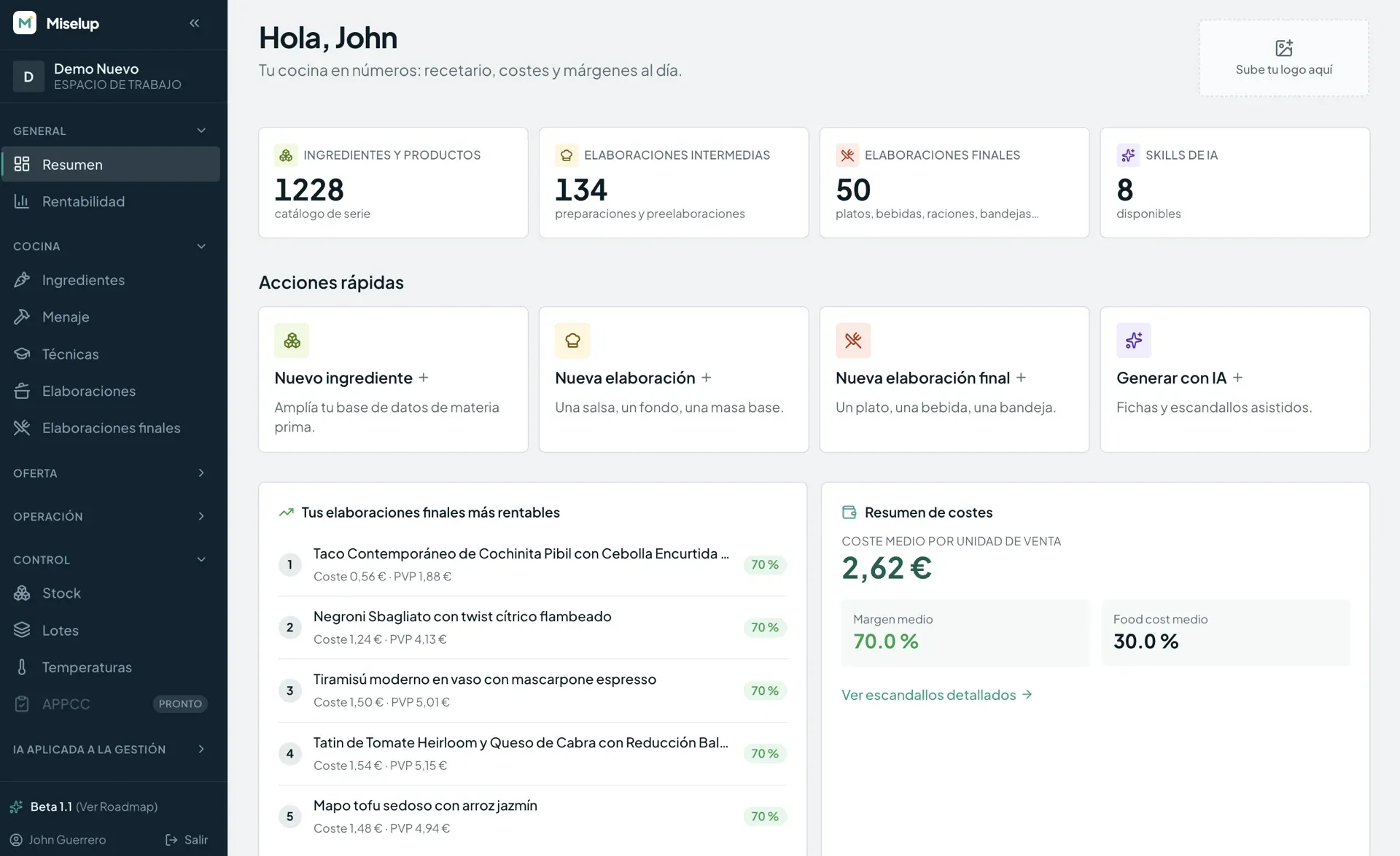
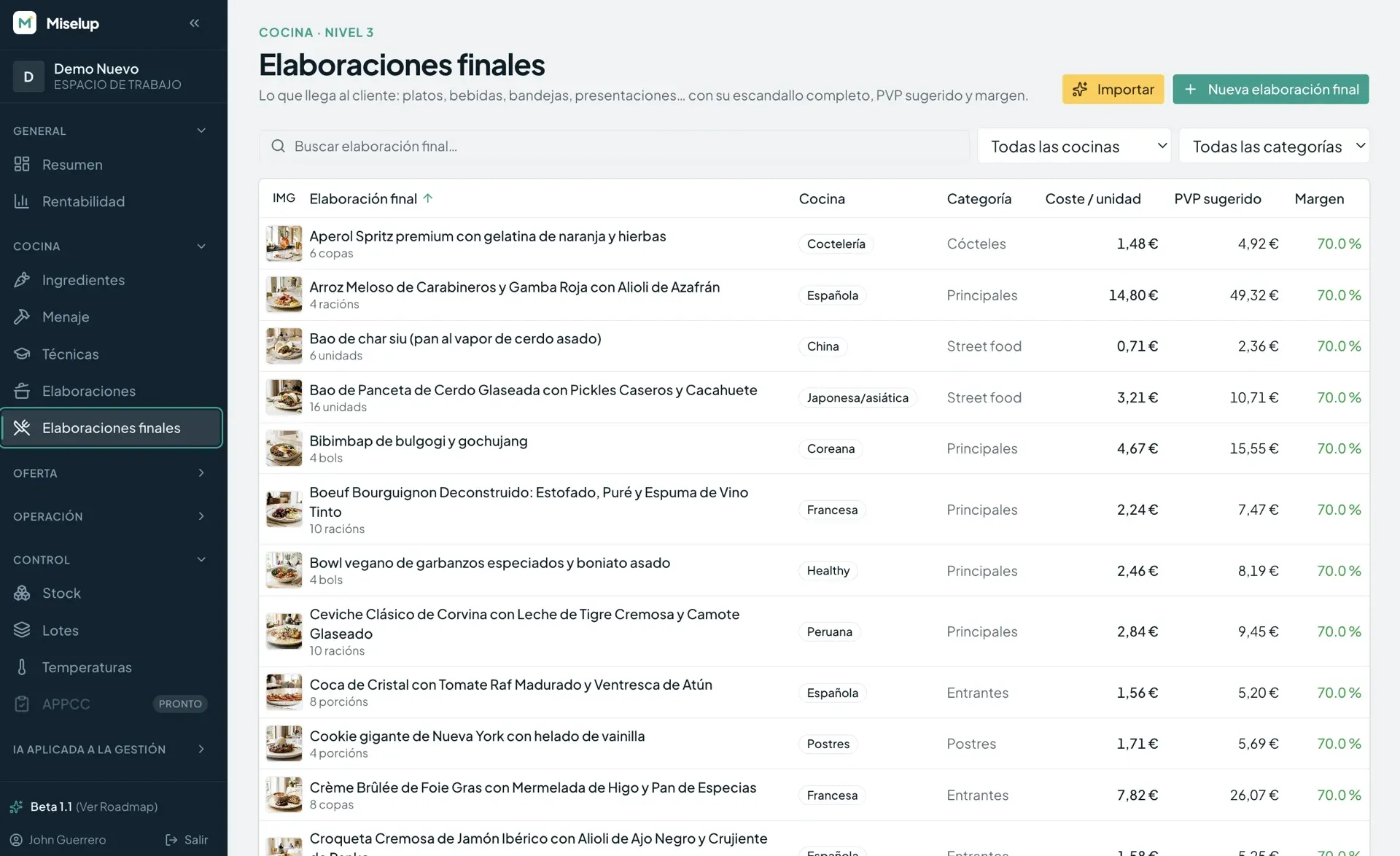
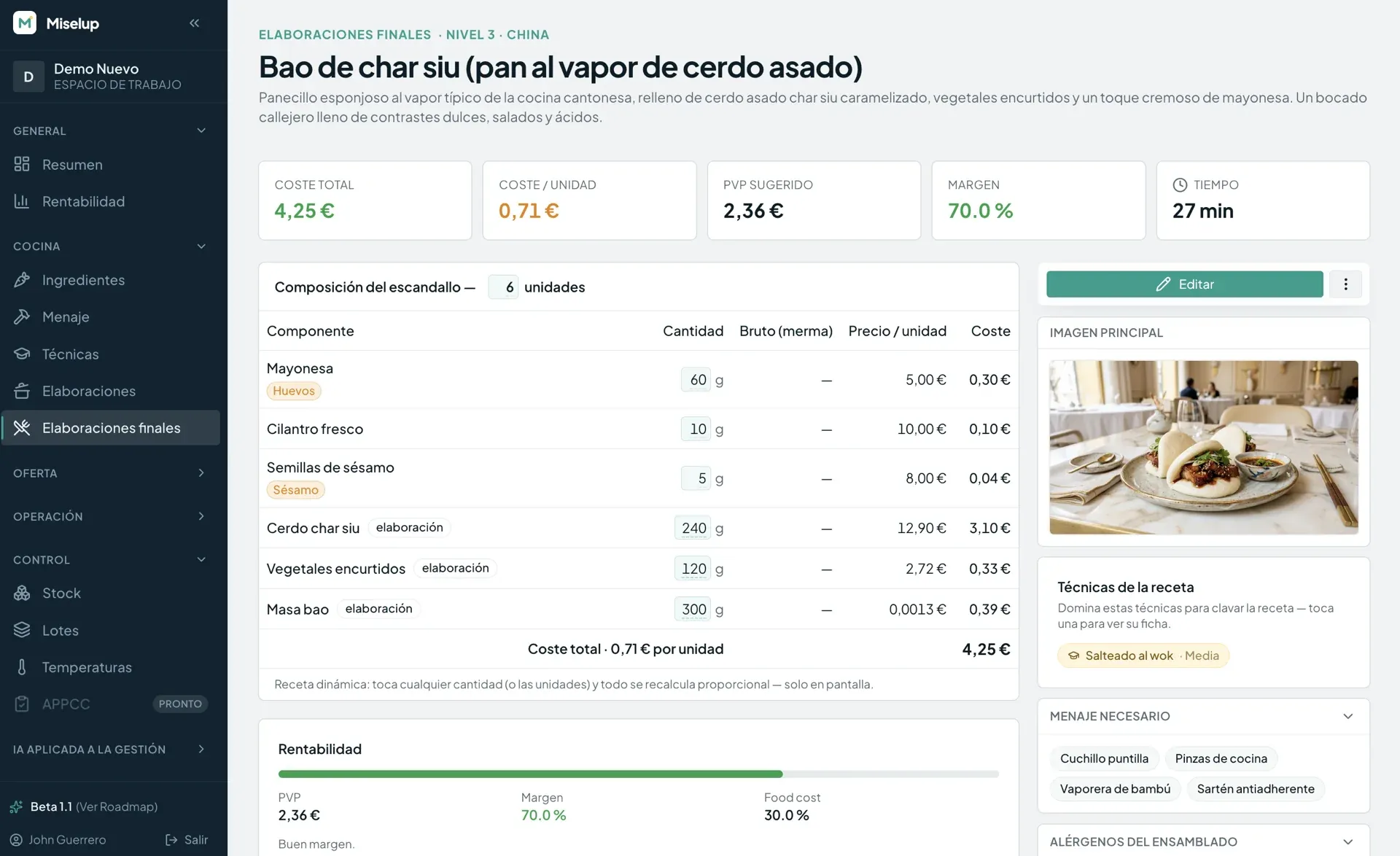
Forget about manually reviewing batches when the order jumps from 200 to 1,500 croissants. With Miselup, you set the final quantity and the recipe costing for each preparation recalculates automatically. Centralize yield loss control, actual costs, and spec sheets for all your production centers in one place.

Free forever No credit card Your recipe book in an afternoon

Spec sheet · dynamic

100% Butter Croissant (laminated dough)

120 units
Food cost 28 %
  • High-strength flour (W>350) 7.500 kg 7,13 €
  • Dry butter 84% fat for lamination 3.750 kg 33,75 €
  • Fresh whole milk 3.000 L 2,85 €
  • White sugar 0.900 kg 0,81 €
  • Fine salt 0.150 kg 0,05 €
  • Fresh compressed yeast 0.375 kg 1,35 €
  • Fresh eggs for egg wash 0.600 kg 1,44 €

Cost / unit: 0,39 €

47,38 €
The why

Recipe costing in production kitchens

In a food production center, efficient recipe costing management isn't an option—it's the backbone of profitability and standardization. Without thorough control of every ingredient and process, it's estimated that a production center in Spain can suffer up to 10–15% deviation in its annual production costs, directly impacting the margin of its final products and its competitiveness in the market. Precision is the key to success at scale.

By integrating live, digitized costings, a production center transforms its operations. It enables millimeter-level control of food cost per batch, facilitates recipe scalability without losing quality or profitability, optimizes purchasing and stock management, and guarantees final product consistency. This translates into greater efficiency, data-driven decision-making, and the ability to react quickly to market fluctuations, ensuring the profitability of every production spec.

Why Miselup

Miselup, built for production kitchens

The software for central bakery workshops that recalculates production spec sheets instantly. Scale recipes, control yield loss, and unify costs across centers in real time.

Instant error-free scaling

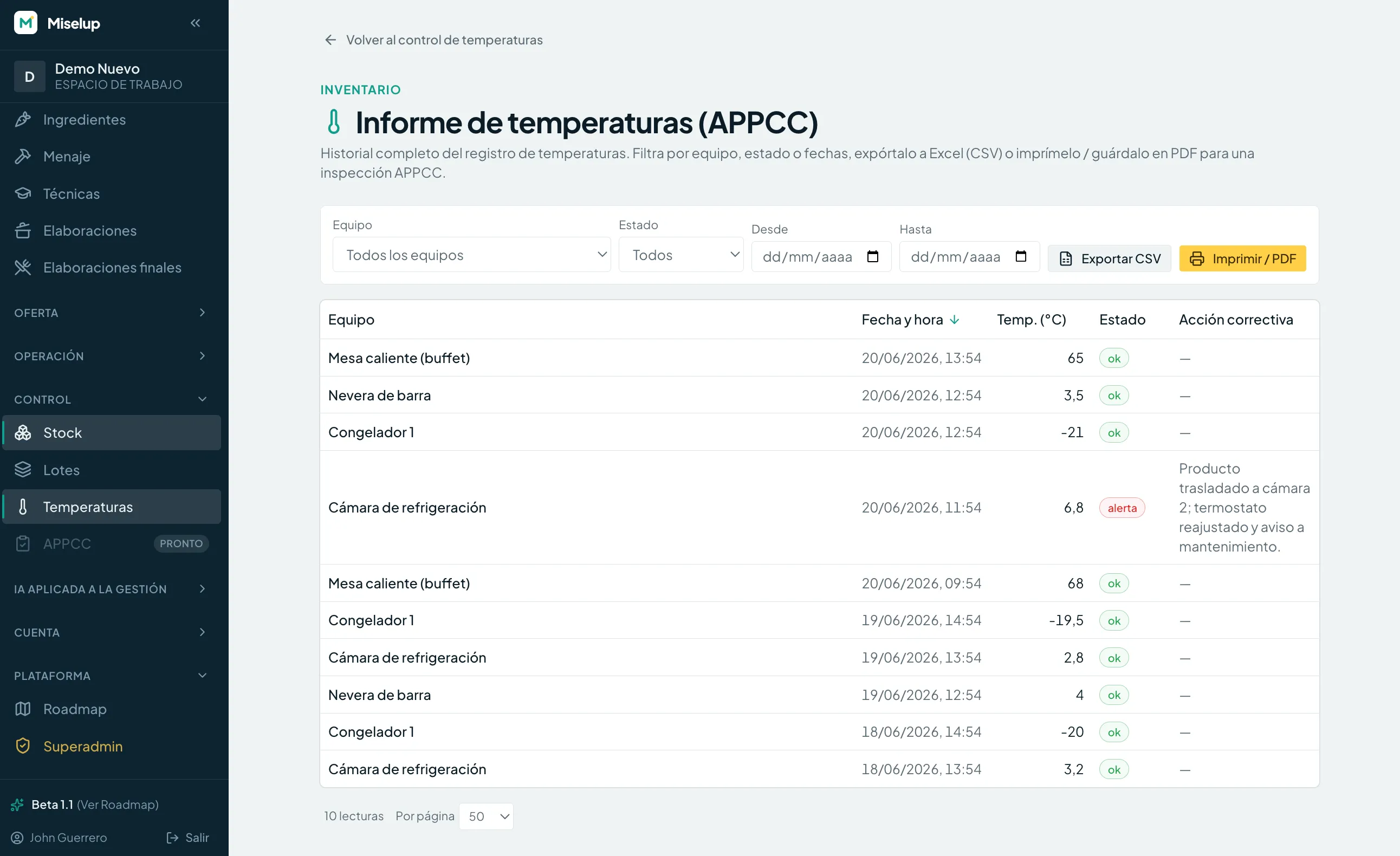
Change the planned production and the system adjusts every gram of flour, butter, or yeast. Goodbye to Excel spreadsheets that nobody updates.

Full traceability across centers

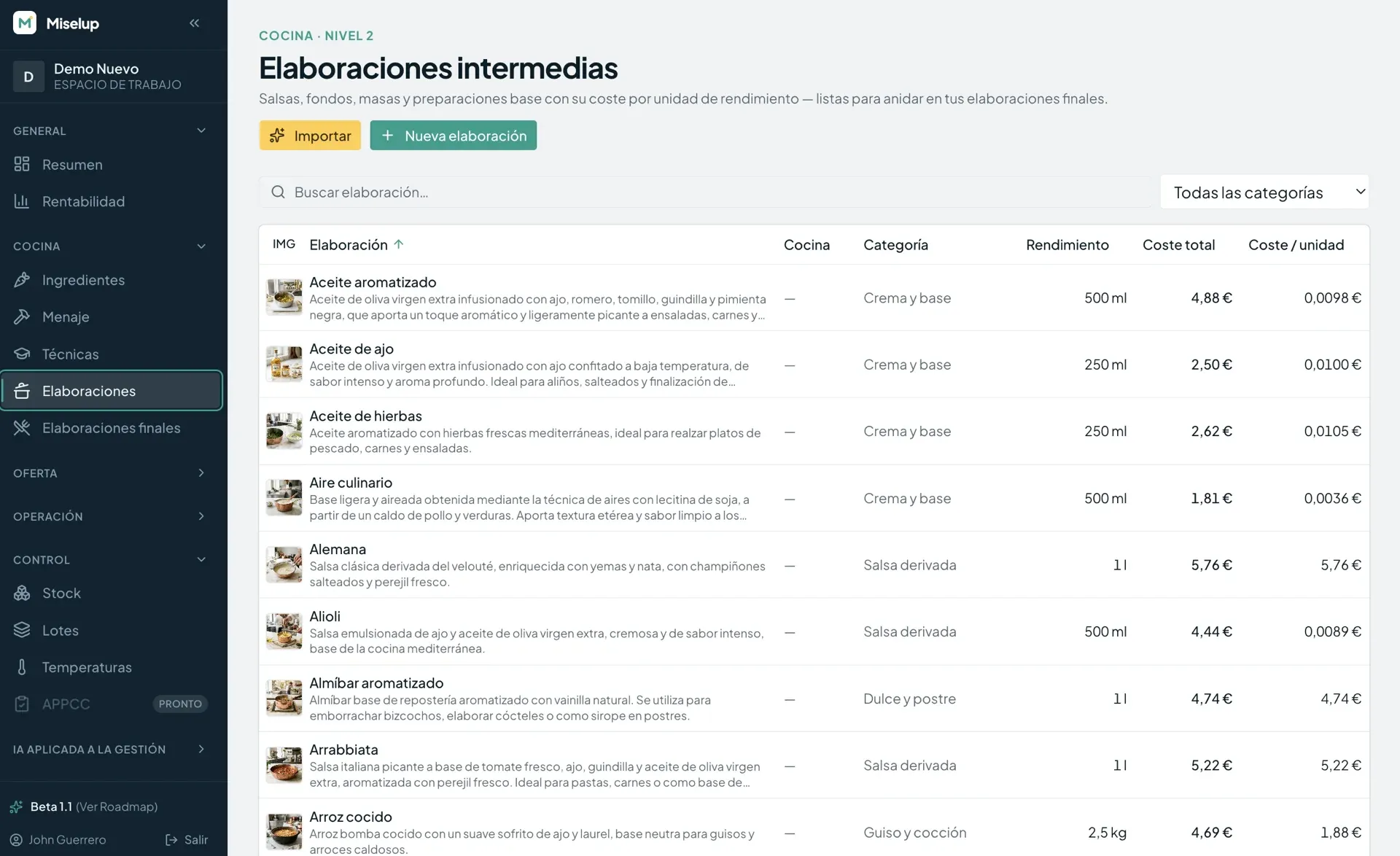
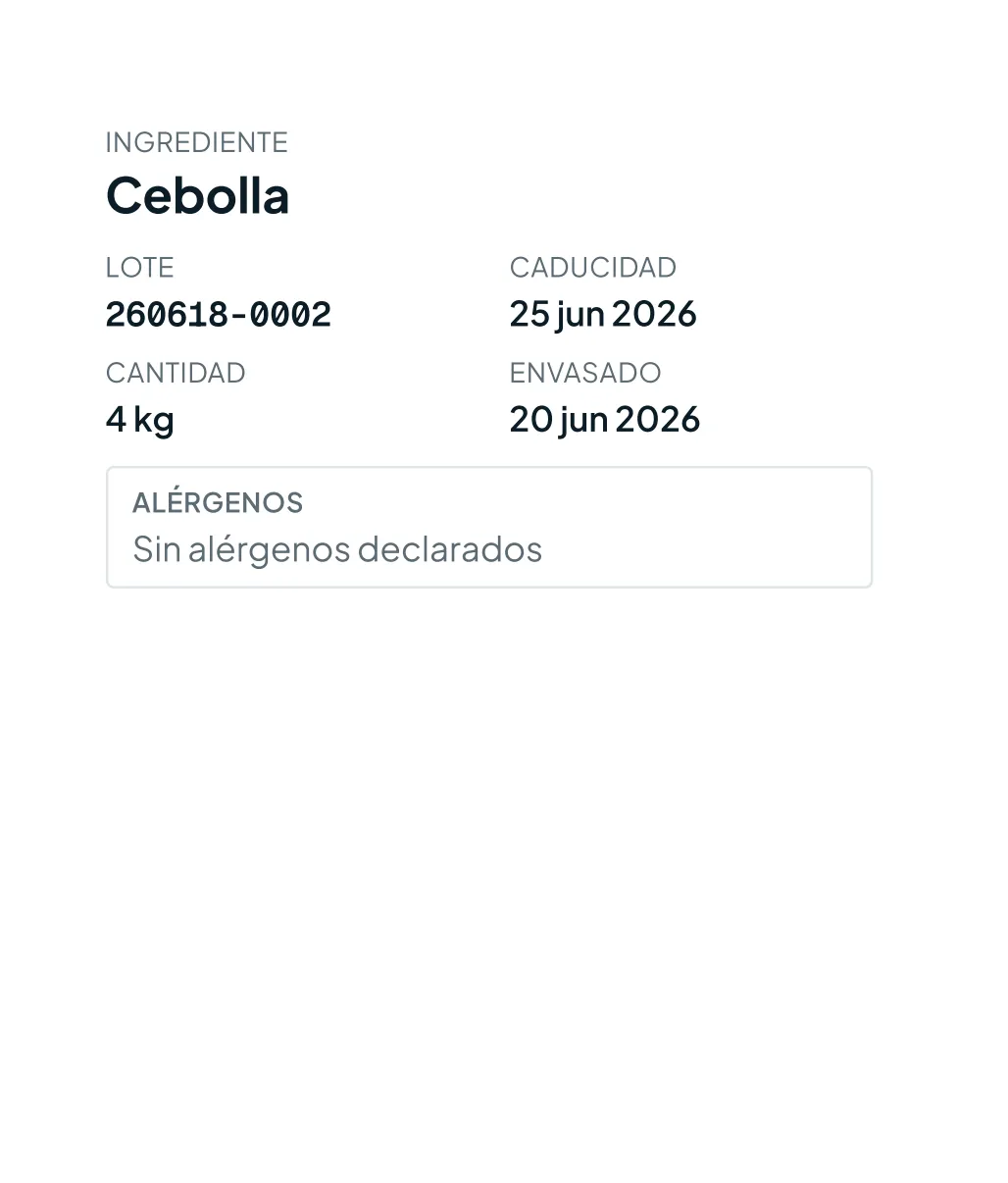
If you produce sourdough starter at the central kitchen and ship it to stores, each spec sheet reflects the actual internal cost. You control the recipe costing of the semi-finished product and its impact on the final product.

Bulk import with AI

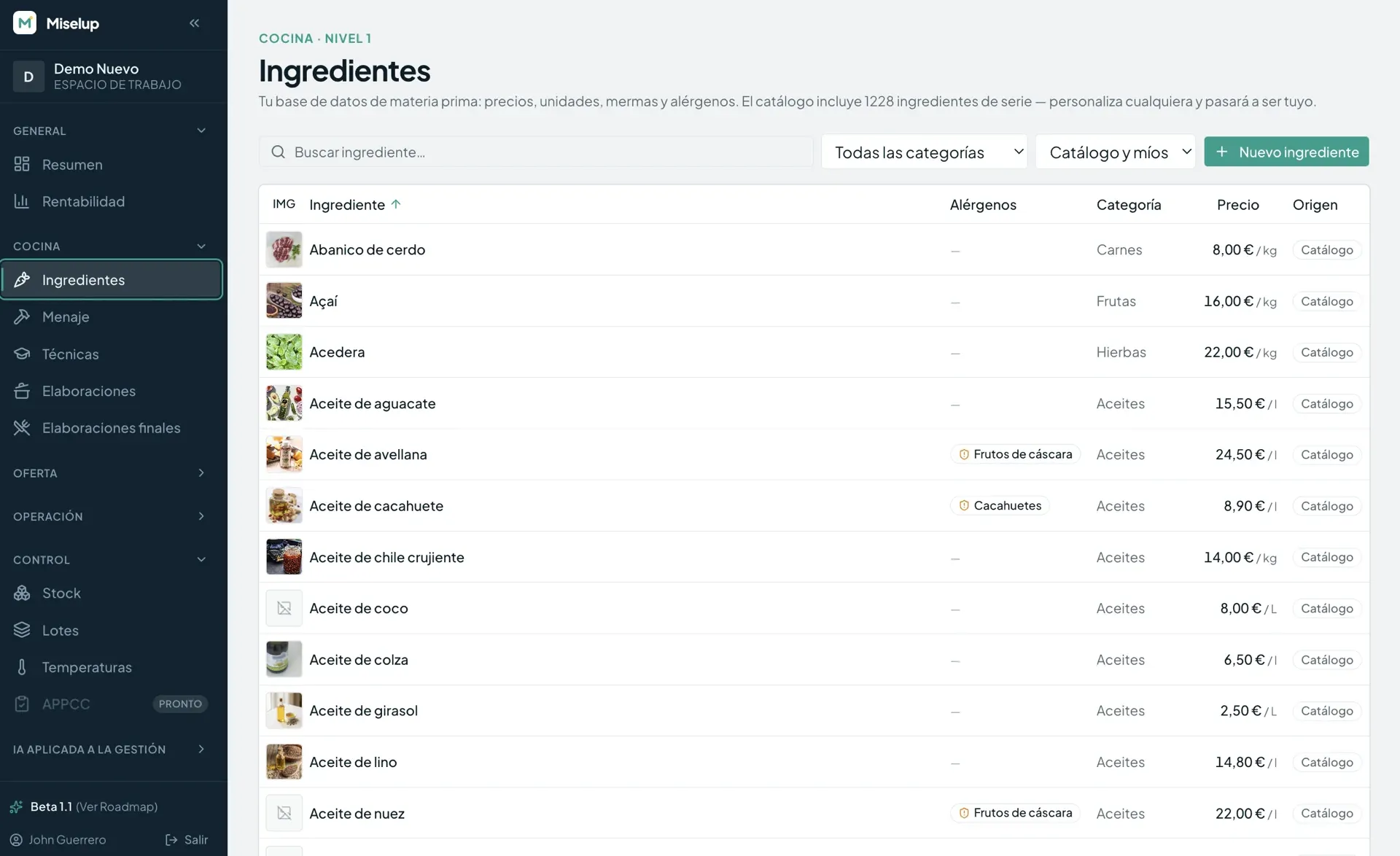
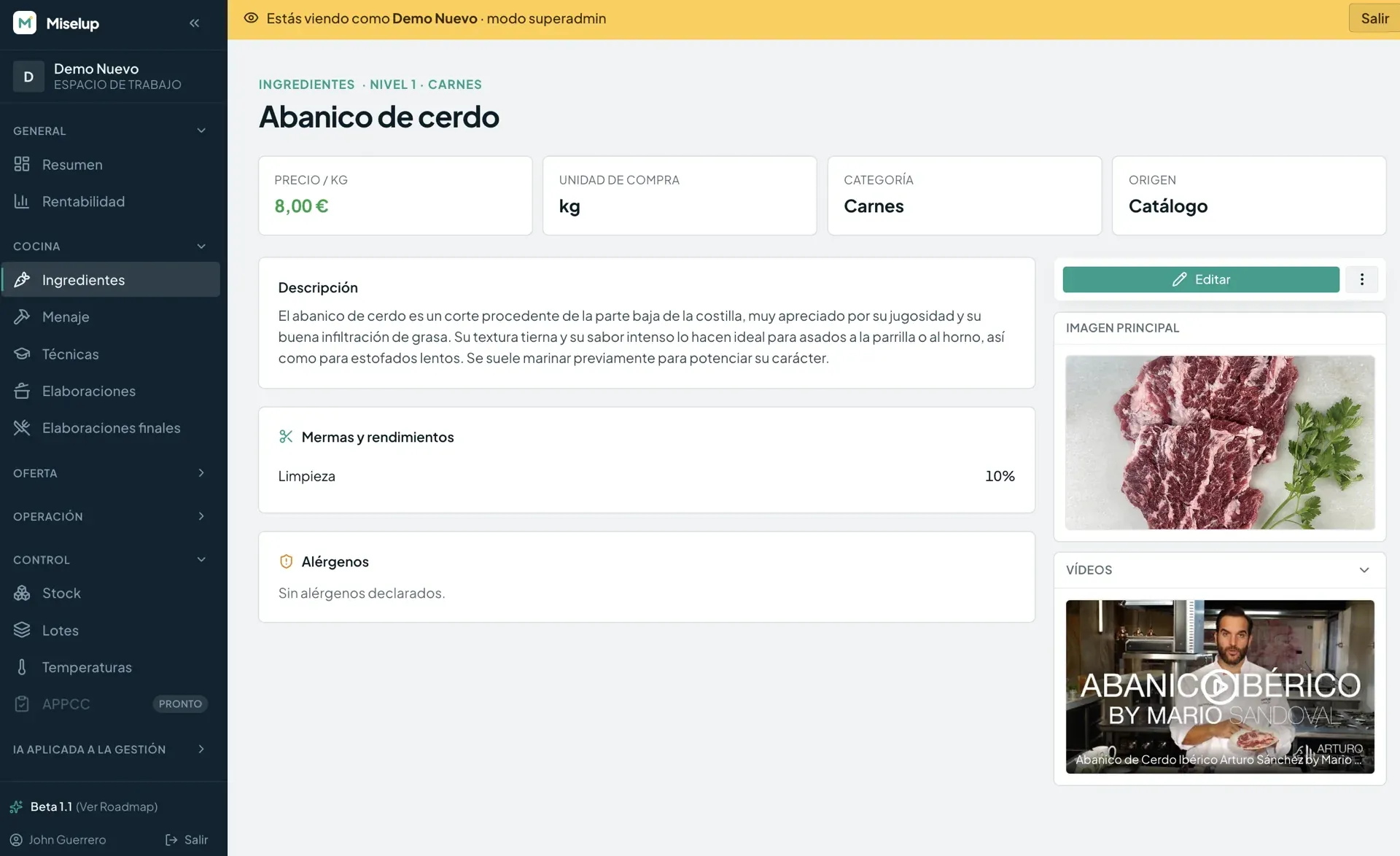
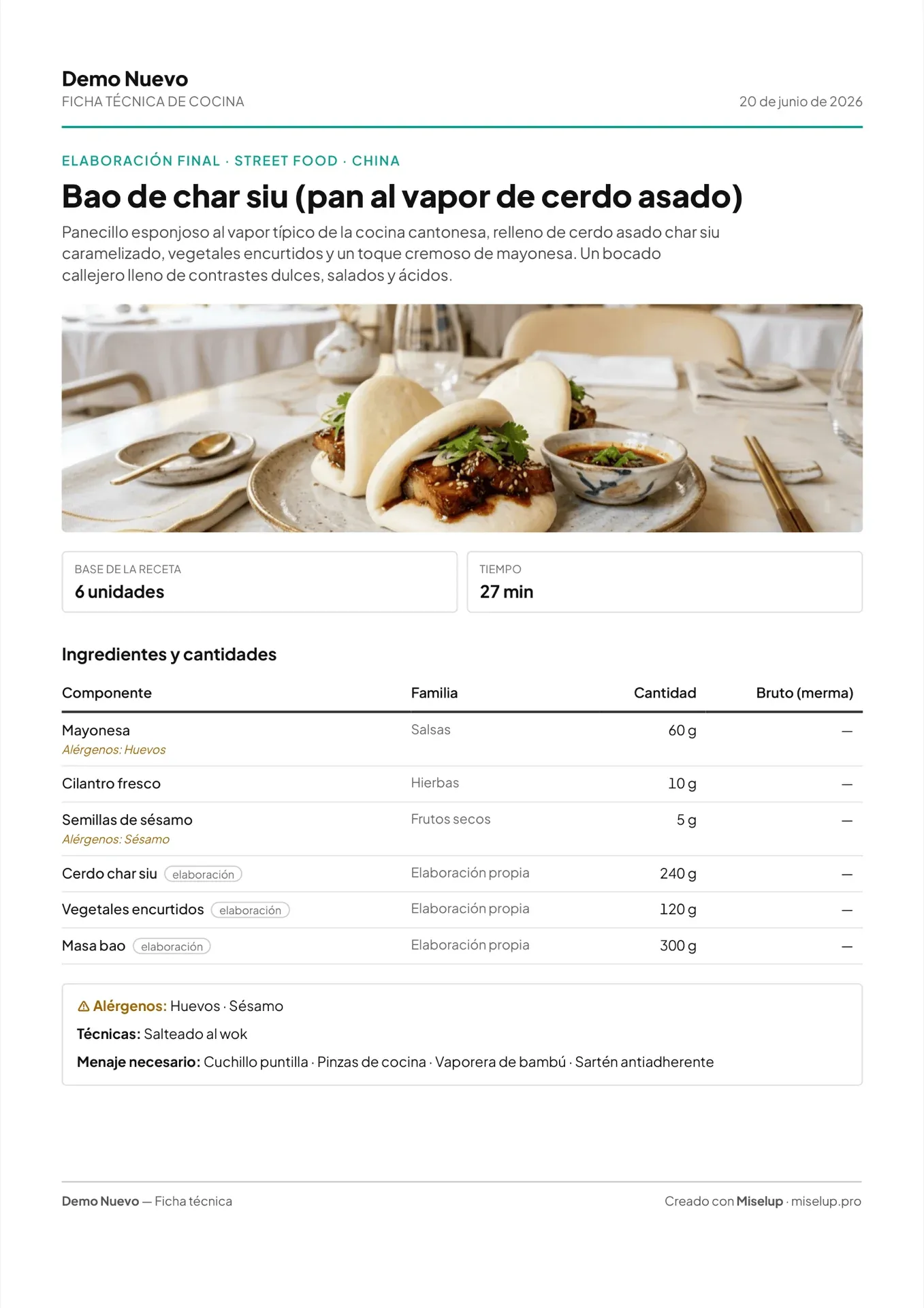
Upload a photo of the chef's handwritten recipe, a supplier PDF, or an old Excel file. AI converts it into a spec sheet with allergens and costs in seconds.

Step by step

How to cost a production spec sheet in a production center step by step

1

Define the master spec sheet

Establish the base recipe with exact quantities for a standard batch (e.g., 10 kg of sauce). This will be the starting point for scaling.

2

Exhaustive breakdown of ingredients and additives

List every component, including seasonings, thickeners, or preservatives, with its precise weight or volume per batch. Omit nothing, no matter how small it seems.

3

Calculate process losses and yields

For each ingredient and the overall process, determine losses from peeling, cooking, evaporation, or handling. This is vital for the final batch yield.

4

Assign raw material and auxiliary costs

Update the purchase prices for each ingredient. Also include the costs of primary packaging, labels, and other auxiliary materials per unit of final product.

5

Calculate labor and energy costs

Estimate the batch production time and assign an hourly labor cost. Also include a proportionate share of energy costs (electricity, gas) associated with producing the batch.

6

Determine the total cost per batch and per unit

Sum all costs (ingredients, losses, packaging, labor, energy) to obtain the total batch cost. Then divide by the number of final units obtained to get the unit cost.

Worked example

Real example: costing of 'Roasted Pumpkin Cream' (10 kg batch)

Costing a batch of cream is essential for controlling the cost of a frequently used semi-finished product.

Ingredient Quantity Waste Cost
Pumpkin (whole) 12 kg 20 % 12.00 €
Onion 1.5 kg 10 % 1.20 €
Carrot 1 kg 10 % 0.80 €
Vegetable broth 4 L 0 % 2.00 €
Cream (35% fat) 0.5 L 0 % 1.50 €
Extra virgin olive oil 0.2 L 0 % 1.60 €
Salt 0.05 kg 0 % 0.05 €
Labor (0.5h) 0.5 h 0 % 7.50 €

Total cost

26.65 €

Food cost

71 %

Suggested price

N/A

Margin

N/A (semi-finished product)

When adjusting the amount of pumpkin, the system will automatically recalculate the total batch cost and food cost, maintaining the proportionality of the other ingredients and associated costs.

10-15 %

Cost reduction through production spec sheet optimization

industry reports

5-8 %

Margin of error in costs without digitized yield loss control

Spain market data

30-45 %

Percentage of production destined for hospitality and organized catering

sector studies 2026

20-30 %

Labor cost as a share of total production cost in efficient centers

food production consultancies

In pictures

The craft, up close

Production kitchens

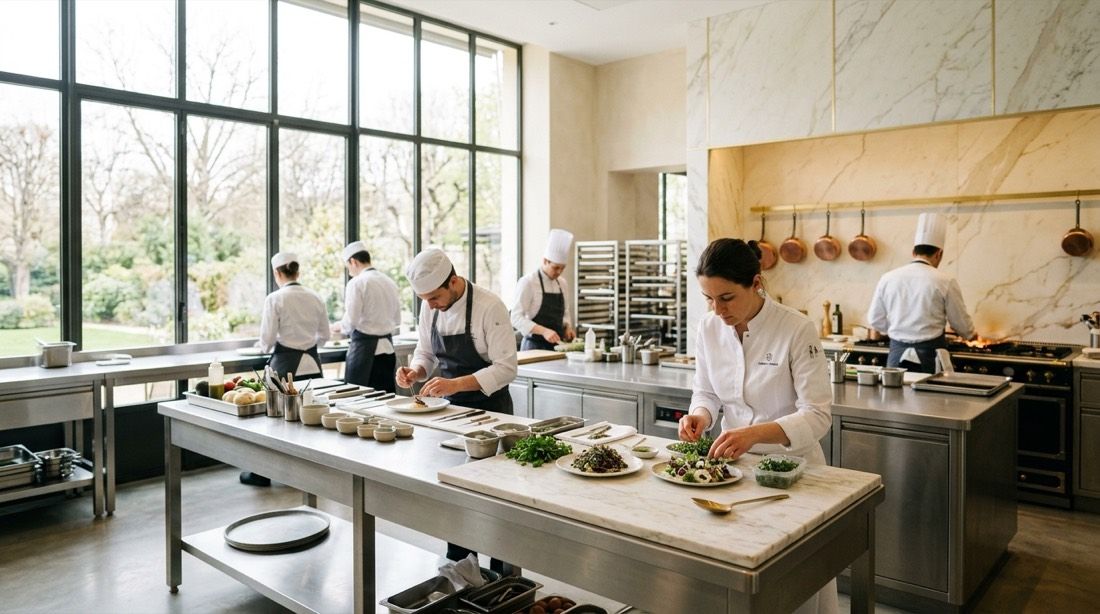
Central production, exact specs
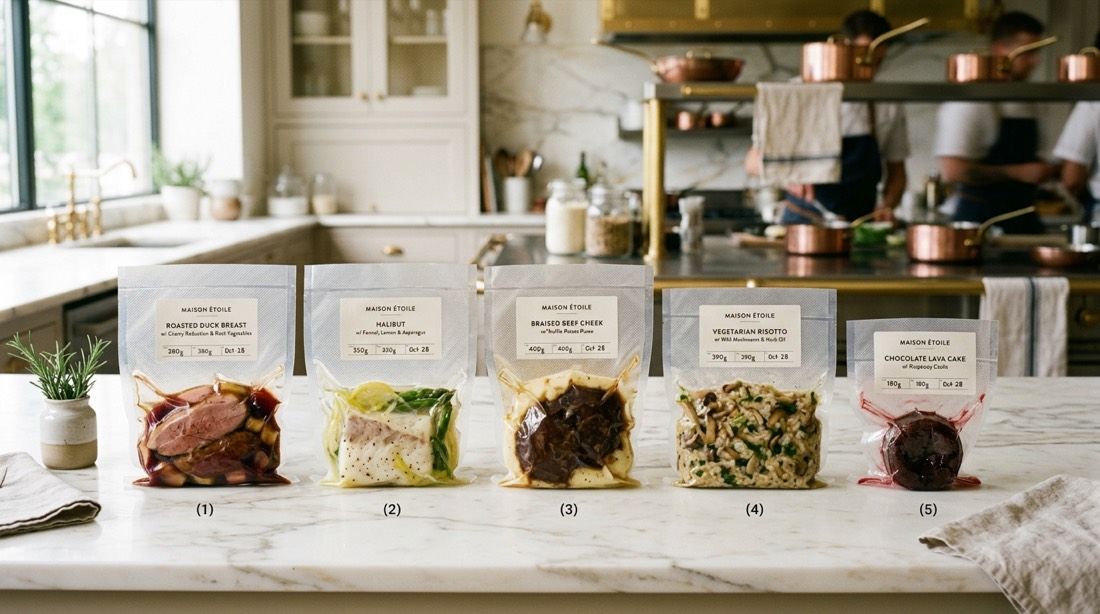
Batches labeled and costed
Scaling without losing the cent
Avoid these

Typical mistakes when costing in production centers

Not considering indirect production costs

Ignoring labor, energy, machinery maintenance, or equipment amortization costs distorts the real product cost and its profitability.

Underestimating yield losses at large volumes

Small per-unit wastes multiply exponentially in large batches. Not measuring them accurately leads to major deviations in the final product cost.

Lack of recipe standardization

Variations in ingredient quantities between batches without updating the spec sheet prevent reliable cost control and affect product quality and consistency.

Not integrating packaging and labeling costs

In a production center, the cost of the primary packaging and the label are an integral part of the final product's unit cost and must be costed precisely.

The niche in depth

Key types of recipe costing for production centers

For comprehensive and scalable management, consider these approaches:

Raw material costing · soon

To determine the real cost of each ingredient once cleaned, peeled, or chopped, ready to enter the production line.

Semi-finished/base product costing · soon

Essential for knowing the cost of components produced in large quantities and used in multiple final products (e.g., sauces, doughs, fillings).

Final product costing · soon

The complete costing that includes all ingredients, yield losses, labor, energy, and packaging costs for the product going to market.

Production batch costing · soon

Allows you to calculate the total cost of a specific run of a product, considering the actual conditions and yields of that batch.

Production line costing · soon

Analyzes the cost of products manufactured on a specific line, including the costs associated with the machinery and personnel of that line.

Professionals

What the pros who cook with numbers say

Chefs, pastry chefs, bartenders, baristas and chocolatiers who swapped spreadsheets and notebooks for Miselup.

Carlos Mendoza

Carlos Mendoza

Owner · La Mesa Restaurant

“Every recipe change used to be a mess. With Miselup, if I bump the sirloin by 20 g, I see the real cost instantly. It's amazing—I no longer lose margin without noticing. Now costing is quick and safe, no calculator needed.”

Diego Valdés

Diego Valdés

Head Bartender · Nébula Bar

“My team sees the production sheet without any cost breakdown. That way they measure every cocktail precisely—no more over- or under-pouring. The recipe stays clear, and the numbers stay for my eyes only.”

Mateo Herrera

Mateo Herrera

Owner · Café Origen

“Swap whole milk for oat milk and Miselup updates allergens on the menu automatically. Every new season with sandwiches and pastries used to be a nightmare. Now my digital menu is always up to date and my celiac customers are grateful.”

Carlos Mendoza

Carlos Mendoza

Owner · La Mesa Restaurant

“Every recipe change used to be a mess. With Miselup, if I bump the sirloin by 20 g, I see the real cost instantly. It's amazing—I no longer lose margin without noticing. Now costing is quick and safe, no calculator needed.”

Diego Valdés

Diego Valdés

Head Bartender · Nébula Bar

“My team sees the production sheet without any cost breakdown. That way they measure every cocktail precisely—no more over- or under-pouring. The recipe stays clear, and the numbers stay for my eyes only.”

Mateo Herrera

Mateo Herrera

Owner · Café Origen

“Swap whole milk for oat milk and Miselup updates allergens on the menu automatically. Every new season with sandwiches and pastries used to be a nightmare. Now my digital menu is always up to date and my celiac customers are grateful.”

Carlos Mendoza

Carlos Mendoza

Owner · La Mesa Restaurant

“Every recipe change used to be a mess. With Miselup, if I bump the sirloin by 20 g, I see the real cost instantly. It's amazing—I no longer lose margin without noticing. Now costing is quick and safe, no calculator needed.”

Diego Valdés

Diego Valdés

Head Bartender · Nébula Bar

“My team sees the production sheet without any cost breakdown. That way they measure every cocktail precisely—no more over- or under-pouring. The recipe stays clear, and the numbers stay for my eyes only.”

Mateo Herrera

Mateo Herrera

Owner · Café Origen

“Swap whole milk for oat milk and Miselup updates allergens on the menu automatically. Every new season with sandwiches and pastries used to be a nightmare. Now my digital menu is always up to date and my celiac customers are grateful.”

Lucía Ramírez

Lucía Ramírez

Pastry Chef · Dulce Masa Bakery

“I always jot down recipes in my test notebook. I snap a photo with Miselup, and the AI turns that page into a technical sheet with exact ingredients and weights. It's magic—saves me hours of copying data and eliminates errors completely.”

Ana Solís

Ana Solís

Catering Director · Sol y Sombra Events

“For each wedding menu, I instantly see if the proposal is green or red. The margin traffic light tells me if I'm over cost before sending the quote. I negotiate with data, not blind. And I sleep easy once every event is locked in.”

Isabel Vega

Isabel Vega

Artisan Chocolatier · Bombones Amargo

“For a big order of 300 boxes, I enter the base recipe for 10 chocolates and Miselup scales everything: grams, time, cost. No neurotic math. From small workshop to large order, the scaling is spot on and I don't waste a single gram of cocoa.”

Lucía Ramírez

Lucía Ramírez

Pastry Chef · Dulce Masa Bakery

“I always jot down recipes in my test notebook. I snap a photo with Miselup, and the AI turns that page into a technical sheet with exact ingredients and weights. It's magic—saves me hours of copying data and eliminates errors completely.”

Ana Solís

Ana Solís

Catering Director · Sol y Sombra Events

“For each wedding menu, I instantly see if the proposal is green or red. The margin traffic light tells me if I'm over cost before sending the quote. I negotiate with data, not blind. And I sleep easy once every event is locked in.”

Isabel Vega

Isabel Vega

Artisan Chocolatier · Bombones Amargo

“For a big order of 300 boxes, I enter the base recipe for 10 chocolates and Miselup scales everything: grams, time, cost. No neurotic math. From small workshop to large order, the scaling is spot on and I don't waste a single gram of cocoa.”

Lucía Ramírez

Lucía Ramírez

Pastry Chef · Dulce Masa Bakery

“I always jot down recipes in my test notebook. I snap a photo with Miselup, and the AI turns that page into a technical sheet with exact ingredients and weights. It's magic—saves me hours of copying data and eliminates errors completely.”

Ana Solís

Ana Solís

Catering Director · Sol y Sombra Events

“For each wedding menu, I instantly see if the proposal is green or red. The margin traffic light tells me if I'm over cost before sending the quote. I negotiate with data, not blind. And I sleep easy once every event is locked in.”

Isabel Vega

Isabel Vega

Artisan Chocolatier · Bombones Amargo

“For a big order of 300 boxes, I enter the base recipe for 10 chocolates and Miselup scales everything: grams, time, cost. No neurotic math. From small workshop to large order, the scaling is spot on and I don't waste a single gram of cocoa.”

FAQ

Frequently asked questions

Production kitchens

How can I calculate the target food cost for my products in a production center?
The target food cost will depend on your pricing strategy and desired margin. Generally, for products sold to distributors or the hospitality sector, it may be higher (e.g., 40–50%) than for direct-to-consumer sales.
What is a production spec sheet and why is it vital in a production center?
A production spec sheet is a detailed document that standardizes the making of a product, including ingredients, quantities, process steps, times, temperatures, and yields. It is vital for consistency, quality control, and precise cost calculation at scale.
How can recipes be scaled efficiently in a production center?
To scale recipes, use multiplication factors on the quantities from your master spec sheet. Recipe costing software allows you to do this automatically, recalculating costs and raw material needs for the new volume.
Should I include energy costs in my costings?
Yes, it is fundamental. The energy consumption of ovens, cold rooms, blast chillers, etc., is a direct production cost. You must allocate it per batch or per unit to get a complete picture of your product's real cost.
What is the difference between food cost and total production cost in a production center?
Food cost refers solely to the cost of the raw materials used in the product. Total production cost includes food cost plus labor, energy, packaging, machinery amortization, and other indirect costs associated with manufacturing.
How can I optimize supplier management to reduce costs?
By having precise costings, you know your exact needs. This allows you to negotiate better volume prices, compare offers from different suppliers, and plan purchases to reduce waste and take advantage of quantity discounts.
John Guerrero
About the author

John Guerrero

Gastronomy consultant · Founder of ChefBusiness and Miselup

15+ years advising restaurants, bakeries and hospitality businesses across Spain and Latam. Creator of ChefBusiness, AI Chef Pro and Miselup: the digital mise en place his clients use to control food cost to the cent.

Ready to stop losing money on every plate?

Set up your recipe book in an afternoon and try Free forever. No credit card, no commitment.