✨ Early Bird 40% off your first 3 months with code · 40% off · 3 months · EARLYBIRD
Food trucks

Recipe costing for food trucks and street food: maximize margin on every recipe

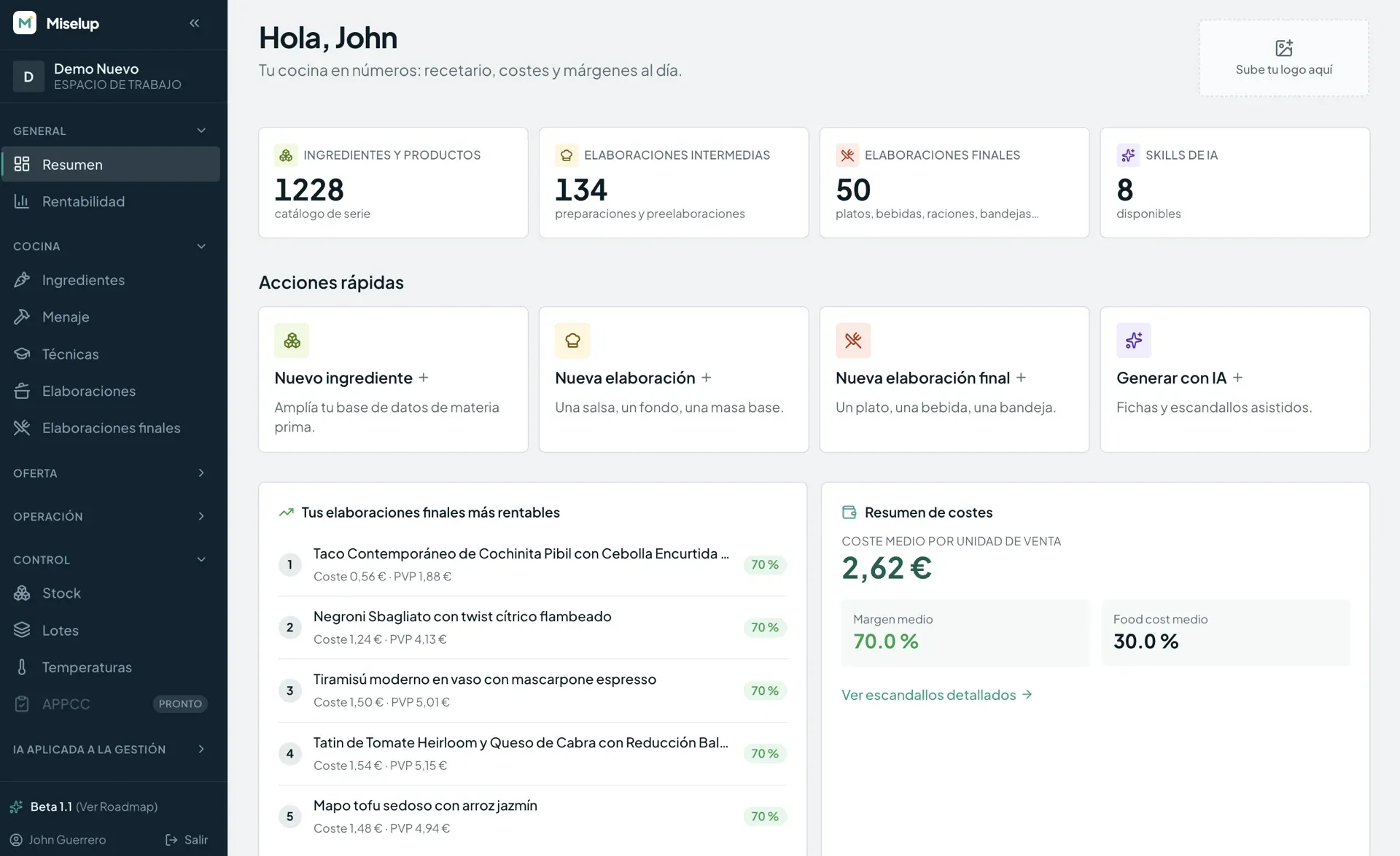
Avoid discrepancies on your street food route with recipe costing that adapts to your changing menu. Boost average ticket without losing a cent per serving.

Free forever No credit card Your recipe book in an afternoon

Spec sheet · dynamic

Smash Burger with bacon and cheese

2 units
Food cost 30 %
  • Ground beef (200 g) 200 g 2.00 €
  • Brioche bun (2 units) 2 units 1.20 €
  • Cheddar cheese slices 2 units 0.50 €
  • Smoked bacon 2 slices 0.80 €
  • Lettuce, tomato and sauce to taste 0.30 €

Cost / unit: 2.40 €

4.80 €
The why

Recipe costing in food trucks

Recipe costing in a food truck means calculating the real cost of every dish—from raw ingredients down to the last ketchup packet. Without it, your kitchen on wheels loses money on every service: according to Spanish market data, a street food business that doesn’t do recipe costing lets an average of 12% of its annual revenue slip away in dishes with hidden costs, uncontrolled yield loss, and prices that don’t cover the real cost structure of the business.

When you keep recipe costing up to date in a digital format, your margin per item becomes fully transparent. You know exactly how much you make on every burger, taco, or bowl, and you can adjust the menu in real time: drop the dishes that don’t perform, raise the price on hot sellers, or negotiate with suppliers. A food truck with live recipe costing makes menu and pricing decisions based on data—not gut feeling—and protects your profitability even when costs fluctuate, as they often do on the street.

Why Miselup

Miselup, built for food trucks

Optimize your food truck's food cost with Miselup. Dynamic recipe costing, spec sheets, and allergens for street food. Start free!

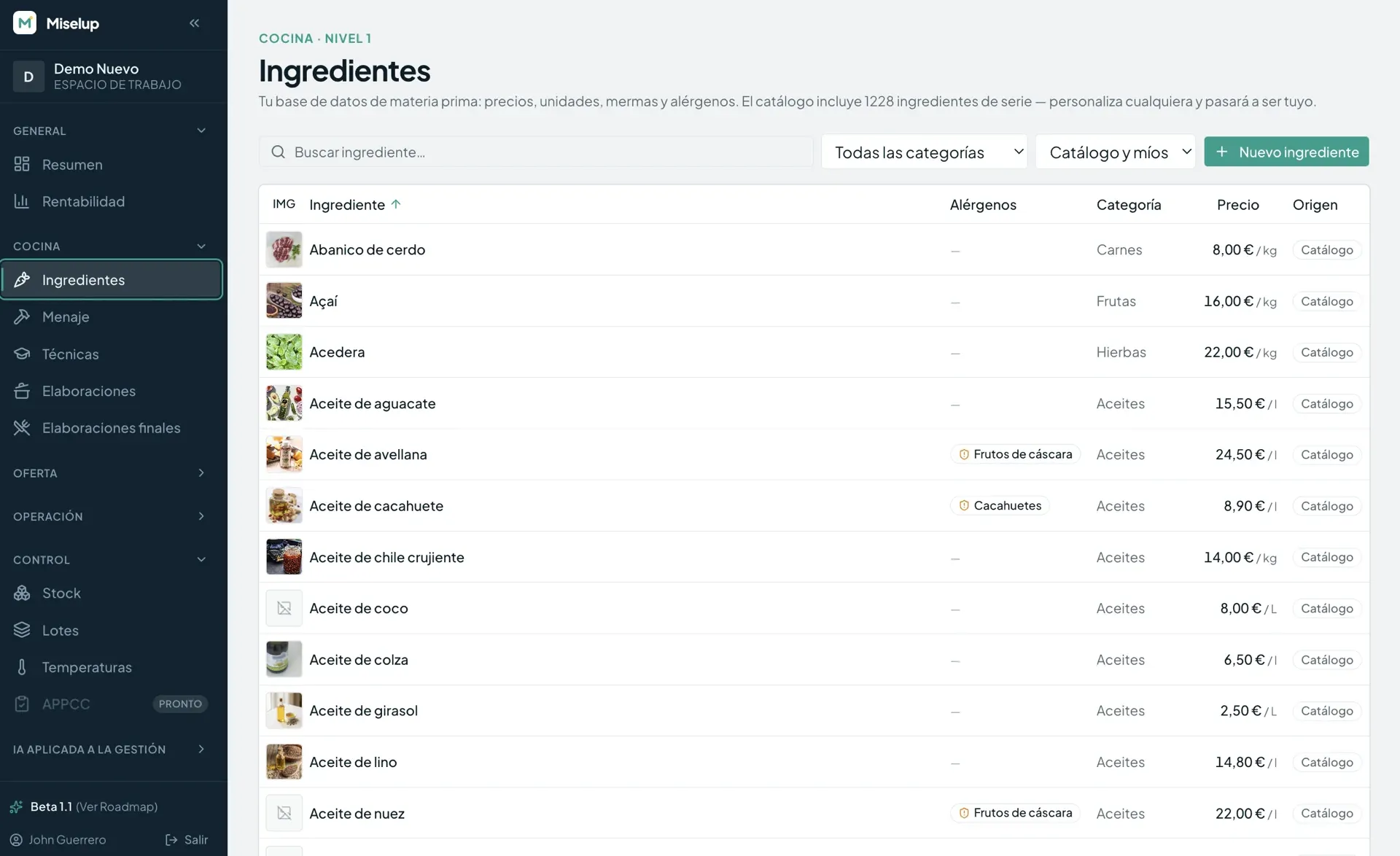
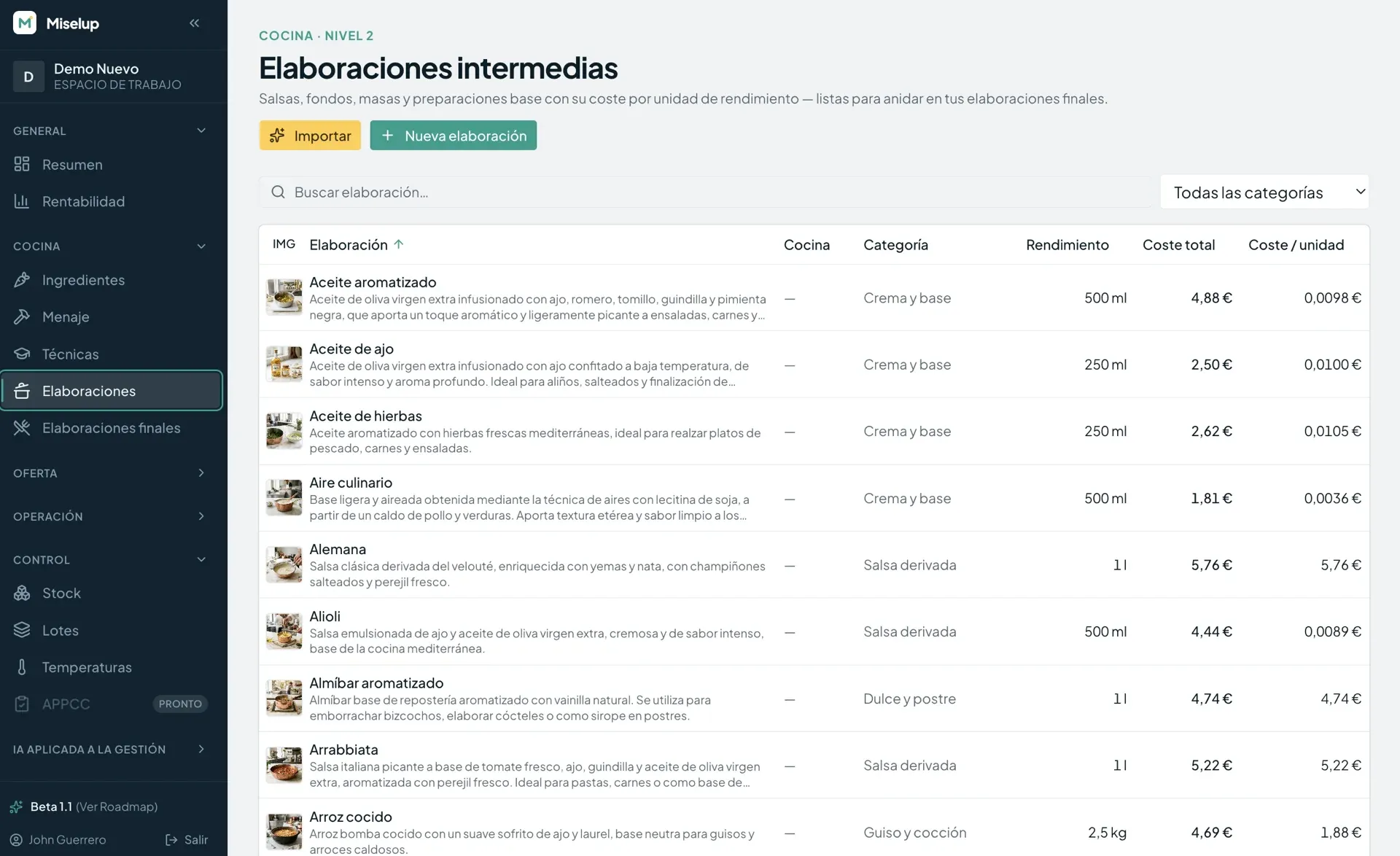
Dynamic recipe costing for changing menus

Adjust quantities on the fly and recalculate costs instantly. Perfect for food trucks with rotating menus.

Spec sheets with and without costs for your team

Share only ingredients and allergens with cooks, protecting your business margins.

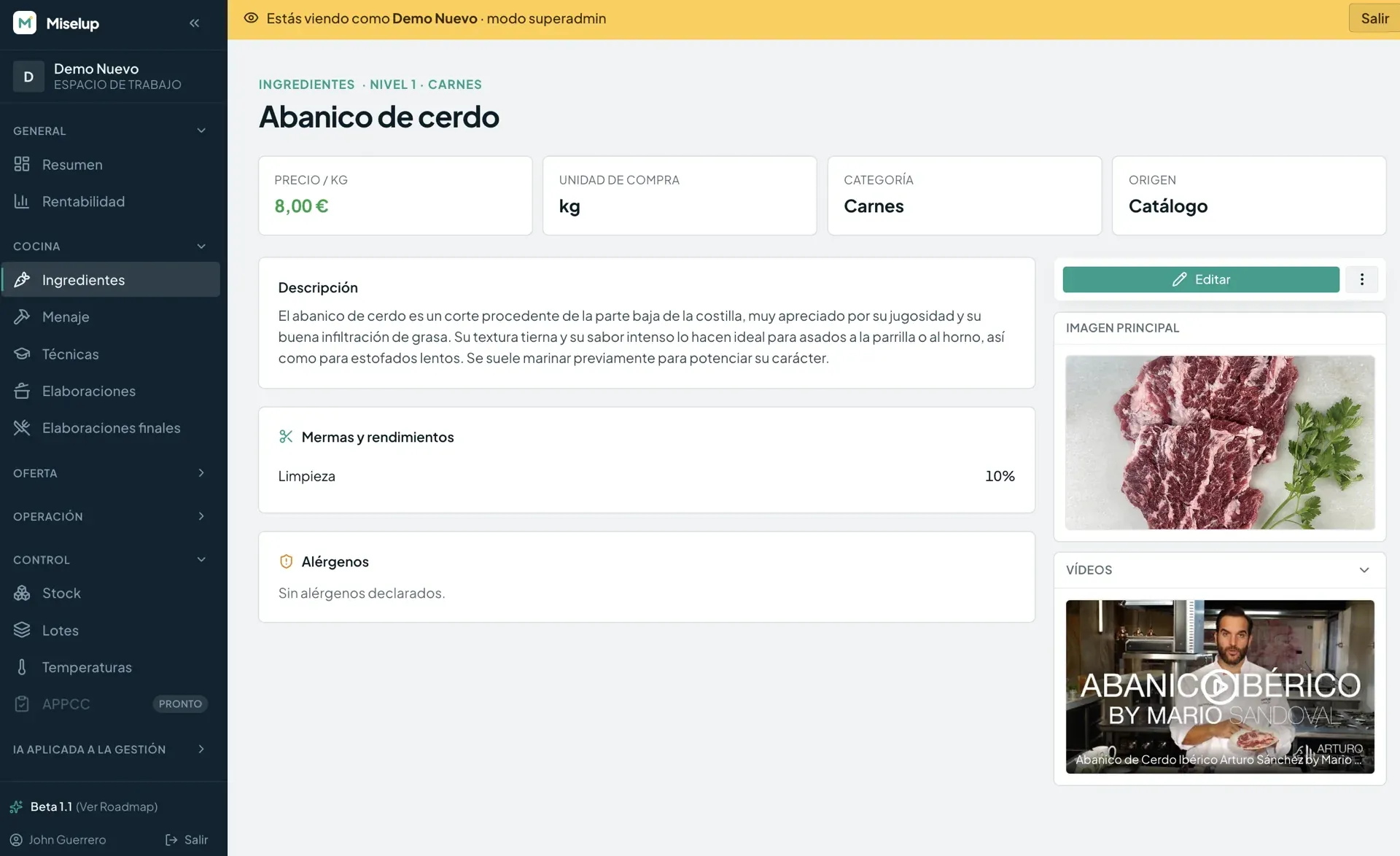
Allergen control for any event

Comply with regulations at every stop. Automatic declaration of 14 allergens on all your spec sheets.

Step by step

How to do recipe costing for a street food dish, step by step

1

Create the dish spec sheet

List every ingredient with its net raw quantity (grams, pieces, milliliters). Include even the salt, griddle oil, and sauces—on the street, every detail counts. This spec sheet is the foundation that makes recipe costing repeatable and comparable across services.

2

Calculate the real cost of each ingredient

Start from the purchase price (excluding VAT) and apply the real yield loss: cooking loss, trimmings, or evaporation. For example, 200 g of burger meat might shrink 15% during cooking, so the effective cost is higher. Always use the price per kilo or liter from the latest invoice.

3

Add up the direct dish costs

Include not just ingredients, but also the container, napkins, toothpicks, or any disposables you hand to the customer. In street food, packaging can account for up to 8% of total cost—a frequent oversight that crushes your margin.

4

Add the allocable indirect costs

Include a proportional share of gas, the food truck’s electricity, commissions from delivery platforms (if you use them), and ice for drinks. These expenses aren’t ingredients, but without them the dish doesn’t go out the window.

5

Set the selling price based on your target food cost

Divide the total dish cost by the food cost percentage you want to maintain (for example, 0.28 for 28%). Add the applicable VAT to the result (10% in hospitality). Check that the final price is competitive in your area and that the gross margin covers your fixed costs and leaves you a profit.

Worked example

Real-life example: recipe costing for a gourmet beef burger with cheese and bacon

Typical recipe costing for a 200 g burger served from a food truck, on a brioche bun, with cheddar cheese and crispy bacon. Prices reflect average market costs in Spain in 2026.

Ingredient Quantity Waste Cost
Brioche bun 1 pc 0 % 0,45 €
Beef (200 g raw) 200 g 15 % 2,20 €
Cheddar cheese 30 g 0 % 0,35 €
Sliced bacon 2 pc (40 g) 20 % 0,50 €
Lettuce, tomato, and onion 30 g 5 % 0,20 €
House secret sauce 20 ml 0 % 0,15 €
Oil, salt, and seasonings 5 g 0 % 0,05 €
Container, napkin, and toothpick 1 pc 0 % 0,30 €

Total cost

4,20 €

Food cost

28 %

Suggested price

16,50 € (VAT incl.)

Margin

10,80 € per unit

If you touch the meat quantity, the cost recalculates proportionally and the selling price adjusts automatically to keep the food cost at 28%, letting you simulate the impact of recipe or supplier changes in seconds.

67 %

of food trucks don’t update their recipe costing after supplier changes

industry reports

72 %

average gross margin in street food with optimized recipe costing

Spanish market data

18 %

average net profit increase when adjusting prices with digital recipe costing

industry reports

8 %

of the total dish cost goes to containers and disposables in street food

Spanish market data

In pictures

The craft, up close

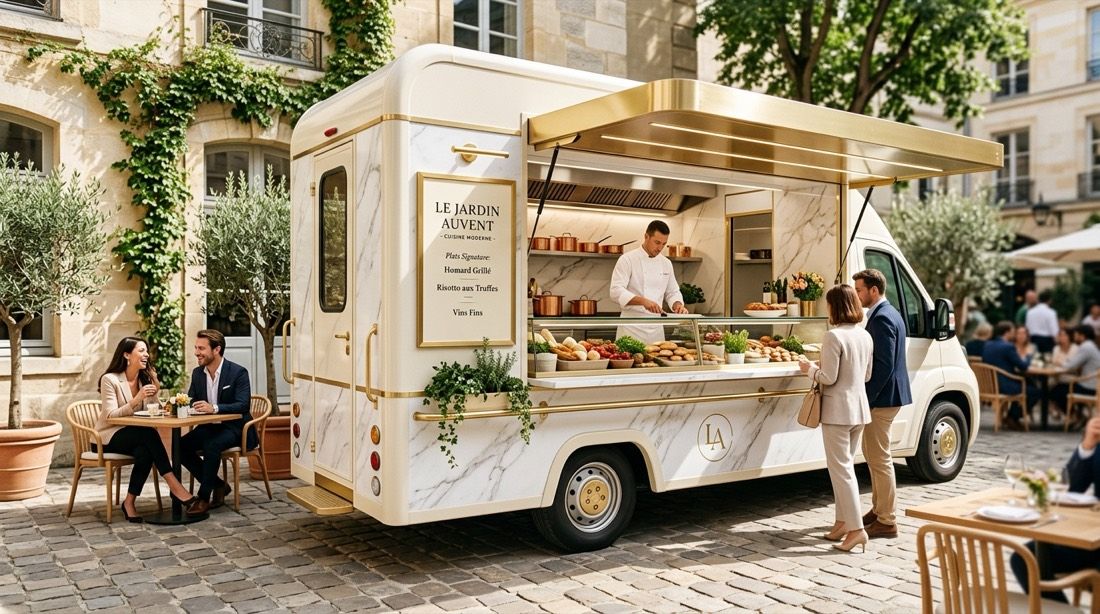
Food trucks

Compact kitchen, big margins
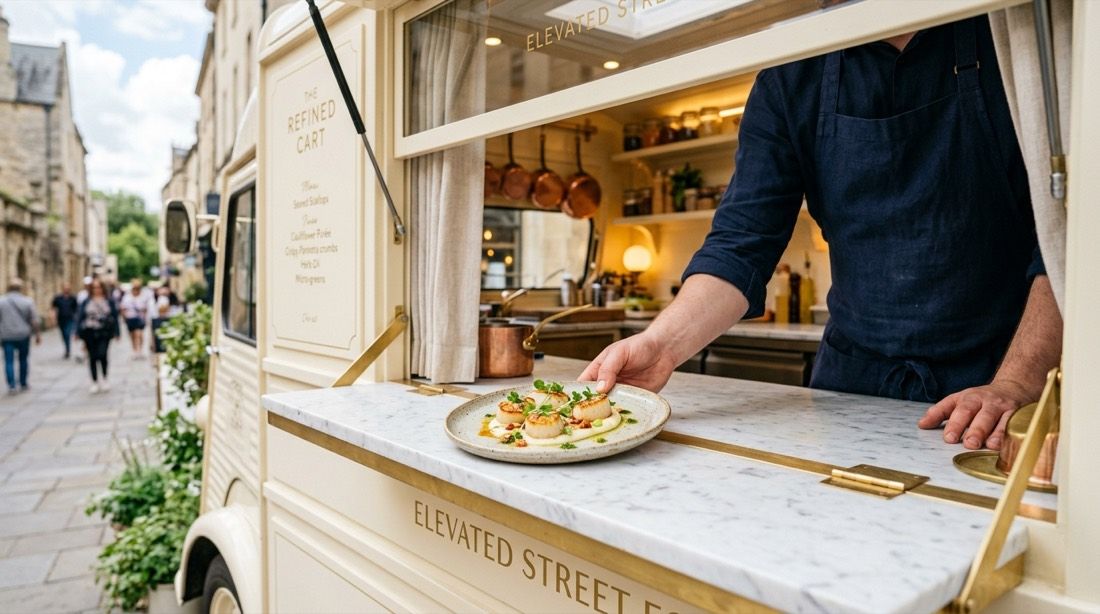
Street food, costed
Street food, costed
Every serving comes out profitable
Avoid these

Common recipe costing mistakes in food trucks

Ignoring real cooking yield loss

Many food trucks calculate costs based on raw weight and forget that meat, bacon, or vegetables shrink when cooked. A 200 g burger can lose 30 g on the griddle, sending real cost soaring if that yield loss isn’t factored in.

Leaving out packaging and napkin costs

On the street, every dish needs its box, paper, and toothpicks; these expenses add €0.25 to €0.50 per unit. Leaving them out skews your costing and makes the margin look bigger than it really is.

Using outdated purchase prices

Meat, oil, and dairy prices fluctuate weekly. Running recipe costing with an invoice from three months ago is the fast track to selling below cost without realizing it.

Setting the selling price without accounting for VAT

Applying your target food cost percentage to the cost and forgetting to add 10% VAT is a beginner’s mistake. The public selling price must include the tax, or the margin vanishes when you file your quarterly return.

The niche in depth

Types of food trucks and their recipe costing needs

Every street food format has its own challenges with costs, yield loss, and seasonality.

Gourmet burger truck · soon

High meat yield loss (12–18%) and the elevated cost of artisan buns. Recipe costing must also track waste in sauces and fresh vegetables.

Mexican taquería · soon

Corn or flour tortillas, slow-cooked fillings, and house-made salsas. Yield loss from evaporation in the fillings and the price swings of avocados demand a very up-to-date recipe costing.

Mobile pizzeria · soon

Controlled-fermentation dough, mozzarella, and perishable toppings. The wood-fired or gas oven adds a significant energy cost that must be allocated per pizza.

Artisan ice cream truck · soon

High-cost dairy raw materials and yield loss from melting or poorly calculated portions. Recipe costing must reflect the real yield of each tub and the cost of the cone or cup.

Specialty coffee truck · soon

Whole-bean coffee, fresh milk, and compostable cups. Labor cost and yield loss from unused ground coffee are critical to keeping a flat white from wrecking the margin.

Professionals

What the pros who cook with numbers say

Chefs, pastry chefs, bartenders, baristas and chocolatiers who swapped spreadsheets and notebooks for Miselup.

Carlos Mendoza

Carlos Mendoza

Owner · La Mesa Restaurant

“Every recipe change used to be a mess. With Miselup, if I bump the sirloin by 20 g, I see the real cost instantly. It's amazing—I no longer lose margin without noticing. Now costing is quick and safe, no calculator needed.”

Diego Valdés

Diego Valdés

Head Bartender · Nébula Bar

“My team sees the production sheet without any cost breakdown. That way they measure every cocktail precisely—no more over- or under-pouring. The recipe stays clear, and the numbers stay for my eyes only.”

Mateo Herrera

Mateo Herrera

Owner · Café Origen

“Swap whole milk for oat milk and Miselup updates allergens on the menu automatically. Every new season with sandwiches and pastries used to be a nightmare. Now my digital menu is always up to date and my celiac customers are grateful.”

Carlos Mendoza

Carlos Mendoza

Owner · La Mesa Restaurant

“Every recipe change used to be a mess. With Miselup, if I bump the sirloin by 20 g, I see the real cost instantly. It's amazing—I no longer lose margin without noticing. Now costing is quick and safe, no calculator needed.”

Diego Valdés

Diego Valdés

Head Bartender · Nébula Bar

“My team sees the production sheet without any cost breakdown. That way they measure every cocktail precisely—no more over- or under-pouring. The recipe stays clear, and the numbers stay for my eyes only.”

Mateo Herrera

Mateo Herrera

Owner · Café Origen

“Swap whole milk for oat milk and Miselup updates allergens on the menu automatically. Every new season with sandwiches and pastries used to be a nightmare. Now my digital menu is always up to date and my celiac customers are grateful.”

Carlos Mendoza

Carlos Mendoza

Owner · La Mesa Restaurant

“Every recipe change used to be a mess. With Miselup, if I bump the sirloin by 20 g, I see the real cost instantly. It's amazing—I no longer lose margin without noticing. Now costing is quick and safe, no calculator needed.”

Diego Valdés

Diego Valdés

Head Bartender · Nébula Bar

“My team sees the production sheet without any cost breakdown. That way they measure every cocktail precisely—no more over- or under-pouring. The recipe stays clear, and the numbers stay for my eyes only.”

Mateo Herrera

Mateo Herrera

Owner · Café Origen

“Swap whole milk for oat milk and Miselup updates allergens on the menu automatically. Every new season with sandwiches and pastries used to be a nightmare. Now my digital menu is always up to date and my celiac customers are grateful.”

Lucía Ramírez

Lucía Ramírez

Pastry Chef · Dulce Masa Bakery

“I always jot down recipes in my test notebook. I snap a photo with Miselup, and the AI turns that page into a technical sheet with exact ingredients and weights. It's magic—saves me hours of copying data and eliminates errors completely.”

Ana Solís

Ana Solís

Catering Director · Sol y Sombra Events

“For each wedding menu, I instantly see if the proposal is green or red. The margin traffic light tells me if I'm over cost before sending the quote. I negotiate with data, not blind. And I sleep easy once every event is locked in.”

Isabel Vega

Isabel Vega

Artisan Chocolatier · Bombones Amargo

“For a big order of 300 boxes, I enter the base recipe for 10 chocolates and Miselup scales everything: grams, time, cost. No neurotic math. From small workshop to large order, the scaling is spot on and I don't waste a single gram of cocoa.”

Lucía Ramírez

Lucía Ramírez

Pastry Chef · Dulce Masa Bakery

“I always jot down recipes in my test notebook. I snap a photo with Miselup, and the AI turns that page into a technical sheet with exact ingredients and weights. It's magic—saves me hours of copying data and eliminates errors completely.”

Ana Solís

Ana Solís

Catering Director · Sol y Sombra Events

“For each wedding menu, I instantly see if the proposal is green or red. The margin traffic light tells me if I'm over cost before sending the quote. I negotiate with data, not blind. And I sleep easy once every event is locked in.”

Isabel Vega

Isabel Vega

Artisan Chocolatier · Bombones Amargo

“For a big order of 300 boxes, I enter the base recipe for 10 chocolates and Miselup scales everything: grams, time, cost. No neurotic math. From small workshop to large order, the scaling is spot on and I don't waste a single gram of cocoa.”

Lucía Ramírez

Lucía Ramírez

Pastry Chef · Dulce Masa Bakery

“I always jot down recipes in my test notebook. I snap a photo with Miselup, and the AI turns that page into a technical sheet with exact ingredients and weights. It's magic—saves me hours of copying data and eliminates errors completely.”

Ana Solís

Ana Solís

Catering Director · Sol y Sombra Events

“For each wedding menu, I instantly see if the proposal is green or red. The margin traffic light tells me if I'm over cost before sending the quote. I negotiate with data, not blind. And I sleep easy once every event is locked in.”

Isabel Vega

Isabel Vega

Artisan Chocolatier · Bombones Amargo

“For a big order of 300 boxes, I enter the base recipe for 10 chocolates and Miselup scales everything: grams, time, cost. No neurotic math. From small workshop to large order, the scaling is spot on and I don't waste a single gram of cocoa.”

FAQ

Frequently asked questions

Food trucks

What’s the ideal target food cost for a food truck?
In street food, food cost usually ranges between 25% and 30% of the selling price before VAT, depending on the type of cuisine and positioning. Gourmet burger trucks can aim for 28–30%, while ice cream or specialty coffee trucks can allow themselves 22–25% thanks to higher margins on drinks. The key is that the percentage you choose covers all your fixed costs and leaves a sufficient net profit.
How do I calculate the selling price for my street food dishes from the recipe costing?
Divide the total dish cost (ingredients, packaging, and allocable indirect costs) by your target food cost as a decimal (for example, 0.28 for 28%). The result is the selling price before VAT. To get the final selling price, add 10% VAT (or the applicable rate). If the resulting price is off-market, you need to review ingredients, servings, or the target food cost itself.
How often should I update my food truck’s recipe costing?
Ideally, you should review purchase prices at least once a week, especially for volatile ingredients like meat, fish, or oil. With digital recipe costing software, updates are instant and you can immediately see how any supplier change affects your margins.
What digital tools are available for recipe costing in a food truck?
There are specific solutions like Miselup that let you create spec sheets, calculate yield loss, allocate indirect costs, and get the recommended selling price in seconds. They work from a mobile phone—key for a business on the move—and avoid the spreadsheets that become outdated the moment a price changes.
How does seasonality of ingredients affect recipe costing?
Products like tomatoes, avocados, or seafood can double in price depending on the season. If your menu depends on them, your recipe costing must reflect that variation to avoid selling at a loss. A good practice is to maintain spec sheets with alternative suppliers or adjust the selling price when costs peak.
Is it mandatory to include the food truck license costs in the recipe costing?
The municipal license or public space occupancy fee is not a direct dish cost, but it is a fixed business cost. You don’t put them into the per-unit costing, but you must consider them when setting your overall target gross margin. If your per-dish margin doesn’t also cover those fixed expenses, the business won’t be profitable at the end of the month.
John Guerrero
About the author

John Guerrero

Gastronomy consultant · Founder of ChefBusiness and Miselup

15+ years advising restaurants, bakeries and hospitality businesses across Spain and Latam. Creator of ChefBusiness, AI Chef Pro and Miselup: the digital mise en place his clients use to control food cost to the cent.

Ready to stop losing money on every plate?

Set up your recipe book in an afternoon and try Free forever. No credit card, no commitment.