✨ Early Bird 40% off your first 3 months with code · 40% off · 3 months · EARLYBIRD
Cocktail bars

Cocktail recipe costing & cost per drink that leaves no room for bar leaks

Every drop of premium spirit and every garnish counts. Stop eyeballing estimates and take control of your menu’s liquid profitability with recipe costing that recalculates margins when gin prices rise or you change the glass.

Free forever No credit card Your recipe book in an afternoon

Spec sheet · dynamic

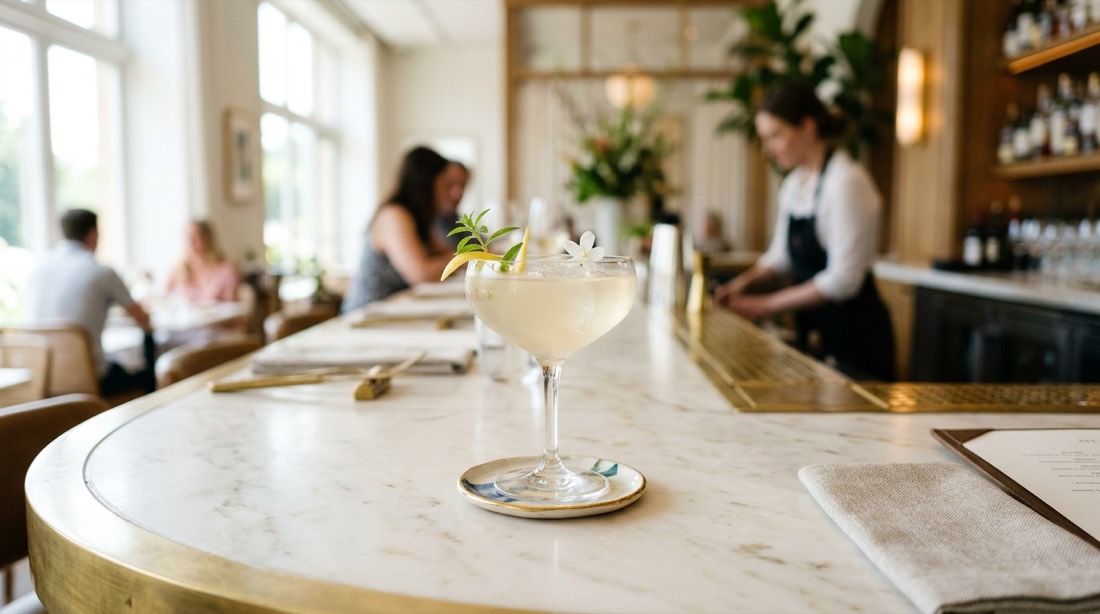
Premium French 75 Cocktail

1 serving
Food cost 20 %
  • Premium London Dry Gin 40 ml €0.84
  • Freshly squeezed Eureka lemon juice 20 ml €0.12
  • Rich cane sugar syrup (2:1) 10 ml €0.04
  • Brut Réserve Champagne (to top up) 80 ml €2.20
  • Lemon twist (garnish) 1 unit €0.05
  • Ice cubes (for shaker) 120 g €0.02

Cost / serving: €3.27

€3.27
The why

Recipe costing in cocktail bars

Cocktail costing is the breakdown of the exact cost of every ingredient in a drink, from the base spirit to the citrus wheel or the ice. A bar that doesn't cost its menu is losing between 12% and 20% of its revenue through overpouring, unstandardized recipes, and drinks whose real cost exceeds the menu price. With a premium gin bottle at €35, every poorly measured milliliter is margin evaporating.

Digitizing your costing lets you set each cocktail's selling price with a target food cost of 18–22%, simulate the impact of switching spirits or suppliers, and spot which drinks are actually profitable. In cocktail bars, where ice, garnish, and bottle waste can add a hidden 5% to costs, having live data in the shaker is the difference between a bar that makes money and one that just moves volume.

Why Miselup

Miselup, built for cocktail bars

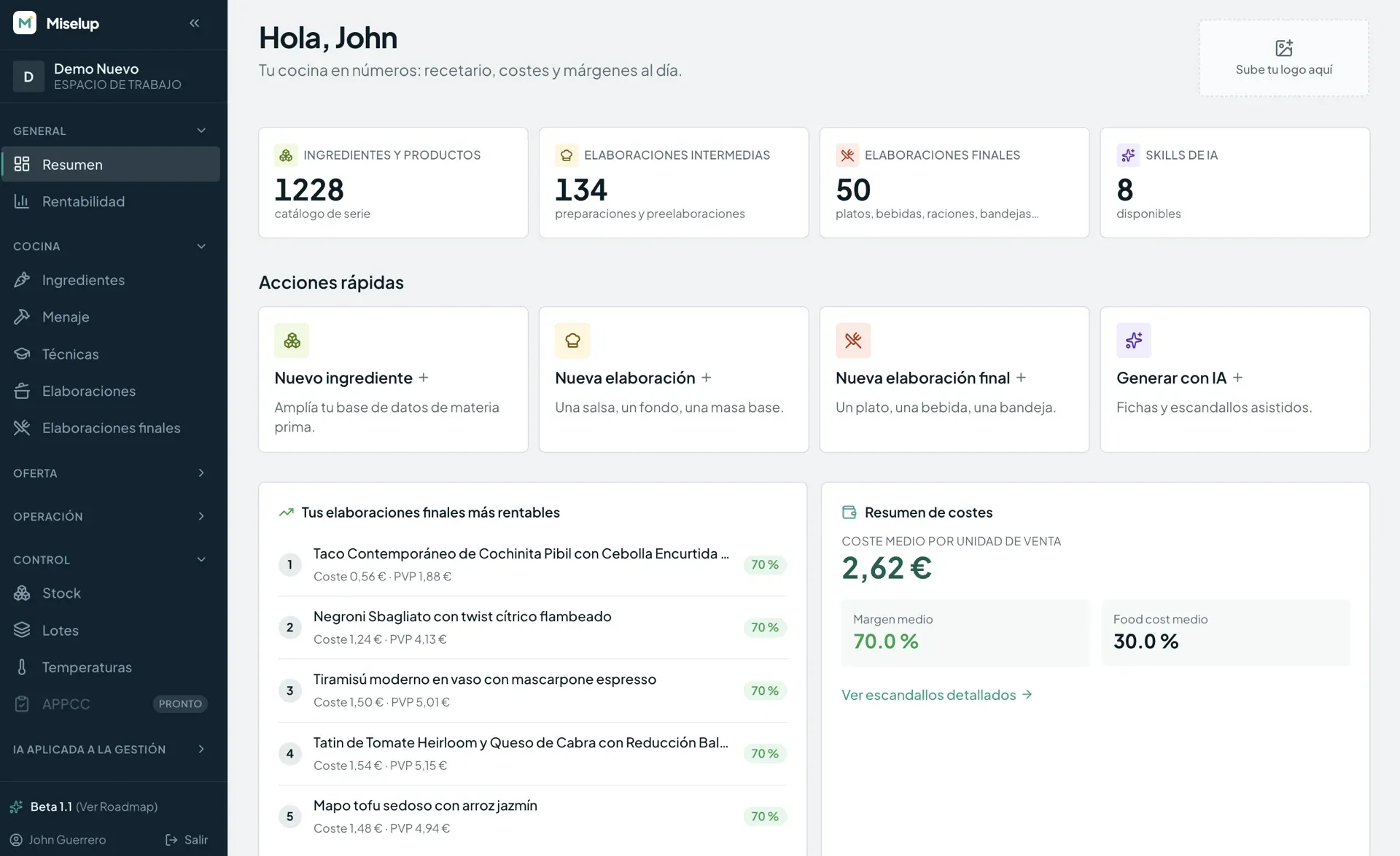
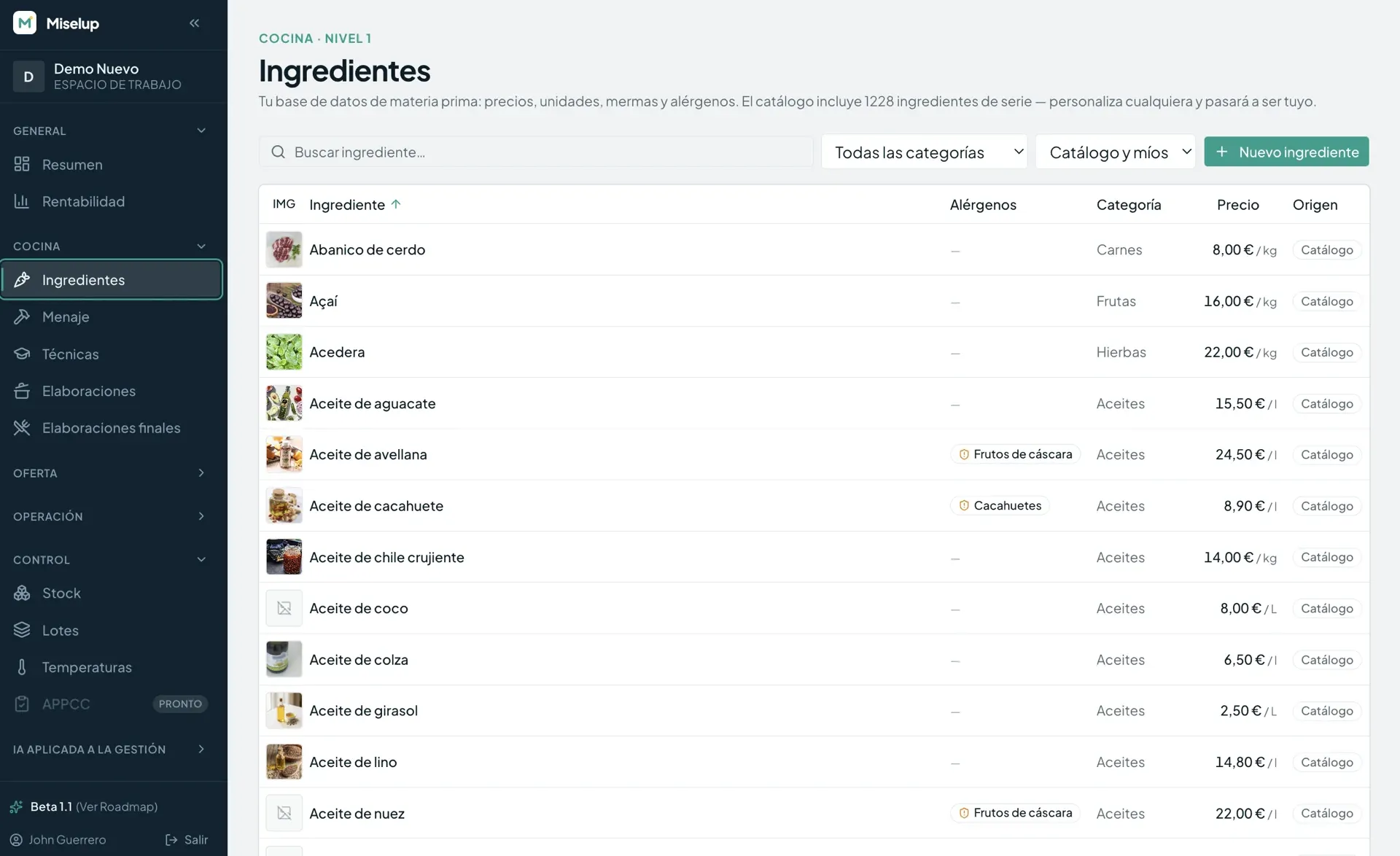
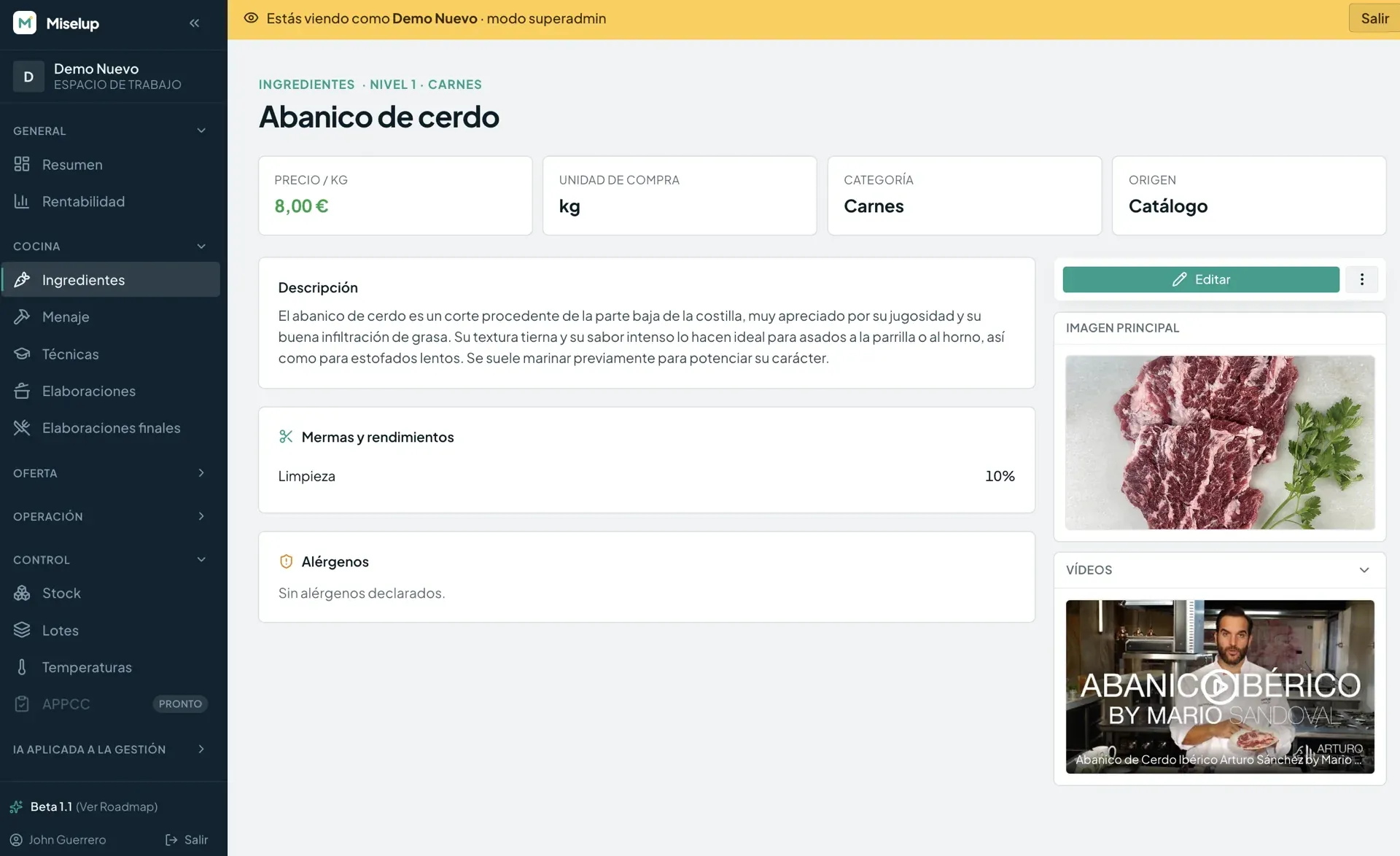
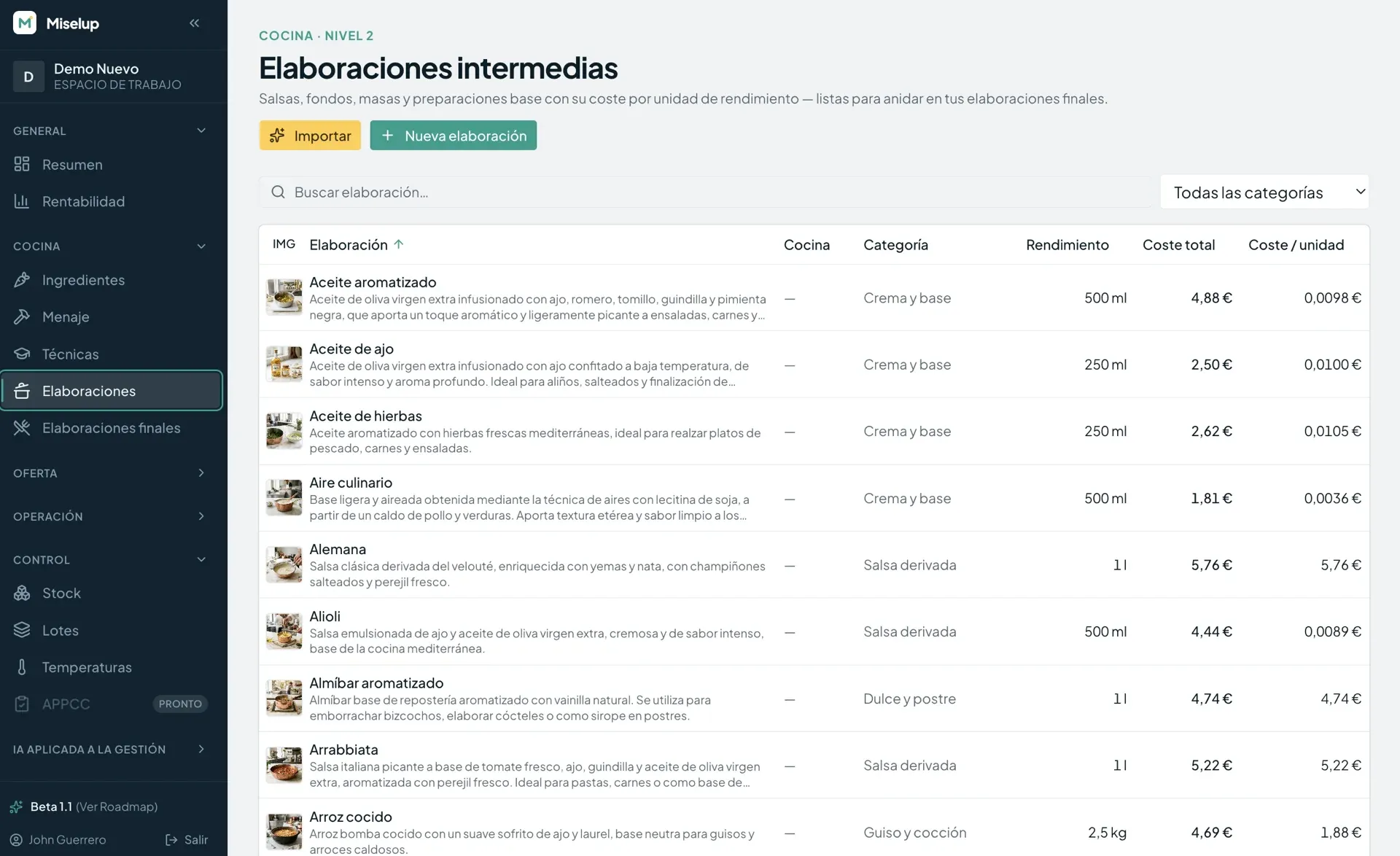
Calculate the cost per serving of each signature cocktail and control your bar's food cost with dynamic recipe costing. Spec sheets with allergens and cocktail recipe scaling.

The true cost of every serve, even when the glass changes

Is your cocktail served in a coupe, highball or Nick & Nora? Enter the glass and its capacity in the spec sheet. The recipe costing recalculates the exact cost of the liquid portion and garnishes, adjusting the selling price based on serving size.

Control garnishes and decorations that eat into your margin

From a lemon twist to a premium olive skewer: every decoration adds up. Assign a cost to twists, absinthe sprays and designer ice, and discover how they impact your bottom line.

Scale recipes from one cocktail to a punch bowl for events

Turn the ratios of a single Negroni into a 30‑liter batch for an event without errors. Production scaling instantly gives you the shopping list and total cost, keeping the drink's consistency and your margin intact.

Step by step

How to cost cocktails and calculate the cost per glass step by step

1

Standardize the recipe in milliliters and units

Define the exact formula for each cocktail: 50 ml gin, 20 ml freshly squeezed lemon juice, 15 ml sugar syrup, 2 dashes of Angostura. Without a locked-down recipe, costing is impossible. Always use jiggers to ensure what you serve matches the costing.

2

Calculate the cost per milliliter of each spirit and liqueur

Divide the bottle price (tax included) by its net milliliters. A 700 ml bottle of gin that costs €28 has a cost of €0.04/ml. For liqueurs used in tiny amounts, this math is even more crucial: Chartreuse at €45 per 700 ml bottle costs €0.064/ml.

3

Apply the waste from evaporation, sticking, and bottle dregs

In cocktail bars, the average waste per open bottle (evaporation, drips, the last unusable pour) is 3–5%. For freshly squeezed citrus juices, pulp and straining waste can reach 15%. Add this percentage to the ingredient cost to get a real cost.

4

Include the cost of ice, garnish, and glassware

Ice isn't free: a 5 kg bag costs €1.50 and one cocktail can hold 150 g of ice (€0.045). A citrus wheel (€0.08–0.12), an olive (€0.10), or a straw (€0.03) all add up. If you use branded balloon glasses, allocate a depreciation cost per use.

5

Sum up all costs and set the selling price according to the bar's target food cost

If the total cocktail cost is €1.85 and your target food cost is 20%, the selling price excluding VAT should be €9.25. Apply 10% VAT to get the menu price: €10.18. Round to €10.50 or €10.90 depending on your psychological pricing strategy.

Worked example

Real-world example: costing a classic Dry Martini

Costing for a Dry Martini served in a pre-chilled cocktail glass, with London Dry gin, dry vermouth, and an olive. Horeca Spain cost prices, June 2026.

Ingredient Quantity Waste Cost
Premium London Dry gin (700 ml) 60 ml 4% €2.50
Dry vermouth (1 L) 10 ml 3% €0.09
Gordal olive with anchovy (unit) 1 pc. 0% €0.12
Mixing ice (large cube) 200 g 5% €0.06
Lemon peel (twist) 1 pc. 10% €0.05
Cocktail glass (depreciation per use) 1 pc. 0% €0.08
Bar napkin 1 pc. 0% €0.02
Direct labor (2 min) 0.033 h 0% €0.50

Total cost

€3.42

Food cost

19.5%

Suggested price

€17.50 (VAT incl.)

Margin

€14.08 per drink

If you swap the London Dry gin for a craft gin at €42 per bottle, the cost rises to €4.02 and food cost jumps to 23%. To keep the margin, you'd need to raise the selling price to €20.50 or adjust the pour to 50 ml.

18-22%

Recommended target food cost for craft cocktail bars and lounges

industry reports

3-5%

Average waste per open spirit bottle (evaporation, drips, unserviceable bottom)

Spanish market data

15%

Average waste in freshly squeezed citrus juices (pulp, straining, and oxidation)

Spanish market data

€0.30–0.60

Average garnish and glassware cost per cocktail served at the bar

industry reports

In pictures

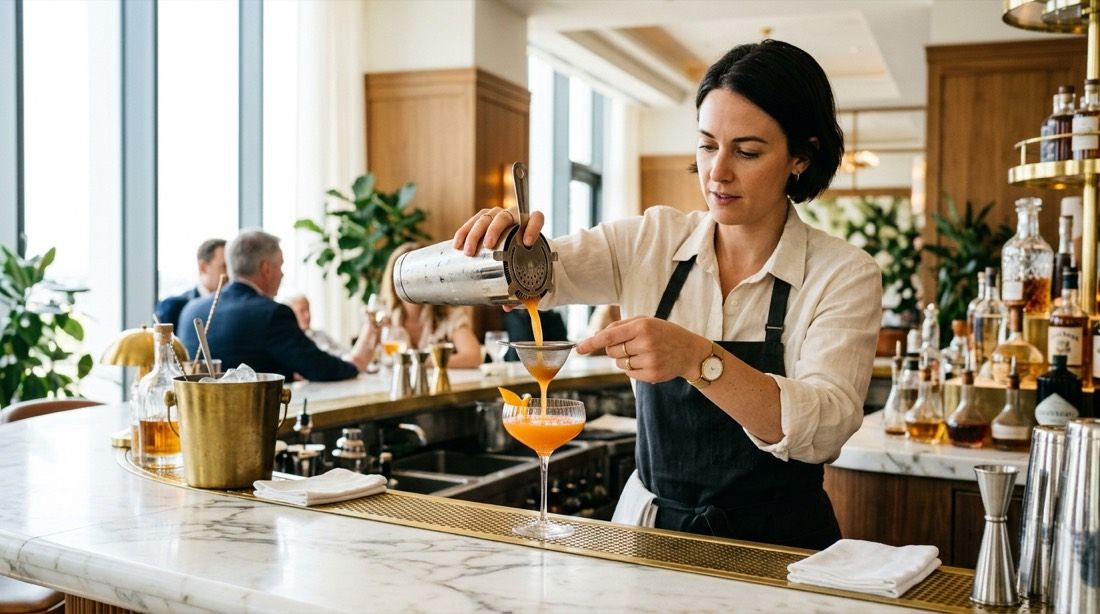
The craft, up close

Cocktail bars

Every glass with its costing
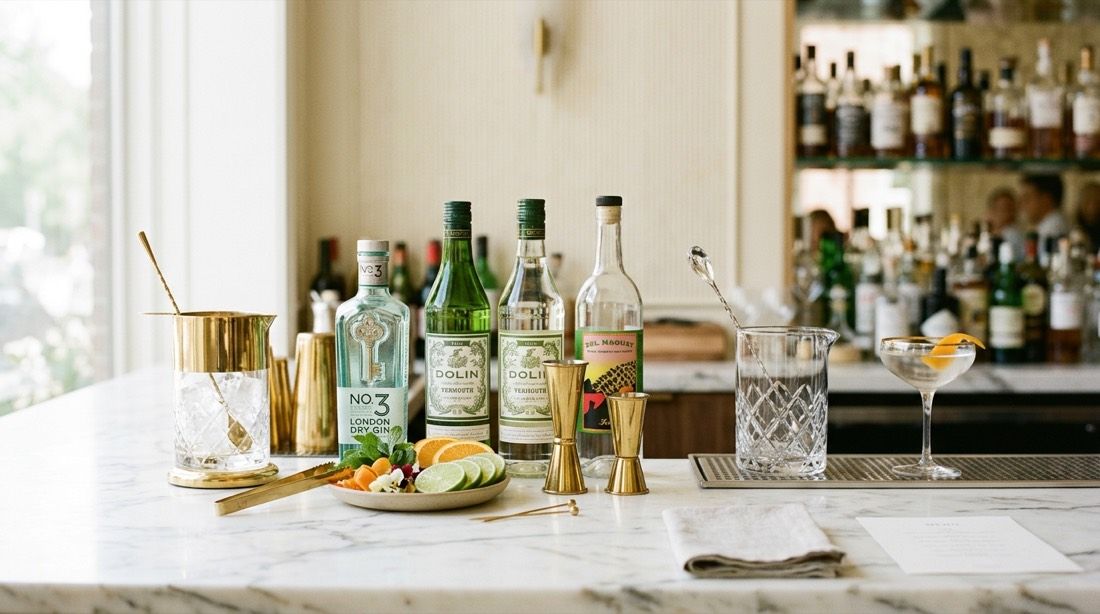
The bar's mise en place
Price per glass, clear margin
Avoid these

Common costing mistakes in cocktail bars and pubs

Not counting ice as an ingredient with a cost

A cocktail bar can go through 50–80 kg of ice in a night. At €0.30/kg, that's €24 vanishing from your bottom line because it wasn't costed. And high-end cocktail ice (large, clear cubes) costs twice as much as standard bagged ice.

Using the sealed bottle price without applying open-bottle waste

Out of a 700 ml bottle, the last 15–20 ml never get served because they carry cork or pourer impurities. If you don't account for that 3% waste, you're artificially inflating the margin on the first 35 drinks and losing money on the last ones.

Not updating the costing when the bottle format changes

A liqueur you used to buy in 1 L bottles at €22 now comes in 700 ml at €18. Its cost per milliliter went from €0.022 to €0.026—an 18% hike. If you keep the same selling price, your food cost has ballooned without you even noticing.

Costing only the spirits and forgetting the mixers and house-made syrups

A house ginger syrup requires sugar, fresh ginger, water, and cooking time. Its cost can be €0.15 per portion. If you leave it out of the costing, you're giving away the very ingredient that sets your Moscow Mule apart from any other bar.

The niche in depth

Types of costings every cocktail bar needs

Every cocktail family has a different cost structure. These are the key costings to control your bar's profitability:

Classic cocktail costing (Dry Martini, Negroni, Old Fashioned) · soon

Dominated by the base spirit cost (60–80% of the total). Bottle waste and garnish are the critical points to watch.

Signature or seasonal cocktail costing · soon

Includes house-made syrups, infusions, and foams with high waste. The prep labor (mise en place) must be charged as an added cost per glass.

Non-alcoholic cocktail costing (mocktail) · soon

The food cost is often lower (10–15%), but so is the menu price. The challenge is finding the balance so the gross margin in euros is attractive, not just the percentage.

Pitcher and sharing format costing · soon

The proportion of ice and garnish is not linear compared to a single glass. A 1 L pitcher of Sangria uses proportionally less ice than four 250 ml glasses, which improves the margin.

Straight spirit costing (shots, neat whisky, premium gin & tonic) · soon

Here the bottle cost is everything. A premium gin & tonic with craft tonic and botanicals can have a garnish cost higher than the tonic itself—something that will surprise you if you don't cost it out.

Professionals

What the pros who cook with numbers say

Chefs, pastry chefs, bartenders, baristas and chocolatiers who swapped spreadsheets and notebooks for Miselup.

Carlos Mendoza

Carlos Mendoza

Owner · La Mesa Restaurant

“Every recipe change used to be a mess. With Miselup, if I bump the sirloin by 20 g, I see the real cost instantly. It's amazing—I no longer lose margin without noticing. Now costing is quick and safe, no calculator needed.”

Diego Valdés

Diego Valdés

Head Bartender · Nébula Bar

“My team sees the production sheet without any cost breakdown. That way they measure every cocktail precisely—no more over- or under-pouring. The recipe stays clear, and the numbers stay for my eyes only.”

Mateo Herrera

Mateo Herrera

Owner · Café Origen

“Swap whole milk for oat milk and Miselup updates allergens on the menu automatically. Every new season with sandwiches and pastries used to be a nightmare. Now my digital menu is always up to date and my celiac customers are grateful.”

Carlos Mendoza

Carlos Mendoza

Owner · La Mesa Restaurant

“Every recipe change used to be a mess. With Miselup, if I bump the sirloin by 20 g, I see the real cost instantly. It's amazing—I no longer lose margin without noticing. Now costing is quick and safe, no calculator needed.”

Diego Valdés

Diego Valdés

Head Bartender · Nébula Bar

“My team sees the production sheet without any cost breakdown. That way they measure every cocktail precisely—no more over- or under-pouring. The recipe stays clear, and the numbers stay for my eyes only.”

Mateo Herrera

Mateo Herrera

Owner · Café Origen

“Swap whole milk for oat milk and Miselup updates allergens on the menu automatically. Every new season with sandwiches and pastries used to be a nightmare. Now my digital menu is always up to date and my celiac customers are grateful.”

Carlos Mendoza

Carlos Mendoza

Owner · La Mesa Restaurant

“Every recipe change used to be a mess. With Miselup, if I bump the sirloin by 20 g, I see the real cost instantly. It's amazing—I no longer lose margin without noticing. Now costing is quick and safe, no calculator needed.”

Diego Valdés

Diego Valdés

Head Bartender · Nébula Bar

“My team sees the production sheet without any cost breakdown. That way they measure every cocktail precisely—no more over- or under-pouring. The recipe stays clear, and the numbers stay for my eyes only.”

Mateo Herrera

Mateo Herrera

Owner · Café Origen

“Swap whole milk for oat milk and Miselup updates allergens on the menu automatically. Every new season with sandwiches and pastries used to be a nightmare. Now my digital menu is always up to date and my celiac customers are grateful.”

Lucía Ramírez

Lucía Ramírez

Pastry Chef · Dulce Masa Bakery

“I always jot down recipes in my test notebook. I snap a photo with Miselup, and the AI turns that page into a technical sheet with exact ingredients and weights. It's magic—saves me hours of copying data and eliminates errors completely.”

Ana Solís

Ana Solís

Catering Director · Sol y Sombra Events

“For each wedding menu, I instantly see if the proposal is green or red. The margin traffic light tells me if I'm over cost before sending the quote. I negotiate with data, not blind. And I sleep easy once every event is locked in.”

Isabel Vega

Isabel Vega

Artisan Chocolatier · Bombones Amargo

“For a big order of 300 boxes, I enter the base recipe for 10 chocolates and Miselup scales everything: grams, time, cost. No neurotic math. From small workshop to large order, the scaling is spot on and I don't waste a single gram of cocoa.”

Lucía Ramírez

Lucía Ramírez

Pastry Chef · Dulce Masa Bakery

“I always jot down recipes in my test notebook. I snap a photo with Miselup, and the AI turns that page into a technical sheet with exact ingredients and weights. It's magic—saves me hours of copying data and eliminates errors completely.”

Ana Solís

Ana Solís

Catering Director · Sol y Sombra Events

“For each wedding menu, I instantly see if the proposal is green or red. The margin traffic light tells me if I'm over cost before sending the quote. I negotiate with data, not blind. And I sleep easy once every event is locked in.”

Isabel Vega

Isabel Vega

Artisan Chocolatier · Bombones Amargo

“For a big order of 300 boxes, I enter the base recipe for 10 chocolates and Miselup scales everything: grams, time, cost. No neurotic math. From small workshop to large order, the scaling is spot on and I don't waste a single gram of cocoa.”

Lucía Ramírez

Lucía Ramírez

Pastry Chef · Dulce Masa Bakery

“I always jot down recipes in my test notebook. I snap a photo with Miselup, and the AI turns that page into a technical sheet with exact ingredients and weights. It's magic—saves me hours of copying data and eliminates errors completely.”

Ana Solís

Ana Solís

Catering Director · Sol y Sombra Events

“For each wedding menu, I instantly see if the proposal is green or red. The margin traffic light tells me if I'm over cost before sending the quote. I negotiate with data, not blind. And I sleep easy once every event is locked in.”

Isabel Vega

Isabel Vega

Artisan Chocolatier · Bombones Amargo

“For a big order of 300 boxes, I enter the base recipe for 10 chocolates and Miselup scales everything: grams, time, cost. No neurotic math. From small workshop to large order, the scaling is spot on and I don't waste a single gram of cocoa.”

FAQ

Frequently asked questions

Cocktail bars

What is the ideal food cost for a cocktail bar in Spain?
The target food cost for cocktail bars ranges from 18% to 22%. Classic cocktails with mid-shelf spirits usually land in the lower band (18–20%), while signature cocktails with fresh ingredients and house-made syrups can approach 22%. Above 25%, the gross margin is too tight to cover ambiance, music, and skilled staff.
How do I calculate the selling price of a cocktail from its costing?
Divide the total cocktail cost (ingredients, waste, garnish, ice, and direct labor) by the target food cost. If the cost is €1.50 and you target a 20% food cost, the selling price excluding VAT is €7.50. With 10% hospitality VAT, the menu price will be €8.25. Always round up to €8.50 or €8.90 to keep the menu psychologically appealing.
What waste should I apply to an open bottle of vermouth at the bar?
Once opened, vermouth oxidizes and has a shelf life of 4–6 weeks in ideal conditions. Apply 5% waste for evaporation and unserviceable dregs, but add an extra 2–3% for spoilage if you don't have high turnover on that label. A vermouth you throw away half-full is a cost that must be absorbed by the glasses you sell.
How does ice affect a cocktail costing?
Ice can account for between €0.04 and €0.12 per drink depending on type and quantity. A tall, refreshing drink with crushed ice uses more weight than one served neat in a chilled glass. If your bar pours 200 cocktails a day, daily ice expense runs €8–24—an amount that must be costed and built into your selling prices.
Should I include the bartender's labor in the cocktail costing?
Yes, at least the direct preparation labor. If a bartender takes 2 minutes to make a drink and their hourly cost is €14, allocate €0.47 per cocktail. For high-complexity cocktails (fat washing, clarification), labor can exceed the base spirit cost and must be reflected in the final price.
How do I cost a cocktail that uses seasonal or variable-price ingredients?
Create a base costing with the mid-season price and update it weekly. For a strawberry cocktail, the cost might be €0.20 in May and €0.60 in December. If you don't adjust the selling price or swap the garnish, your food cost triples in winter. Seasonal cocktail menus must be flexible or priced to absorb that swing.
John Guerrero
About the author

John Guerrero

Gastronomy consultant · Founder of ChefBusiness and Miselup

15+ years advising restaurants, bakeries and hospitality businesses across Spain and Latam. Creator of ChefBusiness, AI Chef Pro and Miselup: the digital mise en place his clients use to control food cost to the cent.

Ready to stop losing money on every plate?

Set up your recipe book in an afternoon and try Free forever. No credit card, no commitment.