✨ Early Bird 40% off your first 3 months with code · 40% off · 3 months · EARLYBIRD
Hotel buffets

The hotel buffet and breakfast recipe costing that tracks what's actually eaten

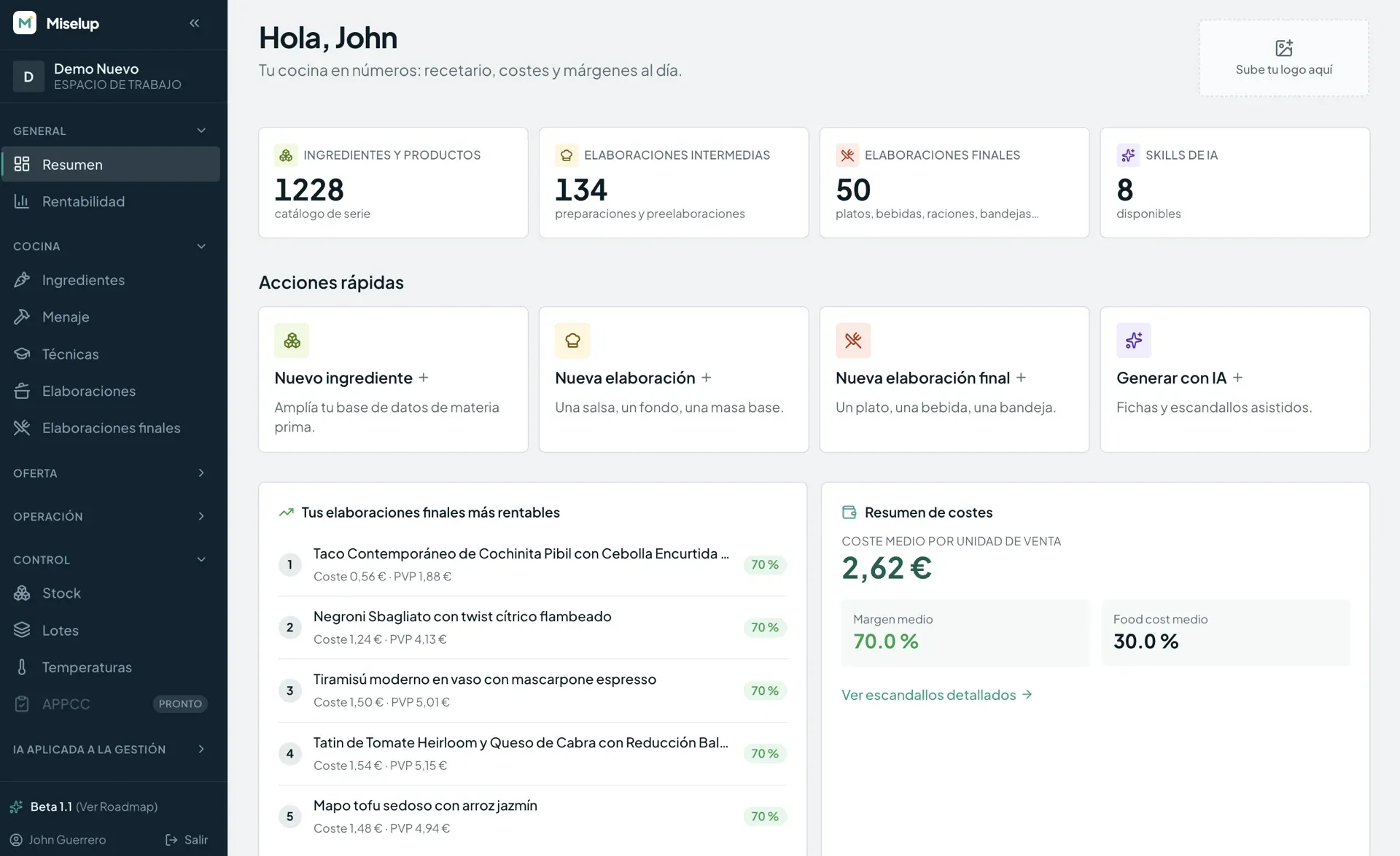
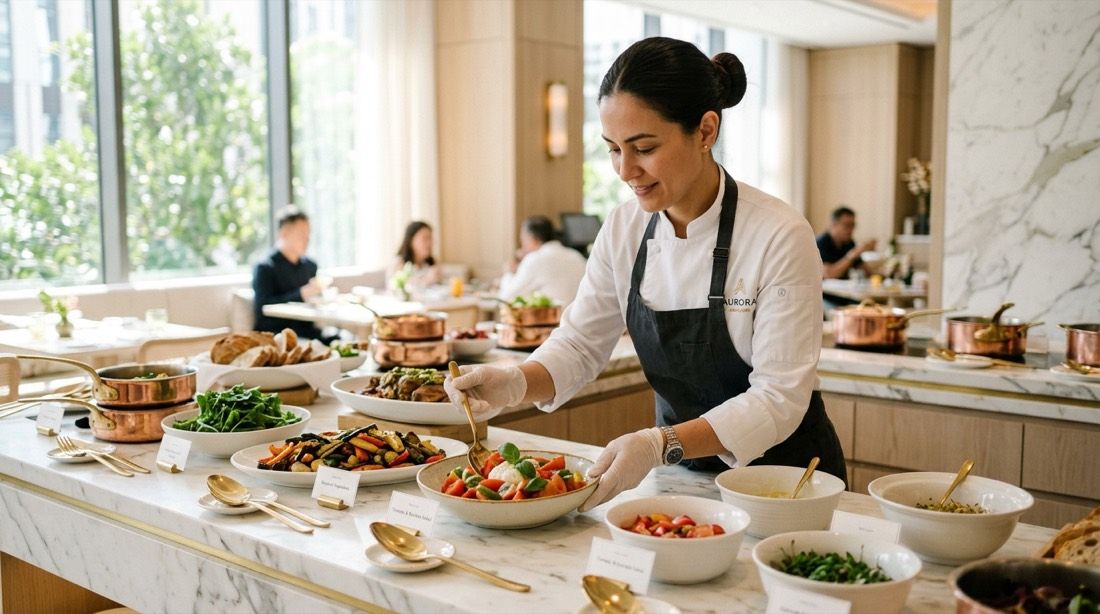
In a buffet, you don't profit from what you display, but from what isn't wasted. Miselup costs out every tray of croissants, cut fruit, or cold cuts and weighs the cost per cover based on expected occupancy and actual yield loss. Adjust the offering without sacrificing the perception of abundance and keep breakfast food cost under control even in high season.

Free forever No credit card Your recipe book in an afternoon

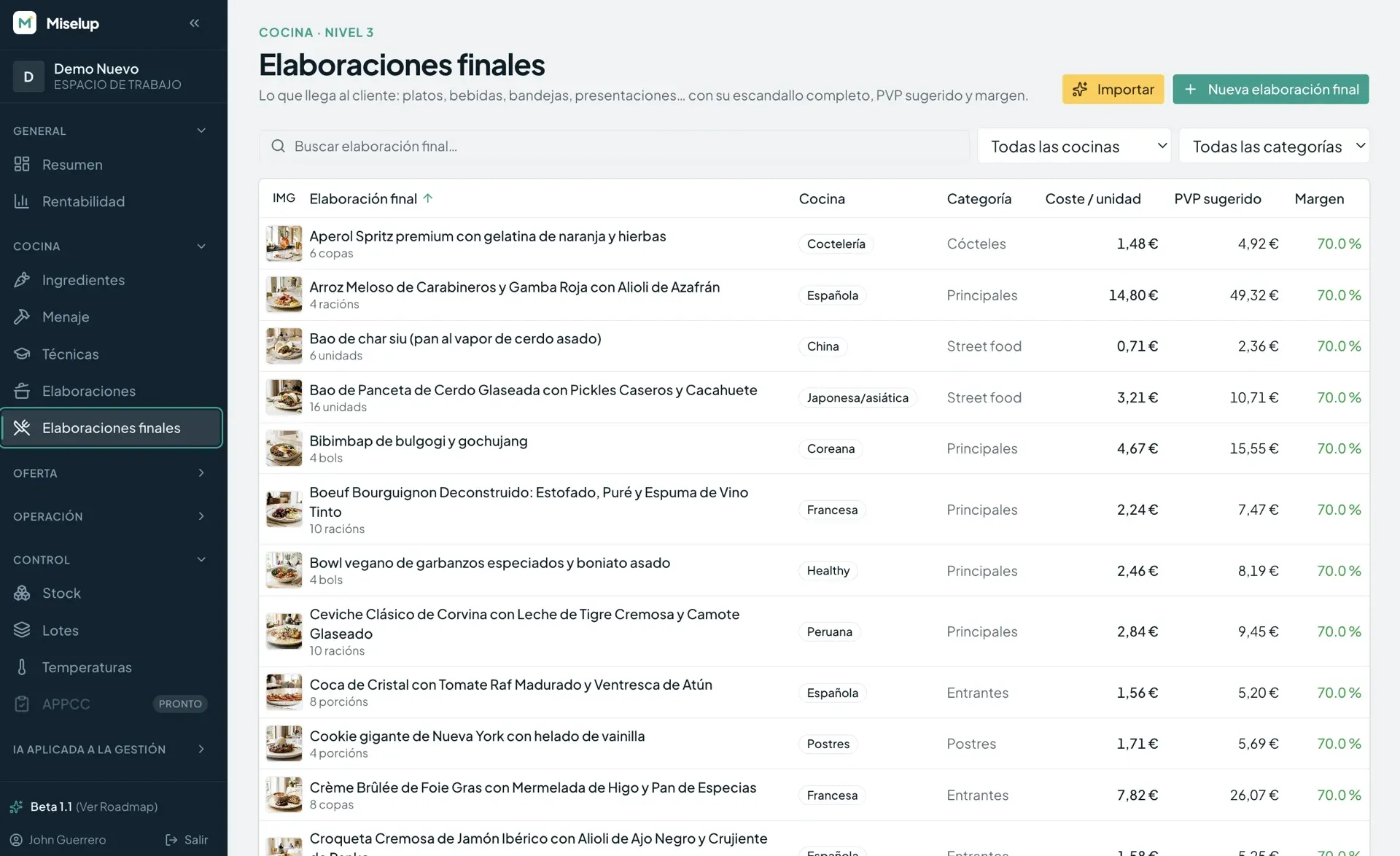
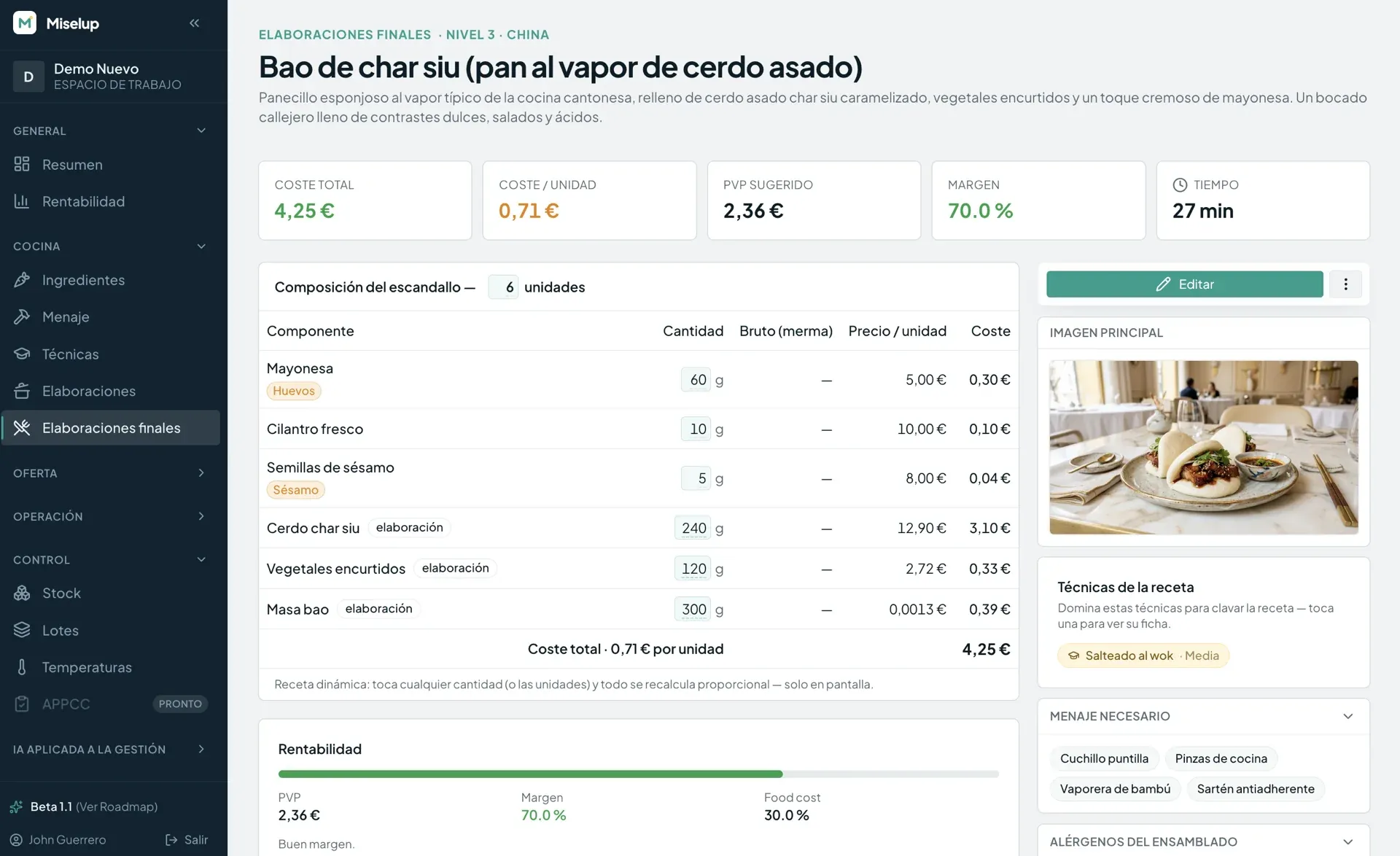
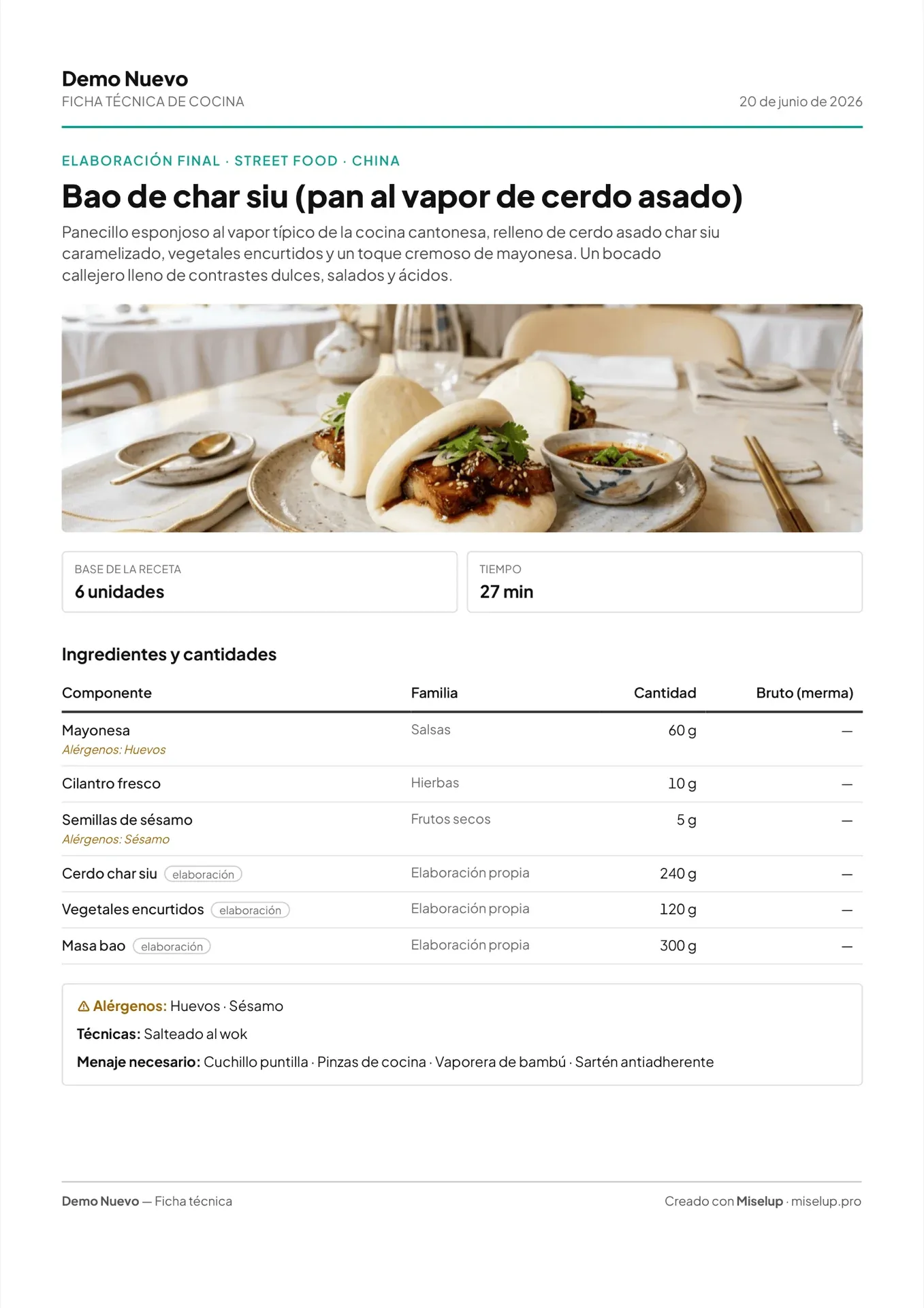
Spec sheet · dynamic

Mini potato and caramelized onion tortilla skewer (buffet)

80 units
Food cost 25 %
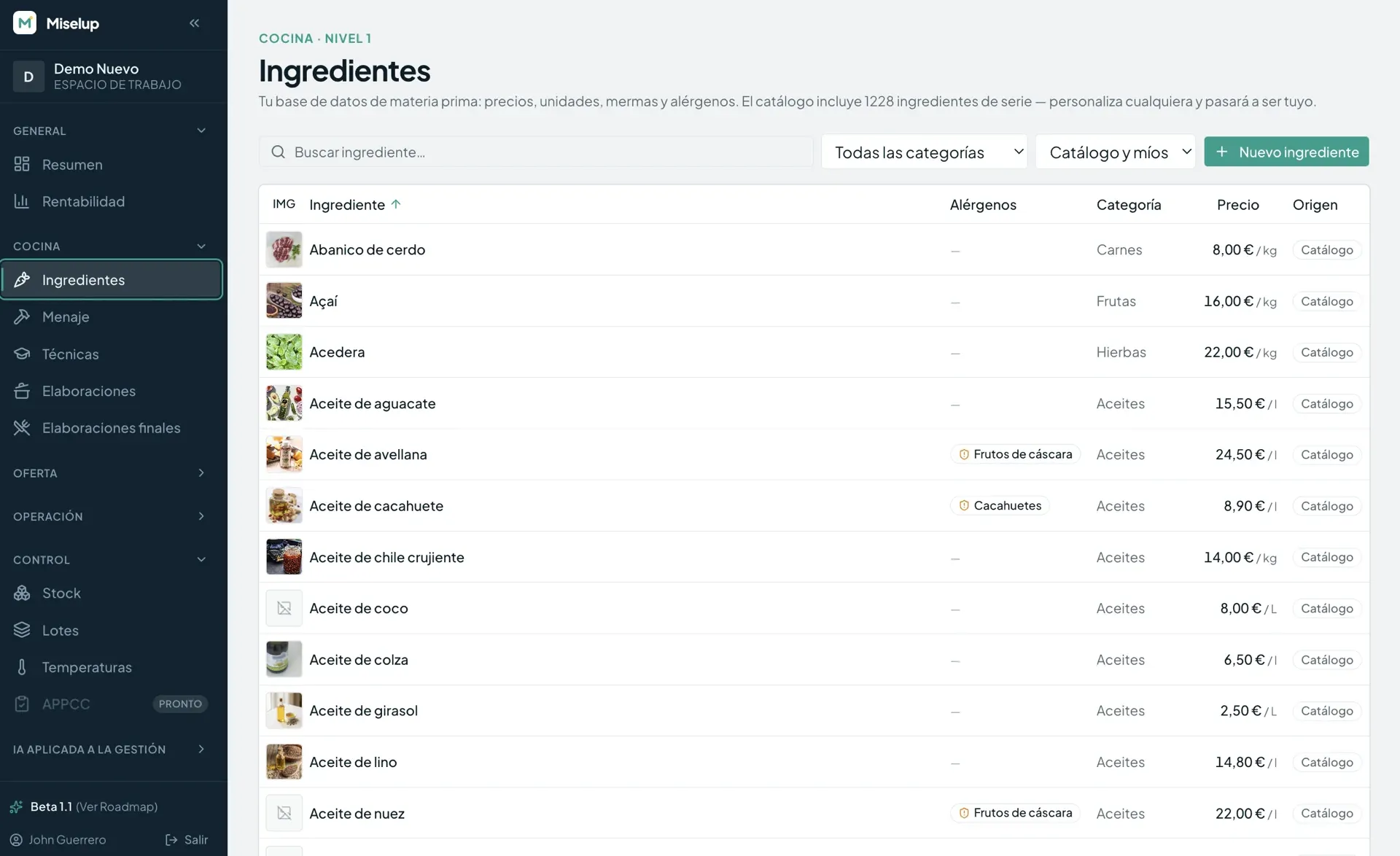
  • Fresh eggs 24.000 units 4,80 €
  • Galician potato 5.000 kg 4,00 €
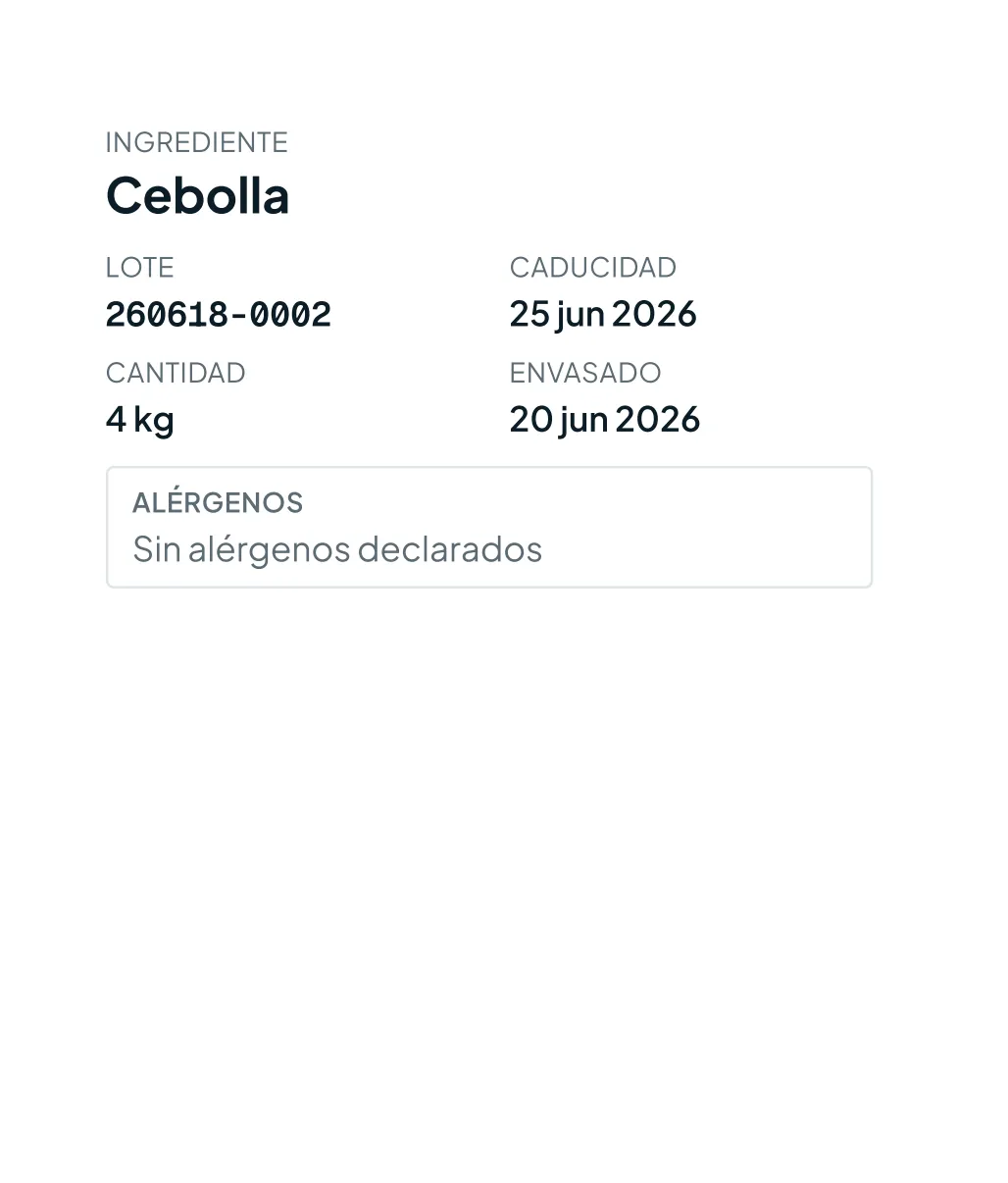
  • Sweet onion 2.000 kg 2,40 €
  • Extra virgin olive oil 1.500 L 10,50 €
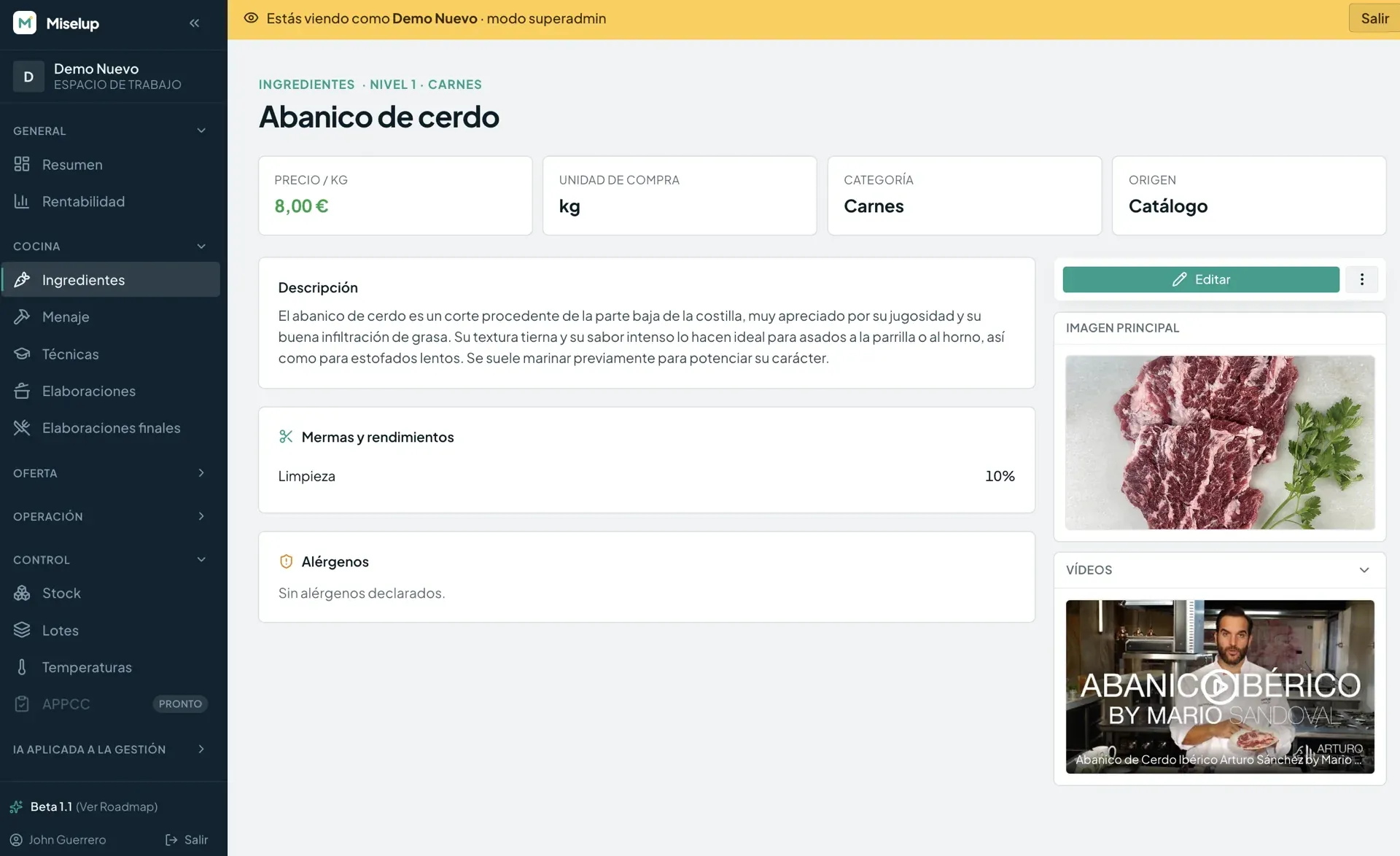
  • Salt and pepper 0.030 kg 0,10 €

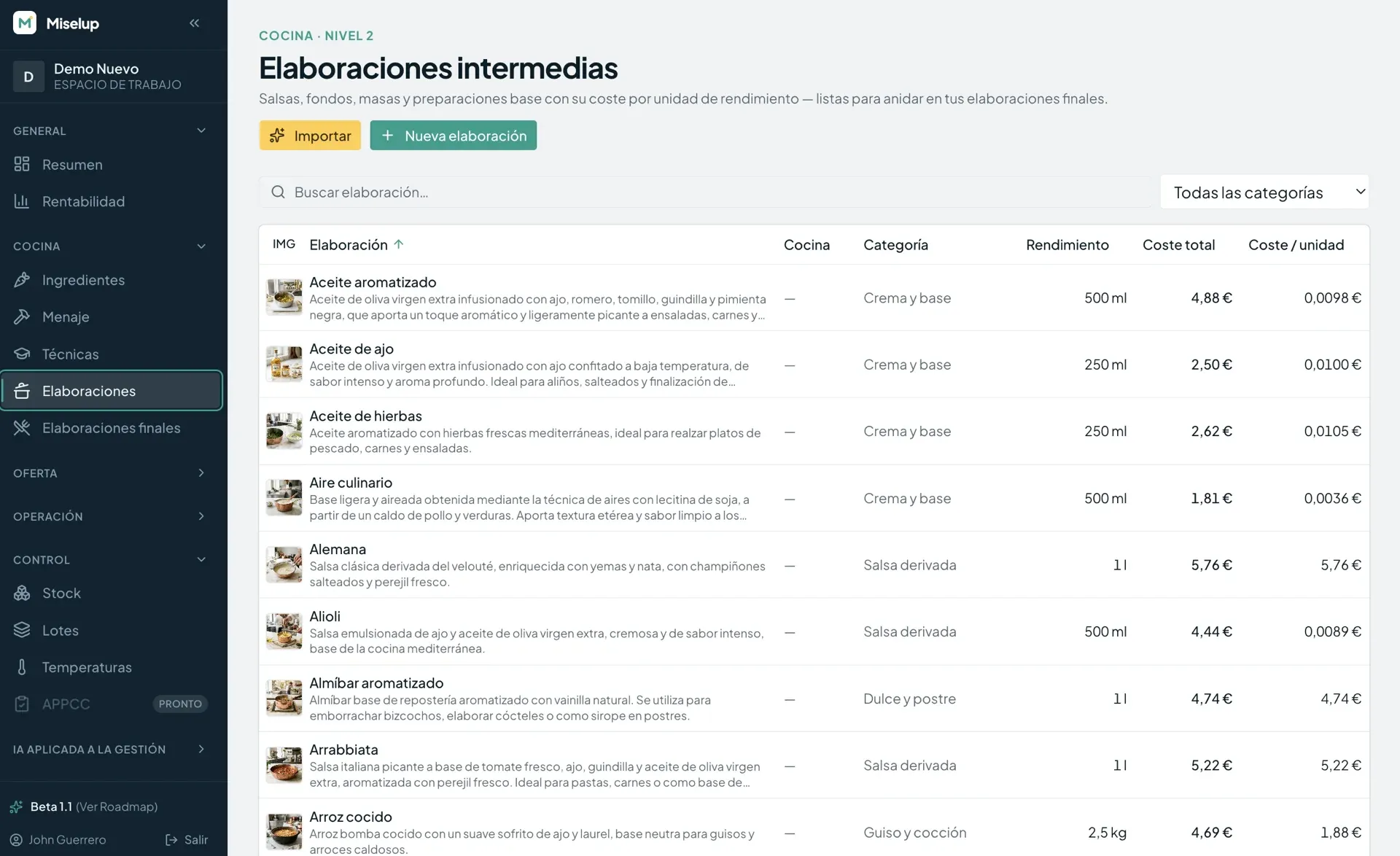
Cost / unit: 0,27 €

21,80 €
The why

Recipe costing in hotel buffets

At a hotel buffet, recipe costing is the only tool that stops waste from eating your margin: without it, the average cost overrun per breakfast hovers around 15–20% of food spend, according to industry reports. We're talking about whole trays thrown away, unpredictable consumption, and ingredient prices that fluctuate unchecked.

With a live digital recipe costing tool, every service shows the real cost per guest and the margin per item. You can decide to cut out-of-season fruit variety, adjust pastry replenishment, or raise the weekend buffet price—all while maintaining a 25–30% target food cost without guests noticing any cutbacks.

Why Miselup

Miselup, built for hotel buffets

Control the actual cost of your buffet per cover. Cost out each tray, calculate yield loss, and adjust the margin of hotel breakfasts and buffets with real data.

Cost per cover calculation with yield loss included

Displaying 100 croissants for 50 guests is not the same as for 200. You assign a yield loss percentage and the system gives you the actual cost per person, fine-tuning the F&B budget down to the cent.

Impact of displayed but unconsumed products

A fresh orange juice in a dispenser or an opened butter that's left over impacts the margin. Record that loss and the buffet recipe costing automatically deducts it from the theoretical yield.

Agile adaptation to occupancy and meal plan

Tomorrow you go from 30 to 120 breakfasts? Adjust the buffet recipe block and the system recalculates the production sheet and expected cost, maintaining quality without stockouts.

Step by step

How to cost out a hotel buffet step by step

1

Define the buffet spread

List every item on display: breads, pastries, cold cuts, fruit, dairy, juices, coffee, and hot dishes. Group them into categories to simplify cost and waste calculations.

2

Calculate the unit cost for each reference

For each product, take the purchase price and apply the relevant yield loss (fruit peeling 15%, ham trimming 10%, croissant breakage 5%). Pre-packaged items and liquids usually have 0% waste.

3

Estimate average consumption per guest

Based on historical data or a pilot run, assign an average per-person consumption for each category (e.g., 1.5 croissants, 80 g of fruit, 200 ml of juice). This figure is critical to avoid under- or over-stocking.

4

Add up indirect service costs

Include kitchen and front-of-house labor, electricity for hot-holding equipment, linen laundry, and dishware replacement. For a breakfast buffet, these costs typically range from €1.50 to €2.50 per cover.

5

Calculate the total cost per guest and set the price

Divide the total buffet cost (food + indirects) by the expected number of guests. Apply the target food cost (25–30%) to get the selling price. If the result exceeds the room rate, adjust the offering or negotiate with suppliers.

25-30%

Recommended food cost for hotel buffets

industry reports

€4.50

Average cost per breakfast buffet in Spain (2026)

Spain market data

15-20%

Food waste without recipe costing

industry reports

€1.50-2.50

Indirect costs per cover

Spain market data

In pictures

The craft, up close

Hotel buffets

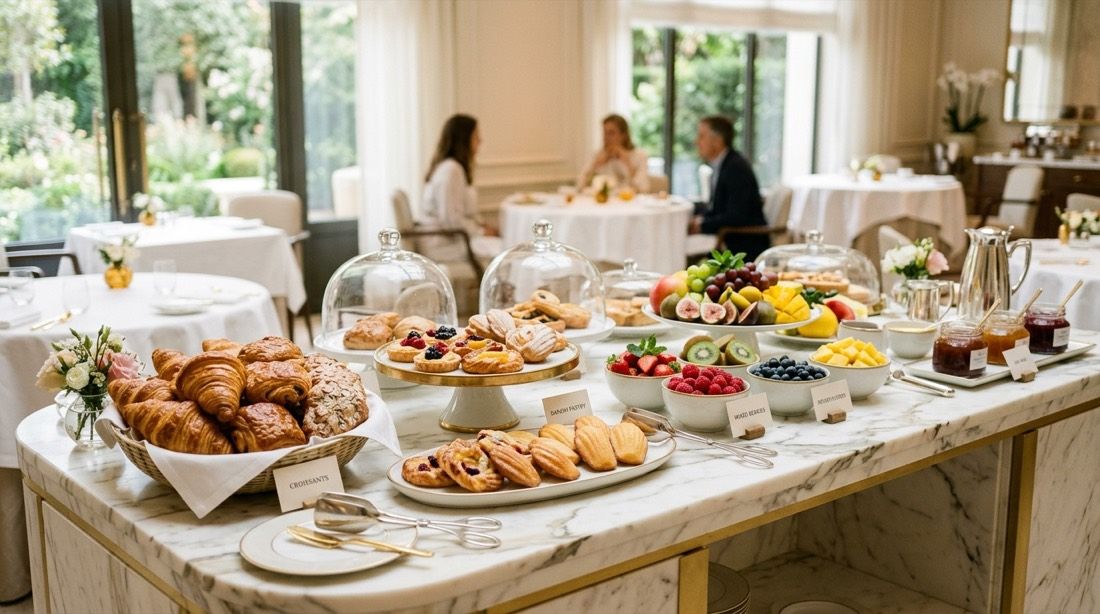
A buffet controlled by spec sheets
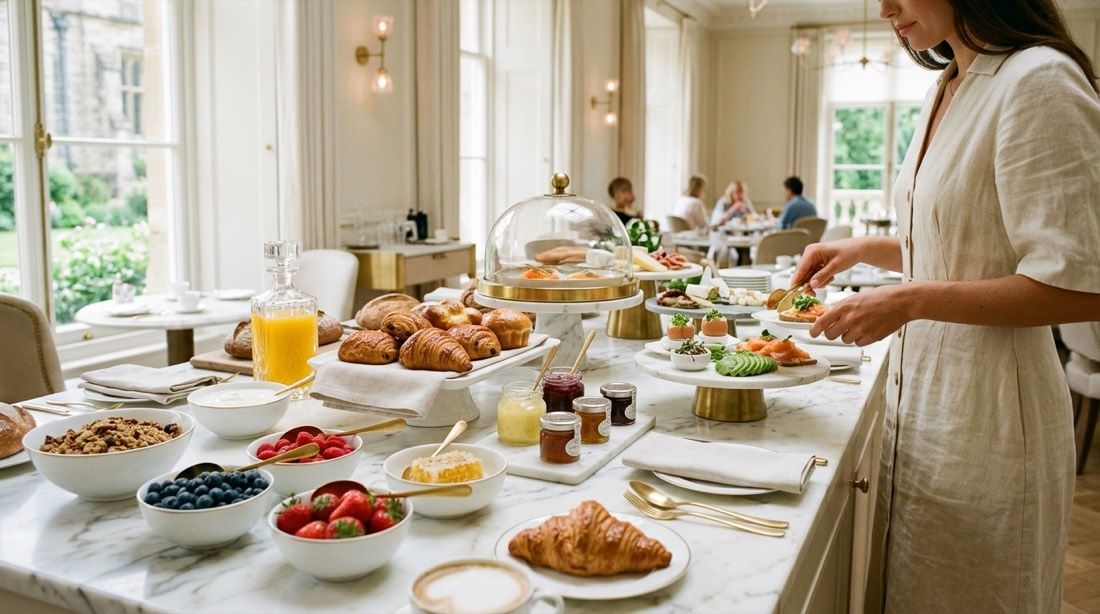
A breakfast that loses no money
Replenishment with measured waste
Avoid these

Common recipe costing mistakes in hotel buffets

Not measuring actual product consumption

Relying on gut feeling leads to over- or under-replenishing. Without a record of what's actually eaten, your costing is based on guesswork and food cost spins out of control.

Ignoring display waste

Cut fruit oxidizes, pastries dry out, and ham loses color. This waste isn't accounted for if you only look at the purchase invoice, skewing the real cost by up to 8%.

Not adjusting the offering for seasonality

Keeping tropical fruit in winter drives up costs. Recipe costing should let you simulate the impact of switching to seasonal items to protect margin without a noticeable drop in quality.

Setting the price without tax

Many hotels set the breakfast selling price before tax and then pass it on in the final bill. Without clarity, the real margin can be 10% lower than expected.

The niche in depth

Types of hotel buffet costing

Each buffet format has its own cost and waste dynamics.

Breakfast buffet · soon

The most common. Low unit cost but high volume items dominate. The key is controlling consumption of pastries and cold cuts, which are also the most wasted.

Sunday brunch · soon

Includes hot items like eggs Benedict and roast meats. The per-guest cost rises, but so does the price; food cost can run 28–32%.

Dinner buffet · soon

Features more fish, seafood, and elaborate desserts. Waste is higher due to variety and late service; a food cost of 30–33% is recommended.

Themed buffet · soon

Mexican, Asian, Mediterranean… Requires specific ingredients that can increase cost. Recipe costing should evaluate each theme's profitability before launch.

Event buffet · soon

Cocktail receptions, coffee breaks, banquets. Costed per person and includes setup and extra staffing. Food cost tends to be lower (25%) because the final price is fixed.

Professionals

What the pros who cook with numbers say

Chefs, pastry chefs, bartenders, baristas and chocolatiers who swapped spreadsheets and notebooks for Miselup.

Carlos Mendoza

Carlos Mendoza

Owner · La Mesa Restaurant

“Every recipe change used to be a mess. With Miselup, if I bump the sirloin by 20 g, I see the real cost instantly. It's amazing—I no longer lose margin without noticing. Now costing is quick and safe, no calculator needed.”

Diego Valdés

Diego Valdés

Head Bartender · Nébula Bar

“My team sees the production sheet without any cost breakdown. That way they measure every cocktail precisely—no more over- or under-pouring. The recipe stays clear, and the numbers stay for my eyes only.”

Mateo Herrera

Mateo Herrera

Owner · Café Origen

“Swap whole milk for oat milk and Miselup updates allergens on the menu automatically. Every new season with sandwiches and pastries used to be a nightmare. Now my digital menu is always up to date and my celiac customers are grateful.”

Carlos Mendoza

Carlos Mendoza

Owner · La Mesa Restaurant

“Every recipe change used to be a mess. With Miselup, if I bump the sirloin by 20 g, I see the real cost instantly. It's amazing—I no longer lose margin without noticing. Now costing is quick and safe, no calculator needed.”

Diego Valdés

Diego Valdés

Head Bartender · Nébula Bar

“My team sees the production sheet without any cost breakdown. That way they measure every cocktail precisely—no more over- or under-pouring. The recipe stays clear, and the numbers stay for my eyes only.”

Mateo Herrera

Mateo Herrera

Owner · Café Origen

“Swap whole milk for oat milk and Miselup updates allergens on the menu automatically. Every new season with sandwiches and pastries used to be a nightmare. Now my digital menu is always up to date and my celiac customers are grateful.”

Carlos Mendoza

Carlos Mendoza

Owner · La Mesa Restaurant

“Every recipe change used to be a mess. With Miselup, if I bump the sirloin by 20 g, I see the real cost instantly. It's amazing—I no longer lose margin without noticing. Now costing is quick and safe, no calculator needed.”

Diego Valdés

Diego Valdés

Head Bartender · Nébula Bar

“My team sees the production sheet without any cost breakdown. That way they measure every cocktail precisely—no more over- or under-pouring. The recipe stays clear, and the numbers stay for my eyes only.”

Mateo Herrera

Mateo Herrera

Owner · Café Origen

“Swap whole milk for oat milk and Miselup updates allergens on the menu automatically. Every new season with sandwiches and pastries used to be a nightmare. Now my digital menu is always up to date and my celiac customers are grateful.”

Lucía Ramírez

Lucía Ramírez

Pastry Chef · Dulce Masa Bakery

“I always jot down recipes in my test notebook. I snap a photo with Miselup, and the AI turns that page into a technical sheet with exact ingredients and weights. It's magic—saves me hours of copying data and eliminates errors completely.”

Ana Solís

Ana Solís

Catering Director · Sol y Sombra Events

“For each wedding menu, I instantly see if the proposal is green or red. The margin traffic light tells me if I'm over cost before sending the quote. I negotiate with data, not blind. And I sleep easy once every event is locked in.”

Isabel Vega

Isabel Vega

Artisan Chocolatier · Bombones Amargo

“For a big order of 300 boxes, I enter the base recipe for 10 chocolates and Miselup scales everything: grams, time, cost. No neurotic math. From small workshop to large order, the scaling is spot on and I don't waste a single gram of cocoa.”

Lucía Ramírez

Lucía Ramírez

Pastry Chef · Dulce Masa Bakery

“I always jot down recipes in my test notebook. I snap a photo with Miselup, and the AI turns that page into a technical sheet with exact ingredients and weights. It's magic—saves me hours of copying data and eliminates errors completely.”

Ana Solís

Ana Solís

Catering Director · Sol y Sombra Events

“For each wedding menu, I instantly see if the proposal is green or red. The margin traffic light tells me if I'm over cost before sending the quote. I negotiate with data, not blind. And I sleep easy once every event is locked in.”

Isabel Vega

Isabel Vega

Artisan Chocolatier · Bombones Amargo

“For a big order of 300 boxes, I enter the base recipe for 10 chocolates and Miselup scales everything: grams, time, cost. No neurotic math. From small workshop to large order, the scaling is spot on and I don't waste a single gram of cocoa.”

Lucía Ramírez

Lucía Ramírez

Pastry Chef · Dulce Masa Bakery

“I always jot down recipes in my test notebook. I snap a photo with Miselup, and the AI turns that page into a technical sheet with exact ingredients and weights. It's magic—saves me hours of copying data and eliminates errors completely.”

Ana Solís

Ana Solís

Catering Director · Sol y Sombra Events

“For each wedding menu, I instantly see if the proposal is green or red. The margin traffic light tells me if I'm over cost before sending the quote. I negotiate with data, not blind. And I sleep easy once every event is locked in.”

Isabel Vega

Isabel Vega

Artisan Chocolatier · Bombones Amargo

“For a big order of 300 boxes, I enter the base recipe for 10 chocolates and Miselup scales everything: grams, time, cost. No neurotic math. From small workshop to large order, the scaling is spot on and I don't waste a single gram of cocoa.”

FAQ

Frequently asked questions

Hotel buffets

What's the recommended food cost for a hotel buffet?
Ideally, keep it between 25% and 30%. For breakfast, with many low-cost items, you can aim for 25%; dinner or brunch, with more expensive proteins, often lands at 30%. A solid recipe costing tool lets you simulate changes to maintain that percentage.
How do I set the price for a breakfast buffet?
Calculate the total cost per guest (food + indirects) and divide by the target food cost. For example, if your per-guest cost is €4.50 and you want a 28% food cost, the pre-tax selling price is 4.50 / 0.28 = €16.07. Then add 10% tax and round to €17.50, or include it in the room rate.
How can I reduce waste in a hotel buffet?
Recipe costing helps you adjust production quantities based on expected occupancy. You can also use smaller trays, replenish only what's needed, and donate or repurpose leftovers. Measuring actual consumption per item is the first step.
What waste percentage applies to fruit on a buffet?
Peeling and trim waste for fresh fruit runs about 15%. If served cut, add an extra 5% for oxidation and handling. Whole fruit that goes uneaten is also waste, so it's worth tracking.
How often should I update the costing for a buffet?
At minimum, every time a supplier changes or the season shifts. In hotels with high product turnover, a weekly review is ideal. Recipe costing software recalculates automatically when new prices are entered.
Does the hotel category affect buffet costing?
Absolutely. A 5-star hotel uses premium products (Iberian ham, salmon, exotic fruit) that raise the cost—and the price. A 3-star hotel runs a tighter food cost. The costing must reflect the category and target clientele.
John Guerrero
About the author

John Guerrero

Gastronomy consultant · Founder of ChefBusiness and Miselup

15+ years advising restaurants, bakeries and hospitality businesses across Spain and Latam. Creator of ChefBusiness, AI Chef Pro and Miselup: the digital mise en place his clients use to control food cost to the cent.

Ready to stop losing money on every plate?

Set up your recipe book in an afternoon and try Free forever. No credit card, no commitment.