✨ Early Bird 40% off your first 3 months with code · 40% off · 3 months · EARLYBIRD
Specialty coffee shops

Cost per cup and specialty beverage spec sheets: precision in every extraction

Stop your margin from dissolving in every cup. Calculate the cost of your beverages down to the cent and share professional spec sheets with or without prices, ready for your team.

Free forever No credit card Your recipe book in an afternoon

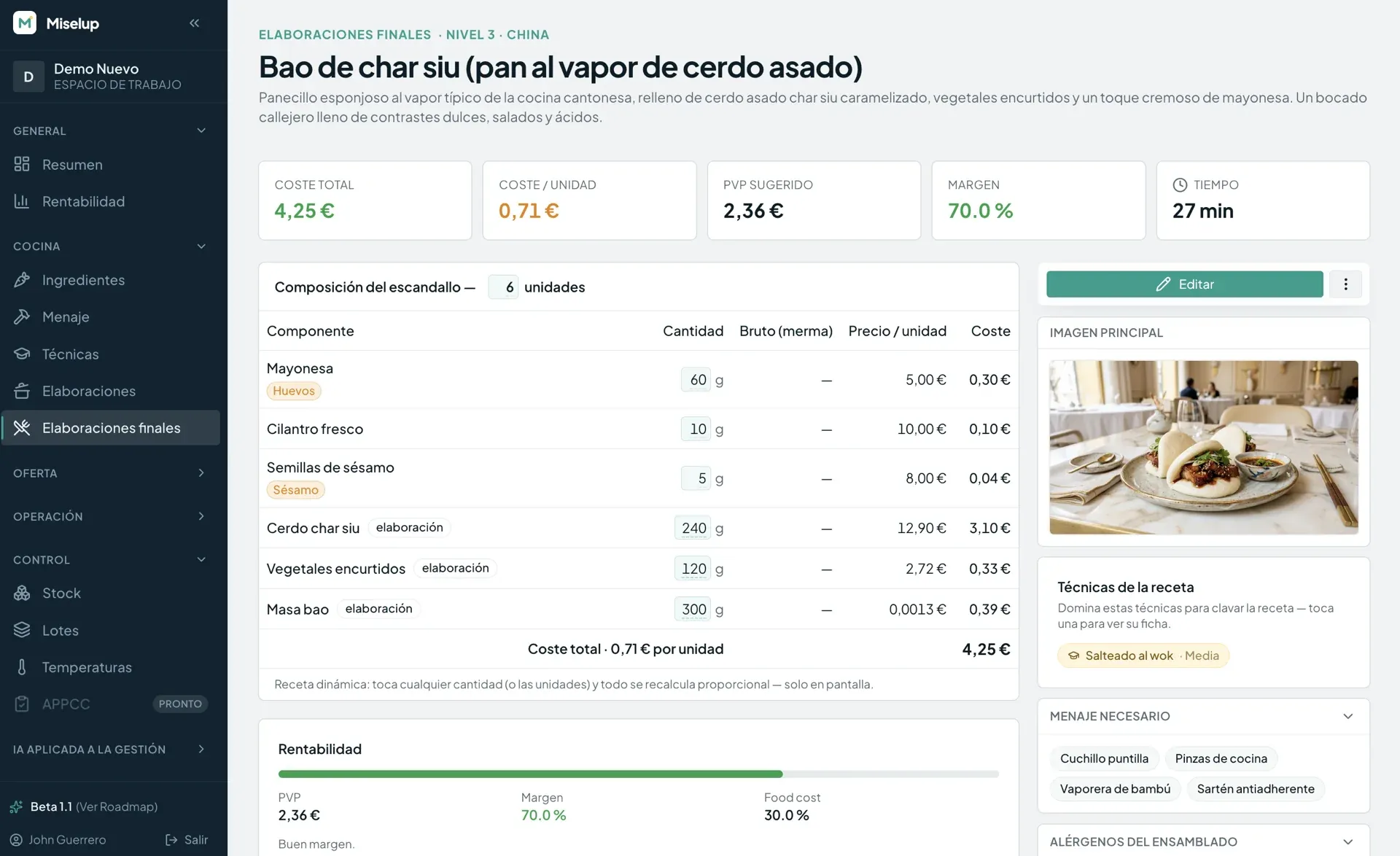
Spec sheet · dynamic

Specialty Flat White

1 cup
Food cost 24 %
  • Double espresso coffee 18 g 0,36 €
  • Whole fresh milk 200 ml 0,18 €
  • Compostable cup + lid 1 ud 0,06 €

Cost / unit: 0,60 €

0,60 €
The why

Recipe costing in specialty coffee shops

In a specialty coffee shop, recipe costing is the spec sheet that breaks down the real cost of each drink: from the coffee beans to the napkin. Without this control, the business loses between 5% and 8% of its annual revenue to hidden costs, according to industry data, because margins are eroded by unrecorded waste, inconsistent recipes, or miscalculated prices.

By digitizing recipe costing and keeping it live, each item (flat white, latte, cold brew) shows its exact margin updated with purchase prices. This allows you to instantly adjust the menu, identify the most profitable drinks, and set prices that ensure a target food cost, turning every cup into a strategic decision.

Why Miselup

Miselup, built for specialty coffee shops

Calculate the true cost of each specialty coffee and create spec sheets with allergens, scaling, and prices updated instantly. Control your food cost without errors.

Dynamic recipe costing in real time

Adjust coffee, milk, or syrup weights and the cost per cup recalculates automatically, keeping your profitability under control.

Fully detailed spec sheets

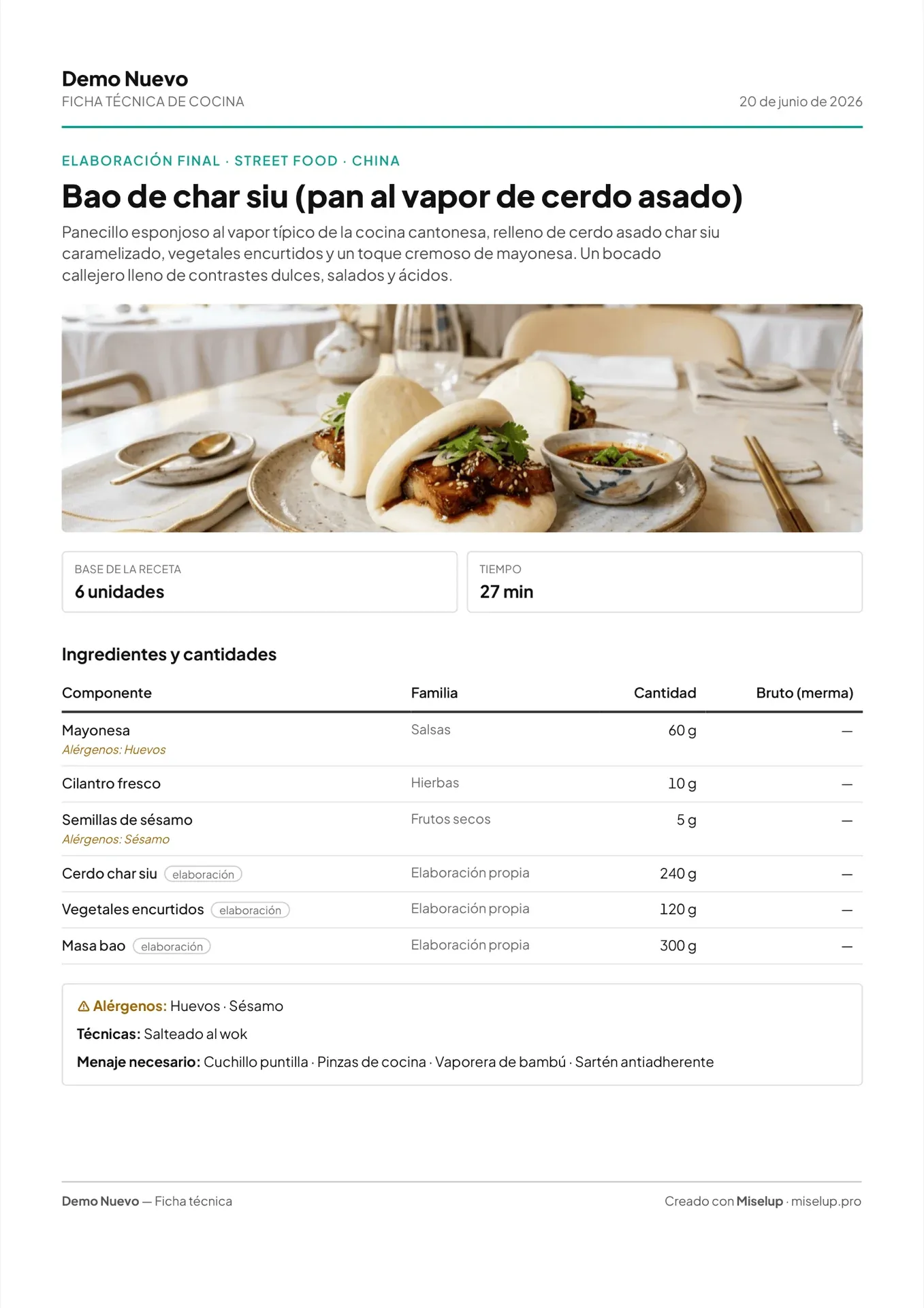
Include preparation method, allergens, photo, and costs. Share with your team or health inspectors in a single click.

Error-free recipe scaling

Go from a single flat white to a 20-liter batch of cold brew; the recipe scales proportionally and the cost adjusts instantly.

Step by step

How to cost recipes for a specialty coffee shop step by step

1

Define the spec sheet for each drink

Specify the format (ml), extraction method, and presentation. Include all components, from coffee to toppings, to standardize the recipe and avoid variations that affect cost.

2

List ingredients with exact quantities

Weigh each input in grams or milliliters: coffee dose, milk, syrups, ice. Use precision scales for solids and graduated cylinders for liquids, noting the net quantity that ends up in the cup.

3

Calculate waste and unit costs

Apply a realistic waste percentage to ingredients like milk (2% for spillage and frothing) or fresh fruit (5-10%). For dry goods like coffee beans, assign 0%. Multiply the adjusted quantity by the purchase price per unit.

4

Add indirect costs per cup

Include energy cost (€0.03 on average), filtered water, packaging (cup, lid), and direct labor (about €0.15 per drink). These expenses are often underestimated and erode margins.

5

Set the selling price according to the target food cost

Divide the total cup cost by the desired food cost percentage (for example, 0.28 for 28%). Add the corresponding VAT (10% in hospitality) to obtain the selling price that ensures profitability.

Worked example

Real example: costing a Flat White

The flat white is an icon of the specialty coffee shop. Here we break down the cost of a 200 ml cup with a double espresso and fresh milk.

Ingredient Quantity Waste Cost
Specialty coffee (whole beans) 18 g 0 % 0,54 €
Fresh whole milk 153 ml 2 % 0,14 €
Biodegradable cup 200 ml 1 ud 0 % 0,10 €
Polypropylene lid 1 ud 0 % 0,05 €
Cellulose napkin 1 ud 0 % 0,02 €
Filtered water and energy 1 serving 0 % 0,03 €
Direct labor 1,5 min 0 % 0,15 €
Total 1,03 €

Total cost

1,03 €

Food cost

28 %

Suggested price

4,05 € (VAT incl.)

Margin

2,65 € per unit

If the coffee dose is adjusted to 20 g, the cost recalculates proportionally and the margin decreases, forcing a review of the selling price.

28 %

Average food cost in specialty coffee shops

industry reports

3,50 €

Average price of a specialty coffee in Spain

Spain market data

65 %

Businesses that do not cost their drinks correctly

2025 sector study

12.000 €

Average annual loss due to lack of cost control

hospitality consultants

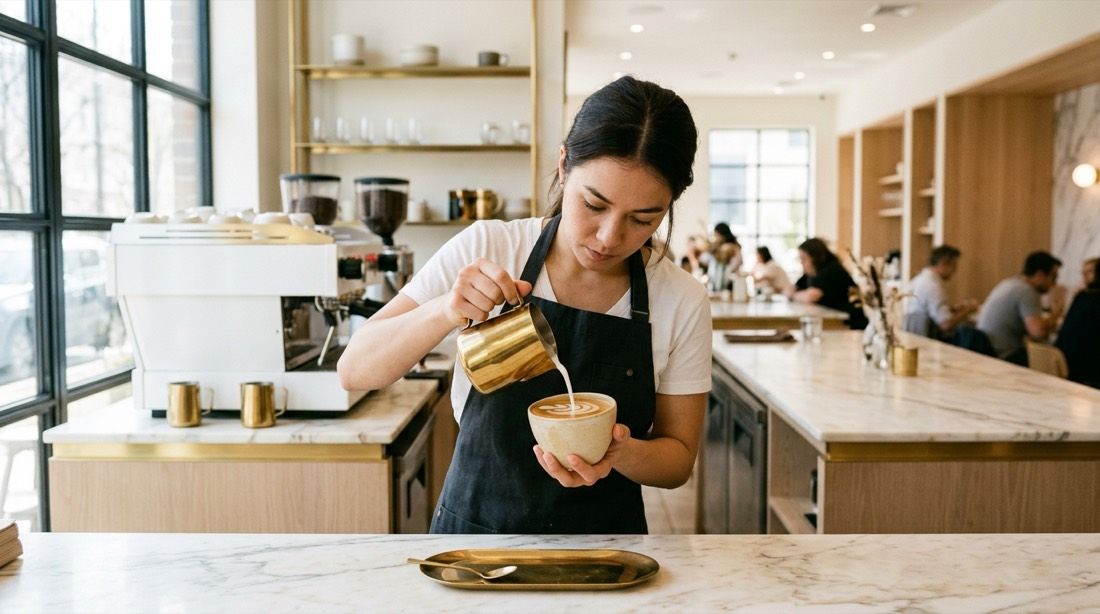
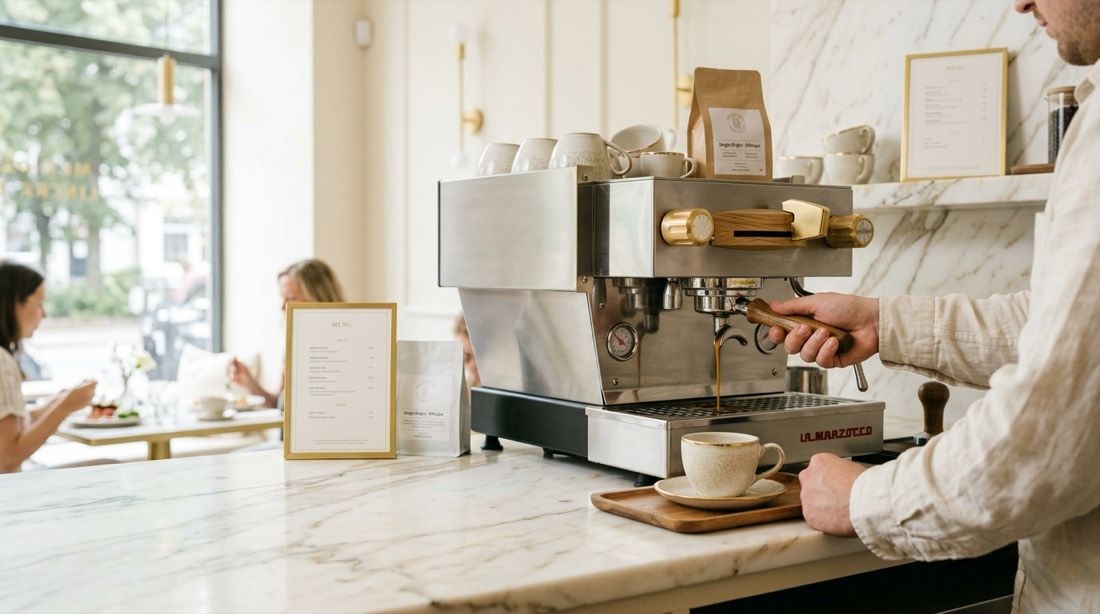
In pictures

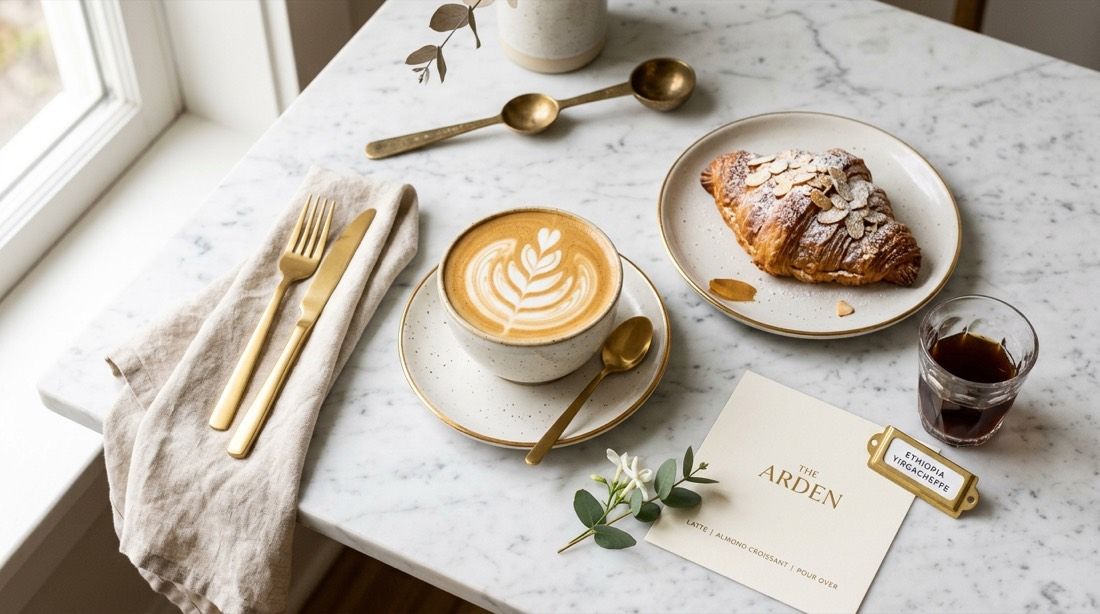
The craft, up close

Specialty coffee shops

Cost per cup, under control
Every shot counts
Every shot counts
A brunch menu with margin
Avoid these

Typical mistakes when costing in specialty coffee shops

Ignoring the cost of water and energy

Filtered water and electricity for the espresso machine add up to €0.05 per cup. Not including them distorts the real margin, especially at high volume.

Not updating green coffee prices

Specialty coffee prices fluctuate with harvests and currency exchange. Keeping fixed prices for months can reduce the margin without the owner noticing.

Applying the same waste percentage to all milks

Plant-based milks (oat, soy) behave differently when steamed; their waste can be higher (up to 5%) and must be calculated separately.

Forgetting the cost of takeaway packaging

Cups, lids, sleeves, and stirrers represent between €0.10 and €0.25 per unit. For takeaway orders, this expense must be reflected in the selling price or it eats into profits.

The niche in depth

Types of drinks in a specialty coffee shop

Categories for accurate costing

Espresso and derivatives · soon

Includes single espresso, double, macchiato, cortado, and latte. The base is freshly ground coffee; the cost varies according to dose and bean origin.

Manual pour-overs · soon

V60, Chemex, Aeropress, or Kalita. They require more coffee per cup (15-20 g) and paper filters, but less milk, which affects the food cost.

Cold brew and cold drinks · soon

Cold brew needs a high coffee-to-water ratio (1:8) and a long steeping time. Iced lattes contain ice, which reduces the amount of milk but adds cup and straw costs.

Specialty teas and infusions · soon

Although the cost per bag or loose leaf is low, the presentation (teapot, cup) and preparation time influence recipe costing.

Signature and seasonal drinks · soon

They include syrups, spices, creams, or toppings. They usually have a higher food cost (30-35%) but allow a premium selling price due to differentiation.

Professionals

What the pros who cook with numbers say

Chefs, pastry chefs, bartenders, baristas and chocolatiers who swapped spreadsheets and notebooks for Miselup.

Carlos Mendoza

Carlos Mendoza

Owner · La Mesa Restaurant

“Every recipe change used to be a mess. With Miselup, if I bump the sirloin by 20 g, I see the real cost instantly. It's amazing—I no longer lose margin without noticing. Now costing is quick and safe, no calculator needed.”

Diego Valdés

Diego Valdés

Head Bartender · Nébula Bar

“My team sees the production sheet without any cost breakdown. That way they measure every cocktail precisely—no more over- or under-pouring. The recipe stays clear, and the numbers stay for my eyes only.”

Mateo Herrera

Mateo Herrera

Owner · Café Origen

“Swap whole milk for oat milk and Miselup updates allergens on the menu automatically. Every new season with sandwiches and pastries used to be a nightmare. Now my digital menu is always up to date and my celiac customers are grateful.”

Carlos Mendoza

Carlos Mendoza

Owner · La Mesa Restaurant

“Every recipe change used to be a mess. With Miselup, if I bump the sirloin by 20 g, I see the real cost instantly. It's amazing—I no longer lose margin without noticing. Now costing is quick and safe, no calculator needed.”

Diego Valdés

Diego Valdés

Head Bartender · Nébula Bar

“My team sees the production sheet without any cost breakdown. That way they measure every cocktail precisely—no more over- or under-pouring. The recipe stays clear, and the numbers stay for my eyes only.”

Mateo Herrera

Mateo Herrera

Owner · Café Origen

“Swap whole milk for oat milk and Miselup updates allergens on the menu automatically. Every new season with sandwiches and pastries used to be a nightmare. Now my digital menu is always up to date and my celiac customers are grateful.”

Carlos Mendoza

Carlos Mendoza

Owner · La Mesa Restaurant

“Every recipe change used to be a mess. With Miselup, if I bump the sirloin by 20 g, I see the real cost instantly. It's amazing—I no longer lose margin without noticing. Now costing is quick and safe, no calculator needed.”

Diego Valdés

Diego Valdés

Head Bartender · Nébula Bar

“My team sees the production sheet without any cost breakdown. That way they measure every cocktail precisely—no more over- or under-pouring. The recipe stays clear, and the numbers stay for my eyes only.”

Mateo Herrera

Mateo Herrera

Owner · Café Origen

“Swap whole milk for oat milk and Miselup updates allergens on the menu automatically. Every new season with sandwiches and pastries used to be a nightmare. Now my digital menu is always up to date and my celiac customers are grateful.”

Lucía Ramírez

Lucía Ramírez

Pastry Chef · Dulce Masa Bakery

“I always jot down recipes in my test notebook. I snap a photo with Miselup, and the AI turns that page into a technical sheet with exact ingredients and weights. It's magic—saves me hours of copying data and eliminates errors completely.”

Ana Solís

Ana Solís

Catering Director · Sol y Sombra Events

“For each wedding menu, I instantly see if the proposal is green or red. The margin traffic light tells me if I'm over cost before sending the quote. I negotiate with data, not blind. And I sleep easy once every event is locked in.”

Isabel Vega

Isabel Vega

Artisan Chocolatier · Bombones Amargo

“For a big order of 300 boxes, I enter the base recipe for 10 chocolates and Miselup scales everything: grams, time, cost. No neurotic math. From small workshop to large order, the scaling is spot on and I don't waste a single gram of cocoa.”

Lucía Ramírez

Lucía Ramírez

Pastry Chef · Dulce Masa Bakery

“I always jot down recipes in my test notebook. I snap a photo with Miselup, and the AI turns that page into a technical sheet with exact ingredients and weights. It's magic—saves me hours of copying data and eliminates errors completely.”

Ana Solís

Ana Solís

Catering Director · Sol y Sombra Events

“For each wedding menu, I instantly see if the proposal is green or red. The margin traffic light tells me if I'm over cost before sending the quote. I negotiate with data, not blind. And I sleep easy once every event is locked in.”

Isabel Vega

Isabel Vega

Artisan Chocolatier · Bombones Amargo

“For a big order of 300 boxes, I enter the base recipe for 10 chocolates and Miselup scales everything: grams, time, cost. No neurotic math. From small workshop to large order, the scaling is spot on and I don't waste a single gram of cocoa.”

Lucía Ramírez

Lucía Ramírez

Pastry Chef · Dulce Masa Bakery

“I always jot down recipes in my test notebook. I snap a photo with Miselup, and the AI turns that page into a technical sheet with exact ingredients and weights. It's magic—saves me hours of copying data and eliminates errors completely.”

Ana Solís

Ana Solís

Catering Director · Sol y Sombra Events

“For each wedding menu, I instantly see if the proposal is green or red. The margin traffic light tells me if I'm over cost before sending the quote. I negotiate with data, not blind. And I sleep easy once every event is locked in.”

Isabel Vega

Isabel Vega

Artisan Chocolatier · Bombones Amargo

“For a big order of 300 boxes, I enter the base recipe for 10 chocolates and Miselup scales everything: grams, time, cost. No neurotic math. From small workshop to large order, the scaling is spot on and I don't waste a single gram of cocoa.”

FAQ

Frequently asked questions

Specialty coffee shops

What is the ideal food cost for a specialty coffee shop?
The target food cost ranges from 25% to 30% for hot drinks, and can reach 35% for cold drinks with premium ingredients. This allows covering the cost of skilled labor and rent in prime areas.
How to calculate the selling price of a specialty coffee?
Divide the total cup cost by the target food cost (e.g., 0.28) and add 10% VAT. For example, if the cost is €1.00, the selling price without VAT would be €3.57, and with VAT, €3.93.
What waste percentage applies to milk in a coffee shop?
Cow's milk has a waste of 2-3% from spillage and residue in the pitcher. Plant-based milks can reach 5% because they tend to produce more foam and waste.
How often should drink costs be updated?
It’s recommended to review it whenever the price of a key input (coffee, milk) changes, or at least once a month. With digital software, the update is automatic when you modify rates.
Is it profitable to offer plant-based milks on the menu?
Yes, because they allow charging a supplement (€0.30-0.50) that offsets their higher cost and waste. However, they must be costed separately to avoid losing margin on the rest of the drink.
How does roast level affect coffee cost?
Light roasts tend to have higher density and require larger doses (up to 20 g) to extract the same volume, which increases the cost per cup compared to a medium roast.
John Guerrero
About the author

John Guerrero

Gastronomy consultant · Founder of ChefBusiness and Miselup

15+ years advising restaurants, bakeries and hospitality businesses across Spain and Latam. Creator of ChefBusiness, AI Chef Pro and Miselup: the digital mise en place his clients use to control food cost to the cent.

Ready to stop losing money on every plate?

Set up your recipe book in an afternoon and try Free forever. No credit card, no commitment.