✨ Early Bird 40% off your first 3 months with code · 40% off · 3 months · EARLYBIRD
Food cost calculation

How to calculate the food cost of a dish and the menu to maximize your profitability

Discover the methodology to accurately calculate food cost, both at the dish level and for your entire offering. Miselup provides you with the tools for thorough control, allowing you to make strategic decisions and increase your profit margins.

Free forever No credit card Your recipe book in an afternoon

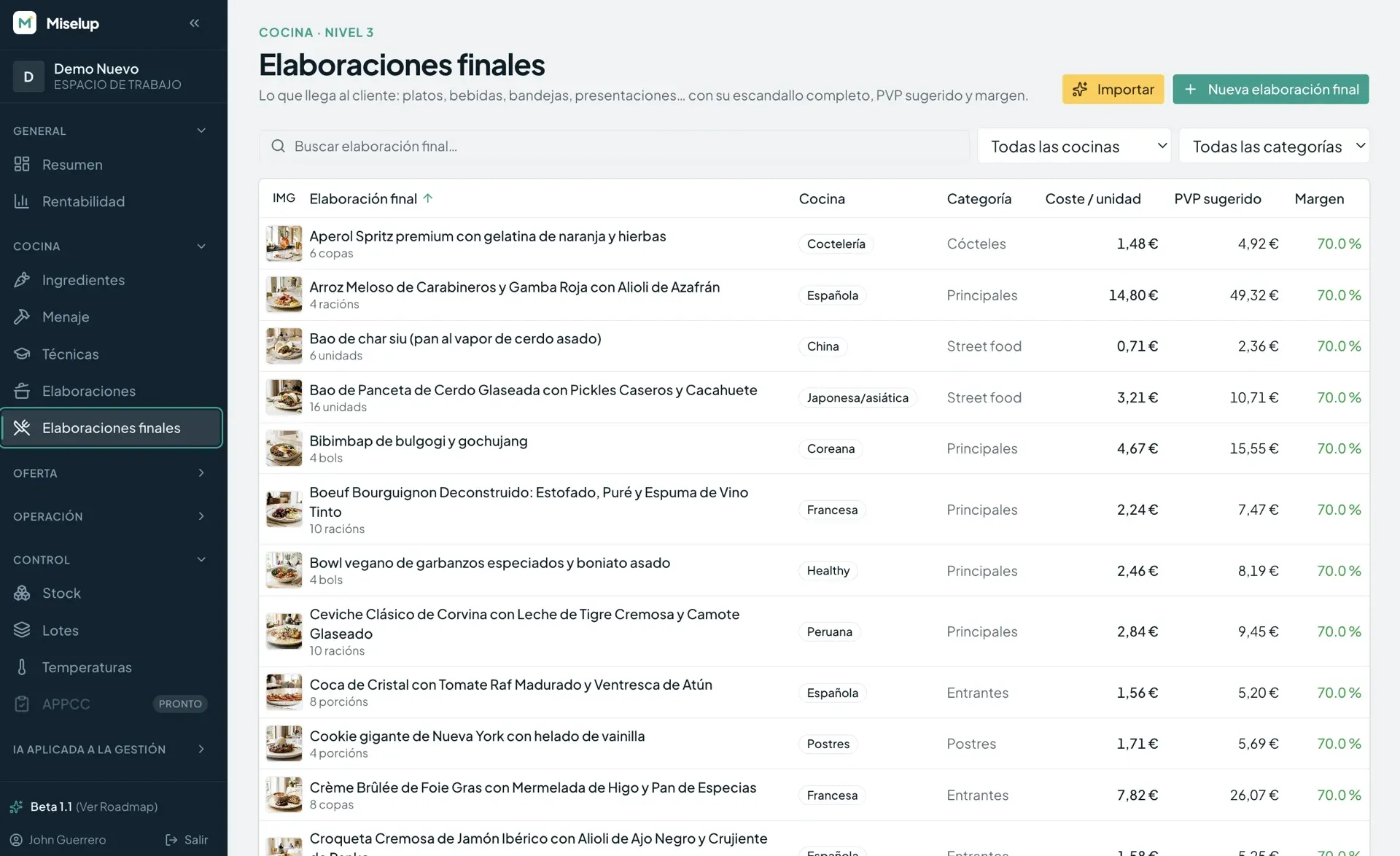
Spec sheet · dynamic

Daily menu (1 person)

1 unit
Food cost 30%
  • Vegetable cream (serving) 1 unit 1.20 €
  • Grilled hake (serving) 1 unit 3.50 €
  • Potato side dish (serving) 1 unit 0.80 €
  • Bread (unit) 1 unit 0.15 €
  • Water (500ml bottle) 1 unit 0.20 €
  • Dessert of the day (serving) 1 unit 1.50 €

Cost / unit: 7.35 €

7.35 €
The why

Food cost calculation

Food cost calculation is the most critical financial metric in managing any hospitality business, from the neighborhood bar to a Michelin-starred restaurant. Without rigorous control, you're losing an average of 10–12% of your annual net profit because you don't know the real cost of what you sell and can't optimize your pricing or purchasing.

Having your food cost calculated and monitored in real time transforms your business. It lets you make informed strategic decisions: adjust selling prices, negotiate better with suppliers, optimize portion sizes, or even redesign your menu to maximize profitability. It's the difference between operating on intuition and using accurate data to drive your profit margin.

Why Miselup

Miselup, built for food cost calculation

Learn how to calculate the food cost of your dishes and your entire menu with Miselup. Control profitability, optimize prices, and improve the management of your hospitality business.

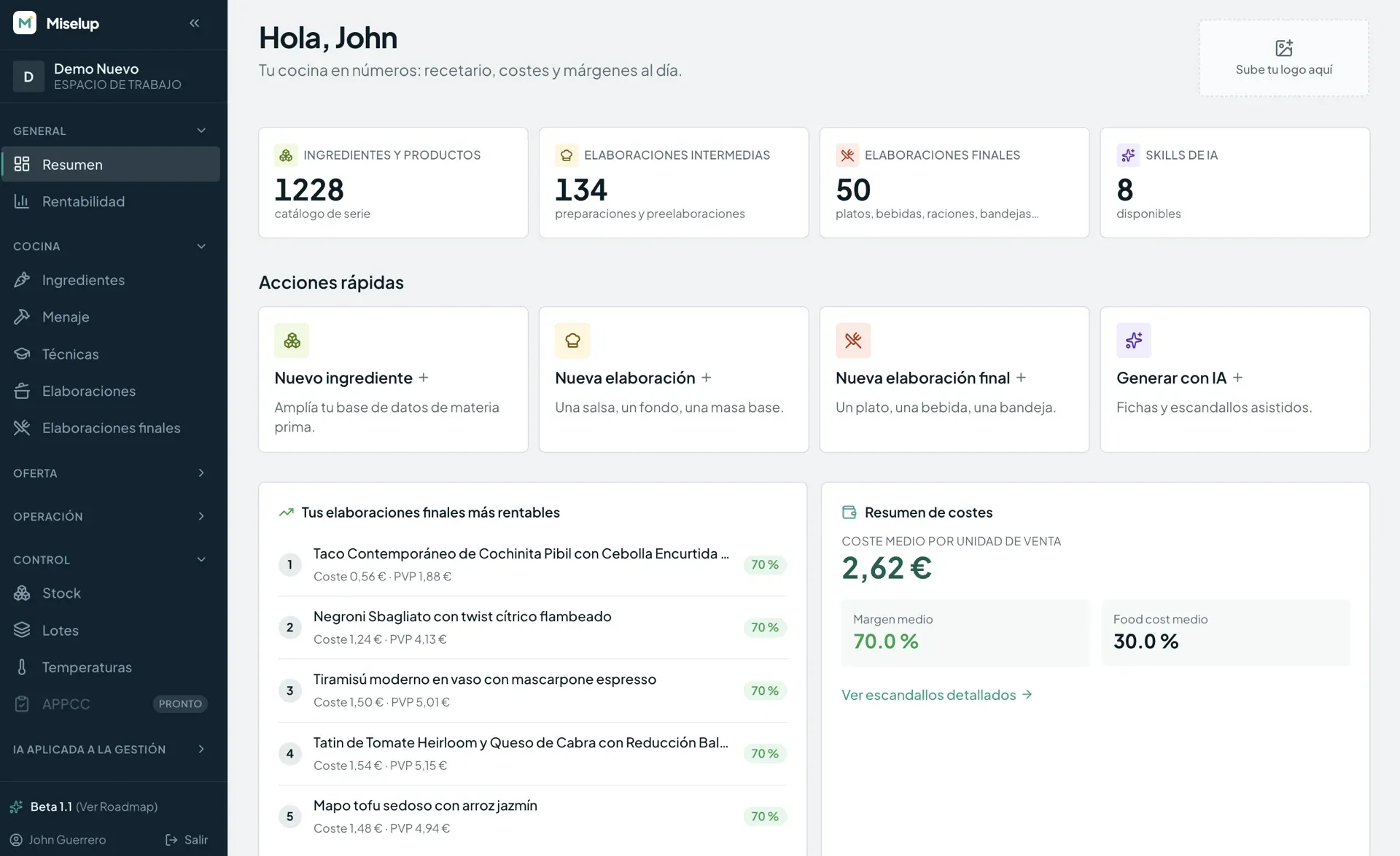
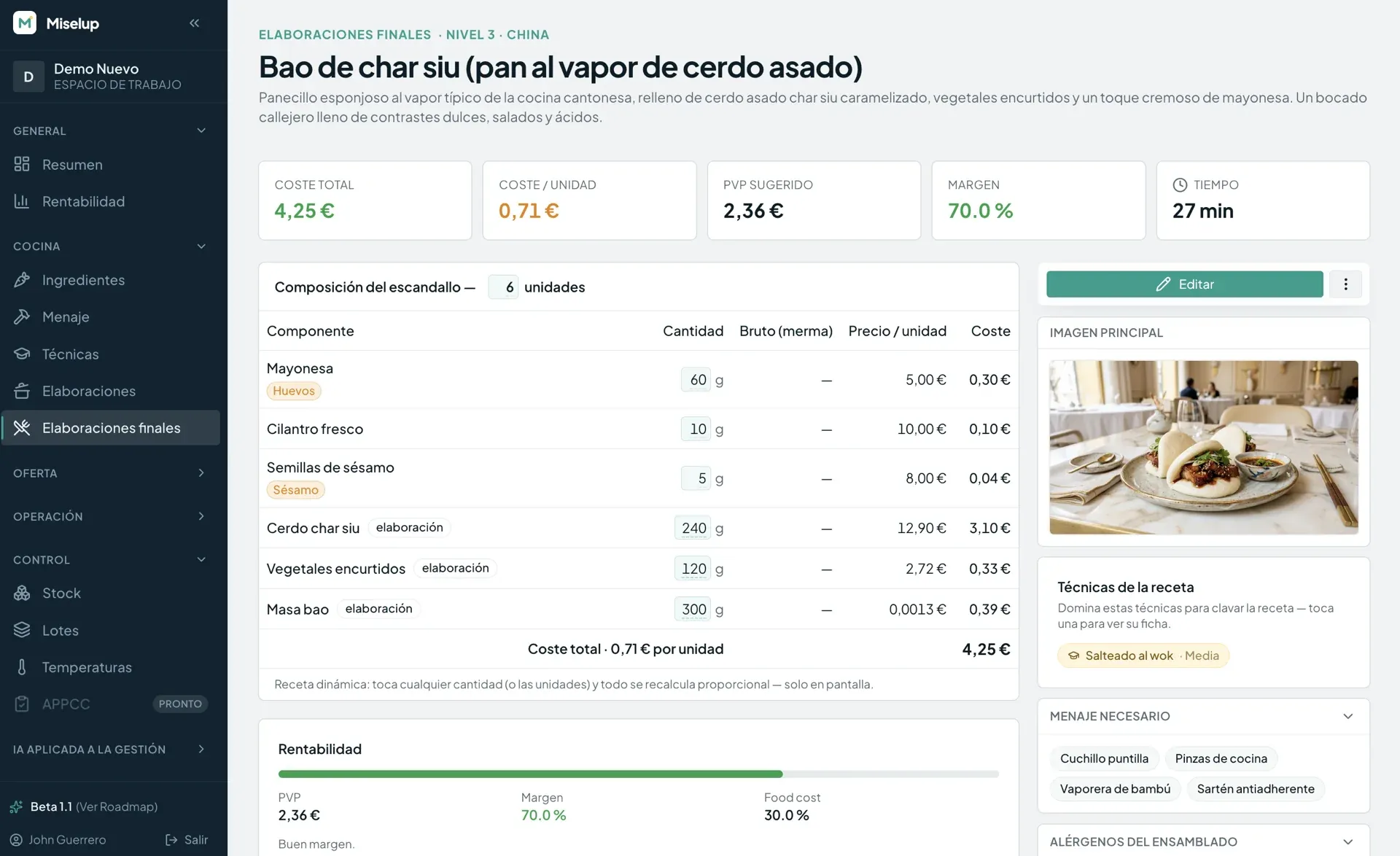
Automatic and dynamic food cost calculation

Miselup calculates the food cost of each dish and the menu in real time, automatically updating percentages with every ingredient price change, without manual intervention.

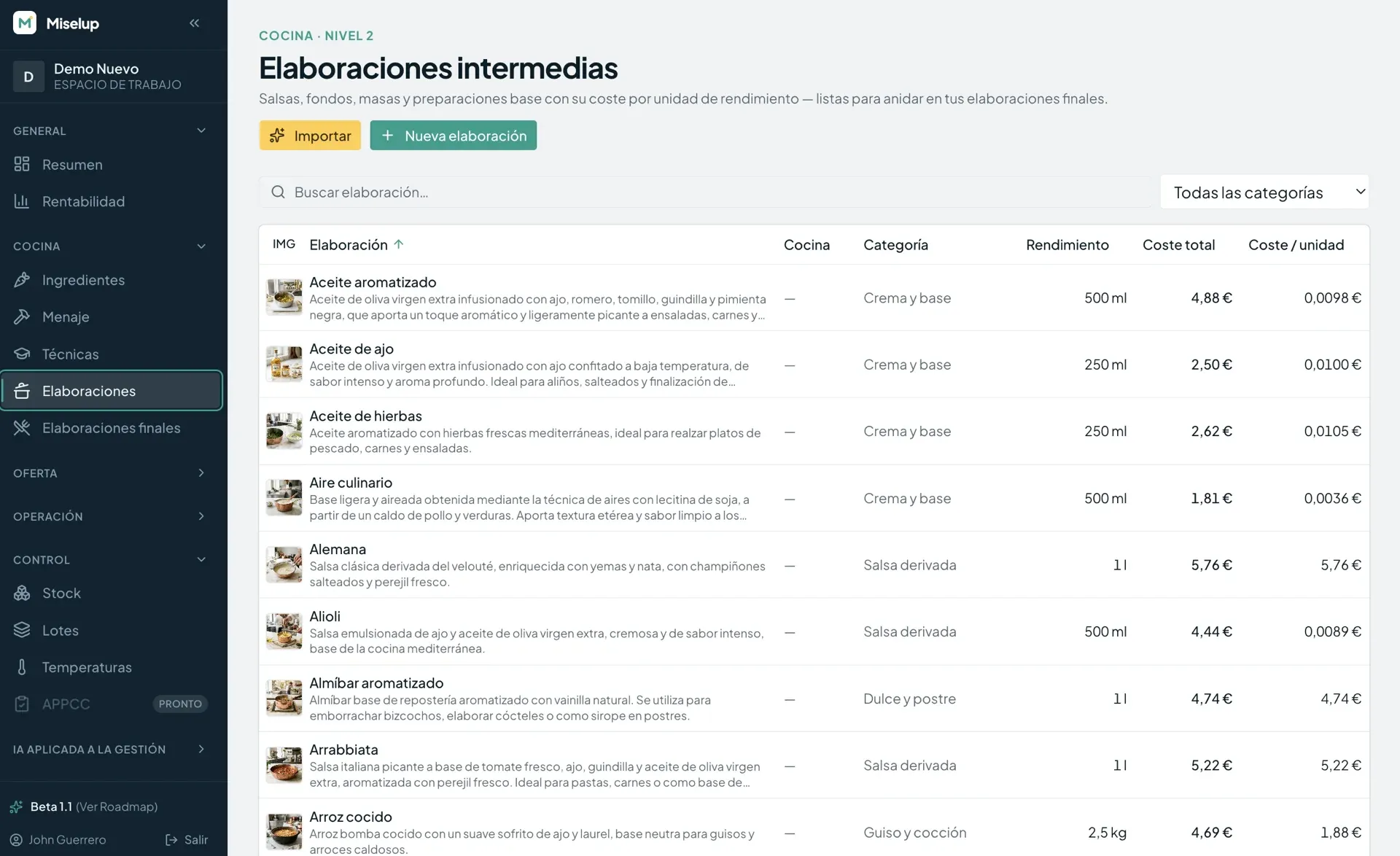
Profitability analysis by dish and category

View the profitability of each dish and category on your menu, identifying the most and least profitable items to optimize your offering and pricing strategy.

Selling price simulation

Adjust the selling prices of your dishes and instantly see how it affects food cost and profit margin, making it easier to make decisions for optimal profitability.

Step by step

How to calculate the food cost of a dish and of the menu step by step

1

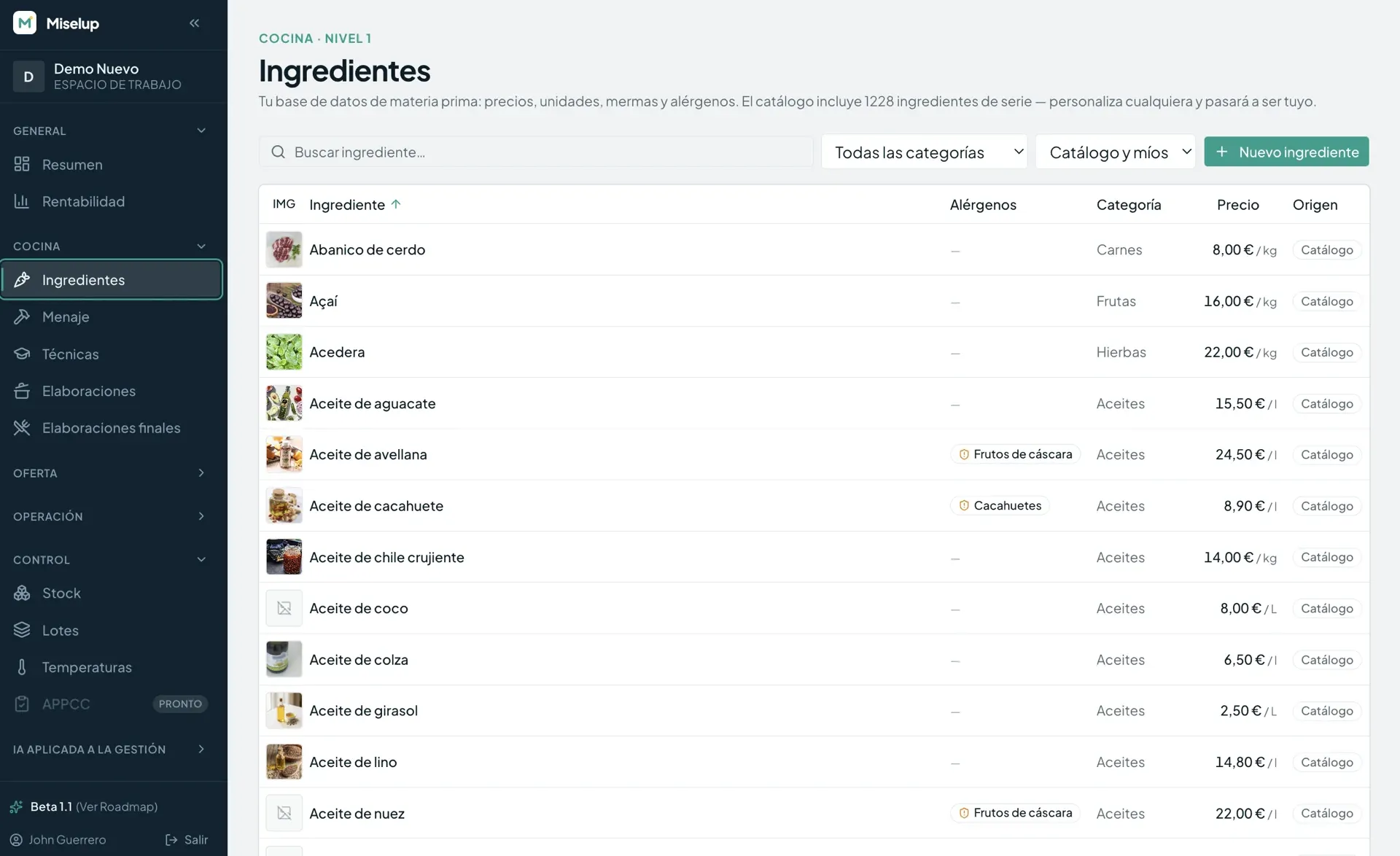
Calculate the direct raw material cost per serving

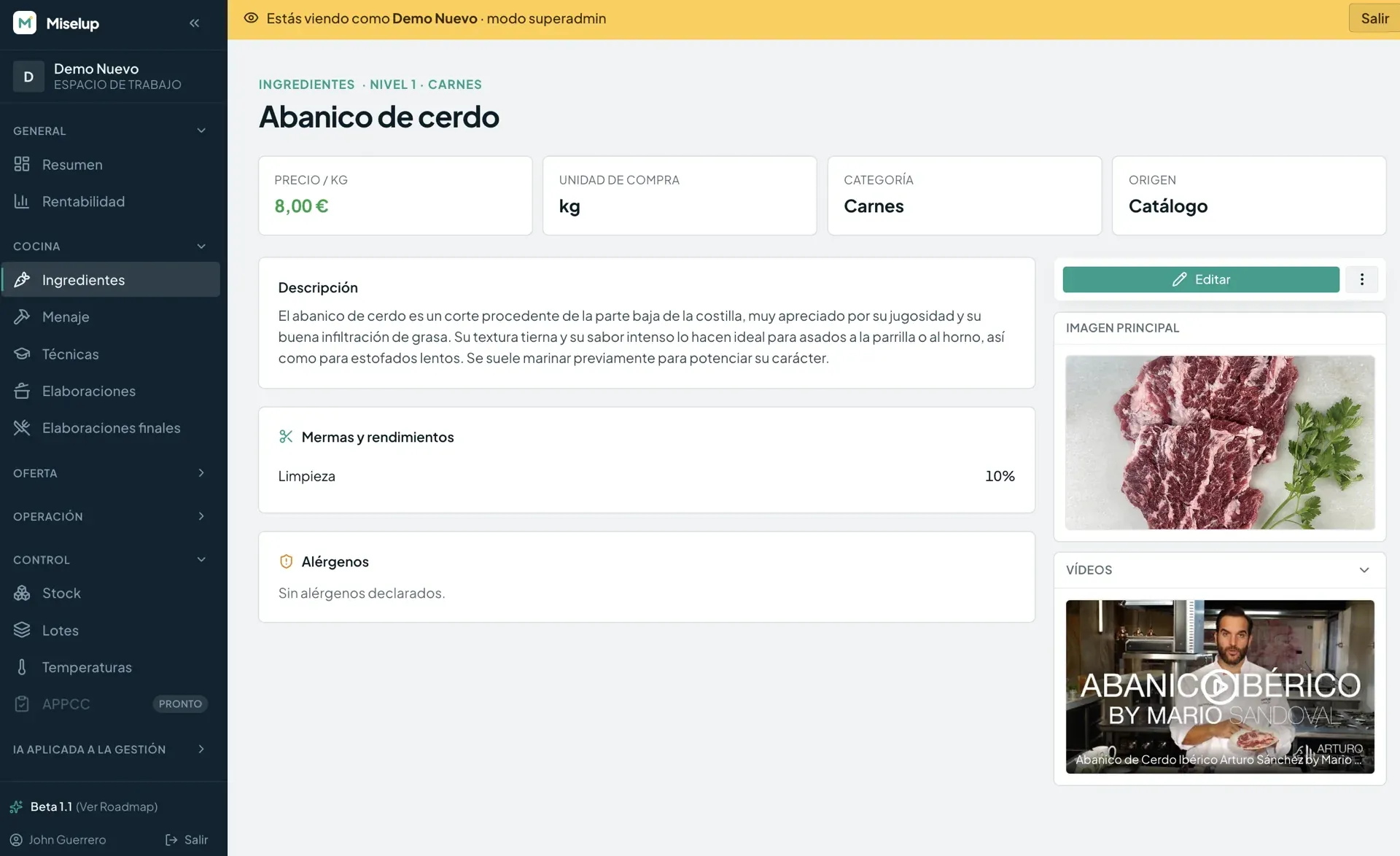
For each dish, add up the cost of all ingredients needed for one serving, including waste and shrinkage. This is the cost you get from the recipe costing of each recipe.

2

Determine the selling price (excl. VAT)

Make sure to use the selling price excluding VAT, since food cost is calculated on the taxable base. If your selling price is €10 and VAT is 10%, your price excl. VAT is €9.09.

3

Apply the food cost per dish formula

Divide the direct raw material cost per serving by the selling price excl. VAT and multiply by 100. The formula is: (Raw material cost / Selling price excl. VAT) x 100.

4

Calculate the overall menu food cost (periodic)

Divide the total cost of raw materials used in a period (opening inventory + purchases - closing inventory) by the net food sales for the same period. Multiply by 100.

5

Analyze and compare the results

Compare your per-dish food cost and overall menu food cost with your targets and industry standards. Identify dishes with a high food cost and look for improvement opportunities.

Worked example

Real example: calculating food cost for a Pasta Carbonara dish

A popular dish that, if not controlled, can erode margins. This example shows how to calculate the food cost of one serving.

Ingredient Quantity Waste Cost
Spaghetti 100 gr 0 % 0,15 €
Guanciale 50 gr 5 % 0,80 €
Egg yolk 2 ud 0 % 0,20 €
Pecorino Romano 30 gr 0 % 0,60 €
Black pepper 2 gr 0 % 0,03 €
Salt 3 gr 0 % 0,01 €
Olive oil 5 ml 0 % 0,02 €
Cooking water 50 ml 0 % 0,00 €

Total cost

1,81 €

Food cost

25 %

Suggested price

8,95 € (incl. VAT)

Margin

7,14 € per unit

If the cost of a key ingredient like guanciale goes up, the food cost will spike, forcing you to adjust the selling price or find alternatives.

25-35 %

Target food cost for full-service restaurants

gastronomic consulting firms 2026

10-12 %

Net profit lost due to uncontrolled food cost

hospitality industry reports

3-5 %

Food cost increase due to unaccounted waste

inventory management studies

15-20 %

Food cost reduction with recipe costing software

Spain market data

In pictures

The craft, up close

Food cost calculation

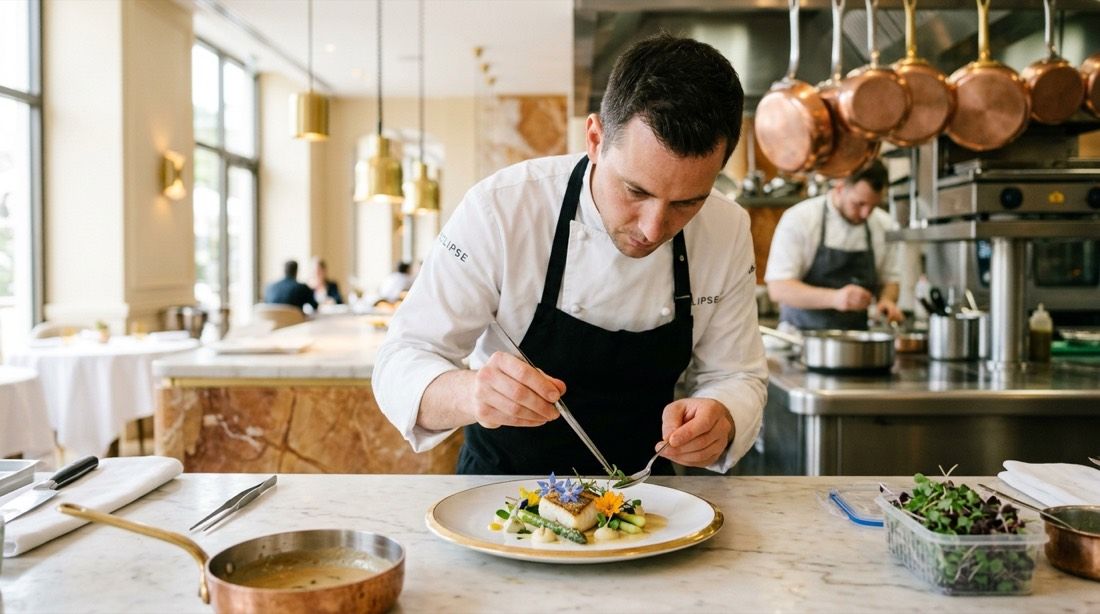
The pass, where costing becomes a dish
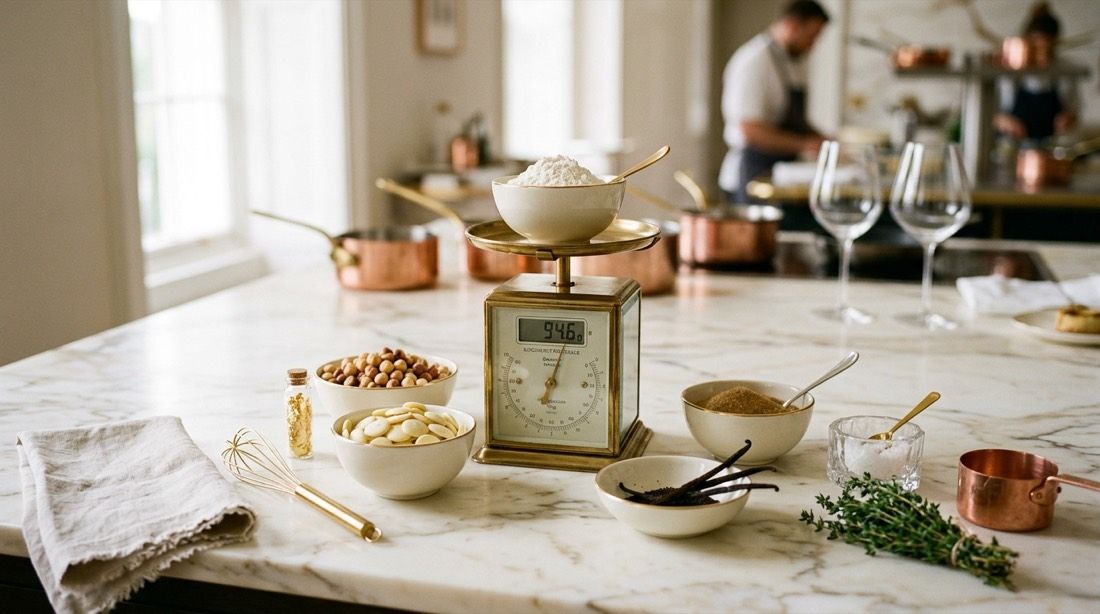
Mise en place weighed to the gram
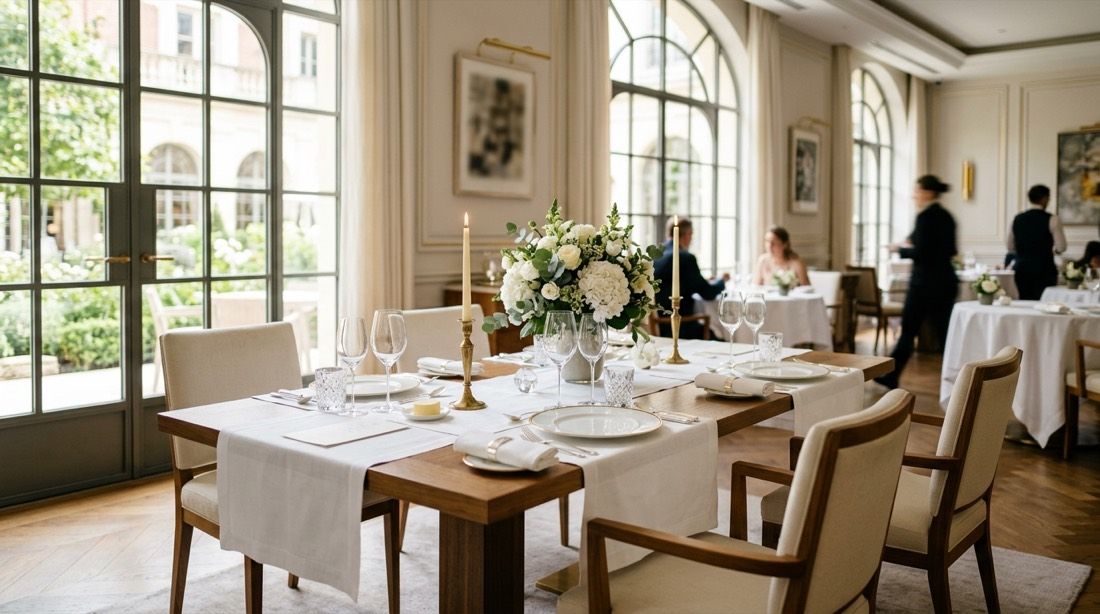
A dining room set for a profitable service
Avoid these

Common mistakes when calculating food cost

Ignoring waste and shrinkage

Ignoring the actual waste of ingredients (peeling, trimming, cooking) underestimates the cost and thus the food cost. This leads to a false sense of profitability.

Using outdated purchase prices

Supplier prices change. Calculating food cost with old prices will give you an unrealistic value and prevent you from making appropriate pricing decisions.

Confusing theoretical and actual food cost

Theoretical food cost is based on standard recipes. Actual food cost includes uncontrolled waste, theft, or inventory errors. It's crucial to monitor both.

Not including all ingredients, no matter how small

Even salt, oil, or spices add up. Omitting these small costs distorts the final food cost, especially in recipes with many components.

The niche in depth

Types of food cost

By focus and application

Theoretical food cost · soon

Calculated from the recipe costings of the recipes and current purchase prices, assuming perfect execution.

Actual food cost · soon

Determined by the opening inventory, purchases, and closing inventory in a given period, reflecting the actual consumption of raw materials.

Target food cost · soon

The food cost percentage desired by the business to achieve its profitability goals, used as a reference for setting prices.

Per-dish food cost · soon

The raw material cost percentage of a single recipe in relation to its selling price, essential for menu management.

Overall/global food cost · soon

The raw material cost percentage of all dishes sold in a period, in relation to total food sales.

Professionals

What the pros who cook with numbers say

Chefs, pastry chefs, bartenders, baristas and chocolatiers who swapped spreadsheets and notebooks for Miselup.

Carlos Mendoza

Carlos Mendoza

Owner · La Mesa Restaurant

“Every recipe change used to be a mess. With Miselup, if I bump the sirloin by 20 g, I see the real cost instantly. It's amazing—I no longer lose margin without noticing. Now costing is quick and safe, no calculator needed.”

Diego Valdés

Diego Valdés

Head Bartender · Nébula Bar

“My team sees the production sheet without any cost breakdown. That way they measure every cocktail precisely—no more over- or under-pouring. The recipe stays clear, and the numbers stay for my eyes only.”

Mateo Herrera

Mateo Herrera

Owner · Café Origen

“Swap whole milk for oat milk and Miselup updates allergens on the menu automatically. Every new season with sandwiches and pastries used to be a nightmare. Now my digital menu is always up to date and my celiac customers are grateful.”

Carlos Mendoza

Carlos Mendoza

Owner · La Mesa Restaurant

“Every recipe change used to be a mess. With Miselup, if I bump the sirloin by 20 g, I see the real cost instantly. It's amazing—I no longer lose margin without noticing. Now costing is quick and safe, no calculator needed.”

Diego Valdés

Diego Valdés

Head Bartender · Nébula Bar

“My team sees the production sheet without any cost breakdown. That way they measure every cocktail precisely—no more over- or under-pouring. The recipe stays clear, and the numbers stay for my eyes only.”

Mateo Herrera

Mateo Herrera

Owner · Café Origen

“Swap whole milk for oat milk and Miselup updates allergens on the menu automatically. Every new season with sandwiches and pastries used to be a nightmare. Now my digital menu is always up to date and my celiac customers are grateful.”

Carlos Mendoza

Carlos Mendoza

Owner · La Mesa Restaurant

“Every recipe change used to be a mess. With Miselup, if I bump the sirloin by 20 g, I see the real cost instantly. It's amazing—I no longer lose margin without noticing. Now costing is quick and safe, no calculator needed.”

Diego Valdés

Diego Valdés

Head Bartender · Nébula Bar

“My team sees the production sheet without any cost breakdown. That way they measure every cocktail precisely—no more over- or under-pouring. The recipe stays clear, and the numbers stay for my eyes only.”

Mateo Herrera

Mateo Herrera

Owner · Café Origen

“Swap whole milk for oat milk and Miselup updates allergens on the menu automatically. Every new season with sandwiches and pastries used to be a nightmare. Now my digital menu is always up to date and my celiac customers are grateful.”

Lucía Ramírez

Lucía Ramírez

Pastry Chef · Dulce Masa Bakery

“I always jot down recipes in my test notebook. I snap a photo with Miselup, and the AI turns that page into a technical sheet with exact ingredients and weights. It's magic—saves me hours of copying data and eliminates errors completely.”

Ana Solís

Ana Solís

Catering Director · Sol y Sombra Events

“For each wedding menu, I instantly see if the proposal is green or red. The margin traffic light tells me if I'm over cost before sending the quote. I negotiate with data, not blind. And I sleep easy once every event is locked in.”

Isabel Vega

Isabel Vega

Artisan Chocolatier · Bombones Amargo

“For a big order of 300 boxes, I enter the base recipe for 10 chocolates and Miselup scales everything: grams, time, cost. No neurotic math. From small workshop to large order, the scaling is spot on and I don't waste a single gram of cocoa.”

Lucía Ramírez

Lucía Ramírez

Pastry Chef · Dulce Masa Bakery

“I always jot down recipes in my test notebook. I snap a photo with Miselup, and the AI turns that page into a technical sheet with exact ingredients and weights. It's magic—saves me hours of copying data and eliminates errors completely.”

Ana Solís

Ana Solís

Catering Director · Sol y Sombra Events

“For each wedding menu, I instantly see if the proposal is green or red. The margin traffic light tells me if I'm over cost before sending the quote. I negotiate with data, not blind. And I sleep easy once every event is locked in.”

Isabel Vega

Isabel Vega

Artisan Chocolatier · Bombones Amargo

“For a big order of 300 boxes, I enter the base recipe for 10 chocolates and Miselup scales everything: grams, time, cost. No neurotic math. From small workshop to large order, the scaling is spot on and I don't waste a single gram of cocoa.”

Lucía Ramírez

Lucía Ramírez

Pastry Chef · Dulce Masa Bakery

“I always jot down recipes in my test notebook. I snap a photo with Miselup, and the AI turns that page into a technical sheet with exact ingredients and weights. It's magic—saves me hours of copying data and eliminates errors completely.”

Ana Solís

Ana Solís

Catering Director · Sol y Sombra Events

“For each wedding menu, I instantly see if the proposal is green or red. The margin traffic light tells me if I'm over cost before sending the quote. I negotiate with data, not blind. And I sleep easy once every event is locked in.”

Isabel Vega

Isabel Vega

Artisan Chocolatier · Bombones Amargo

“For a big order of 300 boxes, I enter the base recipe for 10 chocolates and Miselup scales everything: grams, time, cost. No neurotic math. From small workshop to large order, the scaling is spot on and I don't waste a single gram of cocoa.”

FAQ

Frequently asked questions

Food cost calculation

What is a good target food cost for a restaurant in Spain?
A healthy target food cost in Spain usually ranges between 25% and 35% for full-service restaurants, although it may vary depending on the concept, type of cuisine, and price positioning.
How do I calculate the food cost of my entire menu?
To calculate the food cost of your entire menu for a period, add the value of your opening food inventory, add your total food purchases for that period, and subtract the value of your closing inventory. Divide this figure by your net food sales for the same period and multiply by 100.
What's the difference between theoretical and actual food cost?
Theoretical food cost is the ideal, based on your recipes and costs. Actual food cost is what you really have, influenced by unplanned waste, portioning errors, or spoilage. The difference between the two indicates inefficiencies.
How can I reduce my food cost without lowering quality?
You can reduce your food cost by optimizing purchasing, negotiating with suppliers, controlling waste, standardizing servings, using by-products, and strategically adjusting selling prices.
Is VAT included in the food cost calculation?
No, VAT is not included in the food cost calculation. The selling price excl. VAT (taxable base) is used so the percentage reflects only the relationship between the raw material cost and the actual income from the sale of the dish.
What does it mean if my food cost is too high?
A food cost that is too high indicates that the cost of your ingredients is disproportionate to your selling prices. This may be due to high purchase prices, excessive waste, overly large servings, or insufficient selling prices, directly affecting your profitability.
John Guerrero
About the author

John Guerrero

Gastronomy consultant · Founder of ChefBusiness and Miselup

15+ years advising restaurants, bakeries and hospitality businesses across Spain and Latam. Creator of ChefBusiness, AI Chef Pro and Miselup: the digital mise en place his clients use to control food cost to the cent.

Ready to stop losing money on every plate?

Set up your recipe book in an afternoon and try Free forever. No credit card, no commitment.