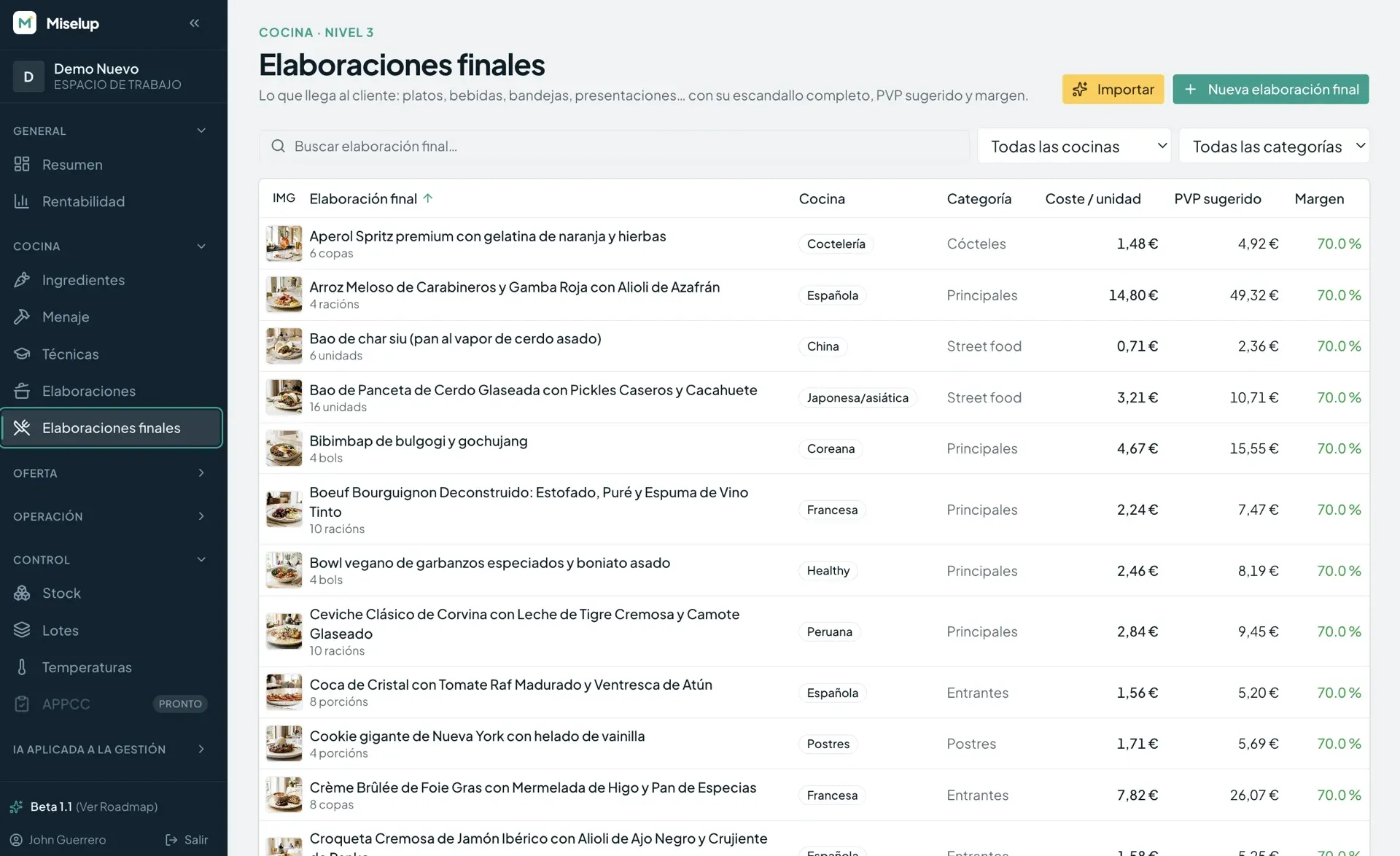
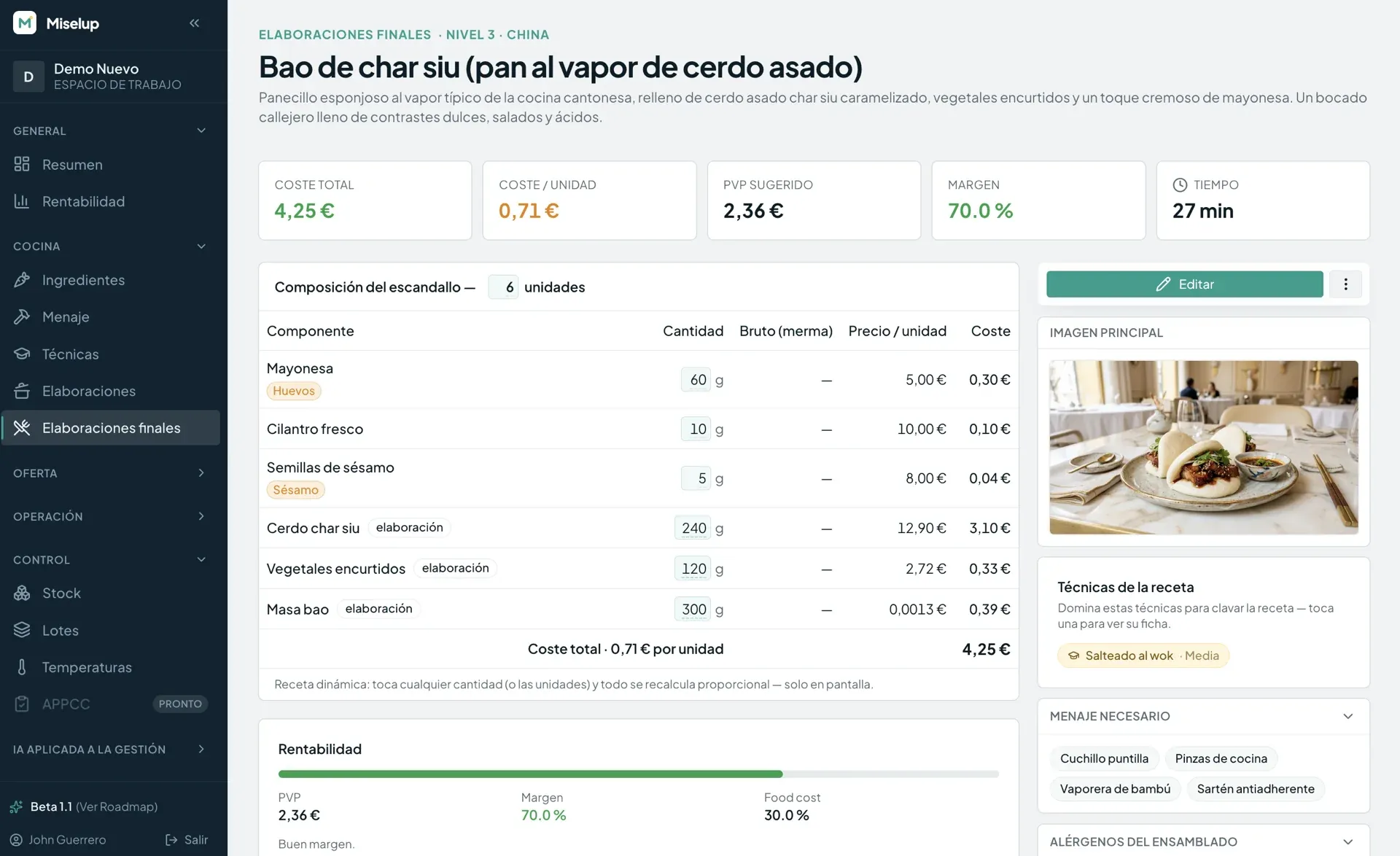
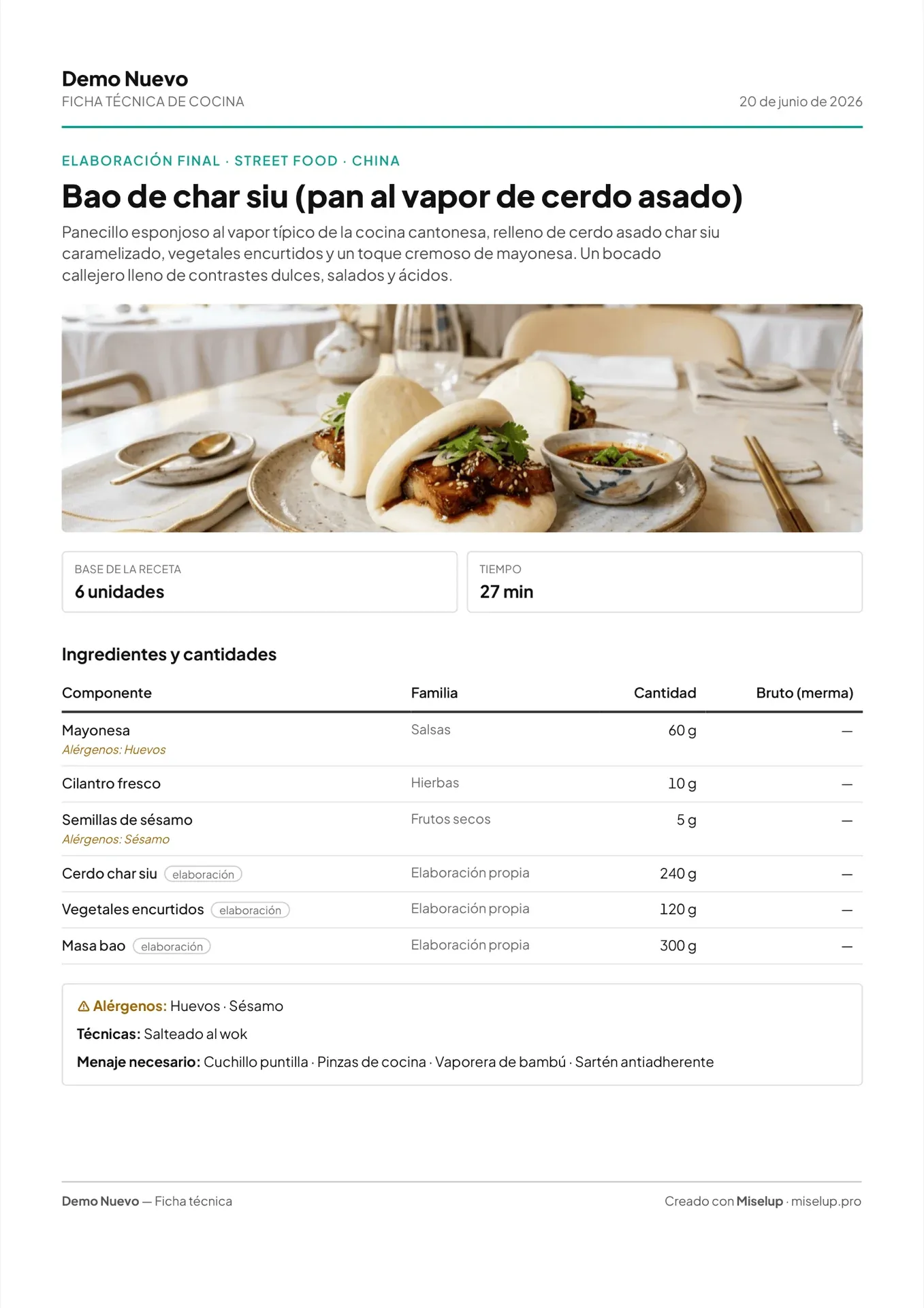
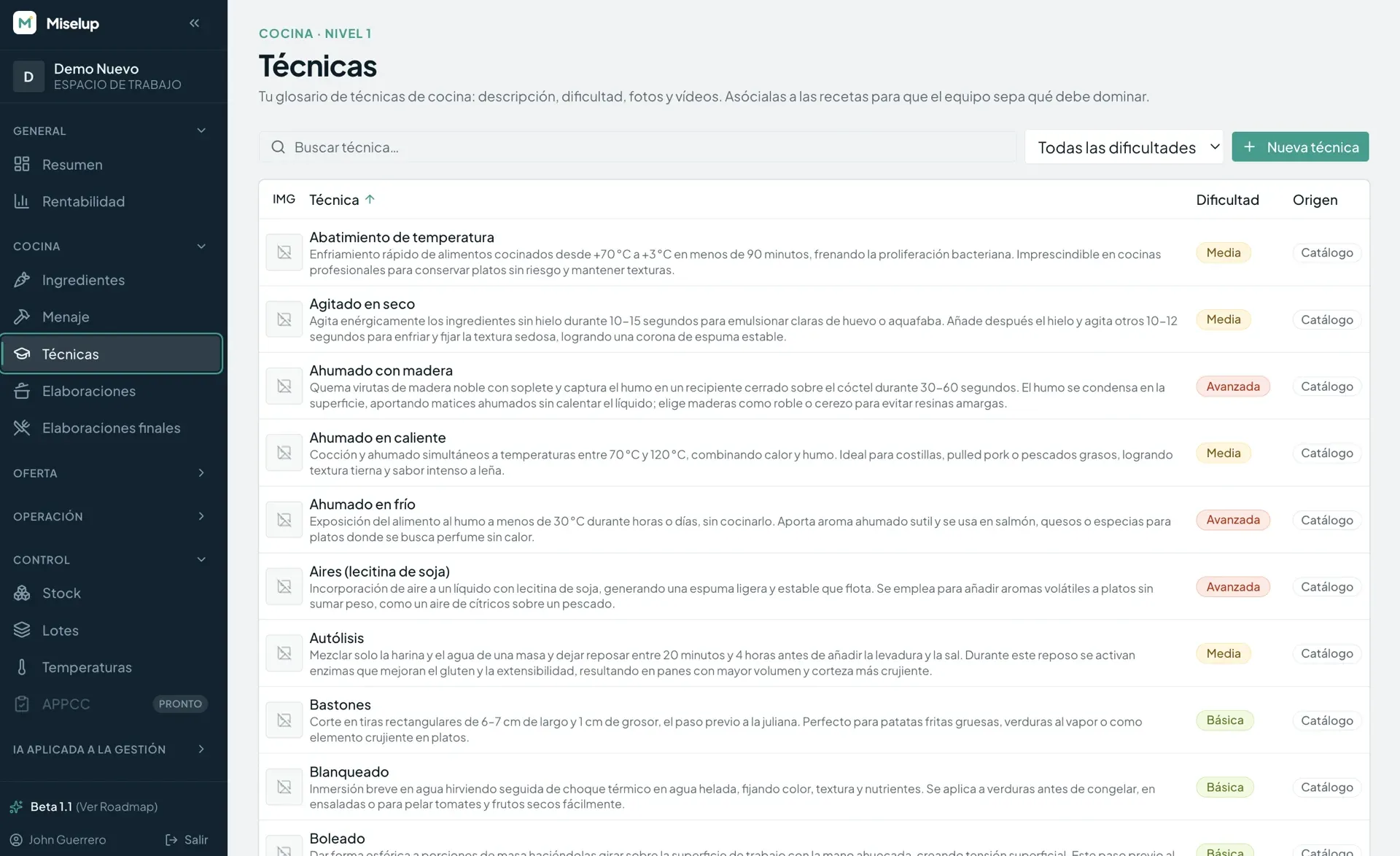
✨ Early Bird 40% off your first 3 months with code · 40% off · 3 months · EARLYBIRD
Production scaling

How to Scale a Recipe from 10 to 300 Servings Efficiently

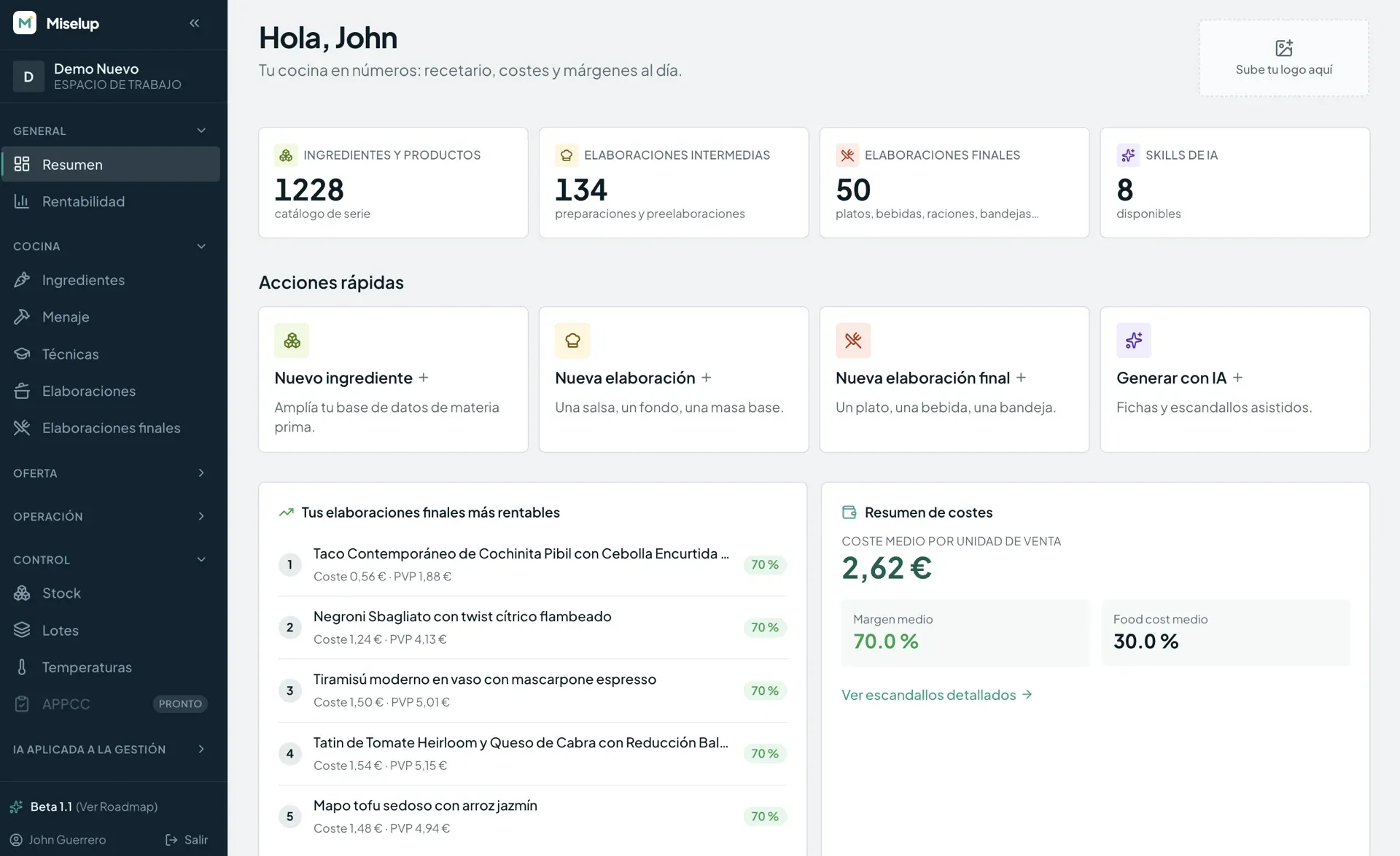
Discover how to adapt your recipes to any production volume without compromising quality or consistency. Miselup allows you to scale your preparations from 10 to 300 servings (or more) automatically and accurately.

Free forever No credit card Your recipe book in an afternoon

Spec sheet · dynamic

Cream of Vegetable Soup (10 servings)

10 servings
Food cost 25%
  • Zucchini 500 g €1.00
  • Potato 300 g €0.45
  • Leek 200 g €0.60
  • Onion 150 g €0.20
  • Vegetable broth 1000 ml €2.00
  • Olive oil 50 ml €0.40
  • Salt and pepper 5 g €0.10

Cost / unit: €0.47

€4.75
The why

Production scaling

In the Spanish hospitality industry of 2026, the ability to scale a recipe efficiently is a fundamental pillar for profitability and growth. Without a precise method, expanding the production of a dish, whether from 10 to 300 servings, becomes a maze of waste, quality inconsistencies, and, most critically, significant economic loss. It is estimated that up to 15% of raw material costs can be lost due to incorrect scaling, directly affecting the profit margin.

A digital, live recipe costing radically transforms this process. It allows you to automatically adjust ingredient quantities when changing the number of servings, maintaining the proportion and quality of the original dish. This tool not only ensures consistency in flavor and presentation, but also optimizes raw material purchasing, reduces waste, and provides accurate data to calculate the food cost per serving, facilitating strategic decisions on pricing and production volume.

Why Miselup

Miselup, built for production scaling

Learn how to scale your hospitality recipes efficiently without losing quality. Miselup lets you automatically adjust quantities for any volume.

Automatic recipe scaling

Miselup adjusts ingredient quantities proportionally for any number of servings, eliminating manual calculations and errors.

Consistency in quality

Ensures that the flavor and texture of your preparations remain identical, regardless of production volume.

Optimized purchasing and stock management

Calculates the exact amounts of ingredients needed for each production run, optimizing your orders and reducing waste.

Step by step

How to scale a recipe from 10 to 300 servings step by step

1

Standardize the original recipe

Precisely define the recipe for a small number of servings (e.g., 10), including exact quantities of each ingredient, cooking times, and techniques. This will be your unalterable base.

2

Calculate the scaling factor

Divide the target number of servings (300) by the number of servings in the base recipe (10). The result (30 in this case) is your multiplier for all ingredients.

3

Adjust ingredient quantities

Multiply the quantity of each ingredient in the base recipe by the scaling factor. Pay special attention to liquids and spices, which sometimes do not scale linearly.

4

Consider process changes

When scaling, cooking times, utensil sizes, and handling may vary. Adapt the process for large batches without compromising quality. Waste may also vary.

5

Perform tests and adjustments

Do not scale directly to 300 servings. Perform intermediate tests (e.g., 50, 100 servings) to fine-tune proportions, times, and techniques. Document each adjustment for future productions.

Worked example

Real example: scaled recipe costing for 'Pumpkin Cream Soup'

Scaling a pumpkin cream soup recipe from 10 to 300 servings, showing the impact on quantities and cost.

Ingredient Quantity Waste Cost
Ingredient Quantity (10 servings) Waste % Cost € (10 servings)
Pumpkin 1 kg 15 % 1,50 €
Onion 200 g 5 % 0,20 €
Leek 150 g 10 % 0,30 €
Vegetable broth 1,5 L 0 % 0,75 €
Heavy cream (35% fat) 100 ml 0 % 0,40 €
Extra virgin olive oil 50 ml 0 % 0,25 €
Salt 10 g 0 % 0,01 €
Pepper 2 g 0 % 0,02 €

Total cost

3,43 € (10 servings)

Food cost

17 %

Suggested price

19,90 € (10 servings)

Margin

16,47 € (10 servings)

When scaling to 300 servings, all quantities are multiplied by 30, automatically recalculating the total cost and the food cost per serving.

15 %

of raw material costs can be lost due to inefficient scaling.

industry reports

70 %

of Spanish restaurants do not use software to scale recipes.

Spain market data

20 %

improvement in final product consistency with digital scaling.

hospitality efficiency studies

10 %

reduction in waste by optimizing production scaling.

hospitality management reports

In pictures

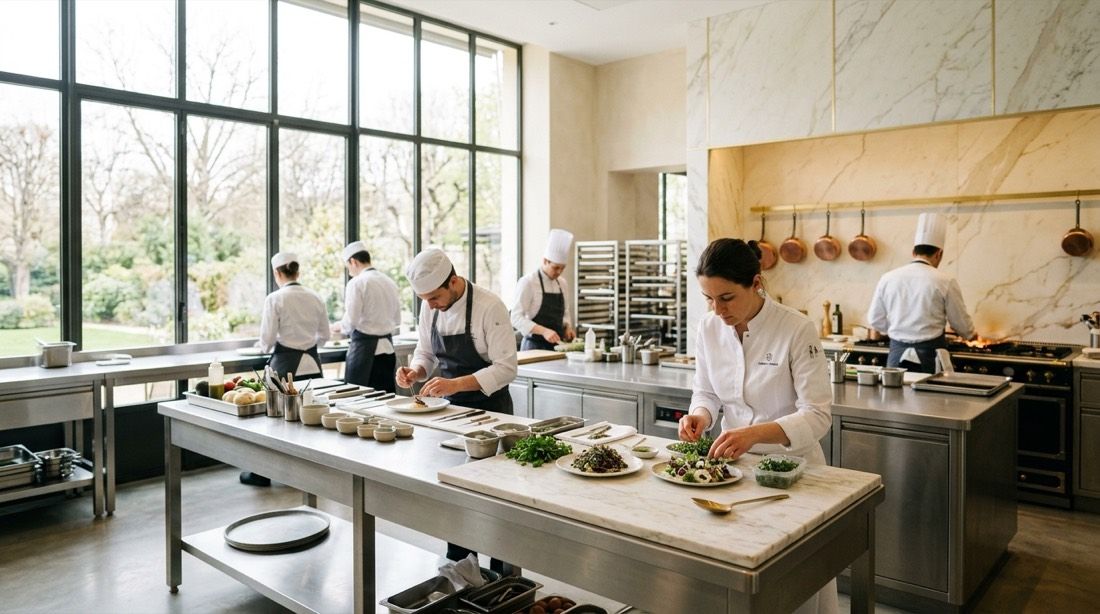
The craft, up close

Production scaling

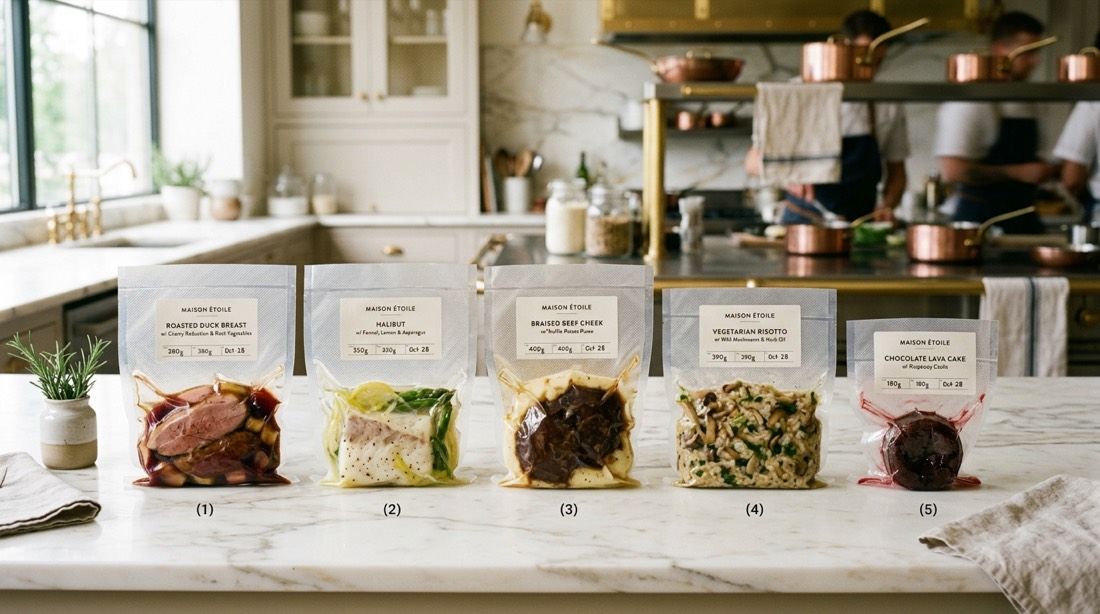
Central production, exact specs
Batches labeled and costed
Scaling without losing the cent
Avoid these

Common mistakes when scaling production in the kitchen

Linear scaling of all ingredients

Not all ingredients scale proportionally. Spices, liquids, or thickening agents may need finer adjustments to maintain flavor and texture balance.

Ignoring changes in cooking times

A larger volume of product requires more time to heat or cook. Not adjusting times can lead to undercooked or overcooked products, affecting quality.

Lack of standardization of the base recipe

If the original recipe is not perfectly defined and documented, any scaling will be inconsistent. Precision is key from the start.

Not performing intermediate tests

Scaling directly to large volumes without testing smaller batches is a risk. Tests allow you to identify and correct errors before mass production.

The niche in depth

Types of production scaling

Adapting your recipe to different needs:

Linear scaling · soon

Multiply all quantities by a fixed factor. It's the most common, but requires fine adjustments for certain ingredients.

Batch scaling · soon

Prepare the original recipe multiple times in small batches. Ensures consistency but can be less efficient for large volumes.

Reverse scaling (reduction) · soon

Divide quantities to adapt a large recipe to a smaller number of servings. Useful for testing or tasting menus.

Concentration scaling · soon

Adjust the proportion of key ingredients to intensify or soften flavors, without drastically changing the total volume.

Nutritional profile scaling · soon

Modify quantities to meet specific nutritional goals while maintaining flavor and texture. Relevant for diets or special menus.

Professionals

What the pros who cook with numbers say

Chefs, pastry chefs, bartenders, baristas and chocolatiers who swapped spreadsheets and notebooks for Miselup.

Carlos Mendoza

Carlos Mendoza

Owner · La Mesa Restaurant

“Every recipe change used to be a mess. With Miselup, if I bump the sirloin by 20 g, I see the real cost instantly. It's amazing—I no longer lose margin without noticing. Now costing is quick and safe, no calculator needed.”

Diego Valdés

Diego Valdés

Head Bartender · Nébula Bar

“My team sees the production sheet without any cost breakdown. That way they measure every cocktail precisely—no more over- or under-pouring. The recipe stays clear, and the numbers stay for my eyes only.”

Mateo Herrera

Mateo Herrera

Owner · Café Origen

“Swap whole milk for oat milk and Miselup updates allergens on the menu automatically. Every new season with sandwiches and pastries used to be a nightmare. Now my digital menu is always up to date and my celiac customers are grateful.”

Carlos Mendoza

Carlos Mendoza

Owner · La Mesa Restaurant

“Every recipe change used to be a mess. With Miselup, if I bump the sirloin by 20 g, I see the real cost instantly. It's amazing—I no longer lose margin without noticing. Now costing is quick and safe, no calculator needed.”

Diego Valdés

Diego Valdés

Head Bartender · Nébula Bar

“My team sees the production sheet without any cost breakdown. That way they measure every cocktail precisely—no more over- or under-pouring. The recipe stays clear, and the numbers stay for my eyes only.”

Mateo Herrera

Mateo Herrera

Owner · Café Origen

“Swap whole milk for oat milk and Miselup updates allergens on the menu automatically. Every new season with sandwiches and pastries used to be a nightmare. Now my digital menu is always up to date and my celiac customers are grateful.”

Carlos Mendoza

Carlos Mendoza

Owner · La Mesa Restaurant

“Every recipe change used to be a mess. With Miselup, if I bump the sirloin by 20 g, I see the real cost instantly. It's amazing—I no longer lose margin without noticing. Now costing is quick and safe, no calculator needed.”

Diego Valdés

Diego Valdés

Head Bartender · Nébula Bar

“My team sees the production sheet without any cost breakdown. That way they measure every cocktail precisely—no more over- or under-pouring. The recipe stays clear, and the numbers stay for my eyes only.”

Mateo Herrera

Mateo Herrera

Owner · Café Origen

“Swap whole milk for oat milk and Miselup updates allergens on the menu automatically. Every new season with sandwiches and pastries used to be a nightmare. Now my digital menu is always up to date and my celiac customers are grateful.”

Lucía Ramírez

Lucía Ramírez

Pastry Chef · Dulce Masa Bakery

“I always jot down recipes in my test notebook. I snap a photo with Miselup, and the AI turns that page into a technical sheet with exact ingredients and weights. It's magic—saves me hours of copying data and eliminates errors completely.”

Ana Solís

Ana Solís

Catering Director · Sol y Sombra Events

“For each wedding menu, I instantly see if the proposal is green or red. The margin traffic light tells me if I'm over cost before sending the quote. I negotiate with data, not blind. And I sleep easy once every event is locked in.”

Isabel Vega

Isabel Vega

Artisan Chocolatier · Bombones Amargo

“For a big order of 300 boxes, I enter the base recipe for 10 chocolates and Miselup scales everything: grams, time, cost. No neurotic math. From small workshop to large order, the scaling is spot on and I don't waste a single gram of cocoa.”

Lucía Ramírez

Lucía Ramírez

Pastry Chef · Dulce Masa Bakery

“I always jot down recipes in my test notebook. I snap a photo with Miselup, and the AI turns that page into a technical sheet with exact ingredients and weights. It's magic—saves me hours of copying data and eliminates errors completely.”

Ana Solís

Ana Solís

Catering Director · Sol y Sombra Events

“For each wedding menu, I instantly see if the proposal is green or red. The margin traffic light tells me if I'm over cost before sending the quote. I negotiate with data, not blind. And I sleep easy once every event is locked in.”

Isabel Vega

Isabel Vega

Artisan Chocolatier · Bombones Amargo

“For a big order of 300 boxes, I enter the base recipe for 10 chocolates and Miselup scales everything: grams, time, cost. No neurotic math. From small workshop to large order, the scaling is spot on and I don't waste a single gram of cocoa.”

Lucía Ramírez

Lucía Ramírez

Pastry Chef · Dulce Masa Bakery

“I always jot down recipes in my test notebook. I snap a photo with Miselup, and the AI turns that page into a technical sheet with exact ingredients and weights. It's magic—saves me hours of copying data and eliminates errors completely.”

Ana Solís

Ana Solís

Catering Director · Sol y Sombra Events

“For each wedding menu, I instantly see if the proposal is green or red. The margin traffic light tells me if I'm over cost before sending the quote. I negotiate with data, not blind. And I sleep easy once every event is locked in.”

Isabel Vega

Isabel Vega

Artisan Chocolatier · Bombones Amargo

“For a big order of 300 boxes, I enter the base recipe for 10 chocolates and Miselup scales everything: grams, time, cost. No neurotic math. From small workshop to large order, the scaling is spot on and I don't waste a single gram of cocoa.”

FAQ

Frequently asked questions

Production scaling

How does scaling affect the food cost per serving?
Efficient scaling should maintain or even slightly reduce the food cost per serving thanks to purchasing optimization and waste reduction. Incorrect scaling will skyrocket it due to waste.
What is the right selling price for a dish scaled to large volume?
The selling price should be based on the actual food cost of the scaled serving, plus your operating costs and desired margin. Large volumes may allow slightly more competitive prices if unit costs decrease.
Should I adjust waste when scaling a recipe?
Yes, waste can vary. Some ingredients may have a different waste percentage in large volumes due to handling or cooking method. It's crucial to monitor and adjust it in the recipe costing.
What tools help me scale recipes accurately?
A recipe costing software like Miselup is the most effective tool. It allows you to enter the base recipe, the desired number of servings, and automatically calculates quantities, costs, and waste.
How do I ensure flavor consistency when scaling?
Standardizing the base recipe is essential. Then, test in intermediate batches, adjust spice and liquid ratios, and train your team to follow the new processes to the letter.
What if an ingredient is difficult to scale (e.g., a ferment)?
Some ingredients, like ferments or yeasts, do not scale linearly. In these cases, it's advisable to consult experts or conduct thorough tests to find the optimal ratio that maintains quality and food safety.
John Guerrero
About the author

John Guerrero

Gastronomy consultant · Founder of ChefBusiness and Miselup

15+ years advising restaurants, bakeries and hospitality businesses across Spain and Latam. Creator of ChefBusiness, AI Chef Pro and Miselup: the digital mise en place his clients use to control food cost to the cent.

Ready to stop losing money on every plate?

Set up your recipe book in an afternoon and try Free forever. No credit card, no commitment.