Gross weight vs net weight in the kitchen: a costing guide
Gross weight vs net weight in the kitchen: master the trim waste formula and see the real cost of your dishes with a worked example in euros.

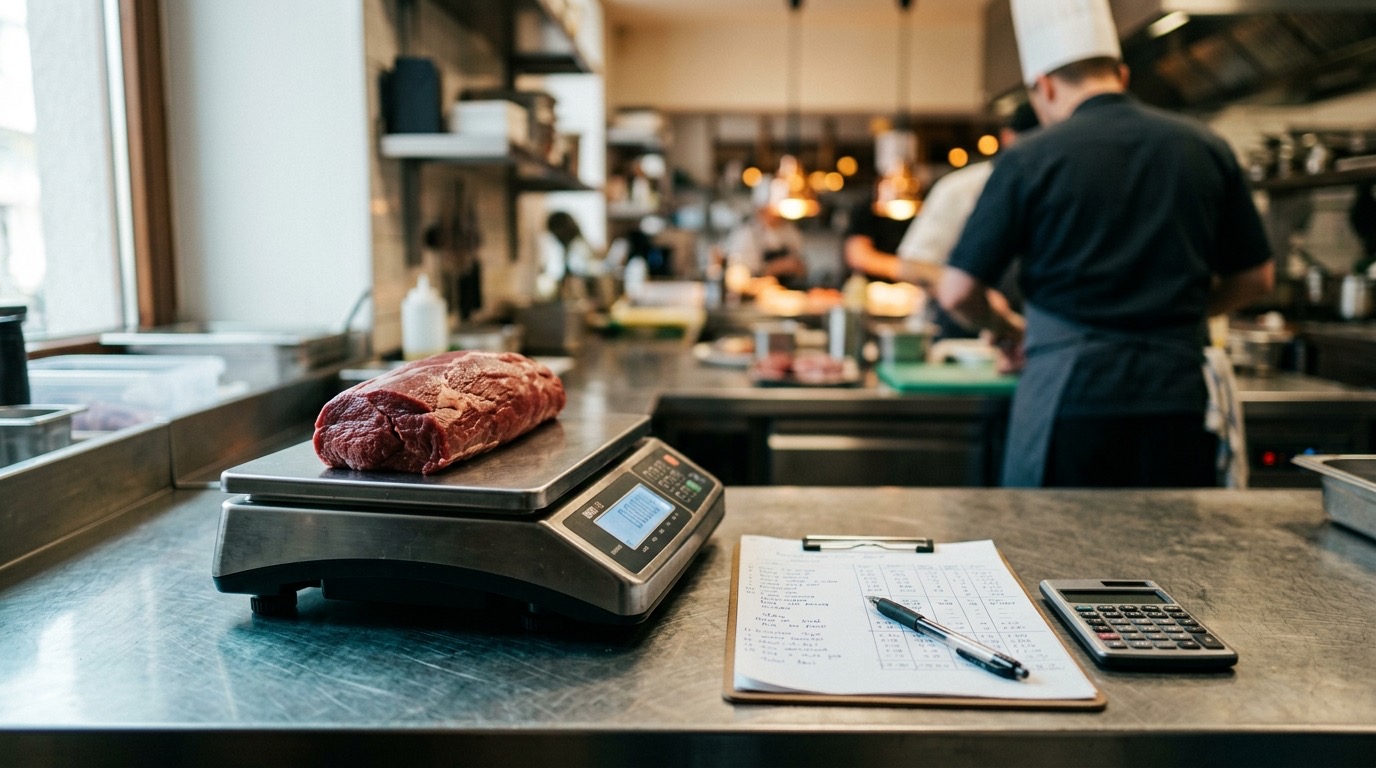
If there is one concept that separates a profitable restaurant from one that quietly drains its capital, it is understanding the difference between gross weight and net weight. When I advise hospitality students or established kitchen teams, I often repeat the same thing: the real cost of a dish does not start with the purchase price of the goods; it starts with what you actually use. And that means weighing, recording, and calculating. If you cannot distinguish gross weight from net weight, your recipe costing is telling you a story that bears no resemblance to what you experience every day on the pass and on the prep station.
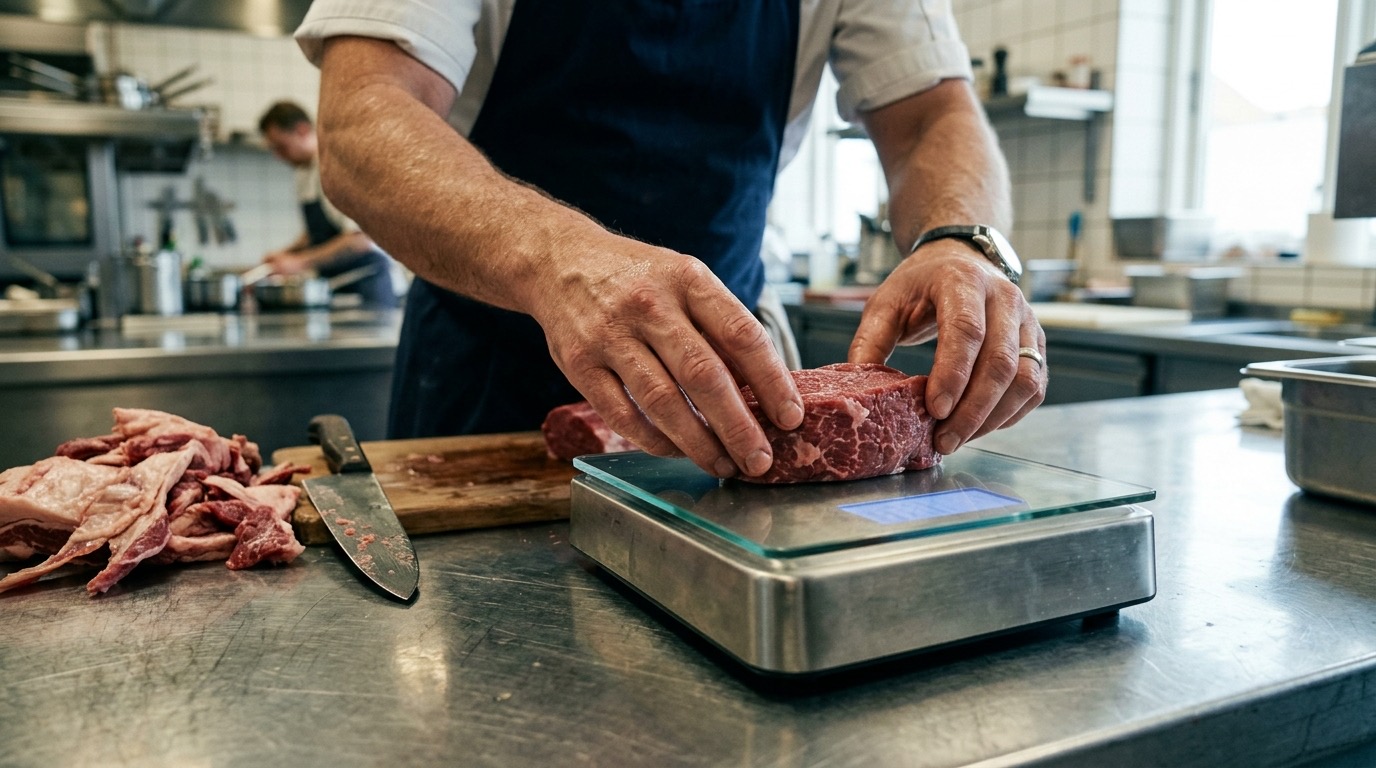
Gross weight and net weight in the kitchen: what they actually mean
Gross weight is the weight of the product when you receive it and place it on the scales as it arrives: with bone, skin, fish bones, surface fat, ice, crown, packing liquid, or packaging. It is the purchase weight, the weight you pay for, and the weight that appears on the supplier’s delivery note.
Net weight is what remains after you have cleaned, butchered, and prepared the ingredient for use in the kitchen: the clean fillet of hake, the peeled potato, the trimmed tenderloin, the tomato pulp without skin or seeds. Here we are talking about raw ingredients ready to lose weight only through cooking.
The difference between the two is trim waste, and this trim waste translates directly into money you are not using. That is why the yield of a product in the kitchen — the proportion of net weight you obtain relative to the gross weight — is the first figure you should engrave in your mind for any prep station.
Gross weight, net weight, and drained or cooked weight: the three weights that get confused
In addition to the two weights above, there is a third concept that generates many inflated figures: drained or cooked weight. For canned goods, jarred pulses, or vegetables in liquid, the real net weight starts when you discard the packing liquid. For meats and fish, the cooked weight reflects thermal yield loss: the loss that occurs when roasting, searing, sautéing, or poaching.
This table helps you visualise the three weights using real, everyday examples:
| Ingredient (per portion) | Gross weight (purchased) | Net weight (clean, raw) | Drained or cooked weight |
|---|---|---|---|
| Beef tenderloin | 250 g | 200 g | 150 g (after searing) |
| Canned chickpeas | 400 g (can) | 240 g (drained) | 240 g |
| Hake steak | 200 g | 140 g | 115 g (grilled) |
| Fresh spinach | 200 g | 180 g | 70 g (sautéed) |
For recipe costing, the controlling weight is the raw net weight: the weight you put on the ingredients list before cooking. The cooked weight helps you calibrate final portions and technical presentation sheets, but not to calculate raw material cost. The gross weight tells you how much to buy; the net weight tells you the true value of each usable gram.
Why this difference determines the real cost of your dishes
The most common mistake is to believe that a kilo of tenderloin costs €42.00 when it is clean. But that is false: you pay €42.00 for a kilo that includes the chain, fat, and silverskin. The kilo you end up plating costs you much more. When you calculate the cost of a dish based on the gross purchase price, you are cheating your own profit and loss account. And in hospitality, where net margins hover between 5% and 12%, an error of €1.99 per portion (as you will see in a moment) is not an oversight; it is a haemorrhage.
That is why professional recipe costing always starts with net weight and net cost per kilo. If you want to review the complete process for building a technical sheet from scratch, I recommend reading how to cost a recipe step by step.
The trim waste formula, step by step
The good news is that calculating trim waste does not require a master’s degree in finance. All you need is a scale, two weight recordings, and this formula:
Trim waste (%) = [(Gross weight − Net weight) / Gross weight] × 100
This percentage gives you two key data points. Yield is the complementary figure: 100% − trim waste (%). And the real cost per net kilo is calculated by dividing the total gross cost (purchase price of the whole piece) by the net weight you actually use.
It is not the same to say “tenderloin has a 20% yield loss” from memory as it is to weigh your own piece and get 20.8%. That difference in decimals, applied to several hundred portions, translates into money you are giving away to the supplier… at your own expense.
Worked example: from tenderloin in grams to real cost in euros
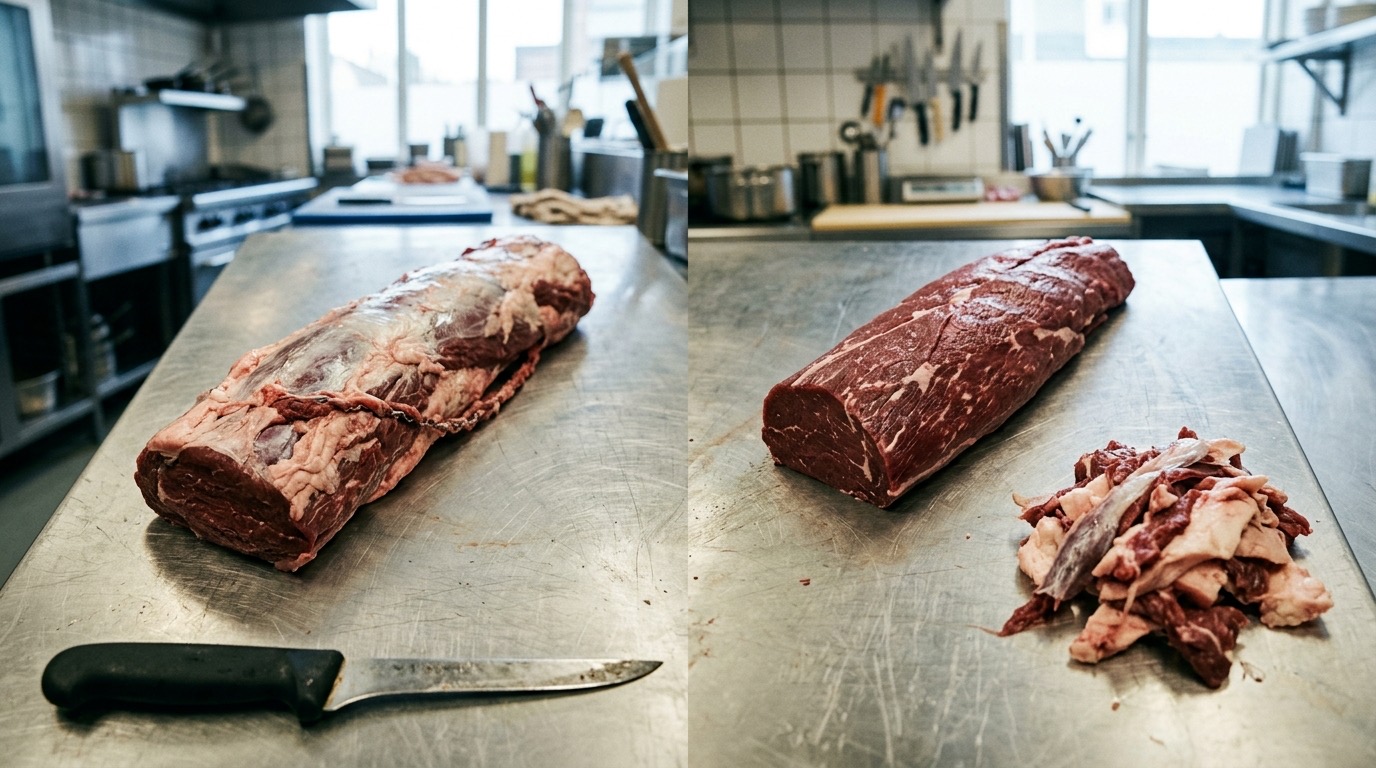
Let’s put numbers, weights, and euros to a real case I encounter every two months when auditing a kitchen. Grab your scales and follow along:
- You buy a 2.4 kg piece of beef tenderloin at €42.00/kg → total gross cost = €100.80.
- After removing the chain, silverskin, and fat, you get 1.9 kg of clean tenderloin. That is your net weight.
- Trim waste = [(2.4 − 1.9) / 2.4] × 100 = 20.8%.
- Yield = 100% − 20.8% = 79.2%.
- Real cost per net kilo = €100.80 / 1.9 kg = €53.05/kg.
- A 180 g portion of clean tenderloin costs: 0.180 × 53.05 = €9.55.
- If you mistakenly use the purchase price (€42.00/kg), the cost you record would be 0.180 × 42 = €7.56. You are ignoring €1.99 per portion.
That figure is not a guess: it is the difference between costing a dish with a fictitious margin or a real one.
The error that inflates your margin: cost with gross weight vs. net weight
When you multiply that error by the volume of a full service, the problem stops being an anecdote and becomes a figure that keeps you up at night:
| Concept | With gross weight (error) | With net weight (correct) |
|---|---|---|
| Raw material cost | €42.00/kg | €53.05/kg |
| Cost per portion (180 g) | €7.56 | €9.55 |
| Difference per portion | — | +€1.99 |
| Over 40 portions per day | — | +€79.60/day |
| Over one month (26 service days) | — | +€2,069.60/month |
Those €2,069.60 per month that looked like margin… never existed. You simply had not deducted them. And the worst part is that this error is replicated in every preparation, every purchase batch, and every dish where trim waste is not recorded. If you automate this calculation with tools like the waste and yield calculator, you prevent such a simple operation from stealing your profitability.
How to apply gross weight and net weight in your recipe costing
On the dish’s technical sheet, you should always record two data points for each ingredient: the purchase price (gross) and the trim waste percentage you have verified in your kitchen. This way, the system — or the spreadsheet — applies the real net cost without you having to perform mental gymnastics.
When you use software like Miselup, each ingredient has its yield associated, and the recipe costing recalculates automatically as soon as you modify the supplier’s price or adjust a yield loss. If for now you prefer to work with your own sheets, you have a recipe costing Excel template with the formulas already set up, ready for you to input your own weights and prices.
Most common mistakes when weighing and calculating trim waste
As simple as they may seem, I have seen these mistakes even in Michelin-starred kitchens. Take note to avoid them from day one:
- Weighing the gross weight with ice, packaging, or canning liquid. The scale should only show the product you are going to clean; empty, drain, and lightly dry before weighing.
- Not taring the scale. It seems obvious, but if you change containers and do not tare, you carry an error into every weight.
- Recording the “already clean” price the supplier gives you as if it were the gross price. That retail price usually includes a theoretical yield that does not match your kitchen’s. Always start from the actual gross price you pay.
- Confusing net weight with cooked weight. The cooking yield loss is applied after the recipe costing, not as a substitute for the raw net weight.
- Using a textbook yield loss without weighing in your own kitchen. The reference table is a guide, but your beef batch, your fish supplier, or manual potato peeling can easily vary by five points. And five points, multiplied by hundreds of kilos, is hundreds of euros.
Quick reference table: trim waste for some common ingredients
So you do not start completely blind, here are five verified values. But I insist: these are reference figures you must verify with your own scales.
| Ingredient | Typical trim waste (%) | Net yield (%) |
|---|---|---|
| Beef tenderloin (whole piece, trimmed of chain and silverskin) | 15-25% | 75-85% |
| Large hake (to fillets) | 35-40% | 60-65% |
| Chicken breast (trimmed) | 25-30% | 70-75% |
| Potato (peeled) | 20-25% | 75-80% |
| Artichoke (to heart) | 60-70% | 30-40% |
If you need more references, consult the full waste and yield table by product, with over 100 ingredients broken down. And remember: the definitive data is always born in your kitchen, with your goods and your butchery technique.
AI Chef Pro · AI for chefs55+ AI tools for your kitchenCreate recipes, menus and optimize costs free. Try AI Chef Pro now.Try it free →Frequently asked questions
What is gross weight and net weight in the kitchen?
Gross weight is the weight of the ingredient as purchased, including bones, skin, liquid, or packaging. Net weight is the weight after cleaning and butchery, ready for culinary preparation. The difference between the two constitutes trim waste.
What is the formula for calculating the trim waste percentage?
The formula is: Trim waste (%) = [(Gross weight − Net weight) / Gross weight] × 100. This gives you the percentage loss of raw material during cleaning, allowing you to calculate the real cost of the usable product.
What is the difference between gross weight, net weight, and drained or cooked weight?
Gross weight corresponds to the purchase; net weight is the product already cleaned and raw; and drained or cooked weight reflects the additional loss from removing packing liquids or from cooking. In recipe costing, you work with raw net weight; cooked weight is used to define final portions.
How does trim waste affect the real cost of a dish?
Every gram lost during cleaning has been paid for at the purchase price. When calculating the dish’s cost using net weight, the price per usable kilo is always higher, which raises the real cost of the portion. Ignoring trim waste artificially inflates the gross margin.
How do you calculate the cost price of an ingredient considering trim waste?
First, determine the total gross cost (price per gross kilo × gross weight). Then divide that cost by the net weight obtained, which gives the real cost per net kilo. Finally, multiply that price by the net quantity in the portion.
Does the drained weight of canned goods count as the net weight for costing?
Yes: for canned and pickled goods, the weight that goes into your recipe costing is the drained weight declared on the tin (or the one you measure yourself), never the gross weight with its brine. A 400 g can with 240 g drained provides only 240 g of usable product, and the real cost per kilo is calculated on those 240 g.