Recipe Costing for a Tapas Bar: Tapa, Half, Full
How to cost a tapas bar: the same dish as a tapa, half and full portion with a different food cost, and how the drink holds the margin.

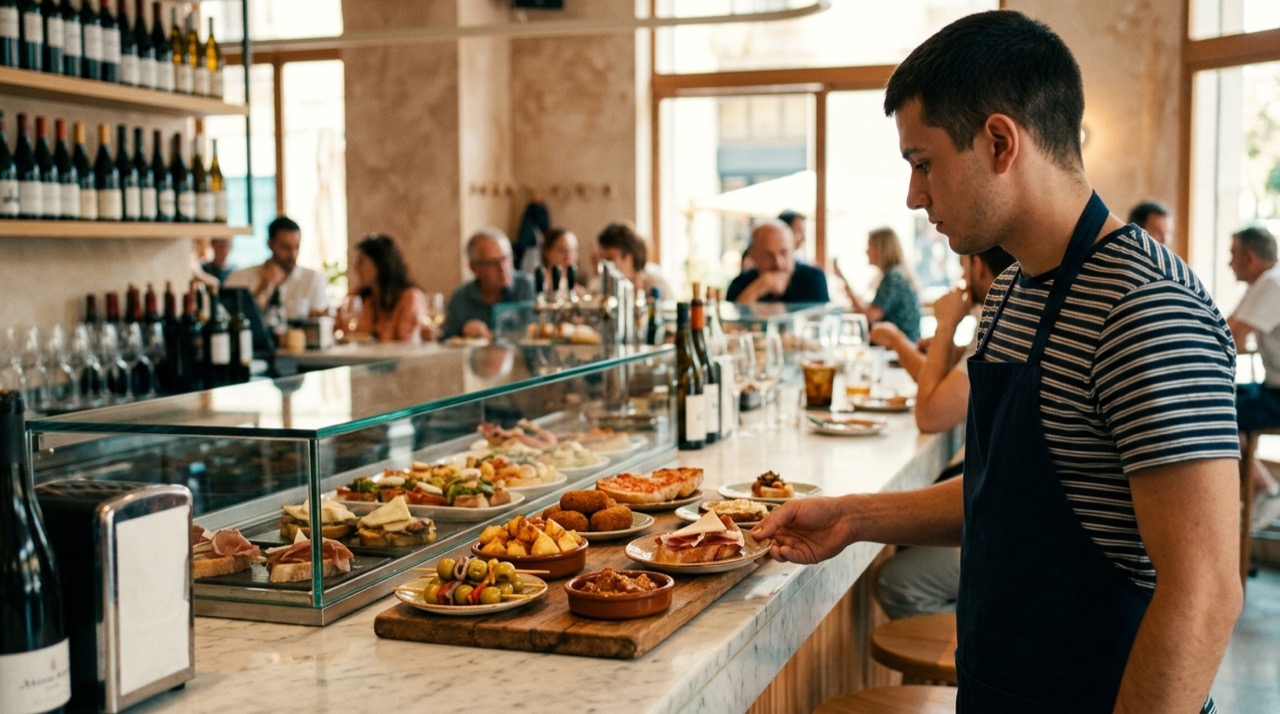
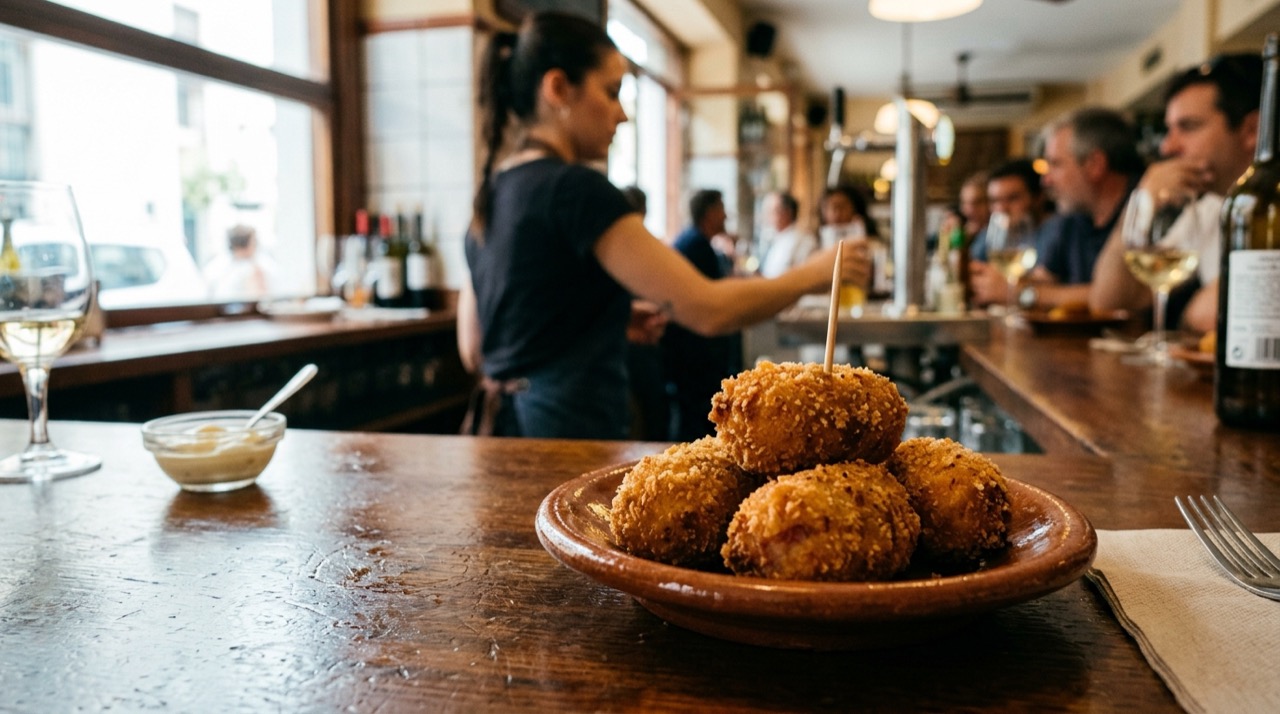
I remember a long chat after a meal in a classic old bar, right by the counter. The barman, who knows me, set down a plate of three freshly fried ham croquettes. A customer next to me, looking at the menu, asked: “Hey, why is the tapa two croquettes for €2.50, the half portion five for €5, and the full portion ten for €8.50? The price isn’t triple.” He looked at me, glass in hand, waiting for an answer. So I explained that a tapas bar doesn’t work like an à la carte restaurant. Profitability lies in the details: the same product in three sizes, the drink that supports the margin, and that recipe costing for a tapas bar that many do by eye but, when you square it with real numbers, saves your bottom line. That impromptu conversation ended up on a napkin full of figures that I want to share with you today.
Why a Tapas Bar Costs Differently
A tapas bar has its own economy, different from that of an à la carte restaurant. The first big difference is that here you’re not selling one large dish and that’s it: you’re selling the same product in three formats — tapa, half portion, and full portion — and each one supports a different cost structure and food cost, even though they start from the same recipe.
The tapa works as a hook. It’s often cheap and sometimes included with the drink, which would be unthinkable in other hospitality settings. But here, the drink is what supports the margin. The small draught beer (caña), wine, or soft drink has a cost that, combined with the tapa, still leaves a net profit per round. If you don’t have this balance clear, it’s easy to give away more than you earn.
Then there’s the volume of references. In a tapas bar, you handle dozens of preparations, many with cheap raw ingredients: a small pork loin montadito, a bite-sized tuna piece, a tortilla pincho. Here, cents really matter. If each portion is off by 10 cents, by the end of the month you’re talking about hundreds of euros vanishing. If you add to this the yield loss from frying and grilling (the oil a croquette absorbs, the evaporation loss from a stew, the energy of the fryer running for three hours during service), you’ll understand why the recipe costing for a bar can’t just be copied from a restaurant’s recipe book. Each business format has its own cost; in fact, if you’ve ever set up a food truck or a ghost kitchen, you’ll know the structure is radically different.
Recipe Costing for a Tapa, a Half Portion, and a Full Portion
The same dish, three sizes, three recipe costings. It’s not enough to multiply the recipe by two or four and assume the cost scales linearly: the food cost shoots up as the portion grows, even though the absolute margin also rises. That’s what confuses many hospitality professionals. Let’s look at it with clear figures.
Imagine some ham croquettes. The fully loaded cost per unit is €0.35, with a breakdown I’ll detail later. If you apply this to the three classic formats — tapa, half portion, and full portion — the figures are these:
| Size | Units | Cost | Selling price (excl. VAT) | Food cost % | Margin € |
|---|---|---|---|---|---|
| Tapa | 2 | €0.70 | €2.50 | 28.0% | €1.80 |
| Half portion | 5 | €1.75 | €5.00 | 35.0% | €3.25 |
| Full portion | 10 | €3.50 | €8.50 | 41.2% | €5.00 |
Look closely. The tapa has the best food cost (the lowest, at 28.0%), but the smallest absolute margin: only €1.80. The full portion, on the other hand, pushes the food cost up to 41.2%, but leaves €5 clean in the till. The secret is that the price per croquette drops as the size increases: €1.25 per unit for the tapa, €1.00 for the half portion, and €0.85 for the full portion. This way, the customer perceives the full portion as “better value,” while you maintain a higher gross margin in absolute terms. This game of perception and profitability is pure menu engineering, just applied to the bar counter.
ChefBusiness · Real profitabilityMaximize your restaurant without losing moneyCost control and food marketing. Book your ChefBusiness consulting now.Get the consulting →The Tapa + Drink Equation: How the Small Draught Beer (Caña) Supports the Margin
Here lies the key to the tapas business. The tapa, on its own, sometimes borders on the limit of profitability, and can even be free with the drink. Why can this be done? Because the real margin is in the drink.
Let’s use real figures, the same ones I’ve used in hundreds of consultations:
- A small draught beer (caña) costs €0.40 and is sold excluding VAT at €1.80, with a margin of €1.40 (food cost 22.2%).
- If you give away a tapa of croquettes (cost €0.70), you subtract that cost from the drink’s margin: €1.40 – €0.70 = €0.70 net per round. The combo remains profitable.
Now, the important warning: if the tapa were more elaborate, say an oxtail pincho with a real cost of €1.50, the equation gives €1.40 – €1.50 = −€0.10. You lose money on every round. And since you’re not keeping track, you unconsciously compensate with other dishes, but the result is a silent hole. That’s why doing a good recipe costing for a tapas bar isn’t a whim: it’s the only way to know how much you can “give away” without losing money.
This reasoning applies equally to other products: a small tuna montadito, a small cheese board, or even a bar gin and tonic if you offer it as a hook with some promotion. The logic is the same: if you don’t know the real cost of what you put on the counter, you don’t know what you’re truly giving away.
Example with Figures: Some Ham Croquettes
Let’s break down the cost per croquette I used earlier, so you can see that not a single cent is left out. It’s not enough to just add up ingredients: you have to include everything the dish uses, even what you don’t see. If you’re just starting with this, I recommend following a step-by-step guide so you don’t miss anything.
The fully loaded cost of a ham croquette is €0.35. Here’s how it breaks down:
- Filling (béchamel + ham): €0.22. Flour, butter, milk, hand-chopped ham. All weighed and costed cold.
- Breading (flour, egg, breadcrumbs): €0.05. This is the cheapest part, but it adds up if you multiply by hundreds of croquettes a day.
- Frying (absorbed oil + oil change amortisation + energy): €0.08. Here’s the key for the bar: the oil isn’t free. The croquette absorbs some, the oil degrades and needs replacing, plus the fryer has to be on. All imputed per unit.
If you apply these €0.35 to the three sizes, you get the table we already saw. The tapa (2 units) costs €0.70; the half portion, €1.75; the full portion, €3.50. From there, it’s time to set the selling prices. And here comes the art of giving coherence to the menu.
Coherent Prices Between Tapa, Half Portion, and Full Portion
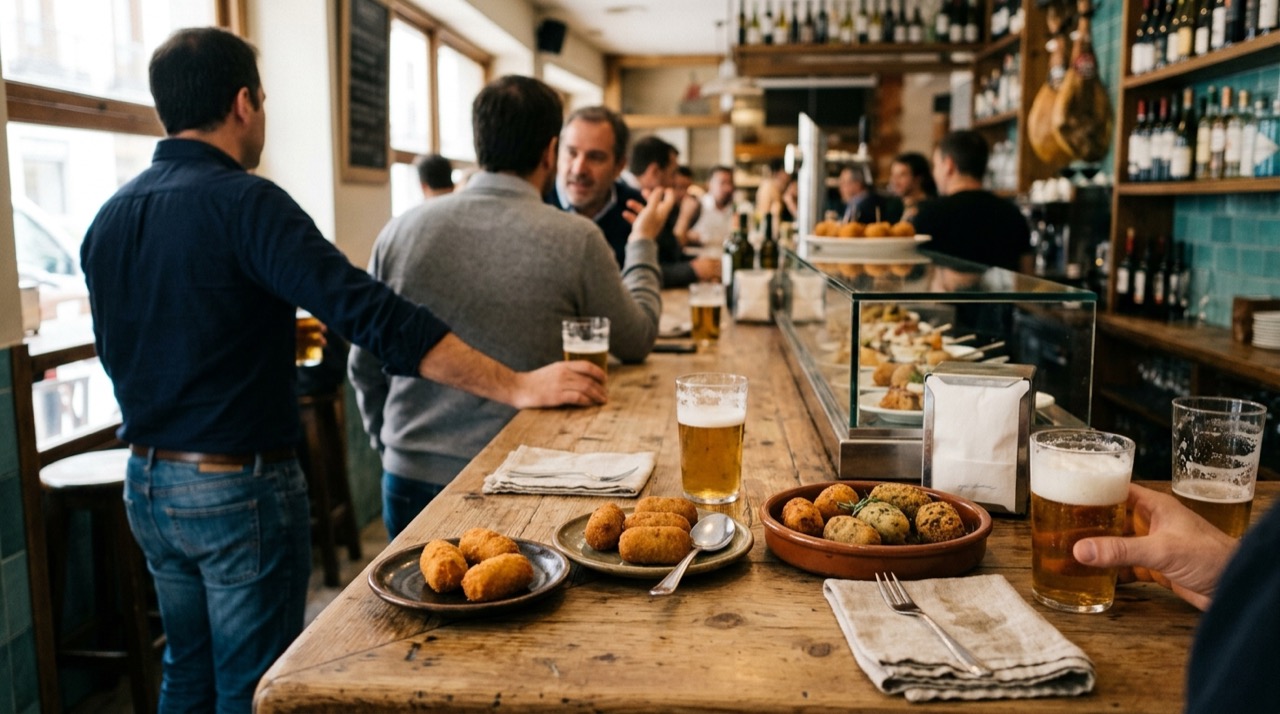
One of the most common mistakes is setting prices that the customer finds illogical. If the tapa of croquettes costs €2.50 (two units), it’s not logical for the full portion of ten croquettes to cost exactly five times that, €12.50. No one pays that, and your food cost would go to unsustainable percentages. The key is that the price per unit decreases as the size increases, while maintaining a decent absolute margin.
In our example, the price per croquette goes from €1.25 to €1.00 and then to €0.85. This way, the customer feels the full portion “goes further,” and you, even with a higher food cost on that dish (41.2% compared to the tapa’s 28%), earn €5 of gross margin instead of €1.80. Profitability is played out in the balance of the entire bar: some tapas with very low food costs compensate for others that are more generous, all lubricated by the drink.
This coherent scaling isn’t exclusive to cooking. It works the same for cold pinchos, bite-sized sandwiches, or even a cheese board with three formats. If you don’t maintain a descending price logic per unit, the customer perceives an inconsistency and tends to order the smallest option, which gives you less absolute margin. To set the prices of each dish properly, it’s worth reviewing the fundamentals of pricing in hospitality and not improvising.
AI Chef Pro · AI for chefs55+ AI tools for your kitchenCreate recipes, menus and optimize costs free. Try AI Chef Pro now.Try it free →Frequently Asked Questions
Is the recipe costing for a tapas bar the same as for an à la carte restaurant?
No. In a tapas bar, you handle small portions of multiple references, the tapa often works as a hook, and you have to account for yield loss like frying oil or the energy cost of the grill running all service. Plus, the drink has a much greater weight in the profit and loss statement. If you’re coming from a restaurant and want to do recipe costing for different formats, like a food truck or a ghost kitchen, you’ll see each model has its own rules.
Why does the tapa have a lower food cost than the full portion, but a worse margin?
Because the cost of the tapa is small and you can sell it expensive in proportion, but since there are few units, the absolute margin (net euros) is low. The full portion, by including more units and applying a volume discount, raises the food cost, but leaves more money in absolute value. The bar business is sustained by balancing both formats.
What do I do if I offer the tapa free with the small draught beer (caña)? Do I still make a profit?
Yes, as long as the drink’s margin exceeds the cost of the tapa. With a small draught beer (caña) that leaves a €1.40 margin, you can give away a €0.70 tapa and still earn €0.70 net per round. But if the tapa is more expensive than the drink’s margin, you lose money. You need the real recipe costing to know which tapas you can include without ruining yourself.
How can I keep recipe costings updated if I change suppliers or prices go up?
Doing it manually with Excel is madness when you have twenty or thirty recipes with several sizes each. Many hospitality professionals desperately look for an Excel alternative that doesn’t steal hours of paperwork. The advantage of a tool like Miselup is that it calculates the recipe costing dynamically and lets you scale the same recipe to tapa, half portion, and full portion, automatically recalculating cost, food cost, and margin when a purchase price changes. This way, you can see the profitability per dish and per size at a glance, something impossible to maintain by hand without going crazy. If you want concrete numbers, you can check the plans and pricing and try it with your own menu.
Does the same reasoning apply to other products besides croquettes?
Absolutely. The logic of recipe costing for a tapas bar applies to any preparation you sell in multiple sizes or use as a drink hook: pinchos, montaditos, boards, fried portions, homemade desserts, and even bar cocktails. The principle is identical: control the cost per unit, scale coherently, and rely on the drink to support the margins.