Recipe Costing for Cafés and Coffee Shops: A Complete Guide
Recipe costing for cafés and coffee shops: coffee dose margins, milk waste, take-away packaging. Miselup recalculates costings automatically.

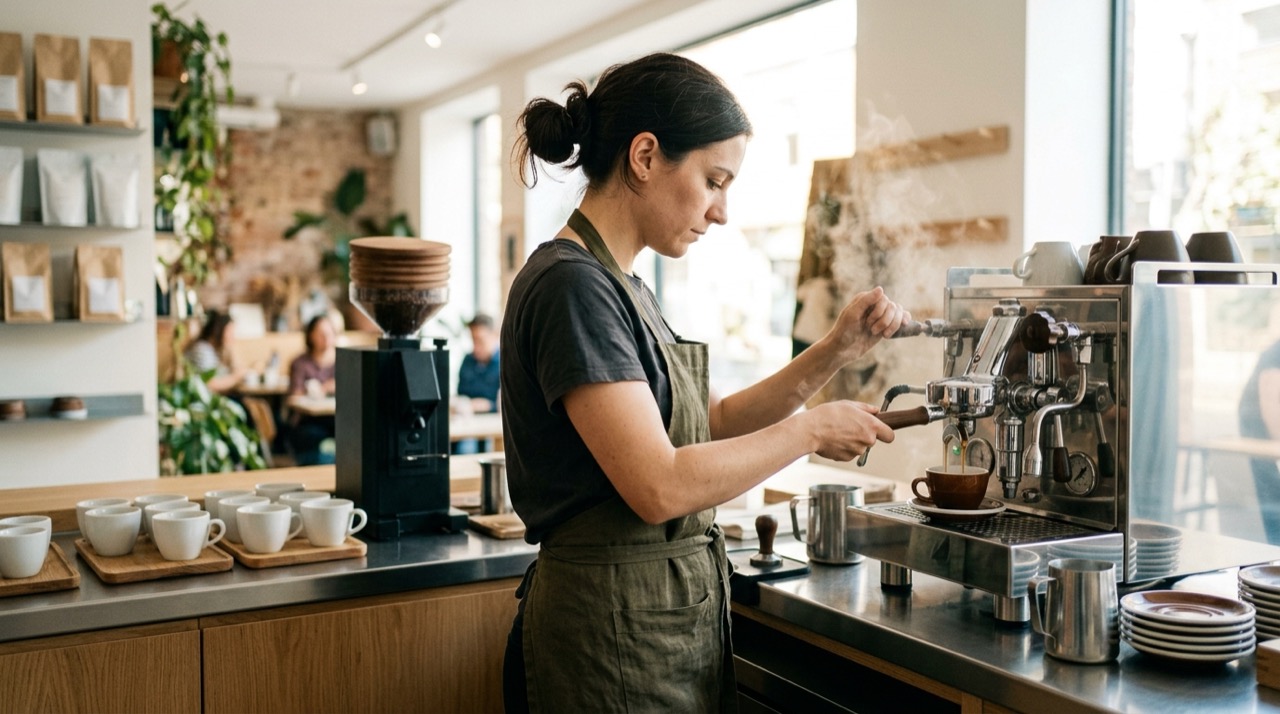
You’ve been opening the shutters at seven-thirty every morning for months. The machine is performing, the customers are coming, and the till is ringing… but your bank balance doesn’t reflect even half of what you feel you should be earning. If you’ve ever told yourself, “I’m selling loads of coffee, but the numbers don’t add up,” stick with me: in the next few minutes, we’re going to bust that myth, and I’ll show you how to calculate recipe costing for cafés and coffee shops using logic that fits a coffee shop, not a traditional restaurant.
After two decades helping hospitality businesses get a grip on their costings, I can tell you that the main mistake speciality cafés, bakery counters, and neighbourhood coffee shops make is applying the same costing mindset as a restaurant. And trust me: it doesn’t work. Here, we’re going to build a recipe costing for cafés that truly reflects your reality, factoring in milk waste, take-away packaging, and the aluminium of that flat white you serve at exactly 70 degrees.
Why a café is costed differently
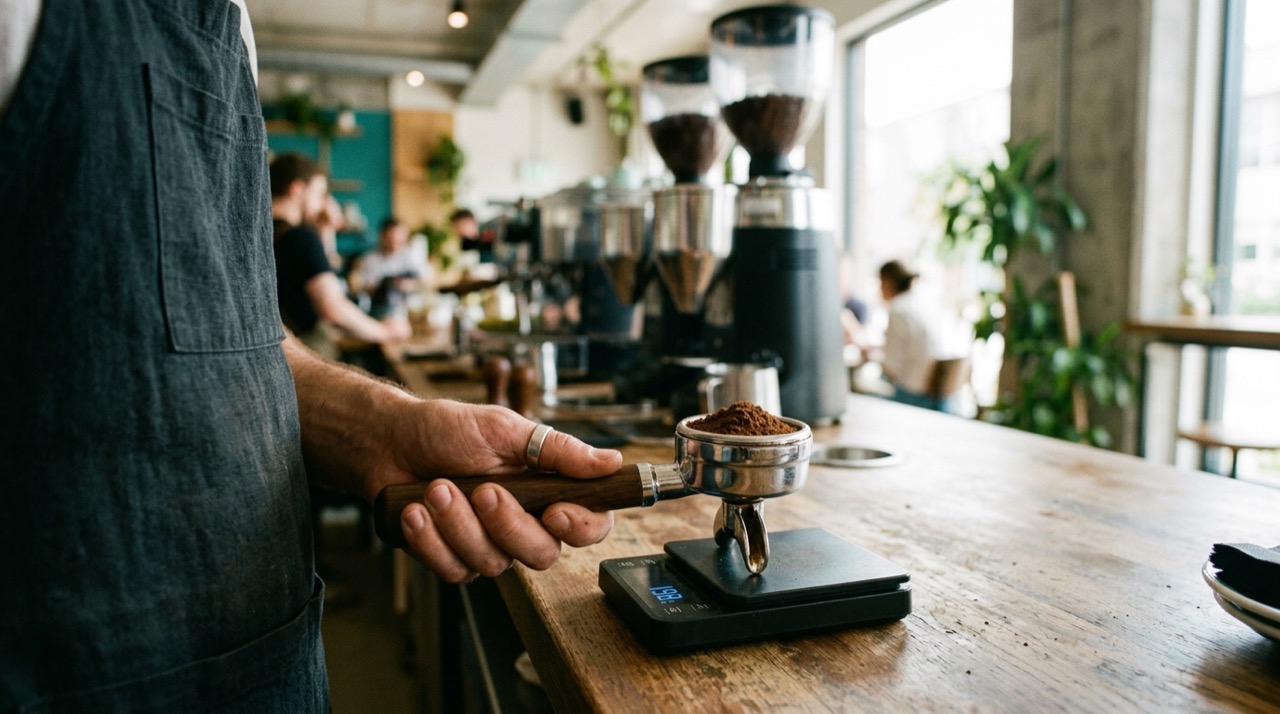
In a restaurant, the cost breakdown revolves around the dish. In a café, the centre of gravity is the drink, and more specifically the dose. You’re not dealing with a 200-gram steak; you’re working with 8, 12, or 18 grams of ground coffee per extraction, a volume of milk that varies by drink (and by what’s left in the jug), and a cup that sometimes costs more than the coffee itself. That logic changes absolutely everything.
Coffee is a high-margin product: its cost per cup is ridiculously low compared to the selling price. Depending on your roaster’s profile and the origin you use, the food cost of a straight espresso can sit below 10%, while an avocado toast or a brunch bowl will comfortably hit 30–40%. The café lives off that cushion: coffee sustains the business, while pastries, toasts, and slow brunch push up the average ticket.
But there are more differences. In a coffee shop, you have specific waste that a restaurant doesn’t see in its kitchen line. The milk you heat up and end up throwing away, the jug you purge, the grinder calibration every morning that produces discard coffee… Those grams and millilitres add up to real money. Then there’s take-away packaging, a silent monster that can inflate the cost of a drink by up to an additional 20%: a cardboard cup with a lid and a sleeve can sometimes cost more than the 8 grams of coffee you’re serving.
Finally, what really defines profitability isn’t just the coffee or the pastries on their own: it’s the mix. A café that only analyses its drinks and ignores how each line behaves in the overall ticket is flying blind. You need a recipe costing for cafés or coffee shops where every item is linked to the others, and this is where many people slip up.
What a coffee really costs: costing by dose
So you don’t just get theory, let’s get practical with a worked example. Imagine you run a speciality café in a Spanish capital city, year 2026, and you work with a single-origin coffee that costs you €28.50 per kilo (net purchase price, excluding VAT). Your standard espresso dose is 8 grams.
The pure coffee calculation is straightforward: cost per kilo divided by 1,000, multiplied by the grams in the dose. That gives you a very low coffee cost per cup. But since the customer asks for it to go, you add a double-wall cup, a lid, and a napkin. Here’s how it looks on paper:
| Item | Quantity | Cost € |
|---|---|---|
| Ground coffee (single origin) | 8 g | 0.228 |
| Take-away cup 120 ml + lid | 1 unit | 0.14 |
| Napkin/straw/stirrer | 1 unit | 0.02 |
| Total cost espresso take-away | 0.388 |
The magic is in the selling price. A speciality espresso to go can easily be priced at €2.20 without anyone batting an eye. That gives you a food cost of 17.6% — if you only counted the coffee, it would be a ridiculous 10.4% — and a gross margin of €1.81 per unit. This is why coffee is the engine of the business. Understanding how to calculate food cost will help you internalise that, no matter how much the cup costs, that espresso is still a rocket in terms of profitability.
Of course, if your filter coffee uses 15 grams or your batch brew works in litres, the logic is exactly the same: dose, grams used, added packaging. When you automate recipe costing in Miselup and enter the price per kilo of coffee just once, every dose of every drink recalculates itself without you having to chase the roaster every time they raise the price by three cents.
ChefBusiness · Real profitabilityMaximize your restaurant without losing moneyCost control and food marketing. Book your ChefBusiness consulting now.Get the consulting →A latte or a flat white: when milk (and its waste) comes in
Now let’s add the real star of most coffee bars: milk. Let’s cost a 160 ml flat white, which uses a double espresso (16 g of coffee) and tops up with fresh whole milk. The coffee, at the same price of €28.50/kg, doubles because the dose is exactly twice that of a single espresso.
Milk in hospitality, bought by the litre, typically runs around €0.94/litre in 2026 with a good distributor deal. A flat white needs about 140 ml of liquid milk to achieve the right volume and texture, but here’s the catch: waste from steaming and purging. I’ve seen thousands of cafés where between 10% and 15% of the milk that’s heated never makes it into the customer’s cup. It stays on the walls of the jug, in the steam wand purge, in the bottom of the jug that gets rinsed. If you ignore that waste, you’re dressing up your costing.
Applying a conservative waste factor of 12%, each flat white actually consumes about 157 ml of milk (140 ml × 1.12 for waste). And add to that the cup with lid and the sleeve:
| Item | Quantity | Cost € |
|---|---|---|
| Coffee (double espresso 16 g) | 16 g | 0.456 |
| Fresh milk (including waste) | 157 ml | 0.148 |
| Take-away cup 200 ml + lid | 1 unit | 0.17 |
| Sleeve | 1 unit | 0.05 |
| Total cost flat white take-away | 0.824 |
With a menu selling price of €3.30, the food cost sits at a spot-on 25% and the gross margin at €2.48. Not bad at all, but notice something: the coffee accounts for €0.456 and the cup with sleeve for €0.22; in other words, packaging represents almost half the cost of the coffee. If you don’t separate that line in your costing, you’ll never see how much take-away eats into your profitability. When you start using an Excel alternative that lets you link each drink to its presentation — bar versus take-away — you can decide, for example, to skip the lid on in-house tickets and improve your margin.
This same reasoning applies to the cappuccino, the latte, and even the matcha latte: always dose + milk + waste + cup. Until you master that skeleton, many cafés don’t even know what price to put on a plant-milk latte that, on top of everything, costs twice as much as cow’s milk. This is where it’s worth reviewing how to price a dish (or a drink in this case) because margins aren’t guessed — they’re calculated.
Coffee vs pastries: the margin comparison table
This is the section that usually triggers an “aha” moment for coffee shop owners. Let’s put five realistic items from a speciality café in Spain in 2026 into the same table: the gap between coffee and food is so striking it will make you rethink your entire menu.
| Item | Cost € | Selling price € | Food cost % | Gross margin € |
|---|---|---|---|---|
| Espresso (bar) | 0.228 | 1.80 | 12.7% | 1.57 |
| Latte take-away (160 ml milk) | 0.71 | 2.80 | 25.4% | 2.09 |
| Butter croissant (bought from bakery) | 0.62 | 2.50 | 24.8% | 1.88 |
| Avocado toast with tomato and sesame | 1.85 | 7.20 | 25.7% | 5.35 |
| Breakfast combo: latte + croissant | 1.33 | 5.00 | 26.6% | 3.67 |
Notice the contrast: the straight espresso has a food cost below 13% and a margin of €1.57 on something that’s served in seconds, while the avocado toast leaves a gross margin more than three times higher (€5.35), but also requires fresh ingredients, assembly, handling, and kitchen space. The croissant, which many people buy in and simply bake, sits in an interesting middle ground: nearly €2 of margin with a food cost of 25%.
What’s relevant is the breakfast combo: by bundling a latte and a croissant, you slightly lower the selling price compared to the sum of the individual items (€2.80 latte + €2.50 croissant = €5.30) and price it at €5.00, but you maintain a margin of €3.67 and, most importantly, you raise the average ticket of that customer who, without the combo, might have only ordered a coffee. This is exactly what I mentioned earlier: the mix sustains the business. If you only looked at coffee, you’d miss the pull effect of pastries; if you only looked at pastries, you’d be scared by their food cost and dangerously lower prices. A combined view is the only way to sleep soundly.
The product mix: how each line supports the ticket
The real profitability of a café isn’t in a single item: it’s in how high-margin drinks finance the food offering, and how that food offering turns a quick €2.20 coffee into an €8 or €12 ticket. If you only sell espressos, you need massive volume to cover fixed costs; if you only sell brunch, your aggregate food cost can easily go above 35% and the numbers won’t work. The combination is key.
In day-to-day bar operations, a dynamic recipe costing is what lets you react without losing your mind. When the price of milk goes up 8% in a month (we’ve lived through it in recent years), if you’re running your costings in Excel, you have to go sheet by sheet, recipe by recipe, and recalculate everything manually. With a tool where you enter the litre of milk once and every latte, cappuccino, and flat white automatically updates its cost, you avoid making wrong decisions based on outdated data. That’s precisely what dynamic recipe costing is: a costing that doesn’t age and gives you the real picture of your menu today, not three months ago.
Plus, when you start building your offers — combos, weekend brunch, pastry packs — on the same base of ingredients and recipes you already have, the system carries the costs through and lets you see the margin of the entire ticket. If avocado goes up, you see it reflected in the combo; if you switch to a biodegradable cup, you see it in real time. The consistency between the costing of each drink and the final offer is what ties everything together. So when it’s time to look at Miselup pricing, you understand that you’re not paying for software, but for the hours you stop giving away in Excel.
And while we’re on the subject of cocktails in other contexts, the logic is the same: in a craft cocktail bar, the glass, the stemware, and ice waste also matter. The day you want to replicate this method behind the cocktail bar, feel free to check out how to cost a cocktail, because the philosophy is identical: dose, waste, and presentation.
AI Chef Pro · AI for chefs55+ AI tools for your kitchenCreate recipes, menus and optimize costs free. Try AI Chef Pro now.Try it free →Frequently asked questions
How do I calculate the cost of a coffee per dose?
Divide the price per kilo of coffee by 1,000 and multiply the result by the exact grams of the dose your grinder uses (8 g, 18 g, etc.). For example, with a coffee at €28.50/kg, each 8 g dose costs €0.228. Then add the cost of the cup, lid, and napkin if the drink is to go.
What should the food cost of a café be?
There’s no single magic number. For straight coffee, you can aim for 10–15%, but once you add pastries or brunch, the average food cost of the menu usually falls between 22% and 28%. The important thing is not to measure everything with the same yardstick: control each line separately, then analyse the overall average ticket.
How do I account for the cost of a take-away cup?
The cup is just another ingredient. Enter the unit price of the cup, lid, sleeve, and any other items (stirrer, sugar, napkin) into your costing. For take-away coffee, this category can amount to between €0.15 and €0.25, so never leave it out.
Is it worth costing pastries if I buy them ready-made?
Absolutely. Even if you buy them from a bakery or an industrial supplier, that item has a fixed cost you need to know to set a profitable selling price. Plus, only by knowing the real cost of each croissant or palmier can you decide whether to include it in a combo or sell it individually.
Where do I start?
Start with the five or six items you sell the most: espresso, latte, cappuccino, the croissant, the most popular toast, and the star combo. Do a full costing with dose, milk, waste, and packaging. Once those items are under control and you can update them easily, extend the method to the rest of the menu.