Recipe Costing for Food Trucks and Ghost Kitchens
Recipe costing for food trucks and dark kitchens: include delivery fees and packaging, then review your costs and margins with worked examples.

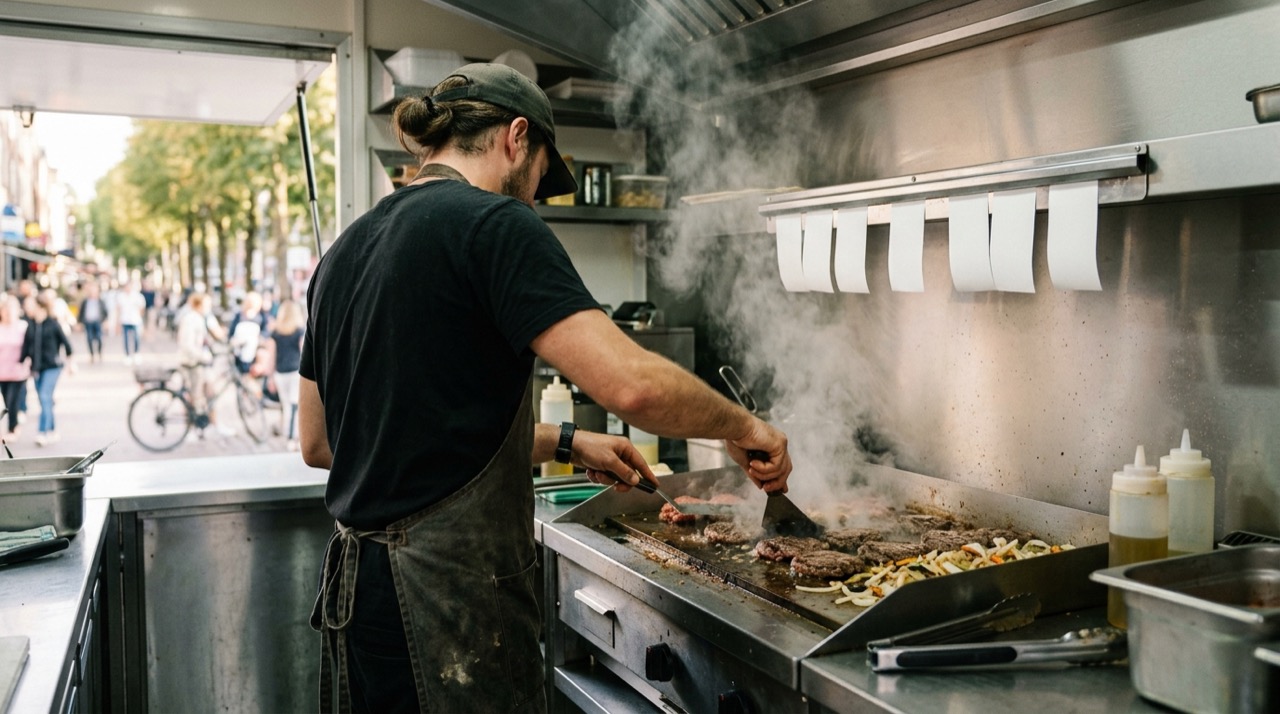
I’ve spent over twenty years reviewing recipe costing for every type of business: three-course restaurants, bar counters, bakeries, specialty coffee shops… and in the last decade, mostly food trucks and ghost kitchens. I’ve seen too many entrepreneurs launch their project, calculate their recipe costing the way they were taught in their first dine-in job, and then transfer it straight to a van or a dark kitchen. And that’s where the drama begins.
Classic recipe costing —the one that only adds up ingredients and gives you a food cost percentage— was designed for a dine-in restaurant, where the customer pays at the table, there’s no digital intermediary taking 30%, and packaging isn’t a cost per order. But when you put that same dish in a food truck or a ghost kitchen, the traditional cost breakdown lies to you. It tells you your margin is one thing, but in reality the margin has evaporated without you even noticing.
That’s why you need an extended recipe costing: one that adds not just the ingredients, but all the costs of the sales channel. For a food truck: fuel, the market pitch, and small-format purchasing. For a dark kitchen: the delivery platform commission and packaging per order. If you don’t include these in the calculation, your business bleeds out while you think you’re making money.
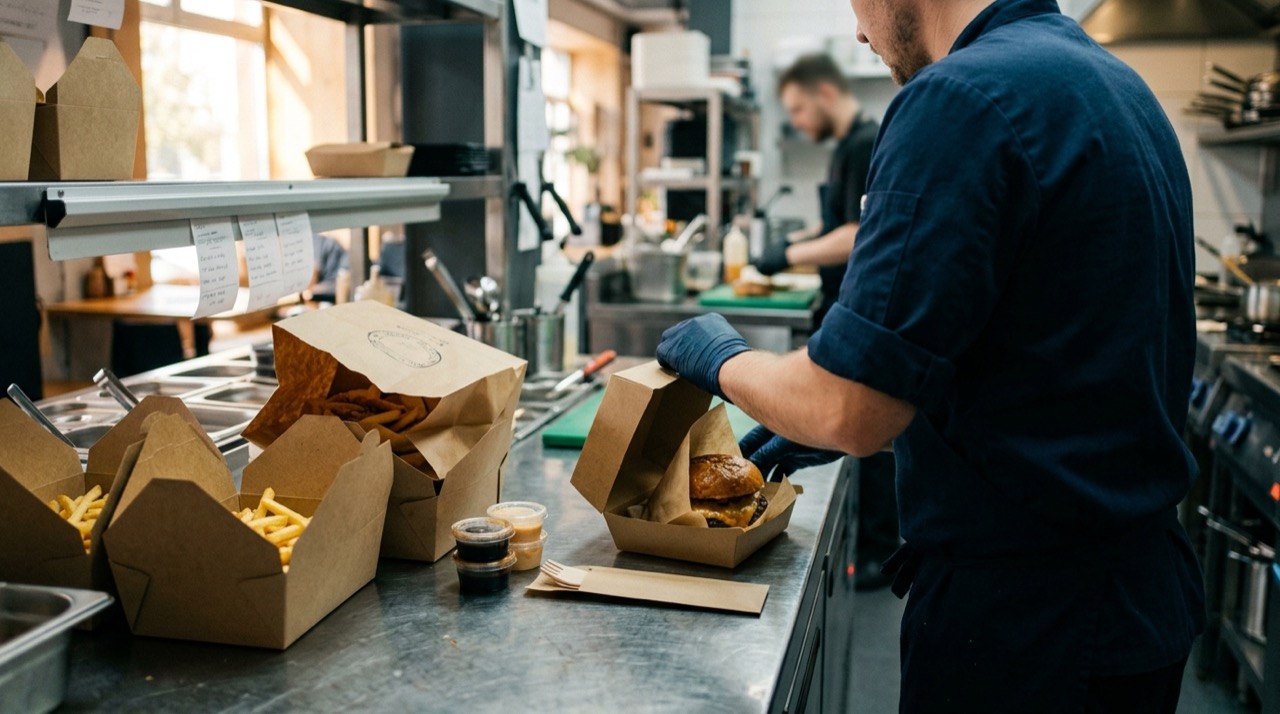
Why the old-school recipe costing lies to you in a food truck or dark kitchen
The usual recipe costing gives you a raw material cost per portion, and you compare it with the selling price. The problem is that selling price isn’t the same across all channels. In dine-in, the customer pays €12 and you receive €12. In delivery, the customer pays €12 but you only get €8.40 because the platform takes €3.60. And on top of that you’ve spent €0.80 on packaging that you didn’t use in dine-in. If you only look at the ingredient cost (€3.60), you think your food cost is 30% and you’re in great shape. But the real cost of the delivery channel is much higher: ingredients plus commission plus packaging adds up to €8.00, which is 66.7% of the price. That’s not 30% — it’s ruinous.
Classic recipe costing ignores channel costs. And in a food truck or dark kitchen, the channel is the business. That’s why you need dynamic recipe costing that shows you the real margin for each format, not just the recipe cost.
Recipe costing for a food truck: the pitch costs nobody adds up
A food truck is not a small restaurant on wheels. It’s a business with a very different cost structure, and if you cost it like you have a counter and an outdoor terrace, you’re fooling yourself.
First, fuel and generator. A food truck needs energy for the grills, the cold room, the lights, and often to drive to the location. It’s not uncommon for the daily spend on fuel and generator to be around €40.
Second, the market or fair pitch and permits. Cooking in a fixed location is not the same as paying for a spot at a food market, a festival, or an industrial estate. Depending on the city and the event, you could be paying €60 a day or more between the pitch fee and municipal permits.
Third, limited capacity and selling hours. A restaurant can open from 1:00 pm to 4:00 pm and from 8:00 pm to 11:30 pm, with two shifts. A food truck usually concentrates sales in a three- or four-hour window. If you sell 80 dishes a day, those daily fixed costs are split among those 80 dishes, and each one carries a proportional share that a restaurant costing doesn’t consider.
Fourth, small-format purchasing. A dine-in restaurant can negotiate bulk prices: it buys whole cases, wholesale, and gets a lower price per kilo. A food truck, because of limited storage and lower sales volume, usually buys from supermarkets or small-format distributors, paying about 15% more per kilo. That means the €3.60 ingredient cost for your burger easily becomes €4.10.
Let’s run the numbers with a concrete example of a food truck that sells 80 dishes a day. The pitch costs that a restaurant costing ignores are: fuel and generator €40 + pitch and permits €60 = €100 per day. Divided among 80 dishes, that’s €1.25 of “pitch cost” per dish sold. Add the small-format surcharge (ingredients go from €3.60 to €4.10), and the real cost per dish is €4.10 + €1.25 = €5.35. If you sell that dish for €12, your real “extended” food cost is €5.35 / €12 = nearly 45%, not the 30% you thought. And that’s without even counting the delivery commission if you also do deliveries.
So the recipe costing for a food truck must mandatorily include these pitch costs and the small-format purchasing surcharge. Otherwise, every dish you sell leaves you with less margin than you think, and at the end of the month you don’t understand why you can’t make ends meet.
ChefBusiness · Real profitabilityMaximize your restaurant without losing moneyCost control and food marketing. Book your ChefBusiness consulting now.Get the consulting →Recipe costing for a dark kitchen: the delivery platform commission, the silent killer
If the food truck suffers from pitch costs, the dark kitchen —or ghost kitchen— suffers from the delivery platform commission. And it’s a silent killer because you don’t see it in the ingredient costing.
When you sell through Glovo, Uber Eats or Just Eat, the platform charges you a commission that usually ranges from 25% to 35% of the selling price (excluding VAT). That is, for every €12 the customer pays, the platform takes between €3 and €4.20. You receive the rest. But the classic costing still calculates margin as if you receive €12. So a dish that in dine-in gave you a contribution margin of €8.40, in delivery can leave you with only €4.00, as we’ll see in the detailed example below.
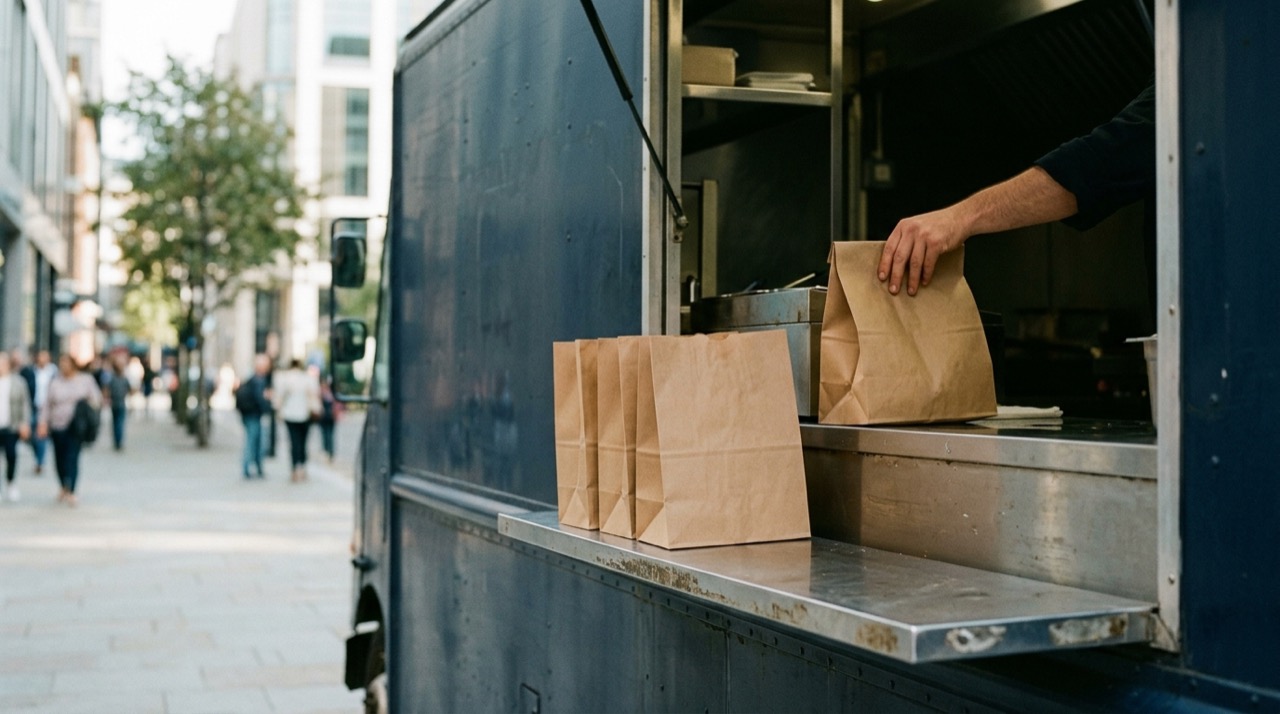
Furthermore, packaging per order is a cost that doesn’t exist or is marginal in dine-in. In delivery, each order needs a box, a bag, napkins, cutlery, single-serve sauces, and often a security seal. A cost of €0.80 per order is quite realistic, and sometimes it’s higher if you use biodegradable or custom packaging.
Another factor many forget is dependence on ranking inside the app. If your dish doesn’t appear in the top positions, you don’t sell. And to appear there, you often have to accept promotions, discounts, or pay for visibility. That reduces your net income even further, and you should consider it another channel cost.
So the recipe costing for a dark kitchen must include at least three items that the dine-in costing ignores: the platform commission, packaging cost per order, and, if applicable, the cost of promotions or visibility fees. Without this, your food cost calculation is a fiction.
The same dish in dine-in and delivery: the table that changes everything
To make it crystal clear, I’ve taken a realistic dish: a house smash burger. I’ve calculated its ingredient cost using a step-by-step recipe costing and then compared what happens in three scenarios: dine-in sale, delivery sale at the same menu price, and delivery sale with an adjusted price.
The ingredient cost of the burger is €3.60 per portion. In dine-in, with a selling price excluding VAT of €12.00, the food cost is 30% and the contribution margin is €8.40 (70% of the price). So far, a healthy, profitable dish.
But when that same dish is sold through delivery at the same price of €12.00, things change drastically:
- The platform applies a 30% commission on €12.00: €3.60. The restaurant only receives €8.40.
- The packaging (box, bag, cutlery, sauces) costs €0.80 per order.
- The ingredients still cost €3.60.
- The real contribution margin is: €8.40 − €3.60 − €0.80 = €4.00, barely 33% of the price the customer paid.
The “real channel cost” soars: ingredients €3.60 + packaging €0.80 + commission €3.60 = €8.00, which is 66.7% of the price. Only 33% remains to cover other expenses (staff, rent, supplies) and generate profit. The margin has plummeted from €8.40 to €4.00 per dish — more than half — even though the classic costing still said the food cost was 30%. That’s the silent killer.
| Concept | Dine-in | Delivery (dine-in price) | Delivery (adjusted price) |
|---|---|---|---|
| Selling price (excl. VAT) | €12.00 | €12.00 | €14.90 |
| Platform commission (30%) | €0.00 | −€3.60 | −€4.47 |
| Net revenue after commission | €12.00 | €8.40 | €10.43 |
| Ingredient cost | −€3.60 | −€3.60 | −€3.60 |
| Packaging / container | €0.00 | −€0.80 | −€0.80 |
| Contribution margin (€) | €8.40 | €4.00 | €6.03 |
| Contribution margin (%) | 70% | 33% | 40% |
The table makes it clear: selling through delivery at the same price as dine-in is a trap. But there is a way out, and it involves repricing.
How to reprice for the delivery channel without scaring off customers
The lesson is obvious: in delivery, the menu price cannot be the same as in dine-in. But you can’t just raise it wildly. If to recover the original €8.40 margin you had to sell the burger at €18.30 (more than a 50% increase), the customer would go to the competition. The practical solution is a different delivery price, more moderate, that recovers most of the margin without scaring people off.
In our example, a price of €14.90 (24% more than dine-in) works well. At €14.90, the 30% commission is €4.47, so you receive €10.43. Subtract the €3.60 in ingredients and €0.80 in packaging, and the real contribution margin is €6.03, which is 40% of the price. You don’t recover the entire dine-in margin, but you do recover most of it, and the price remains competitive.
This fine-tuning is impossible to keep updated if you run your cost breakdowns in Excel. Every time a supplier raises the price of the meat, or the delivery platform changes its commission, you’d have to manually recalculate the margin for every dish in every channel. And in practice, almost nobody does that. That’s where dynamic recipe costing makes the difference.
With Miselup, you record the ingredient, the packaging and the commission once. When a purchase price changes or you adjust the commission percentage, the cost and margin for each channel —dine-in and delivery— are recalculated automatically. You see at a glance whether a dish that’s profitable in dine-in is losing money in delivery. One single piece of data, always consistent. That way you can price a dish based on criteria, not guesswork, and if you’re considering making the leap you can check Miselup’s pricing.
AI Chef Pro · AI for chefs55+ AI tools for your kitchen55+ AI tools to create recipes and menus and optimize your costs.Take a look →Frequently asked questions
Do I need a different recipe costing for delivery?
You don’t need a different recipe, but you do need a costing that includes the channel-specific costs: platform commission, packaging per order, and, if applicable, promotion expenses. The same dish can have two spec sheets —one for dine-in and one for delivery— or, even better, a single sheet that automatically calculates the margin on each channel, as a recipe costing in Miselup does.
How does the platform commission affect my margin?
Drastically. A 30% commission on the selling price reduces your net income by that same proportion. If you don’t include it in the costing, you’ll think your margin is much higher than it really is. In the burger example, the margin dropped from 70% in dine-in to 33% in delivery just because of the commission and packaging.
Should I set higher prices on delivery apps than on my dine-in menu?
Yes, unless you want to lose money on every order. The increase doesn’t have to be 50%, but it should be enough to keep the contribution margin from collapsing. In our example, a 24% increase (from €12.00 to €14.90) recovered most of the margin without making the price prohibitive. However, it’s wise to check competitors’ prices on the same app to stay competitive.
Is it worth getting into delivery if the commission is so high?
It depends on volume and your dishes’ real margins. If after including commission and packaging your contribution margin is still positive and the order volume covers fixed costs, delivery can be a profitable channel. The key is to calculate it properly with an extended recipe costing that includes commission and packaging, and not to cannibalise dine-in sales. Many businesses combine both channels with differentiated prices and make it work.
How can I calculate the food cost of my food truck without mistakes?
Use a food cost calculator that lets you add the specific pitch costs: fuel, pitch, permits and the small-format purchasing surcharge. Divide those fixed costs by the number of dishes you sell per day and add them to the ingredient cost. That gives you a realistic “extended” food cost, which is what you should use to set your prices and control profitability.