Theoretical vs Actual Food Cost: Why They Don't Match and How to Close the Gap
Theoretical vs. actual food cost: seven profit leaks that explain the gap, plus inventory checks to measure deviations and control losses.


You review your recipe costing sheet, check the theoretical food cost figure, and everything looks perfect. Then month-end close arrives, you calculate your actual food cost, and the shock is massive: a deviation of several percentage points translating into hundreds or thousands of euros lost.
That gap between what you should have spent according to your recipes and what has actually disappeared from your kitchen is one of the biggest drains on profitability in hospitality. And no, it’s not black magic or an unsolvable mystery.
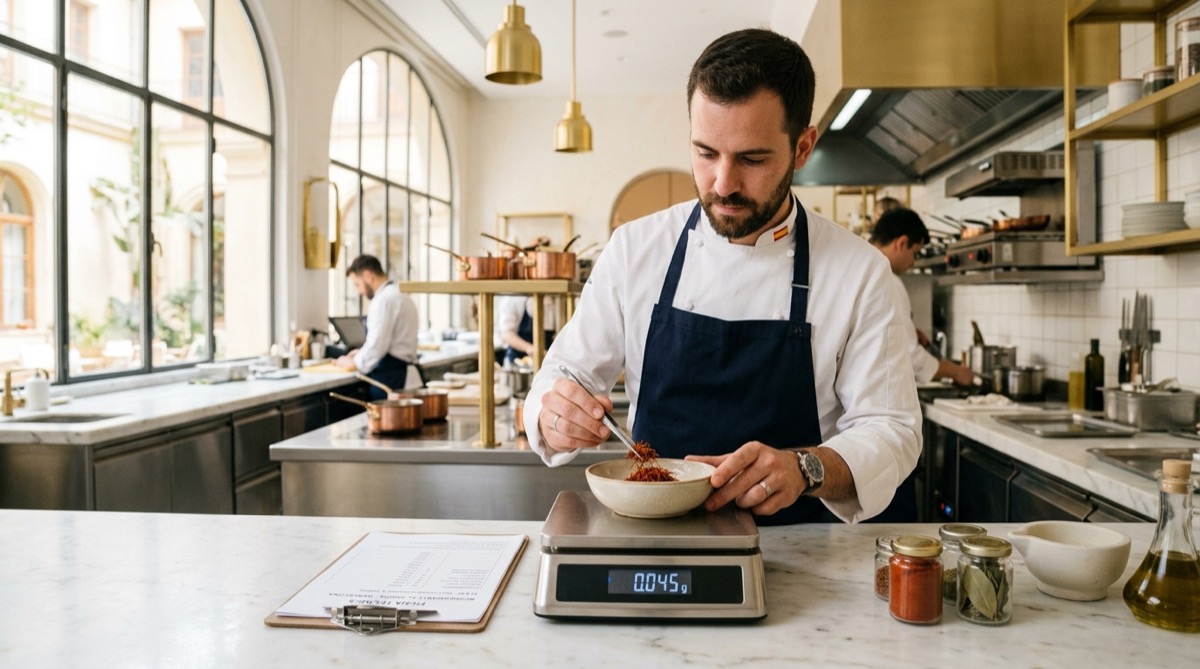
In this article, I clearly explain what both concepts are, why they never match, and most importantly, how to close that gap so your business stops hemorrhaging money unchecked.
ChefBusiness · Real profitabilityMaximize your restaurant without losing moneyCost control and food marketing. Book your ChefBusiness consulting now.Get the consulting →What Are Theoretical and Actual Food Cost?
Before tackling the problem, let’s define them precisely. Because if you don’t know exactly what each one measures, reconciling them will be nearly impossible.
Theoretical Food Cost: What Your Kitchen Should Deliver
Theoretical food cost is the raw material cost percentage you should achieve based on your recipes and recorded sales. It is calculated from your technical specification sheets and recipe costing cards, multiplying the exact cost of each dish by the units sold.
It’s a back-office, purely mathematical calculation assuming everything runs like Swiss clockwork: every gram of ingredient is precisely measured, no waste occurs, there are no mistakes, and no theft happens. The formula is simple:
Theoretical Food Cost (%) = (Total Raw Material Cost According to Recipe Cards / Net Sales) × 100
If you want to dive deeper into how to calculate it correctly, I recommend checking out our comprehensive food cost calculation guide.
Actual Food Cost: The Harsh Reality of Your Back-of-House
Actual food cost is the percentage resulting from comparing everything you really consumed (purchases ± inventory variation) against what you billed. No fiction here: it’s the money that has effectively left your till.
Actual Food Cost (%) = ((Opening Inventory + Purchases - Closing Inventory) / Net Sales) × 100
The difference between the two is what’s keeping you up at night. And the million-dollar question is: what’s happening between theory and reality?
The 7 Leaks Separating Your Theoretical from Your Actual Food Cost
I have audited dozens of restaurants across Spain, and invariably, the deviation stems from a combination of these seven black holes. Let’s dissect them one by one.
1. Unrecorded Waste
This is the most common and quietest leak. I’m talking about kitchen waste that is never documented: poorly trimmed meat cuts, vegetables that get overcooked and reduced to mush, sauces that burn, fish that’s overdone and ends up in the bin.
In a typical Spanish restaurant, unrecorded waste accounts for between 1.5 and 3 percentage points of deviation. If you’re billing €60,000 a month, that’s €900 to €1,800 vanishing monthly.
2. Inconsistent Portions
The chef who plates 180 grams of sirloin instead of 150 because “come on, just a little bit more won’t hurt…”. The waiter who serves an extra shot to that friendly customer. The portion of fries that comes out generous today because the chef is in a good mood.
Every extra gram you give away is margin you lose. Multiply that by hundreds of services a month and you’ll understand the hole it creates.
3. Theft and Uncontrolled Comps
Hard truth: in hospitality, stock disappears. The bottle of wine that vanishes, the ribeye that goes missing during the night shift, staff drinks outside working hours, the coffees “on the house” without any criteria or record.
Establishing a comping protocol with limits and designated responsibility, though as urgent as it is unpleasant, is non-negotiable.
4. Receiving Errors
Do you check every delivery note against what actually comes through your kitchen door? If you don’t, you’re giving money away. Kilograms that never arrive, lower quality product paid for at a premium price, expired or near-expiry goods that the supplier slips past you.
Rigorous receiving control with a scale and thermometer in hand can save you another 1% on your food cost.
5. Outdated Costing Card Prices
Your technical sheet says olive oil costs €3.50/liter, but you’ve been paying €6.80 for the past six months. All that time, the theoretical cost of all your dishes has been falsified.
Updating the purchase prices in your recipe costing cards at least once a month is not optional. With the current volatility of items like oil, fish, or meat, waiting three months is digging a financial hole.
6. Deviations in Preparation Processes
Recipes interpreted with personal variations, cooking times that stretch, evaporating more liquid than intended, butchering errors that discard usable product. It all adds up.
Standardization through technical sheets with photos, exact weights, and detailed processes is the only vaccine. And you need a tool that lets you manage them without losing your mind.
7. Poorly Executed Inventories
If your inventory is miscounted, your actual food cost will be a lie. A jar of crushed tomatoes you think is full but is half empty, expired cans you keep counting as valid stock, product in the walk-in that hasn’t been rotated and is now worthless.
A poorly executed inventory falsifies your starting point and prevents you from detecting the other leaks.
How to Measure the Deviation with Periodic Inventories
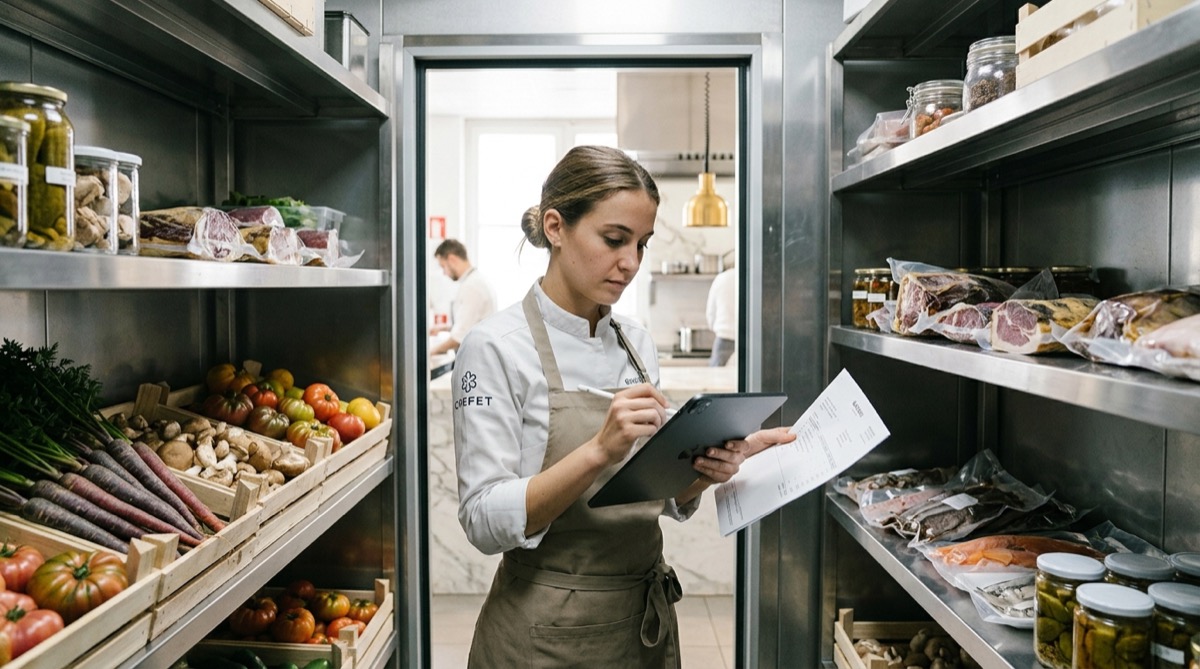
The only reliable way to know your deviation is to conduct periodic physical inventories and compare them against theoretical consumption. The procedure is as follows:
- Opening Inventory: Value all your stock at the beginning of the period (e.g., the 1st of the month) at cost price.
- Period Purchases: Sum all food and beverage purchases for the month.
- Closing Inventory: Value the stock at the end of the period (the 30th or 31st).
- Actual Consumption = Opening Inventory + Purchases - Closing Inventory.
- Theoretical Consumption = The sum of the cost of all dishes sold, according to your recipe cards.
- Deviation (€) = Actual Consumption - Theoretical Consumption.
- Deviation (%) = (Deviation in € / Net Sales) × 100.
Worked Example in Euros
Imagine a restaurant that bills €50,000 a month in food sales:
| Concept | Theoretical | Actual | Deviation |
|---|---|---|---|
| Opening Inventory | €4,000 | €4,000 | - |
| Monthly Purchases | €14,000 | €14,000 | - |
| Closing Inventory | €3,500 | €3,200 | - |
| Consumption | €14,500 | €14,800 | €300 |
| Net Sales | €50,000 | €50,000 | - |
| Food Cost (%) | 29.0% | 29.6% | +0.6 pp |
That difference of just 0.6 percentage points represents €300 that leaked away in one month. Over a year, that’s €3,600. And this is under a very contained deviation scenario. In most cases I see in consulting, the gap exceeds 3 points.
Deviation Table in Euros Based on Revenue
To help you grasp the impact, here is a table showing different revenue levels and the real cost of a 2-point deviation:
| Monthly Revenue | Theoretical Food Cost 30% | Actual Food Cost 32% | Monthly Difference | Annual Loss |
|---|---|---|---|---|
| €30,000 | €9,000 | €9,600 | €600 | €7,200 |
| €60,000 | €18,000 | €19,200 | €1,200 | €14,400 |
| €100,000 | €30,000 | €32,000 | €2,000 | €24,000 |
| €200,000 | €60,000 | €64,000 | €4,000 | €48,000 |
If your theoretical food cost is 30% and your actual is 32%, you are losing €24,000 a year on a monthly revenue of €100,000. That’s net cash you could be earning.
How to Close the Gap Between Theoretical and Actual Food Cost
With the problem diagnosed, let’s move on to the action plan. This is what I apply with my clients and it works:
- Implement a Live Recipe Costing System: Your technical sheets must be updated with every purchase price change. Tools like our food cost calculator allow you to automate this process and maintain accuracy.
- Do Weekly Inventories: A monthly inventory is too late. With weekly inventories, you detect leaks in time to correct them. Relying on an inventory software as a G-Stock alternative helps you automate that weekly count without depending on loose spreadsheets.
- Weigh and Photograph Every Plate Leaving the Kitchen: Standardize portions with a scale, not by eye.
- Record All Waste: Create a log sheet for breakages, burnt items, and expired goods. What isn’t measured, isn’t controlled.
- Control Comps: Set a daily limit per employee and a mandatory record log.
- Audit Your Receiving: Compare delivery notes against what is actually received. Weigh, count, and check temperatures.
- Train Your Team: Explain why following the spec sheets is important. If the team doesn’t understand the impact of their actions, their behavior won’t change.
Frequently Asked Questions
Why is my actual food cost higher than my theoretical?
The most likely cause is a combination of unrecorded waste, excessive portions, and outdated recipe costing prices. Review these three points before looking for more complex explanations: in 80% of cases, the answer lies there.
How often should I take inventory?
At a minimum, once a month for accounting close. But if your deviation exceeds 2 points, I recommend weekly inventories for at least two months to identify the exact source of the leak.
What percentage of deviation is acceptable?
In a well-managed restaurant, the deviation between theoretical and actual food cost should not exceed 1%. More than 2 points indicates structural problems requiring immediate intervention.
How do I update my recipe costing prices without going crazy?
The most efficient way is to use recipe costing software that allows you to update purchase prices in bulk and automatically recalculate the cost of all your recipes. Doing it manually with Excel is a nightmare and a constant source of errors.
Does actual food cost include beverages?
Yes, actual food cost should include all raw material consumption, from the kitchen, cellar, and bar. Ideally, calculate the food cost for the kitchen and for beverages separately to detect leaks with more precision.