Intermediate vs Final Preparations in Recipe Costing
Learn how intermediate preparations (sub-recipes) and nesting affect recipe costing. Control costs by understanding cost propagation.

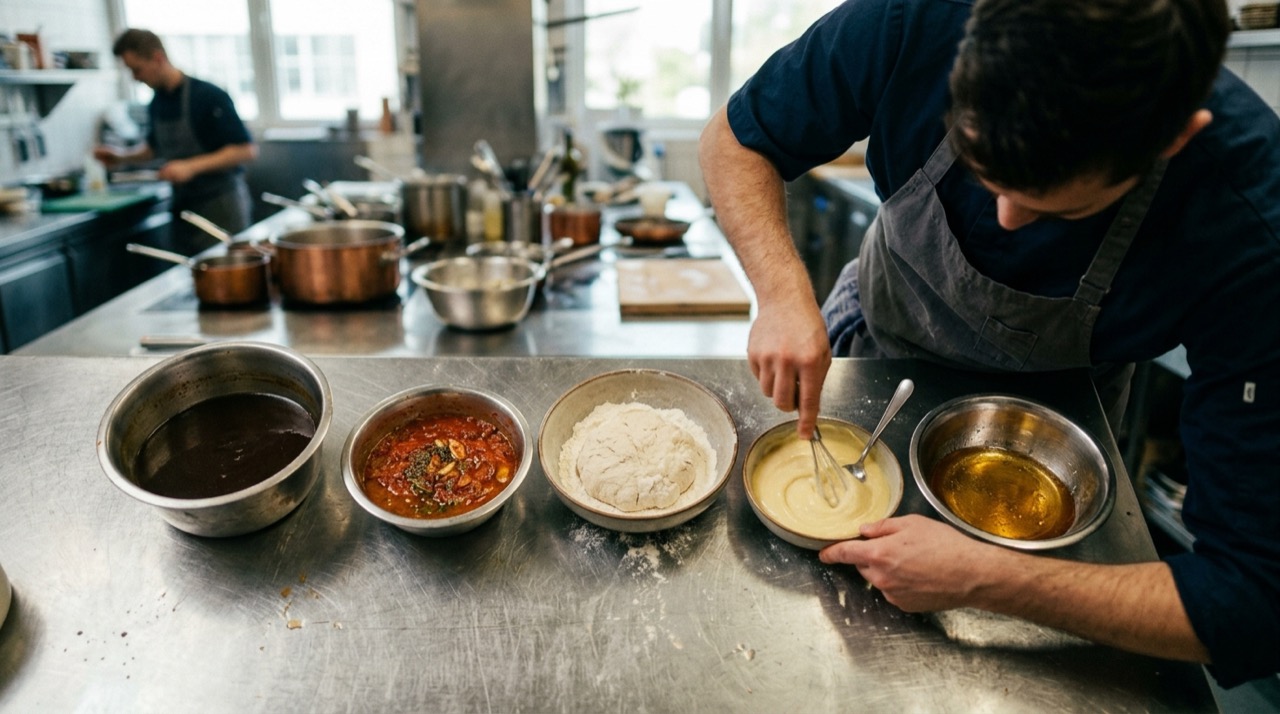
If there’s one thing I’ve seen time and again in every pastry kitchen, cookline, and bar I’ve set foot in, it’s the chaos that erupts when you don’t clearly separate a finished dish from a base that you use inside other dishes. And I’m not just talking about the kitchen: it happens in pastry with creams, in baking with sourdoughs, and in cocktail bars with syrups or cordials. I’ve spent years helping businesses get their professional recipe book in order, and the first step is always the same: distinguishing between an intermediate preparation and a final preparation.
Once you understand that difference, your recipe spec sheet stops being a dead document and becomes a living tool that saves you hours of calculation and margin headaches. Because yes, proper recipe costing starts with knowing what each thing is and how it relates to everything else.
In this article, I’m going to explain it with the clarity I wish I’d had when I started, with examples from the stove, the oven, and the cocktail bar, so you can put it into practice from tomorrow.
What is an intermediate preparation? (and what is a final preparation)
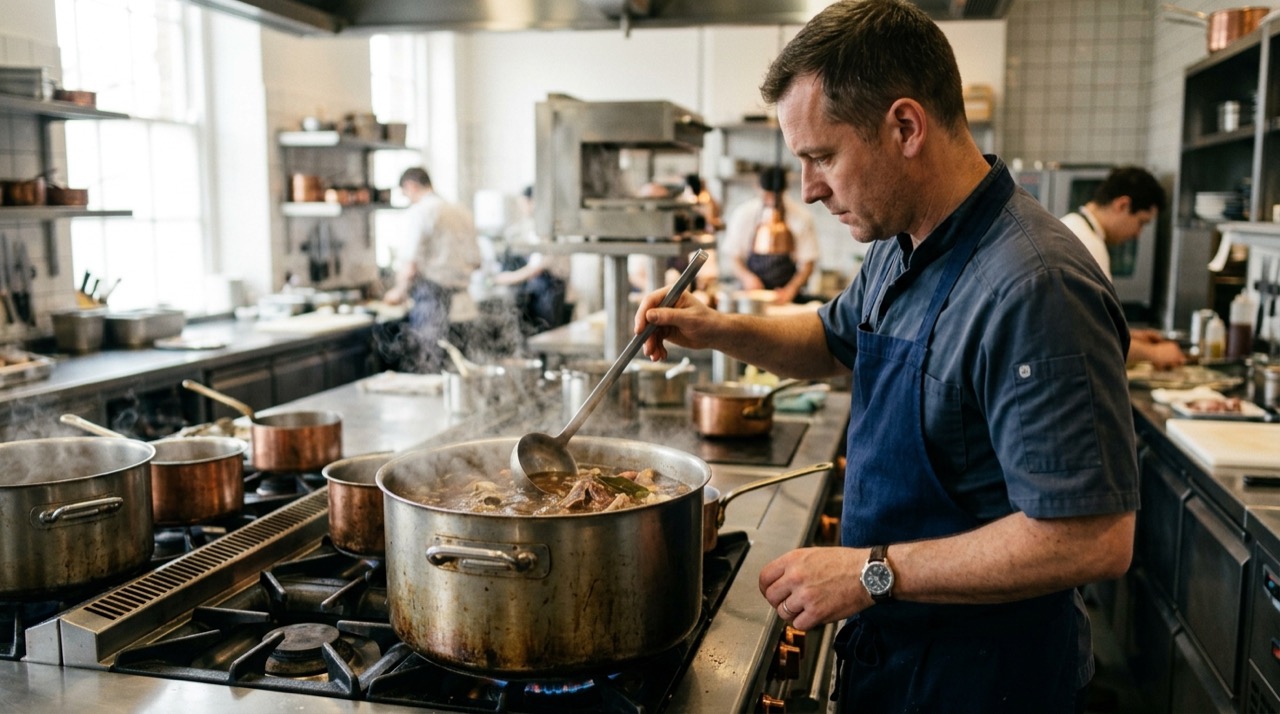
An intermediate preparation is any preparation that isn’t served directly to the customer, but is used as a component in one or more final preparations. Put another way: it’s a sub-recipe, a base you make in your kitchen, bakery, or bar and then incorporate into other recipes. On its own, it makes no sense to put it on the menu or in the display case because it isn’t a finished product; it’s a link in the chain.
Classic examples we all handle daily:
- In the kitchen: a sofrito of onion and garlic, a brown stock, a vegetable broth, a homemade tomato sauce that you then use in several stews.
- In pastry: a pastry cream, a sponge base for cakes, a vanilla syrup, a chocolate ganache.
- In baking: a sourdough starter, a preferment, a pizza dough that you later top and bake.
- In cocktails and coffee bars: a ginger syrup, a lemon cordial, an infused milk, a berry syrup.
A final preparation, on the other hand, is the dish or product that actually reaches the table, the bar, or the display case with its selling price. It’s what the customer orders and pays for: an arroz a la cubana, a strawberry cake, a margherita pizza, a Moscow Mule cocktail. The final preparation may contain several intermediate preparations, but it is the final destination, the one that closes the chain and has a selling price assigned.
The key is that the intermediate isn’t sold on its own; its cost is carried over to the final preparations that contain it. If you’ve ever got tangled up calculating how to cost a recipe step by step, it was probably because you hadn’t isolated the intermediates properly.
Nesting: sub-recipes by levels
Here’s where it gets powerful: an intermediate preparation can itself contain other intermediate preparations. This creates a structure of levels that in hospitality we call nesting. It’s not uncommon to find three or four levels before you reach the final dish.
Let me give you a clear mini-scheme with a kitchen example:
- Level 1 – Brown beef stock: bones, vegetables, water. A pure intermediate.
- Level 2 – Espagnole sauce: uses the brown stock (level 1) plus a sofrito, flour, wine. Another intermediate, but it already contains an intermediate inside it.
- Level 3 – Final dish: sirloin with espagnole sauce and garnish: incorporates the sauce (level 2) and other ingredients. This is what the diner sees.
It’s just as common in pastry: a sponge (intermediate 1) is soaked with syrup (intermediate 2), filled with pastry cream (intermediate 3), and all together forms the final cake. In cocktails, a fruit syrup (intermediate 1) might be mixed with a citrus cordial (intermediate 2) to create a non-alcoholic cocktail that then becomes the base of a spirit-based drink (final).
This nesting is the daily reality of any production kitchen. And if you don’t control it from the start, your recipe costing becomes a nightmare.
Why separating intermediate preparations saves you work and prevents costing errors
When you work with software like Miselup, which allows unlimited nesting of preparations, the advantage is immediate: you calculate the cost of an intermediate once, and that cost automatically propagates to all the final preparations that use it. If the price of tomatoes goes up tomorrow, you only need to update the ingredient in the sofrito spec, and the system instantly recalculates the cost of every dish that contains that sofrito. No re-costing dish by dish. No manual addition errors. No nasty surprises at month-end.
This is what I call dynamic recipe costing, and believe me, when you’re managing 40 or 50 dish specs that share bases, the difference between having it and not having it is the difference between being up to your neck and sleeping soundly.
Imagine the opposite: you keep your costing in Excel or notebooks. You have a sofrito that you use in 12 dishes. Onions go up by 15%. You have to open all 12 specs, manually recalculate the cost of the sofrito in each one, adjust the totals… and pray you haven’t made a mistake. Multiply that by every base you share. The risk of error is huge, and the time wasted is staggering.
Separating intermediates isn’t a quirk of meticulous cooks: it’s a business decision. It lets you know exactly how much each component costs you, spot deviations, negotiate with suppliers, and above all, keep a recipe costing always up to date without losing your mind.
Worked example: a base used in several dishes
To show you with numbers, let me give you a realistic example with a homemade sofrito, one of the most cross-cutting intermediate preparations in Spanish cooking. I’ve taken average market prices in Spain in 2026, rounded for clean calculation.
Costing of the intermediate preparation: base sofrito
| Ingredient | Quantity | Unit price | Cost |
|---|---|---|---|
| Onion | 1.000 kg | €1.20/kg | €1.20 |
| Garlic | 0.200 kg | €4.50/kg | €0.90 |
| Crushed tomato | 1.500 kg | €1.80/kg | €2.70 |
| Olive oil | 0.300 L | €4.20/L | €1.26 |
| Total cost | €6.06 | ||
| Yield after cooking (40% yield loss) | 1.800 kg | ||
| Cost per kg | €3.37/kg | ||
| Cost per 50 g portion | €0.17 |
Real yield is crucial: between the evaporation of water from the onion and tomato and losses in the pan, a well-reduced sofrito loses around 40% of its weight (from 3 kg raw down to 1.8 kg finished product). The cost per kg comes out to €3.37 (€6.06 / 1.8 kg). From here, any dish that uses this sofrito just multiplies the quantity it uses by that unit cost.
Use in final preparations
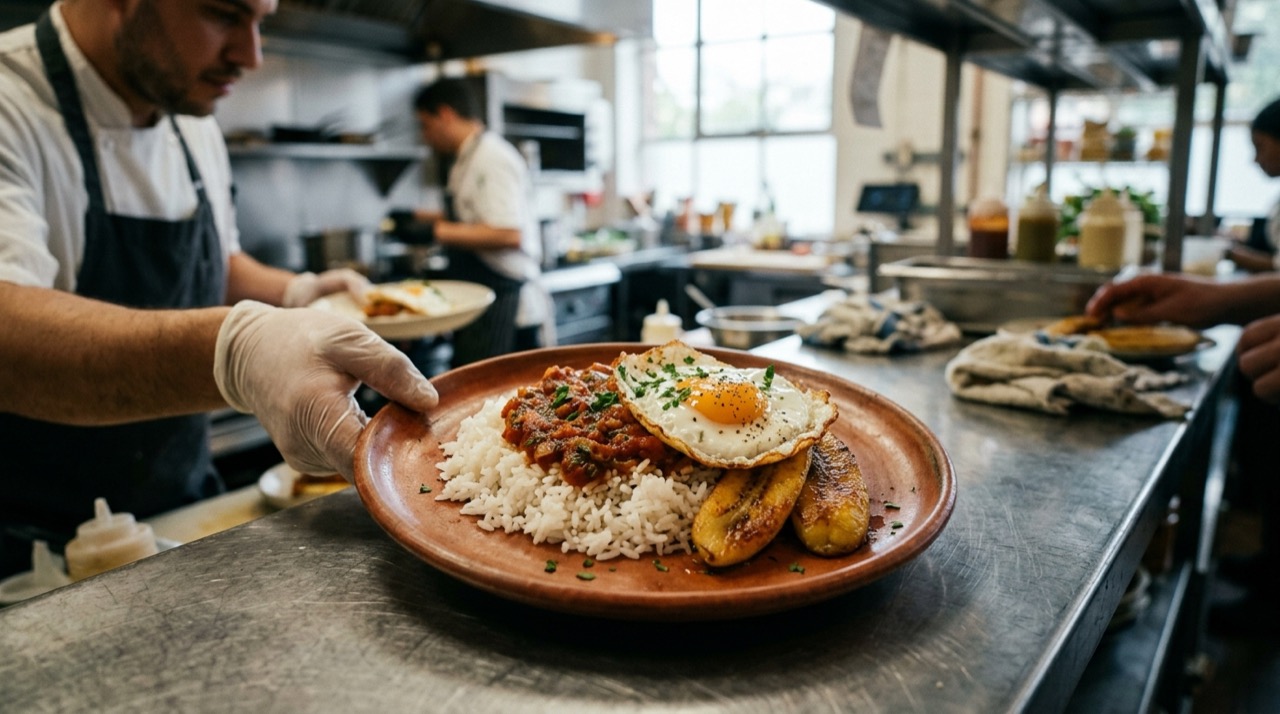
Dish 1 – Arroz a la cubana (individual portion)
- 50 g base sofrito: €0.17
- 80 g cooked white rice (€0.22)
- 1 fried egg (€0.25)
- 1 small banana (€0.15)
- Salt, spices (€0.01)
- Total cost per portion: €0.80
Dish 2 – Tomato sauce for pasta (150 ml portion)
- 100 g base sofrito: €0.34
- 200 g extra crushed tomato: €0.36
- 10 ml extra olive oil: €0.04
- Oregano, salt, pepper: €0.02
- Total cost per portion: €0.76
Dish 3 – Lentil stew (350 g portion)
- 60 g base sofrito: €0.20
- 80 g dried lentils: €0.24
- 100 g potato: €0.12
- 50 g chorizo: €0.35
- Water, bay leaf, paprika: €0.04
- Total cost per portion: €0.95
Notice the power of the system: the cost of the sofrito (€0.17, €0.34, or €0.20) is calculated once in its spec. If the price of tomatoes rises to €2.20/kg, I only update that ingredient in the sofrito spec, and all three dishes (and any others that use it) recalculate automatically. In Miselup this happens automatically because intermediate preparations are linked to final ones, and the cost cascades through. That’s the difference between working with a real dynamic recipe costing and wrestling with Excel cells.
Best practices for costing intermediate preparations
After many badly done costings, I’ve learned four golden rules that never fail:
-
Measure the real yield, not the theoretical one. Weigh the finished preparation after cooking, reducing, or handling. A pastry cream loses volume as it cools, a stock reduces by 30% or more, a syrup gains density and loses volume. If you use the weight of the raw ingredients, your cost per kg will come out lower than the real one, and your margins will be fictional.
-
Always assign a cost per clear unit of measure. For a solid or semi-solid base (sofrito, pizza dough, sponge), use cost per kg. For liquids (broth, syrup, sauce), cost per litre. And if the base is portioned by unit (for example, a 250 g pizza dough ball), also calculate the cost per unit. That way, when you build the final spec, you just indicate the quantity you use and the system multiplies.
-
Name your bases logically and without ambiguity. “Sofrito” on its own won’t cut it. In three months you won’t know if it was the sofrito with pepper or without, whether it had black garlic or white. Use descriptive names: “Base sofrito onion-garlic-tomato”, “Ginger syrup 1:1”, “Rye sourdough 100% hydration”. Your digital professional recipe book will thank you, and so will your team.
-
Review intermediates when you change supplier or format. A price increase in a star ingredient (chocolate, butter, oil) impacts every spec where that intermediate appears. If you have your bases centralised, the update is immediate; if not, you risk selling below real cost for weeks. In Miselup, when you update the price of an ingredient in the intermediate spec, all final specs recalculate on their own, without you having to touch them one by one.
Start with a base and make it your own
The Miselup Recipe Library offers 282 ES/EN recipes with photos and descriptions: 214 intermediate and 68 final. Find a base and incorporate a complete copy with its subrecipes. Previously incorporated ones are reused by origin, never by name; you can copy them again, choose another own recipe and replace ingredients. Only new recipes use your allowance. Follow the Library guide and review yield, products and allergens before service.
ChefBusiness · Real profitabilityMaximize your restaurant without losing moneyCost control and food marketing. Book your ChefBusiness consulting now.Get the consulting →Frequently asked questions
Can I have intermediate preparations inside other intermediate preparations?
Yes, and in fact it’s the most common scenario. For example, a meat stock (intermediate 1) is used inside an espagnole sauce (intermediate 2) that then goes into a final preparation (a dish, a cocktail…). Miselup allows you to nest as many levels as you need, with no limit, and the cost propagates upwards automatically.
Do intermediate preparations have a selling price?
No. Intermediates aren’t sold directly to the customer, so they don’t have a selling price. They are only assigned a unit cost (per kg, litre, or portion) that is transferred to the final preparations. The final ones do have their selling price and corresponding margin.
What happens if I change an ingredient in an intermediate base?
If you work with dynamic recipe costing, the system automatically recalculates the cost of the intermediate and, in cascade, the cost of all final preparations that contain it. You don’t have to redo anything. That’s why it’s so important to have your bases well separated and linked.
How do yield losses affect the cost of an intermediate?
A lot. If you don’t account for evaporation, handling losses, or residue left in the pan, the cost per kg you get is lower than the real one. You must always weigh the finished preparation and use that yield to calculate the correct unit cost.
Does Miselup allow unlimited nesting with automatic cost updates?
Exactly. That’s one of the reasons many hospitality professionals make the leap from Excel. You can create intermediate preparations, put them inside others, and then inside final preparations (a dish, a cocktail, a dessert…); when you change the price of an ingredient at any level, everything recalculates in real time. If you want to see how it works, you can check out Miselup pricing and try it without obligation.
Separating intermediate preparations from final ones isn’t just a technical costing issue: it’s the foundation for having real control over your business. When every gram of sofrito, every millilitre of syrup, or every portion of pastry cream has its clear, up-to-date cost, you can set prices with confidence, spot deviations in time, and above all, stop losing money without knowing it. And that, in today’s hospitality world, is breathing easy.