Mother sauce recipes and bases for a professional kitchen
The five mother sauces and kitchen bases: document yield, variants, allergens and use in final recipes for a practical working recipe book.
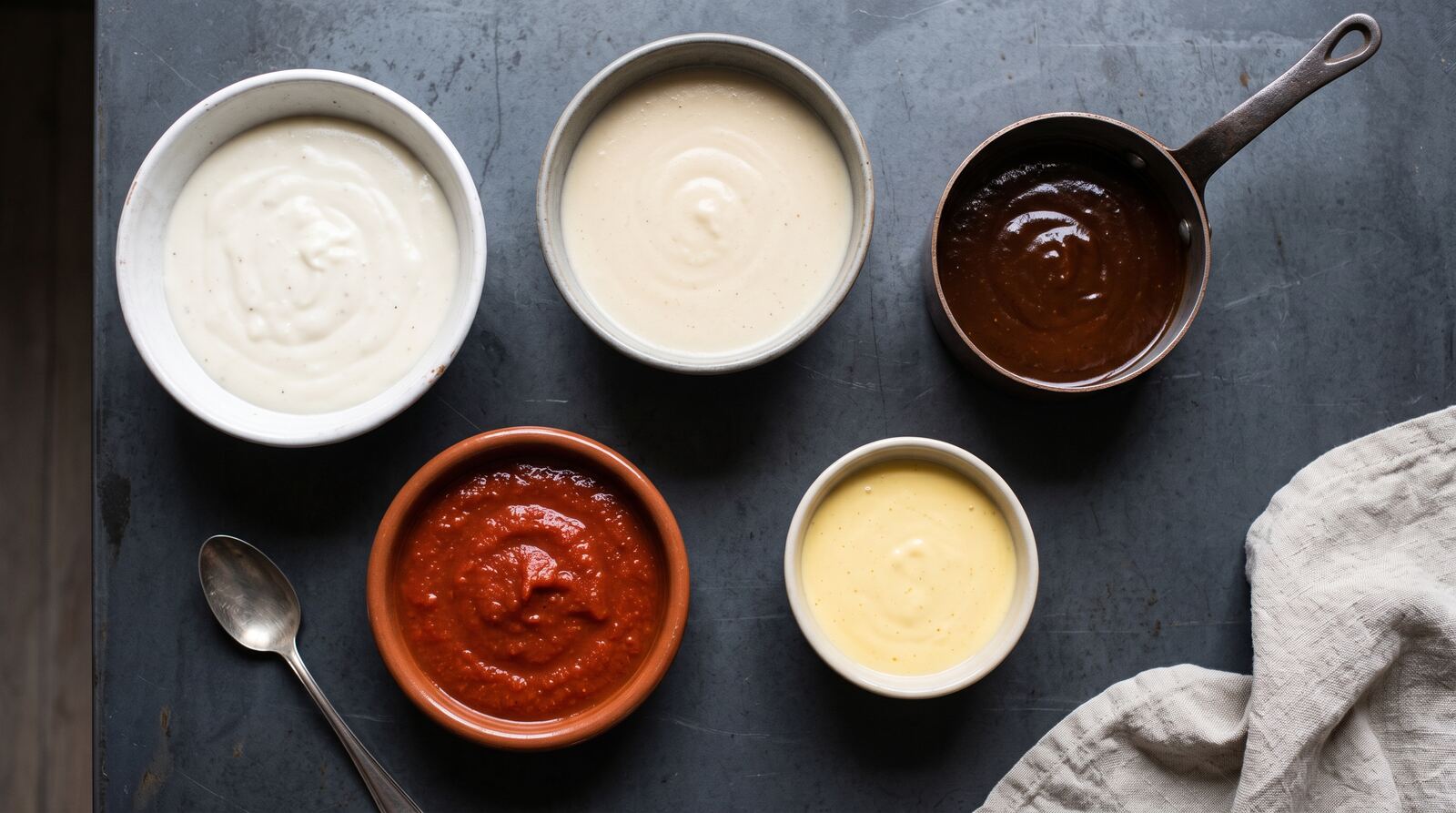
Mother sauces help teach techniques; kitchen bases help organize production. A professional recipe book needs both: an understanding of the preparation and a record of its yield, use and changes when developing a variant. A classical classification does not replace a spec sheet or a kitchen trial.
ChefBusiness · Real profitabilityMaximize your restaurant without losing moneyCost control and food marketing. Book your ChefBusiness consulting now.Get the consulting →The five classical families
The Institute of Culinary Education describes five mother sauces: béchamel, velouté, espagnole, tomato and hollandaise. Auguste Escoffier School of Culinary Arts explains their foundations and techniques. This table summarizes the families. Applications are suggestions for building a working recipe book, rather than complete recipes.
| Sauce | Main base or technique | Possible recipe-book use |
|---|---|---|
| Béchamel | Milk and roux | Gratin or filling |
| Velouté | White stock and roux | Poultry or fish sauce |
| Espagnole | Brown stock and roux | Meat-sauce base |
| Tomato | Cooked tomato | Pasta sauce or stew base |
| Hollandaise | Egg-yolk and butter emulsion | Finish for a dish prepared for service |
Do not turn this table into a storage rule. Actual products, treatment and service determine the procedures your kitchen needs to validate.
Separate bases, variants and finished dishes
A base appears in multiple finished recipes. If your kitchen makes béchamel for several dishes, document one intermediate recipe with an actual yield. Then record the amount each final recipe uses. A croquette spec sheet does not need to repeat the entire base and also add its cost: that duplicates the same component.
A variant has its own composition. Squid-ink béchamel introduces a new product; changing the name or recoloring a photo is not enough. A different stock can change flavor, yield and allergens. Review labels and records for the products you actually purchase.
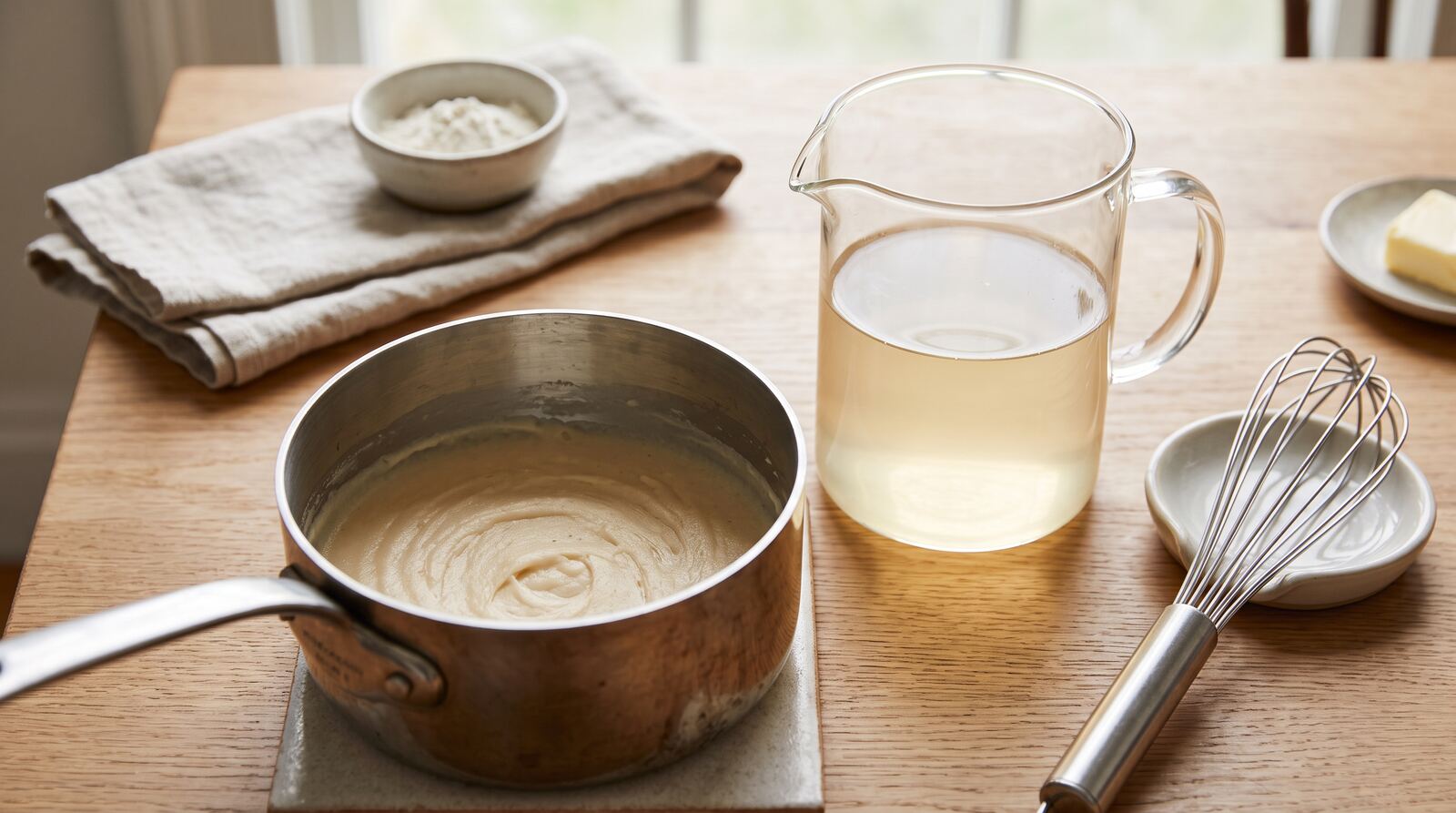
What to document in a base recipe
| Field | What to record | Why it matters |
|---|---|---|
| Ingredients | Specific products and quantities | Defines composition and allergens |
| Method | Sequence, technique and target texture | Makes preparation repeatable |
| Yield | Usable quantity produced | Allocates the base’s cost |
| Unit | Consistent weight, volume or item count | Avoids incompatible quantities |
| Use | Amount consumed by each final recipe | Connects base and dish |
| Storage | Validated procedure and applicable limits | Cannot be inferred from the sauce name |
Run a kitchen trial, weigh the usable result and record observations. If yield changes, review final recipes that use the base. Recipe costing software covers the financial calculation; recipe management explains instructions and variants.
Organize the other bases your menu needs
Your menu may need stocks, cooked vegetable bases, doughs, creams, dressings and prepared vegetables. Document a base because it appears in several dishes or has a method your team needs to reproduce, not simply because it is well known.
Group records by operational use and yield unit. A stock measured by volume, a dough divided into pieces and a cream weighed per serving require different sheets. Do not combine incompatible yields in a generic base called “mise en place.”
Start from the catalog and adapt your copy
Miselup currently provides 214 intermediate and 68 final built-in recipes. October additions brought 90 recipes, while 38 compositions were rebuilt. Review a base and duplicate its record to develop your own version. The copy keeps references and counts toward your own-recipe allowance; photos and history are not copied.
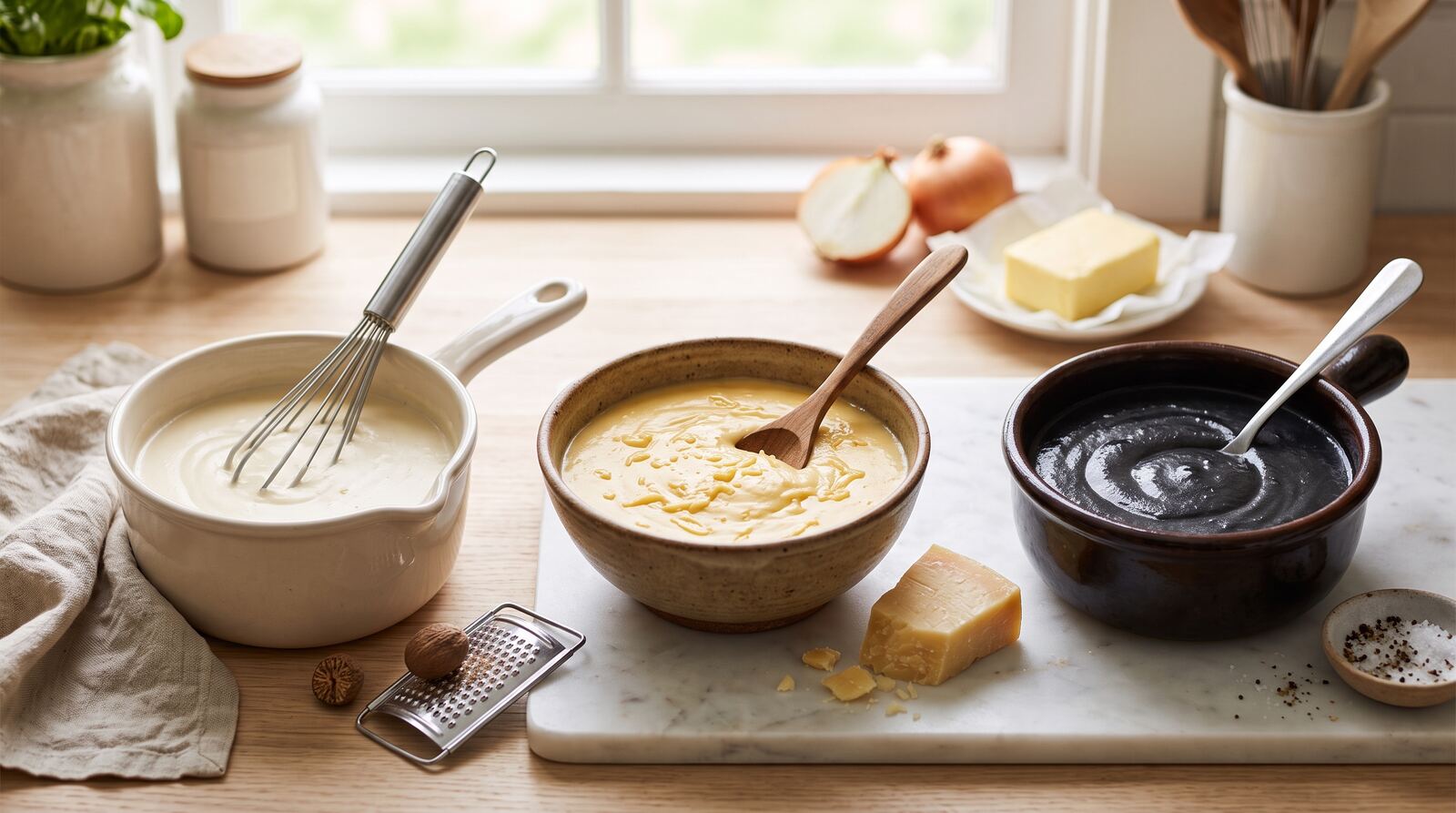
A photo supports recognition of texture and presentation. AI images generate or enhance a result for 100 credits, preserving the original. Do not use the image to validate ingredients or storage conditions.
Once the variant is reviewed, share instructions through a recipe URL or the team portal. See pricing and limits and create an account to manage your recipe book.
Timlup · Team on trackDaily checklists & tasks for your restoKeep your team on point with recurring tasks. Meet Timlup and simplify operations.Meet Timlup →Frequently asked questions
What are the five mother sauces?
The usual classical classification includes béchamel, velouté, espagnole, tomato and hollandaise. It is a way to study bases and techniques, not a requirement for every menu. The Institute of Culinary Education describes these five families. Your working recipe book should adapt them to the dishes you serve.
Can a mother sauce be an intermediate recipe?
Yes, when another recipe uses a quantity of it. Document the base’s ingredients, yield and method, then reference its quantity in each final recipe. Do not add every base ingredient again to the final dish after already including the base’s cost; that counts the same component twice.
Does duplicating béchamel copy every ingredient record too?
The new record copies the starting composition but keeps references to ingredients and other records. It does not create an independent copy of every dependency or copy photos and history. Review the variant and check allergens from any new actual product before using it.
Do built-in recipes replace kitchen trials?
No. They are starting points. Check ingredients, quantities and yield with your products and equipment, then document the method you will use. Miselup currently includes 214 intermediate and 68 final built-in recipes. Those counts describe availability, not validation of your food-safety process.