HACCP plan for burger restaurants: minced meat, griddle and delivery
By Miselup team · Updated:
A HACCP plan for burger restaurants identifies hazards in minced meat, sauces and assembly ingredients and sets controls from receiving to service or delivery. It covers storage, full cooking, prevention of cross-contamination and handover, with monitoring, corrective action and verification for the actual recipe, thickness and equipment.
Mincing can spread contamination into a patty's interior, so surface searing alone does not establish control. Buns, leaves and sauces join the cooked meat without another treatment. A turner used for raw patties must not carry that contamination into the finished burger.
The example uses chilled supplier patties cooked fully to order, then assembled with cheese, leaves and commercial sauce. Establish supported treatment criteria and check your local requirements. Mise Pro HACCP helps organise the plan and evidence; a customer's requested doneness cannot itself justify a weaker safety criterion.
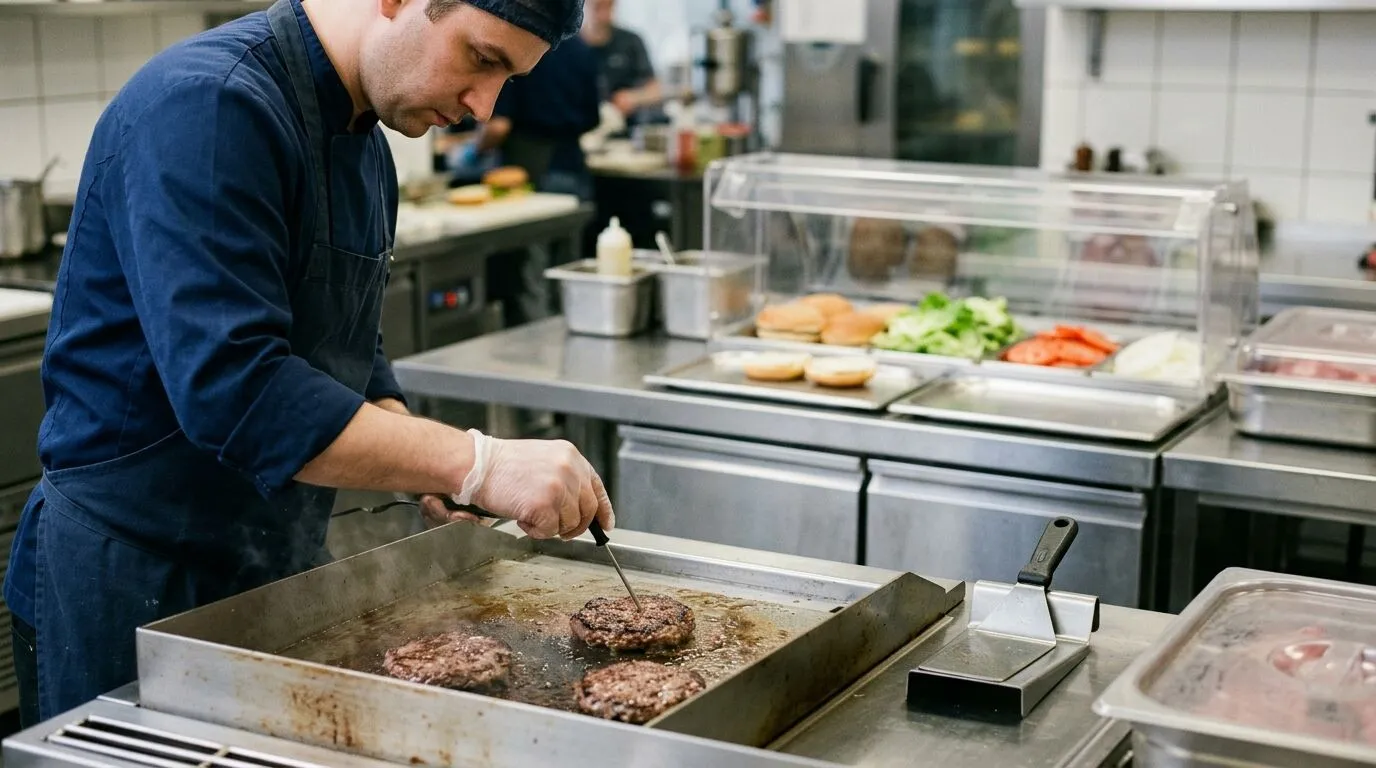
The meat core and the assembly bench need a connected procedure
Control the interior of minced meat and prevent raw handling from contaminating the finished burger. Make the purchased-product category and doneness policy clear to kitchen, front-of-house and delivery-order staff.
Confirm what is bought: minced meat, a formulated meat preparation or cuts minced on site. Composition and process affect acceptance, storage and traceability. On-site mincing adds equipment, cleaning, incoming-meat identity and specific local requirements; this supplier-patty example does not automatically cover that branch.
Support the cooking treatment for the patty's recipe, thickness, chilled or frozen starting state and actual griddle loading. Define what the restaurant offers and how staff respond to requests for rare burgers. A customer's preference, warning or signed acceptance does not establish pathogen control or validate a different treatment.
Assembly brings cooked meat together with cheese, buns, leaves and sauce. Separate raw-meat tools from clean removal and finishing, including when buns or plant-based options use the same equipment. Opened sauce and delivery waiting need their own criteria rather than inheriting control from the cooked patty.
A food flow to confirm in your operation
- 1.Receive and identify meat and other ingredients
- 2.Store by product and opening history
- 3.Prepare buns, leaves and sauce in a clean area
- 4.Handle raw patties away from assembly
- 5.Cook fully under supported criteria
- 6.Use clean removal and assembly tools
- 7.Confirm allergens and final order
- 8.Serve or dispatch and complete declared transport
Food safety hazards in burger restaurants
Pathogen survival in minced meat and transfer between turners, buns, leaves and sauces dominate the biological route. Add griddle chemicals, damaged tools and allergens in buns, sauces and formulated patties to the analysis.
Biological
Pathogens in minced meat surviving inadequate core treatment, or raw-meat contamination reaching buns, leaves and sauce.
How to control it: Use product-specific storage criteria, establish evidence for full cooking and separate raw tools from finishing; customer preference is not a pathogen-control measure.
Chemical
Griddle degreaser, detergent in sauce containers or cleaning products reaching the assembly bench.
How to control it: Follow product instructions, separate cleaning and service and check rinsing and return to use of surfaces and containers.
Physical
Fragments from worn turners or griddle-cleaning tools, plastic packaging or bag closures reaching meat and sauces.
How to control it: Inspect utensils and surfaces, remove cleaning debris and open packs away from assembly; protect affected food after a fragment is found.
Allergens
Wheat or sesame in buns, milk in cheese and egg or mustard in sauce; additional ingredients in formulated or plant-based patties.
How to control it: Check supplier labels and the complete served recipe under local rules, and control shared equipment before accepting allergy requests.
Ground beef, sauces and menu-specific processes
A burger cooked and served to order uses cooking; cooling and reheating belong only to preparations actually stored for later service. Egg, fish and thawing depend on the menu, and the process list does not determine the establishment's CCPs.
Ground beef: core evidence and full cooking
Minced-meat patties or meat preparations cooked to order, with recipe, thickness and starting state distinguished.
Criterion: Support full cooking of the actual ground-beef patty without a universal statutory figure. Review treatment when thickness, composition or frozen starting state changes; customer preference does not justify lowering it.
Codex Alimentarius · General Principles of Food Hygiene, CXC 1-1969
Recording in Miselup: Identify meat and lot and record observed core temperature and holding time for the actual thickness and starting state. The griddle, toasted bun and rare request are not evidence of patty-core treatment.
Cooked onion or sauce: cool only if stored
Only for hot preparations cooled for later storage; not for the example's cook-to-order meat.
Criterion: Validate the method for the cooked side's depth, container and cooling equipment under local rules. It does not establish control of every squeeze bottle or justify keeping the finished burger for another shift.
Codex Alimentarius · General Principles of Food Hygiene, CXC 1-1969
Recording in Miselup: The example cooks meat to order and has no patty-cooling process. If onion or sauce is cooked for tomorrow, record that separate batch's cooling acts; an opened commercial sauce needs a different check.
A stored side: reheat only if served hot again
A cooked and chilled preparation returns to hot service; this is not a raw patty's first cook.
Criterion: Support reheating of the side and check local requirements; Miselup restricts repeat reheating as a product rule. A side's reheating criterion is not the raw patty's cooking criterion.
Codex Alimentarius · General Principles of Food Hygiene, CXC 1-1969
Recording in Miselup: Do not record reheating for the first cook of ground beef. For a cooked and chilled side, identify its batch, removal from storage and completed core treatment.
Egg topping or house sauce: not a bought-sauce preparation
Egg is cooked as a topping or used in a house preparation; commercial sauce needs its actual label and storage checks.
Criterion: Check local egg rules for the topping or uncooked house sauce and support that preparation's storage. Egg criteria cannot be transferred to ground-beef cooking, and commercial sauce does not prove an on-site treatment.
Codex Alimentarius · General Principles of Food Hygiene, CXC 1-1969
Recording in Miselup: The example's commercial sauce needs label, opening and conservation checks rather than an invented egg preparation. Record the actual topping treatment or egg-product route only when the kitchen makes it.
Parasite process: excluded from the beef burger
Only for fish served without adequate parasite treatment; it does not apply to a beef patty or a plant-based option.
Criterion: Support the fish branch's parasite control under local rules. Fish-specific treatment does not address the biological hazards in ground beef.
Codex Alimentarius · General Principles of Food Hygiene, CXC 1-1969
Recording in Miselup: Do not open this process for beef or plant-based patties. If the menu adds susceptible fish without adequate treatment, identify its portion and record in-house treatment or retain supplier evidence.
Frozen patties: confirm the route before cooking
Patties are thawed before cooking; cooking from frozen needs a supported treatment for that starting state.
Criterion: Keep thaw drip away from buns, leaves and sauce and control the cold-chain route. Miselup restricts refreezing without documented transformation; the cooking procedure must match the patty's actual starting state.
Codex Alimentarius · General Principles of Food Hygiene, CXC 1-1969
Recording in Miselup: The example's chilled supplier patties have no thawing acts. If frozen patties are thawed, record portion, method, start and finish; direct-from-frozen cooking needs its own supported procedure.
Example plan: beef burger with cheese, leaves and commercial sauce
Chilled supplier patties are fully cooked to order and assembled with leaves and commercial sauce for table service or delivery. Adapt meat classification, supported treatment, monitoring and CCP decisions; this route does not cook patties for later cooling and reheating.
On smaller screens, scroll the table horizontally to read every control.
| Stage | Hazard | Control measure | Limit / criterion | Monitoring | Record in Miselup |
|---|---|---|---|---|---|
| Receive chilled patties | Contamination, unsuitable storage or incorrect product classification. | Check supplier, batch, composition, packaging and the actual meat product. | Locally applicable category-specific acceptance conditions and supplier specifications. | Measure and inspect under the procedure, separating rejected food. | Food-order receiving and available obligation. |
| Store meat before service | Growth or contamination of assembly ingredients. | Preserve batch and date identity and keep raw patties away from buns, leaves and sauce. | Supported product-specific storage and shelf-life criteria under local rules. | Review product and batch entering the griddle, storage conditions and dates; keep waiting raw patties away from assembly. | Product conservation and refrigeration temperature. |
| Open and portion commercial sauce | Growth or contamination of container and nozzle. | Control opening history and handling; avoid unidentified topping-up over older sauce. | Supplier opened-life instructions and supported operator handling procedure. | Inspect identity, container and conservation as defined in the plan. | Sauce conservation and container cleaning. |
| Prepare griddle and tools | Transfer from raw meat to buns or cooked food. | Use effective separation and distinct raw and clean-removal tools; clean under the procedure. | Supported operator separation procedure and cleaning-product instructions. | Check tools and layout before service and when tasks change. | Griddle and assembly cleaning and disinfection. |
| Cook the patty to order | Pathogens survive in the patty core. | Apply a supported full-cooking treatment for recipe, thickness and starting state. | Supported operator time-and-temperature criterion, checked against local rules; a rare request does not justify reducing it.Codex Alimentarius · General Principles of Food Hygiene, CXC 1-1969 | Measure the core and holding time under the plan and protect food if treatment is not established. | Cooking with identified food and lot. |
| Remove and assemble | Recontamination from raw turner or mishandled leaves. | Use clean removal tools and protected assembly, with leaves suitable for ready-to-eat use. | Operator post-treatment handling procedure. | Check tool changes and the assembly area before finishing the order. | Assembly-route cleaning control. |
| Confirm recipe and allergy request | Missing allergen in bun, cheese, sauce or formulated patty. | Confirm substitutions and practical control of shared surfaces and tools. | Actual composition under local allergen rules and supported cross-contact controls. | Review labels and each allergy request, including delivery orders. | Verified allergen matrix and service check. |
| Wait and hand over for delivery | Loss of conservation or delay after assembly. | Organise dispatch and suitable packaging, evaluating hot and cold components separately. | Supported operator waiting, conservation and transport criteria; check local requirements. | Declare dispatch and check food and conditions at loading and unloading under the plan. | Declared transport acts; closing a bag does not establish delivery. |
Treatment must protect the customer before assembly and handover. Requested doneness, a griddle reading or a closed delivery bag does not establish core cooking. Protect food after deviations, decide its destination and record action and follow-up; the app does not decide whether a burger can be served.
How to measure and record temperatures: the measurement method
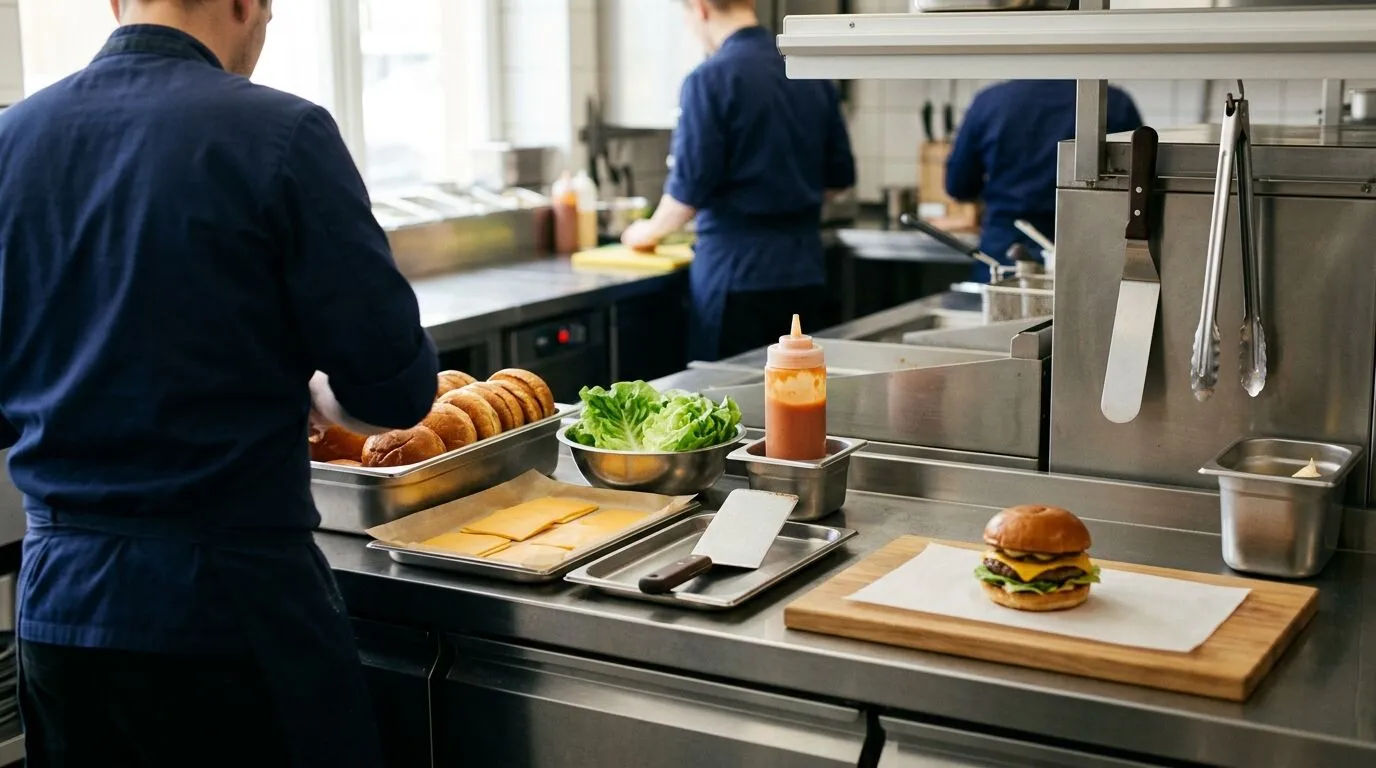
Recording meat, griddle and dispatch controls with Miselup
Keep meat receiving and storage separate from the observed patty treatment. Add sauce, clean-assembly and allergen checks, and declare transport when the plan records the delivery route.
Identify the ground beef that will actually be cooked
Preserve supplier-product category and lot identity in receiving and storage rather than giving all patties the same rule. Declare cooking for that meat's actual starting state. Handle rare requests through the restaurant's policy; they do not become a weaker criterion, and a production order does not establish the core observation.
The clean turner protects buns, leaves and sauce
Record griddle and assembly cleaning and action after raw-meat transfer. Include the sauce nozzle and container in the replenishment procedure. Review the allergen matrix when buns, cheese or formulated patties change, including platform orders; the record cannot detect meat residue on a turner or allergen traces.
Patty evidence continues through the finished order
Verify the probe used for the core and use a traceability exercise to reconstruct meat, bun and sauce identities. A cook-to-order patty has no cooling or reheating acts. Declare dispatch and complete loading and unloading when the plan records delivery, then review gaps and deviations in the period report.
The Miselup HACCP software hub explains the scope of Mise Pro and Mise Pro HACCP and how the manual, records, processes, verification, notifications, team portal and reports work.
Common gaps to address before an inspection
Review core-treatment evidence, responses to rare-burger requests and griddle-tool separation. Include opened sauces, receiving classifications and finished orders waiting for a courier in the same operational review.
-
All patties are treated as the same product
Classification and composition affect storage criteria. Check the actual supplier product before configuring receiving.
-
A rare request changes the safety criterion
Customer preference does not establish pathogen control. Define an offer and staff response that preserve supported full cooking.
-
The griddle is measured instead of the core
A hot surface does not prove the interior treatment. Monitor the food with a supported method.
-
The raw turner removes cooked patties
Assembly can recontaminate the meat. Separate raw tools from clean removal, buns and leaves.
-
Sauce is topped up without opening history
The nozzle and container retain older product. Review opening, replenishment and cleaning.
-
Closed bags build up waiting for couriers
Assembly is followed by delay and possible loss of conservation. Control waiting and the route, acting on affected food.
Daily HACCP checklist for burger restaurants
Open by checking meat, sauces, probes and griddle organisation. During service verify treatment and clean assembly; close with product-disposition decisions, delivery-record review and cleaning of the whole route.
-
Identify meat products and lots
Review labels, dates, composition and storage for the patties assigned to service.
-
Ready the probe and griddle
Confirm probe verification, cooking procedure and raw versus clean tools and zones.
-
Check buns, leaves and sauces
Review opening histories and hygienic preparation away from raw patties.
-
Receive and link observations
Use the applicable food category and cover available receiving obligations with real checks.
-
Cook and check the core
Apply supported criteria for thickness and starting state, recording treatment and deviation responses.
-
Assemble with clean tools
Prevent recontamination and confirm ingredients and separation options for allergy requests.
-
Control waiting and delivery
Organise packaging and dispatch, evaluate hot and cold components and complete declared transport acts.
-
Close and hand over outstanding work
Decide meat and sauce destinations, clean the route and review gaps and open dispatch records.
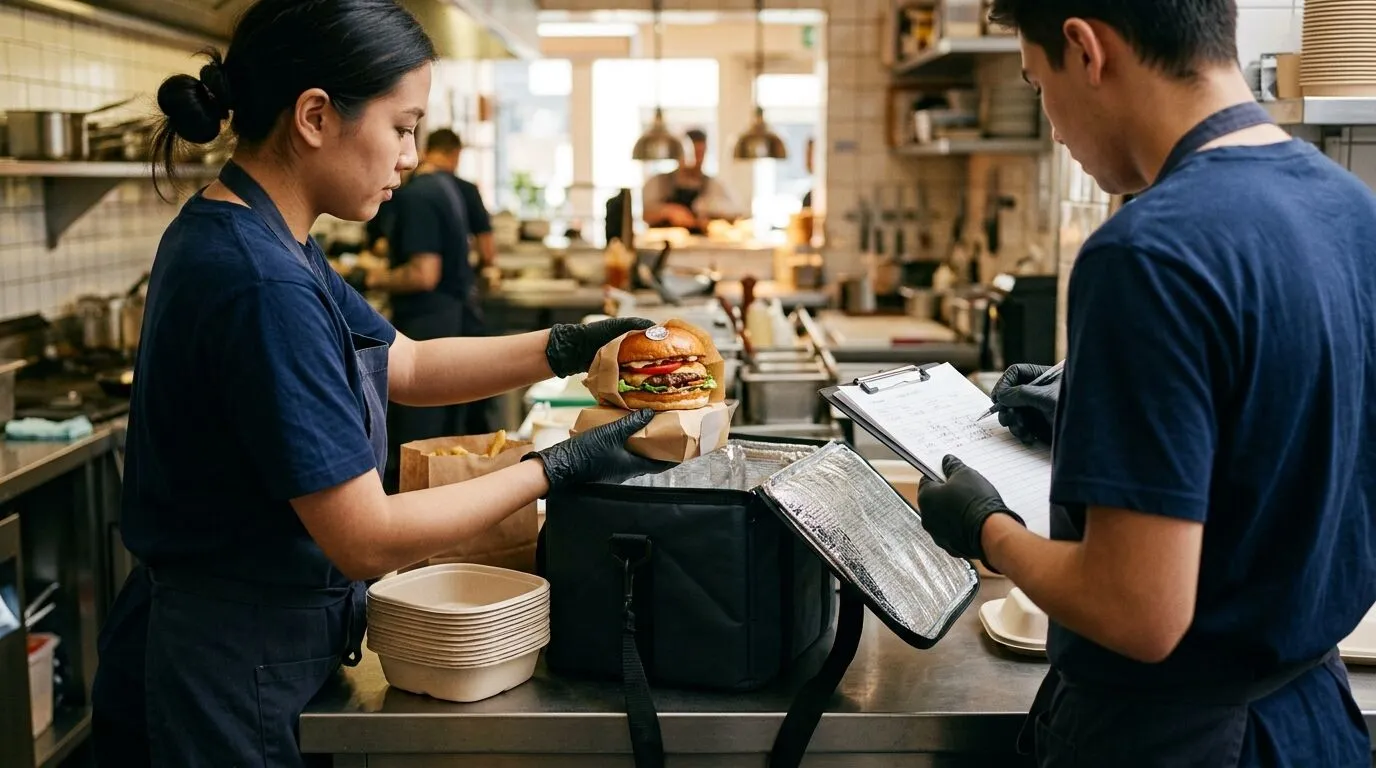
Frequently asked questions: HACCP for burger restaurants
Burger-specific questions concern full cooking, requested doneness, product categories and shared griddles. These answers explain supported operator criteria and the evidence recorded in Miselup without importing another country's numeric rules.
What cooking treatment does ground beef need in a burger?
Can I lower the treatment because the customer requests rare?
Why is surface searing insufficient for a ground beef patty?
Do all supplier patties use the same storage criteria?
Does this example cover mincing meat on site?
How should a shared griddle avoid cross-contamination?
What checks do burger sauces need?
Does closing an order in Miselup prove safe delivery?
Related guides and businesses
This plan covers meat, griddle and assembly; the temperature guide explains measurement and recipe costing covers portions, costs and yields. Contracted catering has a different service and logistics route from an ordinary delivery order and needs its own assessment.
- HACCP temperature logging
Core observations, meat conservation and equipment checks.
- Allergen control plan
Review buns, sauces, patty specifications and substitutions.
- HACCP plan for restaurants
Additional side-dish and batch-preparation routes when the menu needs them.
- HACCP plan for pizza restaurants
Dough, oven and toppings when the kitchen also prepares pizza.
- HACCP for catering
Contracted-event service with a route distinct from cook-to-order delivery.
Bring cooking and clean assembly into every shift
Define meat, sauces, griddle and handover in the plan. Mise Pro HACCP helps organise criteria, responsibilities and records for the burger restaurant's actual routes.