HACCP plan for pizza restaurants: dough, oven and delivery
By Miselup team · Updated:
A HACCP plan for pizza restaurants identifies hazards in dough, toppings and finished pizzas and defines controls from receiving to table service or delivery. It describes fermentation, ingredient storage, oven treatment and handling after baking, with monitoring, corrective action and verification for the actual recipes and equipment.
Tomorrow's dough rests in refrigeration while today's mozzarella and ham sit on the topping line beside the oven. A baked pizza receives rocket leaves before it is sliced and boxed. The oven treatment cannot control what happens to that garnish or to the pizza during delivery.
The example follows a ham-and-mozzarella pizza baked to order with rocket added afterwards. Cooling and reheating are separate branches for a slice-service or par-bake operation. Set supported criteria and check your local requirements; Mise Pro HACCP helps organise the plan and its records.
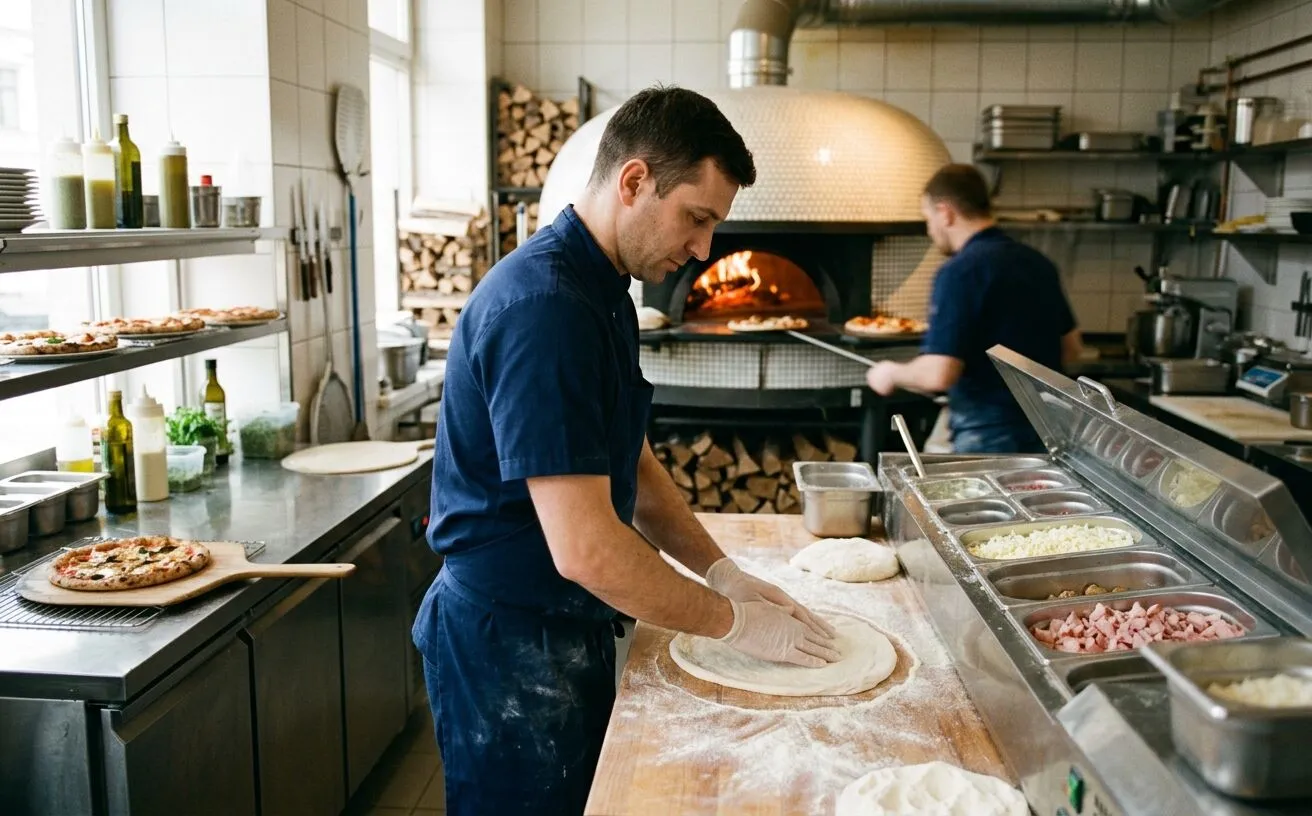
Tomorrow's dough and today's topping line need separate controls
Separate cold-fermented dough batches from ingredients opened on the service line. Baking and post-oven finishing have different controls even when they happen on neighbouring benches.
Give each dough mix an identity, recipe and fermentation procedure. A change in formulation, ball size or storage schedule can change the process being controlled. Good rise and texture are quality observations; they do not alone validate the food safety of the dough's storage history.
Opened cheese and cured meats need identifiable batches and supported conditions on a line that is opened repeatedly beside a hot oven. Keep ready-to-eat ingredients separate from raw toppings requiring cooking. Topping up a container without preserving opening history makes the next shift's decision harder to justify.
Flour spreads across benches, peels and cutters. A gluten-free base needs an effective preparation and finishing procedure if the business makes that claim. Check sauces, meat specifications, cheese and final garnish as well as the base, including what can actually be separated during a busy service.
A food flow to confirm in your operation
- 1.Receive flour, cheese and meat ingredients
- 2.Identify batches and ingredient openings
- 3.Mix and identify dough
- 4.Cold-ferment under the supported procedure
- 5.Prepare the chilled topping line
- 6.Shape, top and bake to order
- 7.Add final garnish and slice
- 8.Serve or pack and hand over for delivery
Food safety hazards in pizza restaurants
Dough and opened toppings need controlled storage, and final garnish bypasses the oven treatment. Airborne flour, cleaning residues and damaged cutters or packaging add hazards that baking alone cannot address.
Biological
Uncontrolled dough or opened-topping storage, insufficient treatment of raw toppings and contamination from post-bake leaves.
How to control it: Support fermentation and shelf-life criteria, control each topping's storage, verify the recipe's cooking treatment and protect ingredients added afterwards.
Chemical
Oven cleaner or surface disinfectant reaching dough, open containers, peels and cutting surfaces.
How to control it: Separate cleaning from production, remove food and follow dosing, contact and rinsing instructions before equipment returns to use.
Physical
Fragments from damaged cutters or peels, or cheese packaging and meat-wrapper closures reaching the topping line.
How to control it: Inspect utensils, open packs away from food containers and remove potentially affected ingredients after a fragment is found.
Allergens
Dispersed wheat flour, milk in cheese and allergens in sauces or meat ingredients; shared cutters across different bases.
How to control it: Check supplier information and local allergen rules, and control the full preparation and cutting route before making absence claims.
Dough, baking and advance-preparation processes
Baking to order uses cooking, while cooling and reheating belong to stored sauces, par-baked products or slice service where present. Refrigerating raw dough for fermentation is not rapid cooling of cooked food, and available forms do not determine CCP classification.
Bake to order: actual thickness, loading and toppings
Pizza is baked to order, including toppings that require treatment; garnish added later needs its own handling controls.
Criterion: Support the treatment of dough and toppings that require cooking and a representative monitoring method. A thicker base or raw topping changes the recipe being controlled, so review the procedure rather than keeping the oven setting unchanged.
Codex Alimentarius · General Principles of Food Hygiene, CXC 1-1969
Recording in Miselup: Identify the recipe and lot and record the treatment specified for its thickness and oven loading. Rocket added afterwards needs clean-finishing checks; this cooking record cannot establish its handling.
Cooked sauce or par-bakes: cooling outside this example
Only when a hot preparation is cooled for storage; this form does not describe raw-dough fermentation.
Criterion: Support cooling for the actual hot preparation, containers and equipment. Raw dough in cold fermentation needs its own procedure; it is not a cooked-food cooling batch.
Codex Alimentarius · General Principles of Food Hygiene, CXC 1-1969
Recording in Miselup: This pizza is baked and served directly, with no cooling process. If sauce or par-baked product is made for storage, identify that batch and record its cooling start and finish.
Slice service: reheating outside this example
Relevant to a stored-slice operation; baking raw dough to order remains cooking.
Criterion: Support treatment for the stored slice and check local requirements. Miselup restricts repeat reheating as a product rule; a raw-dough pizza remains an initial cook.
Codex Alimentarius · General Principles of Food Hygiene, CXC 1-1969
Recording in Miselup: Raw dough baked to order does not need reheating records. For cooked slices stored chilled, record removal from storage, core treatment and completion; the oven display is not the slice observation.
Egg topping or dessert: choose its own route
Only where egg is used; do not assume a basic flour, water, yeast and salt dough contains it.
Criterion: Check egg ingredients and local rules for the actual cooked topping or uncooked dessert. A toasted crust does not establish egg treatment, and the dessert cannot inherit the pizza's baking controls.
Codex Alimentarius · General Principles of Food Hygiene, CXC 1-1969
Recording in Miselup: Do not add egg preparation to the example's ham, mozzarella and rocket recipe. If egg is introduced, record the topping treatment or dessert's egg-product route, with preparation and storage identity.
Post-bake fish: only for a menu change
Only for susceptible fish served without an adequate treatment, including some post-bake additions; not simply because canned fish is used.
Criterion: Support parasite control for that fish under local rules. A post-bake topping does not receive the base's oven treatment, so review the added ingredient separately.
Codex Alimentarius · General Principles of Food Hygiene, CXC 1-1969
Recording in Miselup: This does not apply to the ham pizza or simply to using canned fish. If susceptible fish is added after baking, link the portion and treatment evidence rather than treating the earlier bake as its control.
Frozen dough: thawing is distinct from fermentation
Frozen ingredients are thawed before pizza preparation; omit the stage where none are used or the supported route uses them frozen.
Criterion: Protect dough and toppings from drip contamination and support the cold-chain procedure. Thawing does not validate later fermentation; Miselup restricts refreezing without documented transformation.
Codex Alimentarius · General Principles of Food Hygiene, CXC 1-1969
Recording in Miselup: Do not open thawing for dough mixed and cold-fermented in the restaurant. For supplied frozen dough, identify the portion and method, record start and finish and preserve its links before shaping.
Example plan: ham, mozzarella and rocket pizza baked to order
This route uses cold-fermented dough and chilled toppings, with rocket added after baking before table service or delivery. Adapt supported criteria, frequencies and CCP decisions to the restaurant; the pizza is not cooled and reheated in this example.
On smaller screens, scroll the table horizontally to read every control.
| Stage | Hazard | Control measure | Limit / criterion | Monitoring | Record in Miselup |
|---|---|---|---|---|---|
| Receive mozzarella and ham | Unsuitable product or loss of cold-chain control. | Check batches, packaging, dates, composition and applicable temperature conditions. | Supplier specifications and locally applicable acceptance requirements for each ingredient. | Check deliveries under the procedure and separate deviations. | Food-order receiving linked to an available obligation. |
| Mix dough and fill fermentation boxes | Contamination from mixer or containers. | Use clean equipment and identify the recipe and batch. | Operator hygiene procedure and cleaning-product instructions. | Inspect equipment before mixing and loading boxes. | Mixer and container cleaning and disinfection. |
| Cold-ferment dough | Uncontrolled storage process or use outside supported criteria. | Apply a supported fermentation procedure for the formulation and schedule. | Operator criteria for this dough; no universal fermentation figure is provided here. | Review mix identity, fermentation conditions and duration to decide which dough boxes can enter the shift's shaping route. | Product conservation and refrigeration checks; no dedicated fermentation form. |
| Keep cheese and meat on the topping line | Growth and loss of opening history. | Identify openings and replenish clean containers without mixing histories. | Supported storage and opened-life criteria for each topping under local rules. | Review mozzarella and ham openings and replenishment beside the oven, completing the checks defined for those containers. | Topping conservation and chilled-line equipment. |
| Bake to order | Insufficient treatment of the recipe or raw toppings. | Apply a supported procedure for thickness and actual loading. | Operator cooking criteria for the product; oven setting and crust colour alone do not establish the treatment.Codex Alimentarius · General Principles of Food Hygiene, CXC 1-1969 | Check the food using the plan's supported method and frequency. | Cooking of the identified preparation. |
| Add rocket and slice | Contamination after the final cooking stage. | Use leaves suitable for their intended ready-to-eat use and clean finishing utensils. | Operator procedure for garnish and post-bake handling. | Check ingredient preparation, cutting area and utensils before finishing. | Finishing-area and utensil cleaning. |
| Prepare an allergy order | Flour cross-contact or incomplete composition information. | Confirm base, cheese, meat, garnish and effective separation options. | Accurate information under local allergen rules and supported controls for any absence claim. | Review each request and the shaping and cutting route. | Verified allergen matrix and procedure check. |
| Pack and hand over for delivery | Delay, loss of conservation or contamination after baking. | Use suitable food-contact packaging and a supported dispatch and transport procedure. | Operator conservation and route criteria checked against local requirements; no universal delivery time. | Declare dispatch and check food and conditions at loading and unloading under the procedure. | Declared transport with loading and unloading; no automatic courier tracking. |
Raw-dough fermentation is not evidenced by a cooked-food cooling record. Deviations in storage or delivery require a food-disposition decision and documented response. Miselup does not connect every delivery-platform order or establish delivery completion without the relevant observations.
How to measure and record temperatures: the measurement method
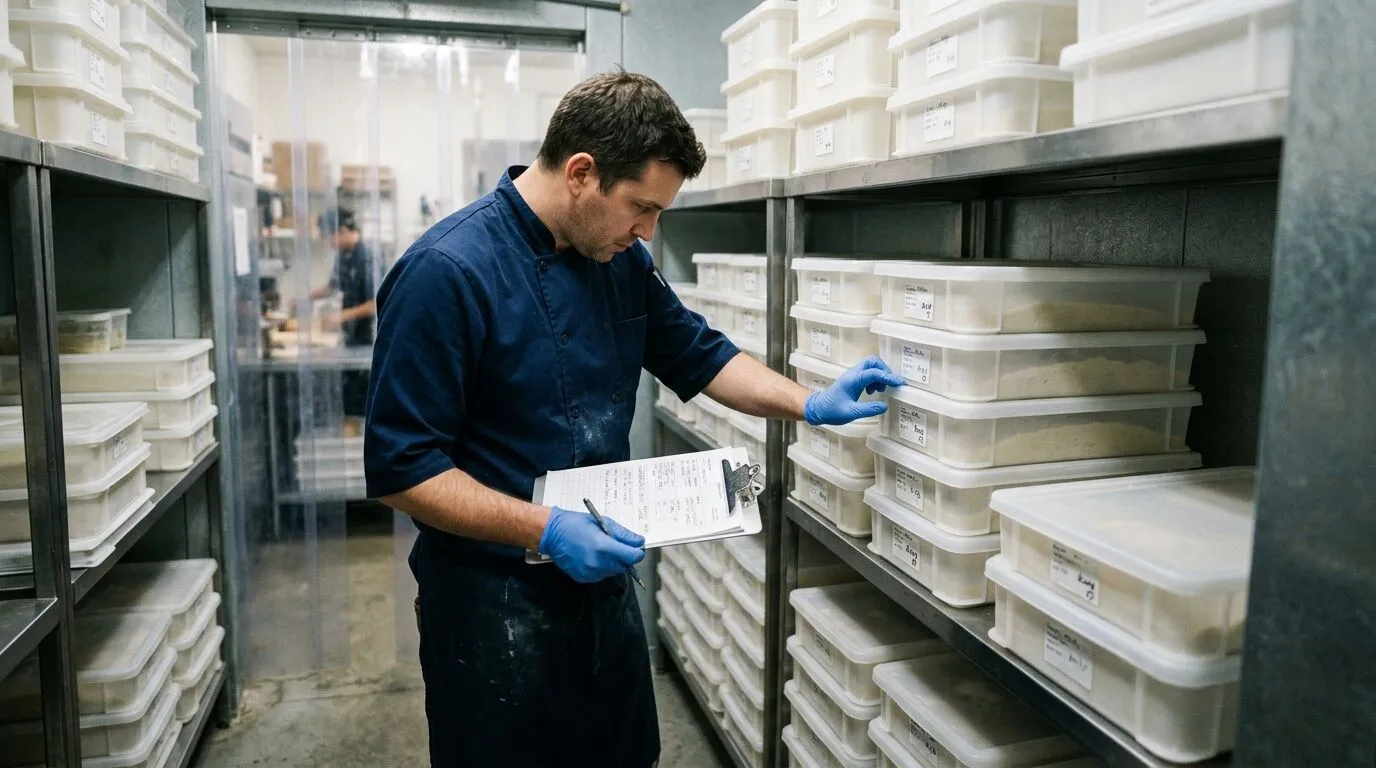
Connecting dough batches, the topping line and delivery
Identify dough batches and keep their storage checks separate from toppings opened for service. Declare baking activity and any recorded delivery route so its treatment and transport acts have their own evidence.
Tomorrow's dough box preserves today's mix
Identify the dough lot and support its formulation, fermentation conditions and schedule in the procedure. Record available food-conservation and refrigeration controls adopted in the plan, linking the observation where an obligation is required. Raw dough does not open cooked-food cooling, and Miselup has no dedicated form that validates fermentation.
Rocket arrives after the baking record
Declare and record cooking for the pizza's recipe, thickness and oven loading. Check the cutting area and rocket handling separately because they act after treatment. For a different base, review the ingredient matrix and actual flour, peel and cutter route; changing the digital recipe does not remove cross-contact.
From an opened topping container to a delivery pizza
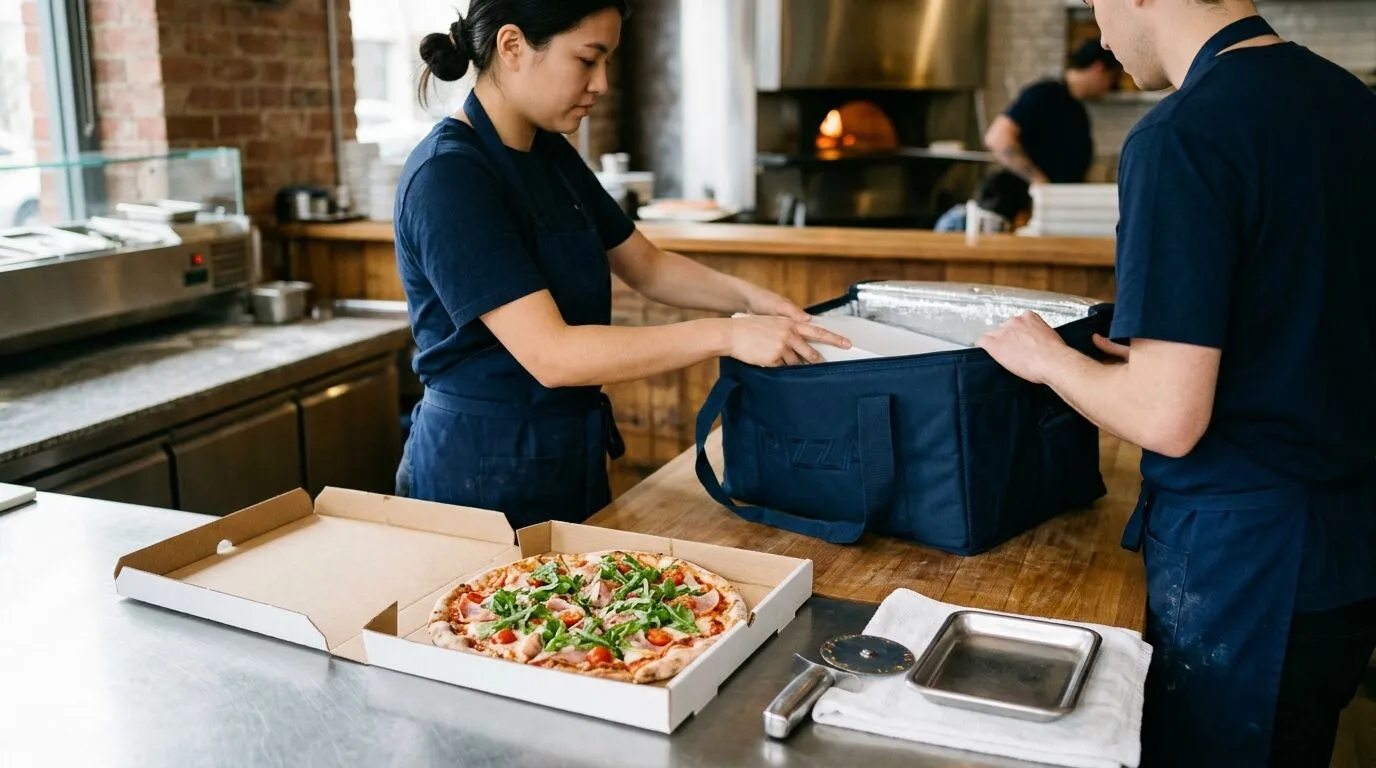
Review mozzarella and ham opening history, identity and conservation, and link the receiving observation where a control is required. Cook-to-order service does not use reheating; declare it only if stored cooked slices enter the menu. Complete the loading and unloading observations for declared delivery transport: a closed box does not establish where the pizza arrived.
The Miselup HACCP software hub explains the scope of Mise Pro and Mise Pro HACCP and how the manual, records, processes, verification, notifications, team portal and reports work.
Common gaps to address before an inspection
Look for unidentified dough boxes, topped-up cheese containers and procedures that treat the oven as the only control. Follow the pizza after baking through garnish, slicing, packing and delivery.
-
A dough box only says tomorrow
The mix and formulation cannot be identified. Preserve batch, date and procedure for the next shift.
-
Fermentation is recorded as cooked-food cooling
Raw dough needs its own supported process. Use the relevant controls rather than a rapid-cooling form.
-
The oven is the only safety barrier
Rocket, finishing oil and cutters act after baking. Check their handling and the finishing bench.
-
Cheese containers are topped up without history
Different openings become indistinguishable. Preserve ingredient identity and clean containers under the procedure.
-
A gluten-free base uses a flour-covered bench
Changing dough does not control cross-contact. Review the full shaping, baking and cutting route.
-
Closing the box is treated as a delivery record
The declared route still needs its checks and completion evidence. Review waiting, transport and handover.
Daily HACCP checklist for pizza restaurants
Before service, confirm dough identities, ingredient openings and topping-line conditions. During the shift check baking, allergy requests and delivery handovers; at closing decide the destination of every batch and container.
-
Identify each dough mix
Check batch, recipe, date and fermentation procedure before removing dough from storage.
-
Ready refrigeration and the topping line
Complete equipment and food-conservation checks for dough, cheese and meat ingredients.
-
Review openings and receiving
Identify opened packs, supplier conditions and the shift's deliveries.
-
Separate raw toppings and final garnish
Prepare ready-to-eat leaves away from raw toppings and dirty utensils.
-
Check baking
Apply the supported recipe, thickness and loading procedure and record treatment observations.
-
Confirm bases and allergy requests
Check ingredients and practical separation through shaping, baking and cutting.
-
Organise delivery handover
Use suitable packaging, control waiting and complete the declared transport acts.
-
Close containers and hand over dough
Decide destinations, clean utensils and identify batches, deviations and outstanding processes.
Frequently asked questions: HACCP for pizza restaurants
Pizza operators often ask about fermentation, oven readings, toppings and gluten-free or delivery orders. The answers distinguish recipe-specific evidence, equipment settings and the records available in Miselup.
Can one HACCP plan cover different pizza doughs?
Is there one cold-fermentation temperature for every dough?
Does the oven setting prove that a pizza is safely cooked?
How should cheese and cured meats be replenished?
Is a gluten-free base enough for a gluten-free pizza claim?
What changes when I sell reheated pizza slices?
Is there a universal maximum time for pizza delivery?
Does Miselup record dough fermentation automatically?
Related guides and businesses
This plan covers dough, baking and delivery, while the temperature guide develops measurement methods and recipe costing covers quantities and waste. Contracted catering adds separate event logistics; an ordinary pizza delivery is not automatically that same service model.
- HACCP plan for restaurants
Batch preparation and handovers if the pizza menu adds other kitchen dishes.
- HACCP temperature logging
Measurement methods for dough, toppings and equipment.
- Allergen control plan
Ingredient and service procedures for flour and cross-contact.
- HACCP plan for burger restaurants
Review minced meat and griddle routes when burgers join the menu.
- HACCP for catering
Contracted-event logistics, distinct from ordinary pizza delivery.
Connect the dough mix with every pizza service
Define dough, toppings, baking and delivery in the plan. Mise Pro HACCP helps organise lots and records for the pizza restaurant's actual food routes.