HACCP plan for sushi restaurants: example and daily checklist
By Miselup team · Updated:
A HACCP plan for sushi identifies hazards in raw fish, rice and assembly ingredients and defines controls through service or delivery. It includes parasite control, conservation, utensils, allergens and monitoring of the procedures declared by the establishment.
A fish portion keeps its freezing and thawing history while rice follows a separate preparation and schedule. They meet on a board beside soy sauce, sesame and perhaps crustaceans, so assembly needs more evidence than a freezer reading.
This example follows susceptible fish treated by in-house freezing, rice under a declared acidification procedure and a delivery order. Adapt the evidence when the supplier already treated the fish; Mise Pro HACCP supports available processes without automatically validating rice or delivery.
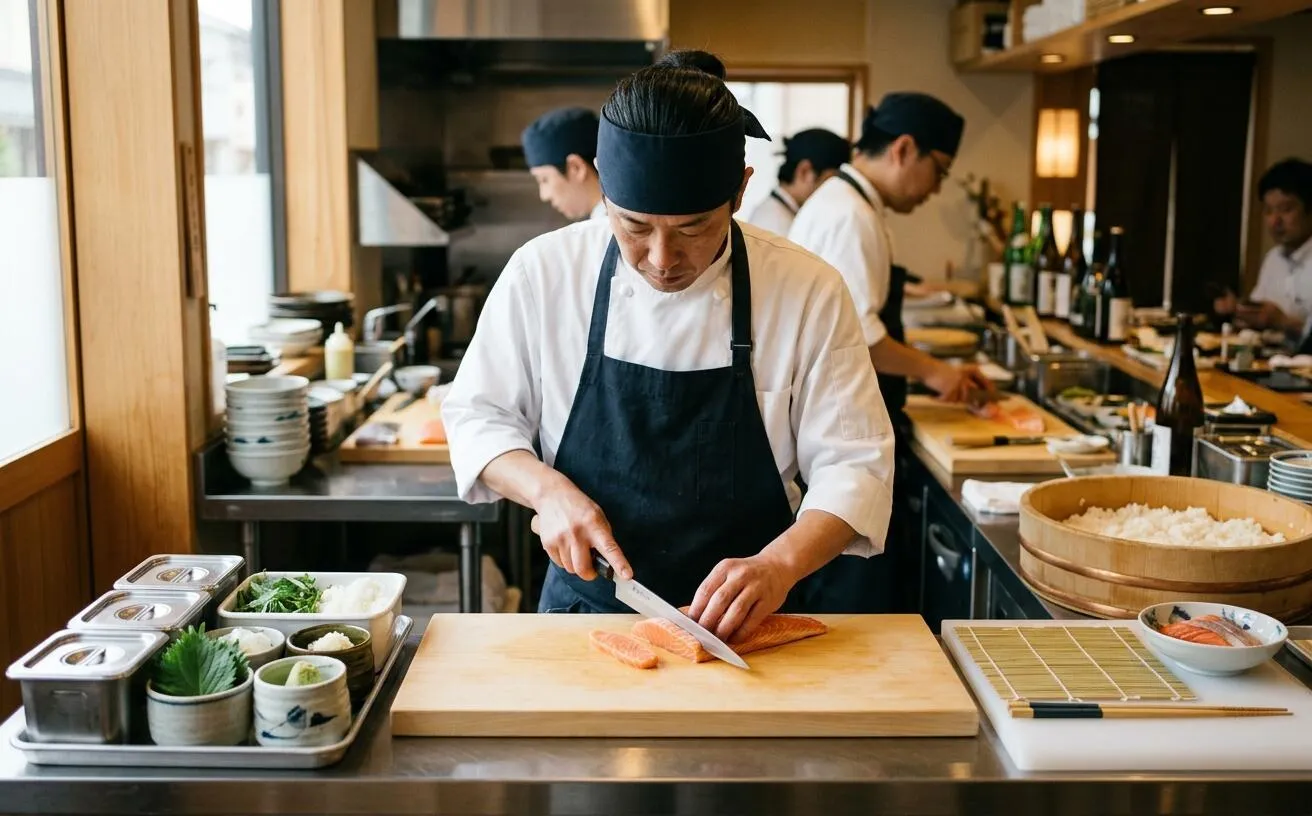
Fish and rice reach assembly by different routes
The sushi plan keeps fish history and the rice procedure separate before assembly. Cutting, sauces and delivery add decisions that adequate freezing cannot resolve.
Link species, supplier, portion and treatment evidence before cutting susceptible fish. For in-house freezing, the treatment concerns the whole product at the supported target condition; freezer air does not establish when that treatment began.
Acidified rice needs a supported procedure for recipe, homogeneous mixing, appropriate measurements and use conditions. Cooking rice and adding vinegar cannot establish that procedure by themselves; retain specific evidence and avoid copying a number from another kitchen.
Cutting and assembly bring together ready-to-eat ingredients, knives, boards and garnishes without another effective treatment. Separate tasks involving different raw foods, review cleaning and sauce changes and carry those decisions through to the complete order and actual delivery responsibilities.
A food flow to confirm in your operation
- 1.Receive fish and review evidence
- 2.Store and identify portions
- 3.Freeze for parasite control where required
- 4.Thaw by the declared route
- 5.Prepare rice and verify its procedure
- 6.Cut and assemble with clean tools
- 7.Confirm sauces, garnishes and allergens
- 8.Serve or hand over to the declared delivery route
Food safety hazards in sushi restaurants and japanese kitchens
Parasites and contamination in raw fish need controls distinct from growth in rice or garnishes. Include cleaning residues, bones and fish, crustacean, soy and sesame allergens in the complete order's analysis.
Biological
Viable parasites in susceptible fish, cutting contamination or growth in rice outside its procedure.
How to control it: Review supported treatment or documented exemption, preserve portion and cold-chain identity and establish rice preparation and use separately.
Chemical
Disinfectant residues on boards and containers or unsuitable materials for acidified rice.
How to control it: Follow cleaning and rinsing instructions and confirm food-contact suitability for the intended use.
Physical
Bones, knife fragments, wrapping or mat parts entering food during assembly.
How to control it: Inspect portions and tools, control package opening and isolate orders exposed to breakage.
Allergens
Fish, crustaceans, soy, sesame or sauce ingredients omitted from information; shared boards and garnishes causing cross-contact.
How to control it: Review final recipe and supplier declarations, separate tools or verify cleaning and confirm changes before handover.
Sushi processes: parasite control, rice and the hot menu
Parasite treatment and thawing follow the portion and actual route, while cooking, egg preparation, cooling and reheating depend on the hot menu. Acidified rice is an operator-declared procedure and is not established by a specialist Miselup pH form.
Actual cooking of rice and hot dishes
Rice, broth or another recipe is cooked; cooking rice does not establish later acidification.
Criterion: Support treatment for the recipe and process and check local requirements. Acidification needs separate criteria and evidence; this page supplies no universal pH or typed acidity capture.
Codex Alimentarius · General Principles of Food Hygiene, CXC 1-1969
Recording in Miselup: Identify the batch and record configured treatment observations, retaining rice-acidification checks separately. Raw fish receives no fictional cooking step.
Broth or hot preparation for tomorrow
Cooked food is cooled for storage; do not automatically impose this branch on acidified rice.
Criterion: Support cooling for batch, containers and equipment under local rules. A named stage cannot justify rice handling outside its established procedure.
Codex Alimentarius · General Principles of Food Hygiene, CXC 1-1969
Recording in Miselup: Declare and complete cooling for the stored broth lot. Represent the rice's actual supported conservation route through its separate procedure.
Cooked, cooled and reheated broth
The menu reheats a stored preparation for hot service; this does not apply to cold nigiri.
Criterion: Support reheating for the actual food and check local requirements. Miselup restricts repeat reheating as a product rule; broth treatment cannot establish treatment of raw fish added later.
Codex Alimentarius · General Principles of Food Hygiene, CXC 1-1969
Recording in Miselup: Link lot, removal from refrigeration, treatment and completion. Subsequent broth holding needs a separate observation programme.
Egg omelette or another egg preparation
Egg appears on the menu; review egg-containing sauces too.
Criterion: Support ingredient, treatment, date and storage under local egg requirements. Do not transfer an immediate-service route to a preparation stored for later use.
Codex Alimentarius · General Principles of Food Hygiene, CXC 1-1969
Recording in Miselup: Declare the preparation's actual route and immediate or stored destination. An uncooked sauce needs an ingredient and procedure appropriate to that use.
Susceptible fish for raw consumption
Fish or cephalopods are served without adequate parasite treatment, unless a documented applicable exemption is established.
Criterion: Declare a supported treatment for species and intended use and check your local requirements. The operator establishes criteria under Codex; this page does not transfer Spanish freezing numbers to other countries.
Codex Alimentarius · General Principles of Food Hygiene, CXC 1-1969
Recording in Miselup: For in-house treatment, link portion, equipment, whole-product target evidence, start and continuous treatment through finish. Keep supplier evidence if treatment occurred upstream instead of inventing in-house acts.
Fish portion after freezing
Frozen fish is thawed before cutting and assembly.
Criterion: Support the cold-chain route and check local requirements. Miselup restricts refreezing without documented transformation; thawing cannot establish an incomplete parasite treatment.
Codex Alimentarius · General Principles of Food Hygiene, CXC 1-1969
Recording in Miselup: Identify the same portion and record its route with drip separated from ready-to-eat ingredients. A shared lot code does not replace treated-portion identity.
Example plan: in-house fish freezing, rice and delivery
The restaurant records treatment and thawing of its susceptible fish portion, prepares rice under a supported procedure and assembles orders. This is neither a species-exemption template nor validation of rice by vinegar addition.
On smaller screens, scroll the table horizontally to read every control.
| Stage | Hazard | Control measure | Limit / criterion | Monitoring | Record in Miselup |
|---|---|---|---|---|---|
| Receive fish for sushi | Unsuitable fish, altered cold conditions or treatment without evidence. | Check supplier, species, lot, packaging and route documentation. | Ingredient acceptance and evidence supporting the invoked treatment or exemption under local rules. | Inspect delivery and separate unaccepted food. | Receiving with supplier evidence retained separately. |
| Freeze for parasite control | Insufficient treatment or target reached only in freezer air. | Apply the complete supported route to the identified portion and establish continuity. | Operator treatment for the whole product with applicable local requirements checked. | Record evidenced start, finish and deviations for that route. | In-house parasite process linked to the portion. |
| Thaw before cutting | Lost control or drip reaching garnishes. | Preserve identity and separate containers and drip. | Supported declared thawing method and local requirements. | Record portion start, finish and destination. | Thawing with the portion's cold-chain history. |
| Prepare and acidify rice | Growth under an unverified procedure. | Apply supported recipe and checks for cooking, mixing and use. | Operator criteria for acidified rice; no universal pH or ambient waiting time. | Record available treatment observations and retain specific acidification evidence separately. | Cooking where appropriate; a separate acidification sheet outside typed captures. |
| Cut and assemble | Contamination through raw foods, boards and ready-to-eat ingredients. | Separate tasks and use clean knives, boards and mats. | Station separation and cleaning procedure. | Check tools and bench between planned tasks. | Cutting and assembly cleaning checks. |
| Conserve order and ingredients | Lost cold conditions or history during waiting. | Identify food and maintain each route's supported conditions. | Food-specific conservation and rice procedure; sushi is not one universal waiting category. | Check food and equipment under the plan. | Food and equipment conservation checks. |
| Confirm sauces and allergens | Soy, fish, crustaceans or sesame omitted. | Verify recipe, accompanying sauces and utensils for the order. | Accurate information for food actually supplied under local allergen rules. | Confirm changes and every allergy request. | Verified matrix and allergen check. |
| Hand over to delivery | Order lacks defined dispatch and handover conditions. | Use suitable packaging and a route with defined responsibilities and criteria. | Supported food, dispatch and delivery conditions; no universal delivery duration. | Declare activity and observe loading and unloading where that transport forms part of the recordable route. | Declared transport with loading and unloading, without courier integration. |
Parasite freezing does not remove all fish hazards or control rice. Third-party delivery needs a realistic handover procedure and responsibilities; Miselup cannot observe the courier or measure food throughout the journey.
How to measure and record temperatures: the measurement method
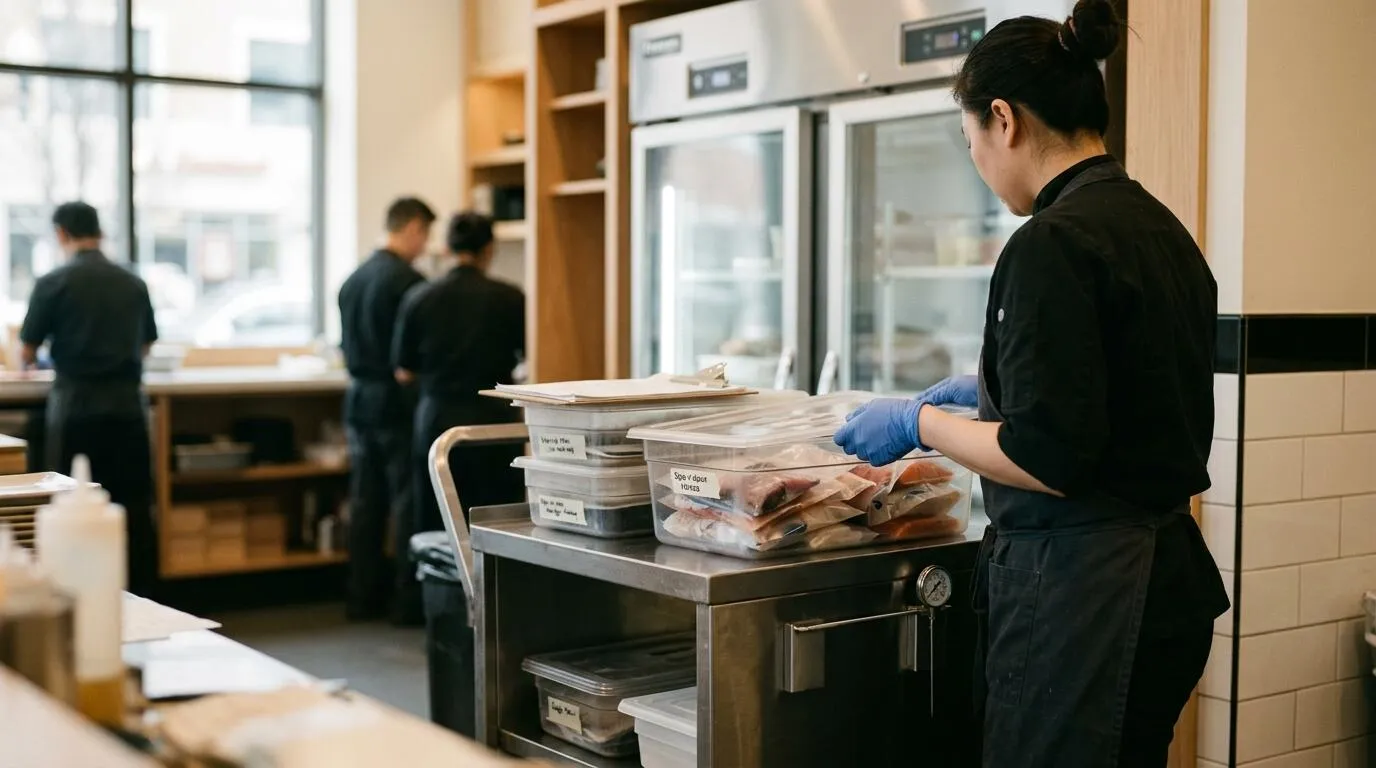
Following portions and sushi assembly with Miselup
Link the portion to treatment and thawing while retaining the rice procedure separately. Review assembly, sauce changes and dispatch conditions.
The portion reaching the cutting board
Declare the in-house parasite route and complete its start and finish with whole-product and continuity evidence. Use portion identity for thawing; the book and dashboard show acts and unfinished processes without replacing supplier documents.
Rice and the assembly station
Record treatment or conservation that represents actual handling and retain acidification checks as specific documentation. Add cleaning controls for knives, boards and mats; there is no typed pH capture validating the rice.
The sauce and dispatched order
Review recipe and accompaniment allergens and record the verified matrix. For declared transport, loading and unloading retain their link; a receipt or produced lot cannot automatically establish dispatch, delivery or an external courier's conditions.
The Miselup HACCP software hub explains the scope of Mise Pro and Mise Pro HACCP and how the manual, records, processes, verification, notifications, team portal and reports work.
Common gaps to address before an inspection
Problems include treating freezer air as fish treatment or vinegar addition as verified acidification. Review boards, portion identification and the order's waiting conditions before dispatch as well.
-
Freezer air starts the treatment clock
The display cannot establish the whole fish condition. Document when the portion reaches the supported target.
-
Different treatment routes are mixed
Use the complete supported pairing and method rather than combining conditions from separate procedures.
-
A sales description becomes an exemption
Commercial wording cannot replace treatment evidence or applicable exemption documents.
-
Vinegar addition counts as validated acidification
The procedure, uniformity and checks are missing. Support the actual rice recipe and use.
-
Boards and sauces are shared without review
Assembly can introduce contamination or allergens after treatment. Check tools, cleaning and accompaniments.
-
The order loses its route at dispatch
Responsibility and handover conditions are unclear. Define delivery and record observable acts.
Daily HACCP checklist for sushi restaurants and japanese kitchens
Before cutting, review fish evidence, thawed portions and rice preparation. During assembly and dispatch, check tools, allergens and order conditions and record action after deviations.
-
Review portions and pending work
Check identity, treatments, thawing and previous-shift decisions.
-
Accept fish with evidence
Review supplier, species, conservation and treatment or exemption documents.
-
Complete in-house freezing
Check whole-product target, declared route, continuity and finish before using the portion.
-
Thaw by the declared method
Separate drip and preserve portion identity through cutting.
-
Prepare and verify rice
Execute its supported procedure and retain acidification and use observations.
-
Review knives and boards
Ready the clean station and separate raw-food and ready-to-eat tasks.
-
Confirm the complete order
Check fish, garnishes, sauces, sesame and actual options for the allergy request.
-
Control dispatch and closing
Record available transport acts, decide destinations and hand over incidents and open processes.
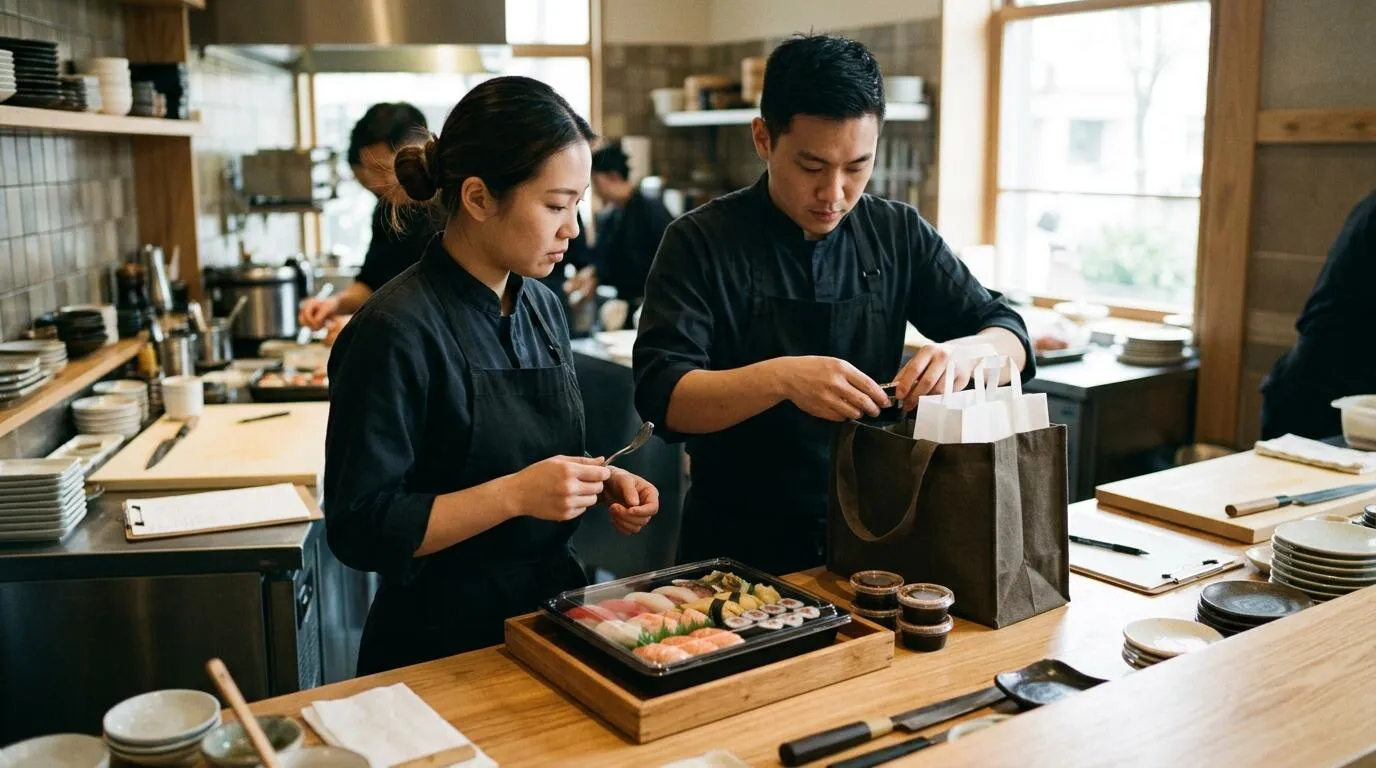
Frequently asked questions: HACCP for sushi restaurants and japanese kitchens
Sushi questions distinguish in-house treatment, supplier evidence and documented exemptions. These answers also define the limits of rice and delivery records without attributing measurements or validation to the app.
Which rules should a sushi HACCP plan follow?
When does the parasite-freezing treatment time start?
Should I freeze fish again if the supplier treated it?
Does parasite freezing make every raw fish portion safe?
What pH should acidified sushi rice reach?
How do I record fish freezing followed by thawing?
Which allergens belong in a Japanese-kitchen order?
Does delivery automatically create transport records?
Related guides and businesses
This page organises Japanese-kitchen food routes; temperature and allergen guides develop specific methods. The restaurant plan extends batch dishes and broths when the hot menu uses those routes.
- HACCP temperature logging
Develop product and equipment observations and treatment evidence.
- Allergen control plan
Review sauces, garnishes and complete-order communication.
- HACCP for restaurants
Extend broth and batch-preparation routes in the hot menu.
Connect fish, rice and dispatch in the sushi plan
Define treatment, procedures and responsibilities for each route. Mise Pro HACCP helps organise your Japanese kitchen's processes and records.