HACCP plan for bakery and pastry production: example and checklist
By Miselup team · Updated:
A HACCP plan for bakery and pastry production identifies workshop hazards and explains their control from ingredients to sale. It describes doughs, treatments, fillings, cooling and display, with monitoring, corrective action and verification for the products actually made.
A loaf leaves the oven, while a cake returns to the bench for cream filling and whipped cream. The same bakery holds different final steps: airborne flour, piping bags and nut decorations can reach food that will receive no further heat treatment.
This example follows a cooked filling through cooling and chilled pastry assembly alongside bread and flour handling. Adapt the stages to your production; Mise Pro HACCP organises the manual and records without treating every bakery operation as a CCP.
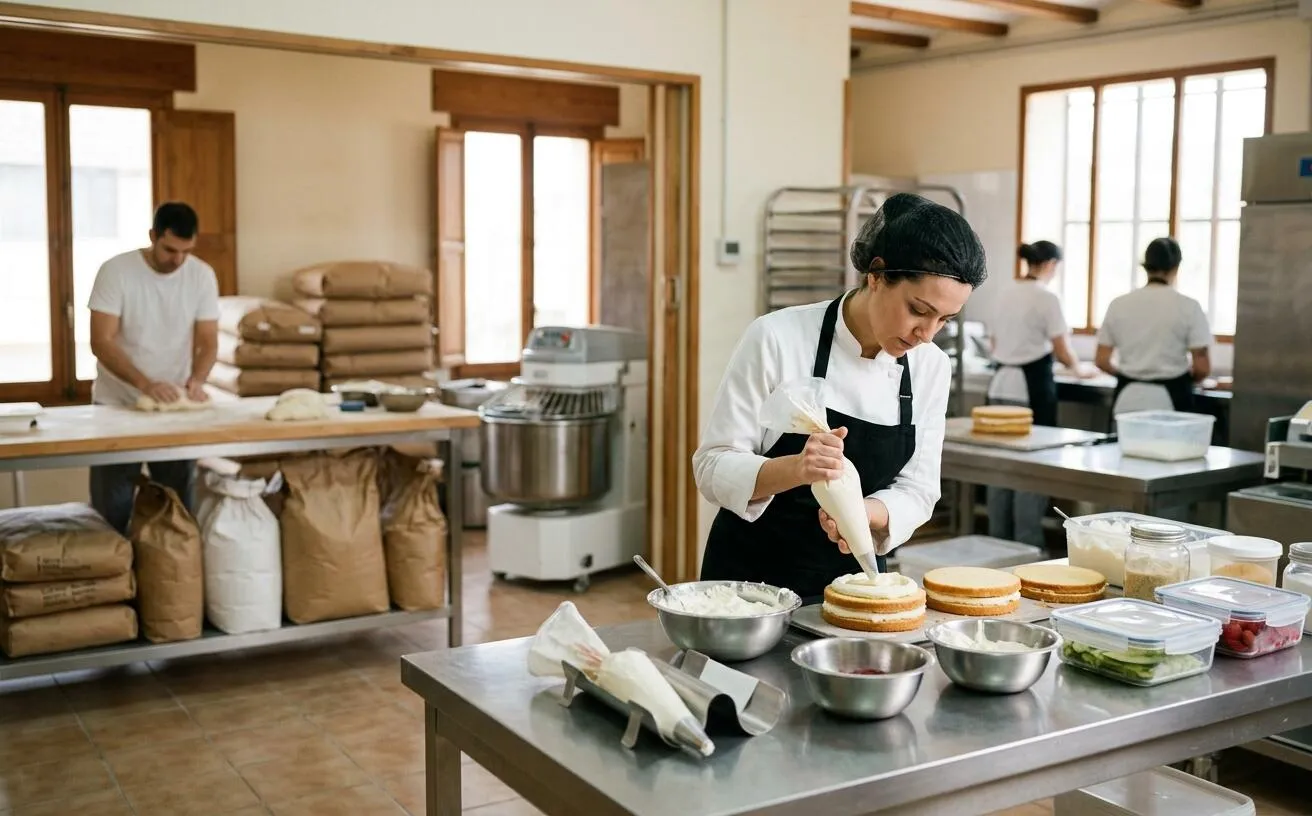
Baking is not always the final treatment
The bakery plan separates baked bread from pastries filled or decorated after baking. Filling identity and cleaning between tasks connect production, display and sale.
Map separate routes for bread and filled pastries. Handling and protected display still matter after a loaf is baked; cooked filling, whipped cream and assembly add stages to a cake that the treatment of its base cannot control.
Support a filling's cooling procedure for its actual volume, container depth and equipment capacity. Keep its batch identity when dividing it between cakes; transferring cream into several piping bags does not give each pastry a new storage history or shelf life.
Flour, sesame and nuts can move between benches, mixers, piping bags and hands. Plan work sequences and cleaning before accepting an allergy order, check compound ingredients and explain the bakery's actual handling options, including the final decoration.
A food flow to confirm in your operation
- 1.Receive flour, eggs, dairy and decorations
- 2.Separate dry and chilled storage
- 3.Prepare identified dough and fillings
- 4.Bake or cook according to recipe
- 5.Cool fillings intended for storage
- 6.Assemble with clean tools and whipped cream
- 7.Store and replenish the display
- 8.Sell with allergen information and leftover decisions
Food safety hazards in bakeries and pastry shops
Cream fillings and whipped cream require assessment of growth and contamination during assembly. Include cleaning residues, damaged equipment, flour-storage pests and cross-contact with wheat, nuts and sesame.
Biological
Growth in slowly cooled filling, uncontrolled whipped cream or contamination during pastry assembly.
How to control it: Support treatments and cooling, retain filling identity and separate clean assembly from raw ingredients and used equipment.
Chemical
Cleaner residues in mixers, tubs or displays and decorations unsuitable for food contact.
How to control it: Follow cleaning and rinsing instructions and confirm piping bags, packaging and decorations suit their intended use.
Physical
Sieve, nozzle or whisk fragments and foreign material associated with packaging or flour-storage pests.
How to control it: Inspect equipment and packaging, protect sacks and apply pest and affected-food procedures.
Allergens
Wheat, milk, egg, nuts or sesame missing from filling and decoration information; cross-contact through mixers and benches.
How to control it: Review composition, sequence work and check shared-equipment cleaning before explaining options for an allergy order.
Bakery processes: baking, fillings and post-bake assembly
Cooking, cooling and egg preparation depend on recipes and storage routes. Reheating, parasite control and thawing belong only to menu branches that actually use them; an available form does not establish a bakery CCP.
Baking and cooking cream are distinct treatments
Dough is baked or filling is cooked; later whipped cream does not receive that treatment.
Criterion: Support the treatment for recipe, batch size and loading, checking local requirements. A browned crust does not establish the treatment of a later filling.
Codex Alimentarius · General Principles of Food Hygiene, CXC 1-1969
Recording in Miselup: Identify recipe and batch and record the observations specified for its actual treatment. Oven temperature does not establish the centre temperature of a filling.
Cooked filling kept for later assembly
Hot filling is cooled for later use; this is not ordinary cooling of an unfilled loaf.
Criterion: Validate the cooling procedure for the filling and storage route and check local requirements. Do not apply a prepared-food procedure to every loaf simply because it leaves the oven warm.
Codex Alimentarius · General Principles of Food Hygiene, CXC 1-1969
Recording in Miselup: Declare the filling's cooling process and retain its batch through start and finish. Establish suitable container depth and equipment loading.
Optional reheated savoury food
Previously cooked and cooled food is reheated; chilled cake service is not reheating.
Criterion: Support reheating and subsequent service for the actual food. Miselup restricts repeated reheating as a product rule; check your local requirements.
Codex Alimentarius · General Principles of Food Hygiene, CXC 1-1969
Recording in Miselup: Open this process only for the stored savoury preparation, recording removal from cold storage and completion. Initial pastry baking follows its own procedure.
Egg-based filling or mousse
Egg is part of the filling; distinguish sufficient cooking from an uncooked mousse.
Criterion: Use egg ingredients and treatment supported for the preparation and local egg rules. Review storage and the finished pastry's shelf life separately, including supplier instructions.
Codex Alimentarius · General Principles of Food Hygiene, CXC 1-1969
Recording in Miselup: Declare the actual ingredient and preparation route with its date and time. A stored filling needs criteria appropriate to later use rather than immediate service.
Fish in a savoury range, only if present
Susceptible fish is served without adequate parasite treatment; omit this route for bread, cream and whipped cream.
Criterion: Support parasite control for the species and preparation and check your local requirements. Baking the canapé base cannot establish treatment of fish added afterwards.
Codex Alimentarius · General Principles of Food Hygiene, CXC 1-1969
Recording in Miselup: Do not create a parasite record for a cake. For raw-fish canapés, review supplier evidence or declare the actual in-house treatment and portion identity.
Frozen fillings or ingredients
A preparation is thawed before use; omit a thawing stage for dough baked directly from frozen under its procedure.
Criterion: Support cold-chain and contamination controls for the actual ingredient. Miselup restricts refreezing without documented transformation; moving filling to the display does not reset its history.
Codex Alimentarius · General Principles of Food Hygiene, CXC 1-1969
Recording in Miselup: Identify the portion and route, keeping thaw drip away from clean assembly. Review ingredient instructions and the supported thawing method.
Example plan: cooked filling and pastries finished with whipped cream
The bakery bakes bases, cooks an egg filling and assembles chilled pastries with whipped cream. Connect filling identity to the finished pastry and sale, then complete classification, responsibilities and frequencies through the establishment's analysis.
On smaller screens, scroll the table horizontally to read every control.
| Stage | Hazard | Control measure | Limit / criterion | Monitoring | Record in Miselup |
|---|---|---|---|---|---|
| Receive eggs, milk and cream | Unsuitable ingredient or interrupted cold chain. | Check suppliers, batches, packaging and opening instructions. | Acceptance criteria for the actual ingredient under local requirements. | Inspect the delivery and separate rejected ingredients. | Receiving linked to an available obligation. |
| Store flour and decorations | Pests, damaged packaging and mixed allergenic ingredients. | Protect sacks, rotate stocks and keep ingredients identified. | Bakery dry-storage and pest procedures. | Inspect sacks, shelving and activity signs. | Pest checks and allergen review. |
| Cook the egg filling | Insufficient treatment of the preparation. | Use the declared route for filling intended for storage. | Supported ingredient and treatment criteria under local egg requirements. | Observe the core treatment and retain batch identity. | Egg preparation with its declared route. |
| Cool cooked filling | Growth during slow cooling. | Use containers and loading established by the validated procedure. | Operator cooling criteria for the filling, followed by appropriate storage. | Record start, finish and deviations for the same batch. | Declared and completed cooling process. |
| Assemble cream-filled pastries | Post-treatment contamination and allergen cross-contact. | Separate clean benches and piping bags from flour and nut work. | Assembly and cleaning procedure with actual filling and decoration composition. | Check tools and recipe changes before assembly. | Cleaning and verified allergen matrix. |
| Store pastries in the display | Growth in filling or cream during display. | Retain identifiable batches and replace trays without mixing histories. | Supported food-storage and shelf-life criteria, distinct from the display-unit check. | Check food during replenishment and equipment as scheduled. | Food conservation and display-unit temperature. |
| Hand over an allergy order | Filling or decoration differs from the agreed recipe. | Verify final composition and actual cross-contact control options. | Accurate allergen information for the pastry supplied under local rules. | Confirm ingredients and tools with preparation and sales staff. | Allergen check for the order. |
| Close bakery and display | Unjustified reuse of leftovers or contaminated equipment. | Decide each batch's destination and clean removable equipment. | Closing procedure and cleaning instructions; changing trays gives no new shelf life. | Review destinations, incidents and unfinished work. | Cleaning and continuing-batch conservation. |
A filling record does not establish assembly hygiene or later pastry storage. Protect the batch after a deviation, record the responsible person's decision and verify the outcome; the app does not decide whether cream can be recovered.
How to measure and record temperatures: the measurement method
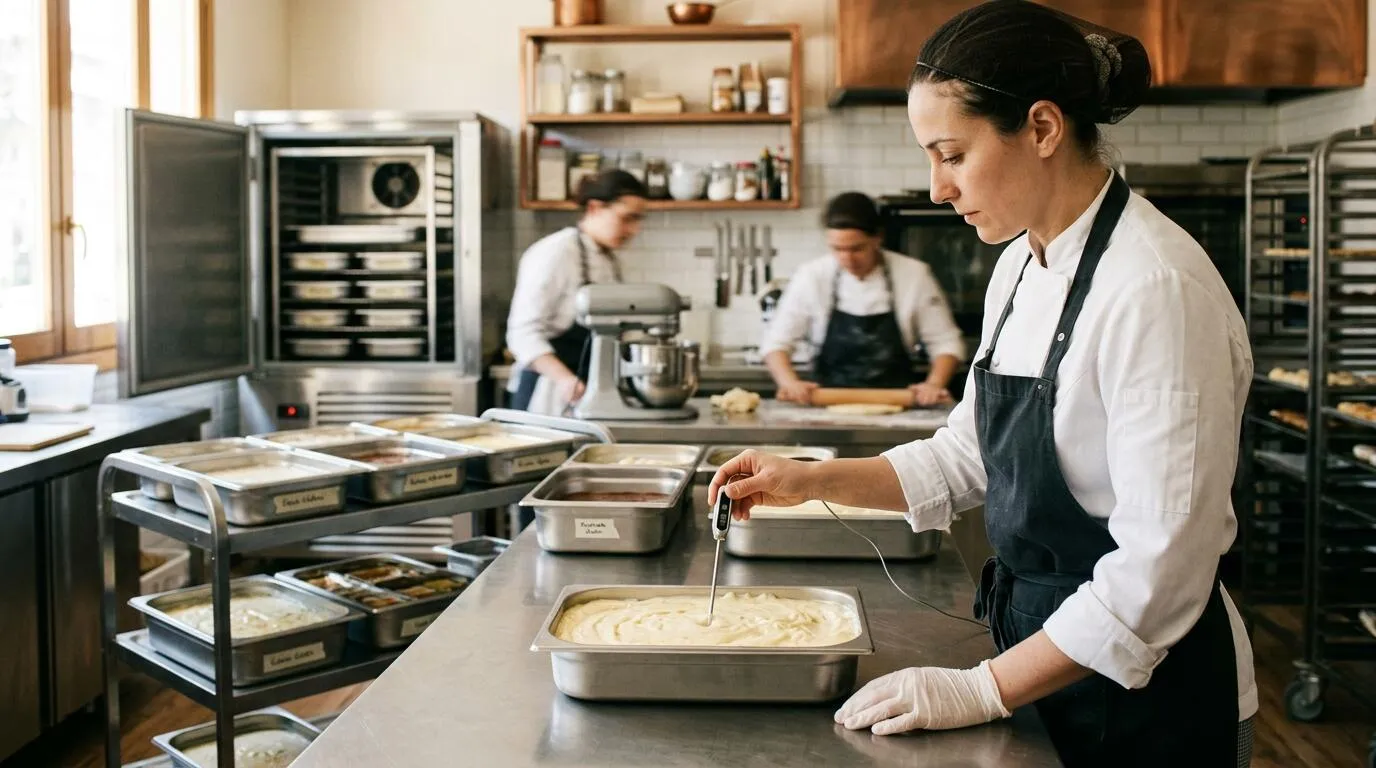
Following filling, assembly and display with Miselup
Link filling to its egg preparation and cooling before pastry assembly. At handover, review displayed batches, changed fillings and unfinished processes.
One filling used in several pastries
Identify the batch and declare its egg and cooling processes, completing each act before treating the route as finished. The record book retains observations and corrective actions. When dividing the filling, staff must preserve its identity and check which pastries contain it.
The display at shift change
Record food conservation and consult the equipment control separately. When the HACCP plan configures an applicable control, a produced lot can generate a required obligation; link the actual observation. Tray replenishment and leftover decisions still need staff checks.
Filling and decoration for a special order
Review ingredients and recipe when chocolate, cream or decoration changes and record the verified allergen matrix. The portal supports authorised checks; recipe information cannot detect flour or nut traces in a shared piping bag.
The Miselup HACCP software hub explains the scope of Mise Pro and Mise Pro HACCP and how the manual, records, processes, verification, notifications, team portal and reports work.
Common gaps to address before an inspection
Problems arise when baking the base is treated as protection for the finished pastry. Review later additions, filling cooling and the history retained by each display tray.
-
Every food route ends at the oven
The cake receives filling afterwards. Include assembly and conservation of the finished pastry.
-
Filling cools in a deep pot
A cool surface cannot establish the centre temperature. Check volume, containers and equipment capacity with actual observations.
-
The piping bag loses batch identity
Pastry histories become unclear. Preserve filling identification and avoid resetting its date during assembly.
-
The order leaves out decoration
Sesame or nuts enter at the final step. Review the finished product and cleaning between tasks.
-
The display screen replaces a food check
Equipment and food serve different controls. Observe the pastry when the criterion concerns the food.
-
Opened flour sacks sit outside the plan
Dry ingredients, packaging and pests matter. Include protected storage and stock review.
Daily HACCP checklist for bakeries and pastry shops
Before production, review ingredients, allergen work sequences and cooling capacity. During assembly and sale, preserve filling and pastry identity and pass unresolved decisions to the next shift.
-
Review production and handover
Identify stored fillings, display trays and unresolved issues before another batch.
-
Inspect dry and cold storage
Check sacks, pest signs, chilled ingredients, equipment and probes.
-
Receive and accept ingredients
Review eggs, dairy and decorations and link required receiving checks.
-
Sequence work and allergens
Separate flour and nut handling from clean assembly and review compound ingredients.
-
Record actual treatments
Identify each batch and use the egg or cooking route appropriate to its recipe.
-
Complete cooling
Record filling start and finish and communicate deviations before use.
-
Assemble and replenish with identity
Use clean piping bags, preserve batches and confirm filling, decoration and storage.
-
Close and decide leftovers
Record destinations, clean equipment and hand over open work and actions.
Frequently asked questions: HACCP for bakeries and pastry shops
Bakery questions distinguish unfilled bread, egg-based cream and pastries finished with whipped cream. These answers guide analysis and records without prescribing one shelf life for every recipe.
Can bread and pastry production share one HACCP plan?
Does baking remove the hazards of a filled cake?
Which egg route suits a filling stored for tomorrow?
Do cream fillings and whipped cream share one shelf life?
What should I record when cooling cooked filling?
How should the bakery handle wheat, nuts and sesame?
Is recording the display temperature enough?
Does supplying an event change the bakery plan?
Related guides and businesses
This page covers bakery food routes; the pastry-costing guide develops batch, piece and filling costs. When an order includes off-site event service, the catering guide adds transport and destination handling to production.
- Bakery and pastry recipe costing
Develop batch, piece and filling costs alongside the bakery food route.
- Bakery recipe costing
Cost doughs and bread alongside the workshop plan.
- HACCP for catering
Add logistics when an order includes off-site event service.
- HACCP temperature logging
Develop filling, food and display measurements.
- HACCP for ice cream shops
Review mixes, utensils and frozen display if the bakery also makes ice cream.
Follow your bakery plan from batch to display
Define doughs, fillings, assembly and responsibilities. Mise Pro HACCP helps organise criteria and records for the bakery's actual production.