HACCP for school kitchens: meal routes, example and checklist
By Miselup team · Updated:
A HACCP plan for school kitchens defines hazards and controls for meals and special diets supplied to children from receiving to service. It covers vulnerable consumers, allergens, hot or chilled routes, retention samples where required and transport and distribution between sites with identified responsibilities.
A kitchen may cook and serve at one school or send trays to a receiving dining site. Staff, equipment and checks change along the route: the main menu, a special diet and retention samples need to preserve identity from production to service.
This example follows meals made at an originating kitchen and served at another site, using hot or chilled branches where applicable. Mise Pro HACCP supports retention samples, loading, unloading and destination service; sensitive-consumer profiles and plan declarations must reflect actual activity.
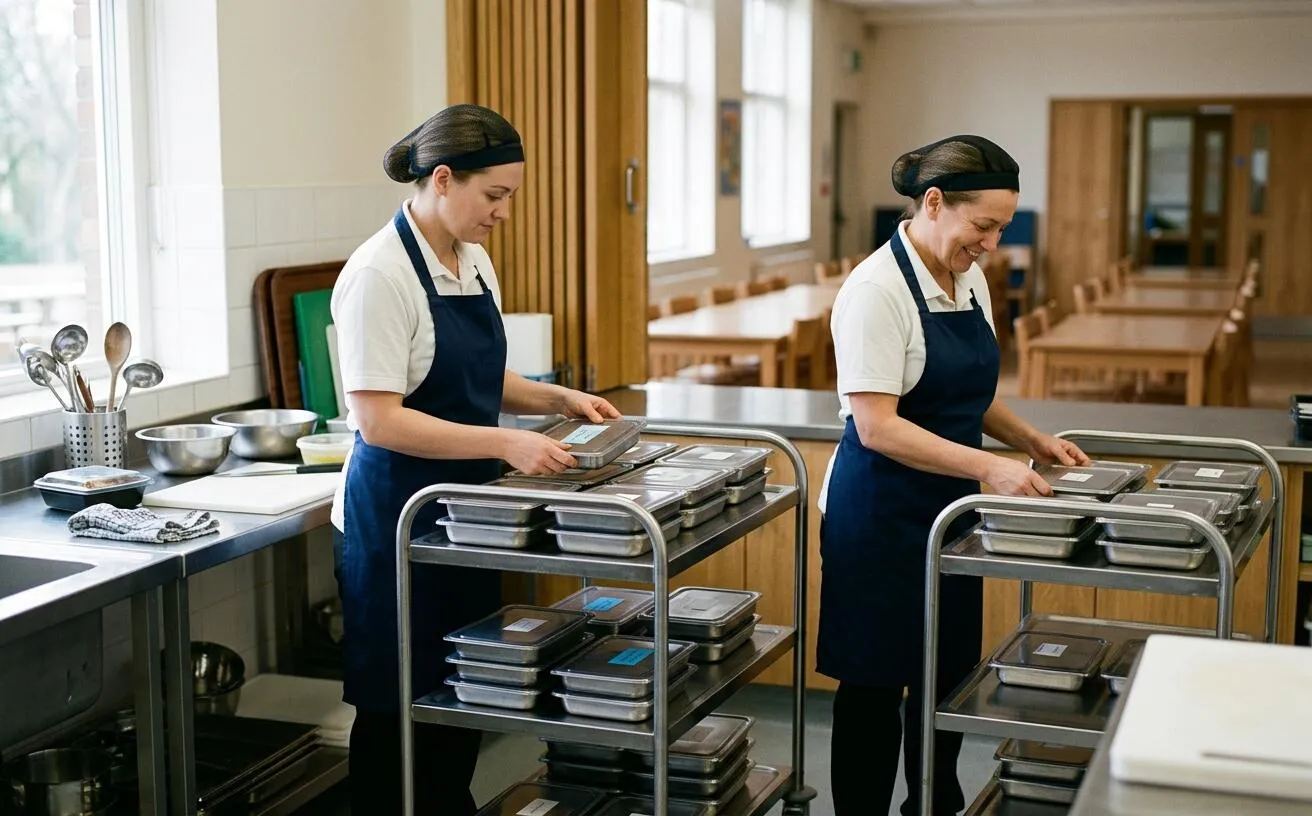
The meal route continues beyond the kitchen door
The plan connects production and service within one school or across separate sites. Special diets and retention samples need identifiable routes alongside the main menu.
Describe where food is made and served, the equipment used and who receives each tray. Hot holding follows the food through service; a chilled route may add cooling and reheating at the receiving site with supported procedures and adequate capacity.
Children's special diets and allergy requests require correct meal identification without mixing trays or utensils. Review substituted ingredients, garnishes and kitchen-to-service communication; calculated recipe allergens cannot establish cross-contact control during meal distribution.
Where required, retention samples should represent served food and preserve identity, date, amount and storage. For separate production and service sites, check the applicable sampling responsibilities and configure their records; unloading food does not replace a sample taken at service.
A food flow to confirm in your operation
- 1.Confirm menu, special diets and destination
- 2.Receive and conserve ingredients
- 3.Prepare with diet and raw-food separation
- 4.Cook and hold hot or cool
- 5.Take origin samples where required
- 6.Load, transport and unload for another site
- 7.Reheat where used and serve with applicable sampling
- 8.Decide leftovers, conserve samples and close records
Food safety hazards in school kitchens and institutional catering
Assess growth during conservation and distribution and contamination when serving vulnerable consumers. Include sanitising residues, foreign material and cross-contact through special-diet handling and utensils in the meal analysis.
Biological
Insufficient treatment or growth during cooling, transport and service to vulnerable consumers.
How to control it: Support menu-specific processes, measure food and complete handovers and hot or chilled treatments.
Chemical
Sanitising residues in containers, trays and reusable tableware.
How to control it: Apply supported cleaning methods and instructions and inspect containers and utensils before loading or service.
Physical
Damaged packages, utensil parts or foreign material entering food during distribution.
How to control it: Inspect integrity at dispatch and receipt, separate outer packaging and isolate trays exposed to breakage.
Allergens
Special diets confused with the main menu, ingredient changes or shared serving utensils.
How to control it: Check actual recipes and diets, identify trays and assign communication and utensils before serving the child.
School-meal processes: production, chilled routes and service
Cooking, cooling and reheating depend on immediate production, hot holding or chilled distribution. Egg preparation, parasite control and thawing apply only to actual ingredients and treatments; transport and samples have separate workflows and cannot establish those processes.
Treatment of the menu and each special diet
Food is cooked on site or at the originating kitchen; receiving prepared trays establishes no in-house cooking.
Criterion: Support treatment for the actual food and process and check specific local requirements. This page supplies no universal cooking number for school meals.
Codex Alimentarius · General Principles of Food Hygiene, CXC 1-1969
Recording in Miselup: Identify lot, dish and special diet and record the treatment defined for size and loading. The main menu's record cannot establish treatment of a different adapted preparation.
A chilled route for advance preparation
Cooked food is cooled for storage and distribution; direct hot holding does not use this route.
Criterion: Support cooling and subsequent conservation for food, containers and loading under local rules. Later transport cannot remedy incomplete cooling.
Codex Alimentarius · General Principles of Food Hygiene, CXC 1-1969
Recording in Miselup: Declare each lot's cooling and complete start and finish, including separate diet containers. Establish equipment capacity for the actual load.
Chilled food returned to hot service
The receiving site reheats previously cooked and cooled food before serving.
Criterion: Support reheating for the actual food and check local requirements. Miselup restricts repeat reheating as a product rule; different special-diet preparations need appropriate observations too.
Codex Alimentarius · General Principles of Food Hygiene, CXC 1-1969
Recording in Miselup: Identify lot, removal from cold storage and completed treatment at destination. Review subsequent holding and service rather than relying on a powered-up oven.
Egg dishes by recipe and destination
The menu or special diet uses egg; review sauces and desserts as well.
Criterion: Support ingredient, treatment, date and conservation under local egg requirements. Immediate-service criteria cannot automatically justify advance preparation.
Codex Alimentarius · General Principles of Food Hygiene, CXC 1-1969
Recording in Miselup: Declare the actual preparation route and immediate or stored destination. Review suitable egg products where relevant rather than copying the main menu's route to another diet.
Susceptible fish without adequate treatment
The actual fish preparation requires specific parasite control; do not presume raw fish in a school menu.
Criterion: Support parasite treatment or an applicable documented exemption and check your local requirements. It does not replace the cooking analysis of microbiological hazards.
Codex Alimentarius · General Principles of Food Hygiene, CXC 1-1969
Recording in Miselup: Review treatment or supplier evidence for the recipe. For an adequate cooked route, document the applicable procedure instead of inventing in-house freezing.
Frozen ingredients for the menu
Ingredients are thawed before preparation; distinguish supported cooking directly from frozen.
Criterion: Support the thawing route under local requirements. Miselup restricts refreezing without documented transformation; moving food to another site does not reset its history.
Codex Alimentarius · General Principles of Food Hygiene, CXC 1-1969
Recording in Miselup: Identify portion, method and destination and separate drip from ready-to-eat ingredients and special diets. Record start and finish when thawing forms part of the procedure.
Example plan: originating kitchen and receiving school site
The kitchen supplies meals and special diets to another site through hot or chilled branches. Complete classification, responsibilities and monitoring for each route and check food and applicable samples in production and service.
On smaller screens, scroll the table horizontally to read every control.
| Stage | Hazard | Control measure | Limit / criterion | Monitoring | Record in Miselup |
|---|---|---|---|---|---|
| Receive ingredients | Unsuitable ingredient or unreviewed substitution. | Review delivery, lots, conservation and menu and diet composition. | Ingredient-specific acceptance and actual recipe; substitutions are not automatically equivalent. | Inspect delivery and notify production of changes. | Receiving with an available obligation and allergen review. |
| Prepare meals and special diets | Wrong meal identity or allergen cross-contact. | Identify trays, separate work and check special-diet utensils. | Diet procedure and actual composition communicated to service. | Confirm recipe, cleaning and destination before production. | Cleaning and menu and diet allergen checks. |
| Cook and choose the service route | Insufficient treatment or undefined conservation route. | Apply supported cooking and either hold hot or complete cooling. | Operator treatment, cooling and hot-holding criteria with local requirements checked. | Measure treatment and complete the actual branch for each lot. | Cooking, cooling or hot holding according to route. |
| Take origin samples where required | Insufficient or unidentified sample for incident investigation. | Collect representative food at the applicable stage, identify, date and protect it. | Operator quantity, storage and retention criteria checked against local requirements. | Check dish, amount, date and sample conservation. | Origin retention sample with dish and service identity. |
| Load and unload at another site | Lost conservation, diet or tray identity during transport. | Use clean containers and check food and destination at both acts. | Supported hot or chilled food criteria for the actual route and local requirements. | Record linked loading and unloading and communicate deviations to receiving staff. | Linked transport acts and container cleaning. |
| Reheat the chilled branch | Insufficient treatment at the receiving site. | Link lot, removal from refrigeration, treatment and leftover destination. | Supported operator reheating criteria and Miselup's repeat-reheating restriction. | Measure and complete the process before service. | Reheating where chilled food returns to hot service. |
| Serve and take applicable destination samples | Lost holding or diet identity; sample does not represent served food. | Confirm trays and utensils, control the line and take samples under the applicable procedure. | Food conservation through service and local sampling criteria; destination does not reset origin retention in Miselup. | Check food, diet, dish and sample with the receiving team. | Destination service, allergens and linked destination sample where applicable. |
| Close and conserve evidence | Early sample disposal or unjustified reuse of reheated leftovers. | Protect samples and record food destinations and incidents. | Applicable sample period and food-disposition procedure; product restrictions on reheated leftovers. | Review dates, conservation, pending work and responsible decisions. | Retention samples and food conservation with recorded actions. |
Confirm whether samples are required and when each site collects them under local rules. The sensitive-consumer profile cannot establish diet controls, and correct unloading does not demonstrate later conservation or service.
How to measure and record temperatures: the measurement method
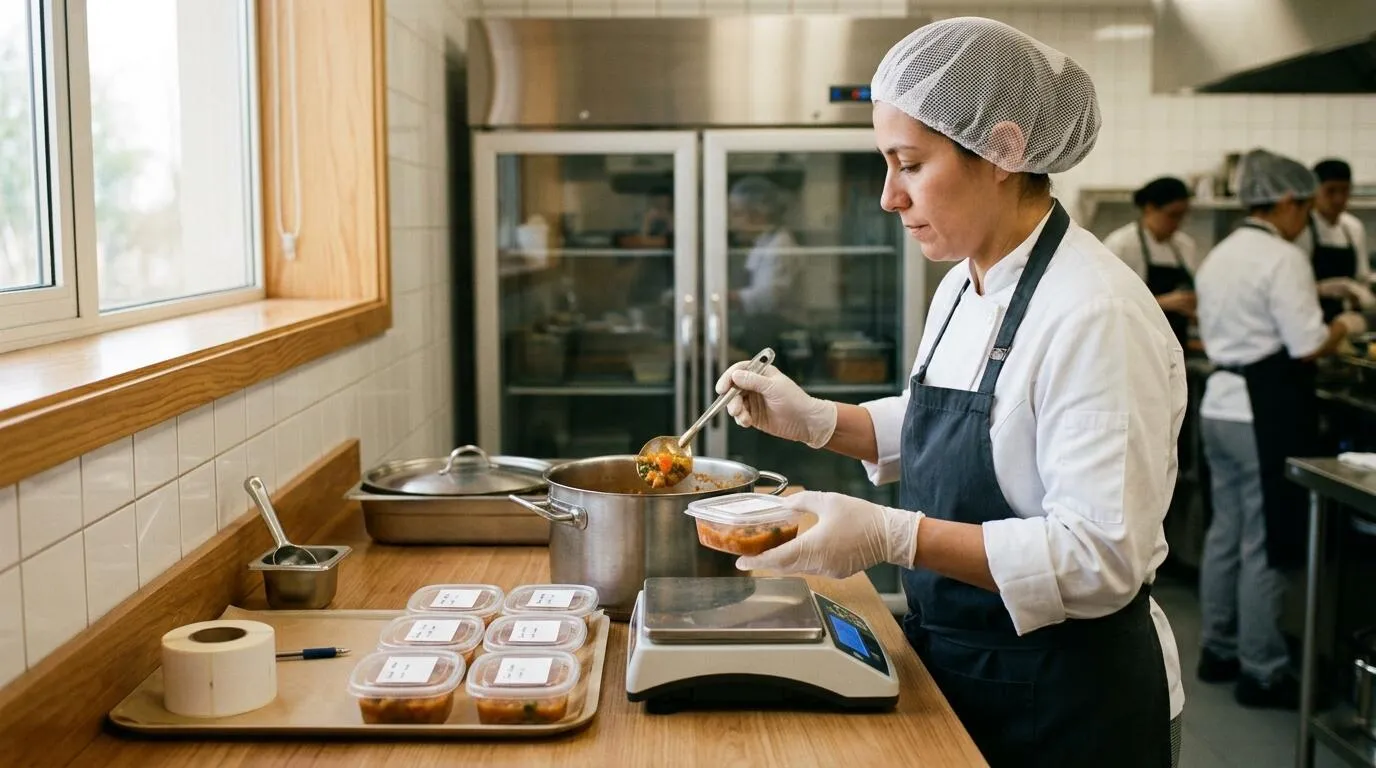
Linking production and school service with Miselup
Declare the profile and vulnerable consumers actually served. Connect lot, dish, service, transport and sample without losing the production-to-distribution handover.
The meal and special diet reaching service
The plan supports sensitive-consumer profiles and vulnerable-population declarations. Review recipe composition and record the verified allergen matrix; tray identification and diet communication remain staff tasks without physical trace detection.
Handover between two sites
Declare transport and service and record loading and unloading linked to the same route. Dashboard and portal support authorised acts; receiving staff check food before holding, serving or reheating. The app cannot measure the vehicle or automatically observe distribution.
The sample representing served food
Record sample quantity, conservation and identity and link origin and destination where applicable. The workflow retains dish, lot and service; destination does not restart the origin period in the product. Review pending work and the report alongside physically retained samples.
The Miselup HACCP software hub explains the scope of Mise Pro and Mise Pro HACCP and how the manual, records, processes, verification, notifications, team portal and reports work.
Common gaps to address before an inspection
Handover gaps arise when a controlled tray loses identity or storage conditions before service. Review special diets, applicable sampling at each site and disposition of reheated leftovers too.
-
The route ends at loading
Unloading, conservation and service are missing. Define who receives food and checks diets.
-
A special diet relies on memory
Handover can confuse trays. Identify meals and confirm composition and destination under the site's procedure.
-
Reheating capacity is assumed
Powered equipment cannot establish treatment. Validate loading and observe the appropriate meal or lot.
-
Origin samples are assumed to cover every site
Check applicable sampling responsibilities at service. Samples need representative food, identity and conservation.
-
Correct unloading closes the service route
Hot or cold conditions may be lost afterwards. Continue controls through delivery of the meal.
-
Closing silently reuses reheated leftovers
Apply the established disposition procedure and product restrictions and retain samples for the applicable period.
Daily HACCP checklist for school kitchens and institutional catering
Before production, confirm the menu, special diets, equipment and receiving site. During distribution and service, complete loading, unloading, conservation, samples and incident communication with receiving and serving staff.
-
Confirm menu, diets and site
Review recipes, substitutions, consumers and production and service responsibilities.
-
Ready equipment and utensils
Check cold and hot equipment, probes, containers and diet separation.
-
Receive ingredients
Review acceptance and composition and link required receiving records.
-
Complete production
Record cooking and the actual hot or cooled route, preserving diet identity.
-
Prepare samples and dispatch
Take identified origin samples where required and declare service and transport.
-
Record loading and unloading
Measure food and preserve route, lot and destination links, communicating deviations.
-
Control service and destination sampling
Reheat where used, confirm diet and utensils and take applicable representative samples.
-
Close and hand over pending work
Decide leftovers, conserve samples and review gaps, open processes and incidents between responsible teams.
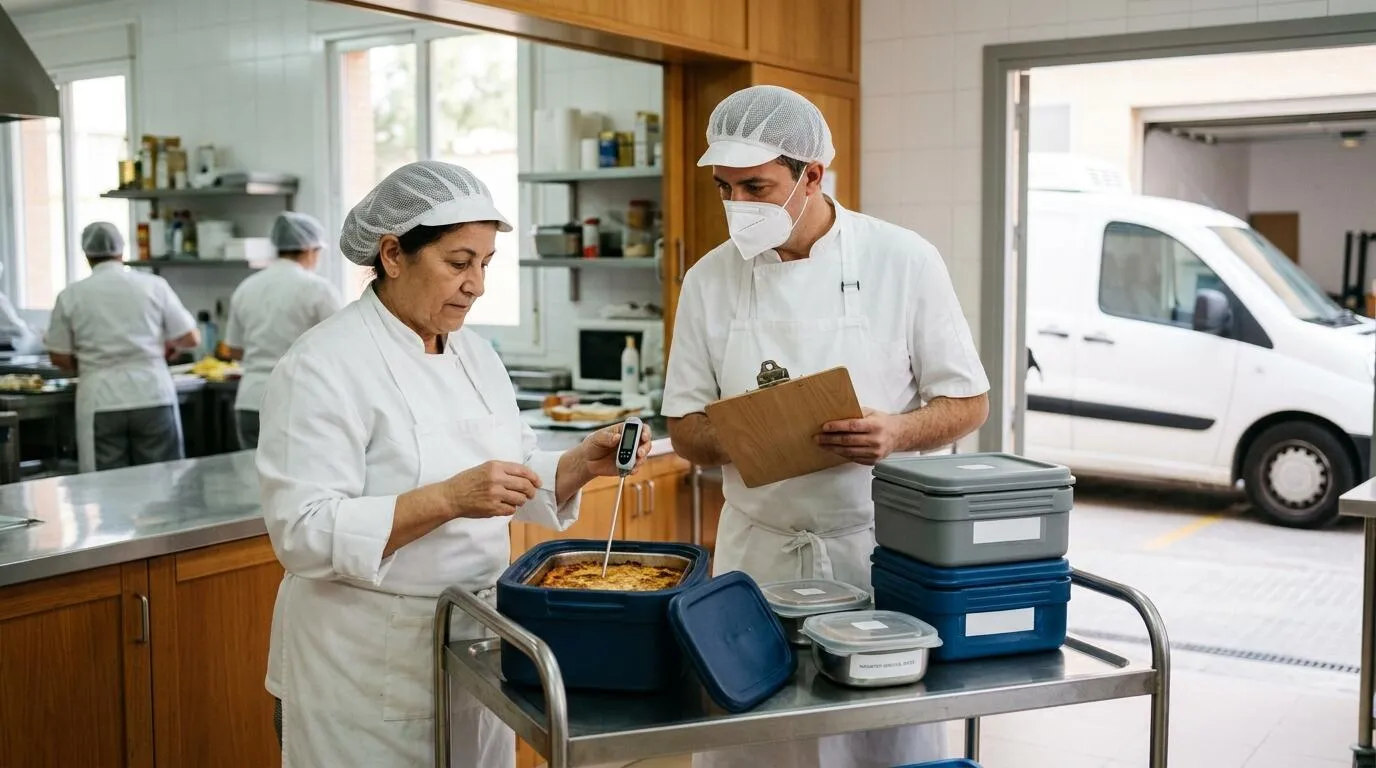
Frequently asked questions: HACCP for school kitchens and institutional catering
School questions distinguish on-site production from meals supplied by another kitchen. These answers explain sample records, service routes and vulnerable-consumer declarations without treating a plan profile as an automatic guarantee.
Does receiving meals from another kitchen change the plan?
Are retention samples required in every school kitchen?
Should origin and destination both collect a sample?
How do hot and chilled meal routes differ?
Does the sensitive-consumer profile guarantee special-diet control?
What does transport between kitchen and school record?
Does a destination sample restart retention in Miselup?
What should the school review after meal service?
Related guides and businesses
This page focuses on school meals and institutional catering; the catering guide develops contracted-event logistics. Institutional recipe costing addresses meal costs while temperature and allergen guides develop their specific methods.
- HACCP for catering
Develop contracted-event transport and service with related logistics but distinct scope.
- HACCP temperature logging
Develop observations for hot and chilled routes and the food itself.
- Allergen control planning
Develop composition, substitutions and communication before service.
- HACCP for restaurants
Compare immediate and advance preparation when the kitchen combines methods.
Follow the school meal plan through to service
Define consumers, special diets and handover between sites. Mise Pro HACCP helps organise your institution's samples, processes and records.